Week 6 – Carla

  1. Connect one of a soft switch to your Arduino. Use it to control an LED.

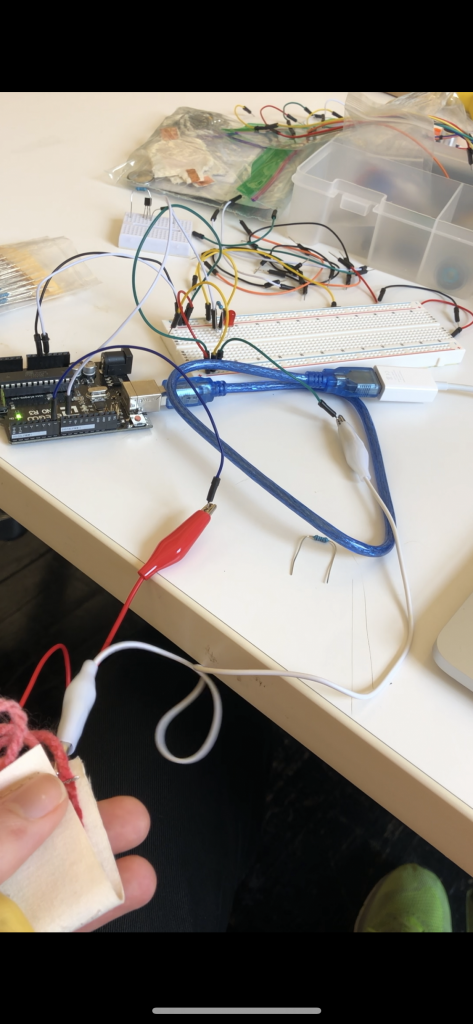
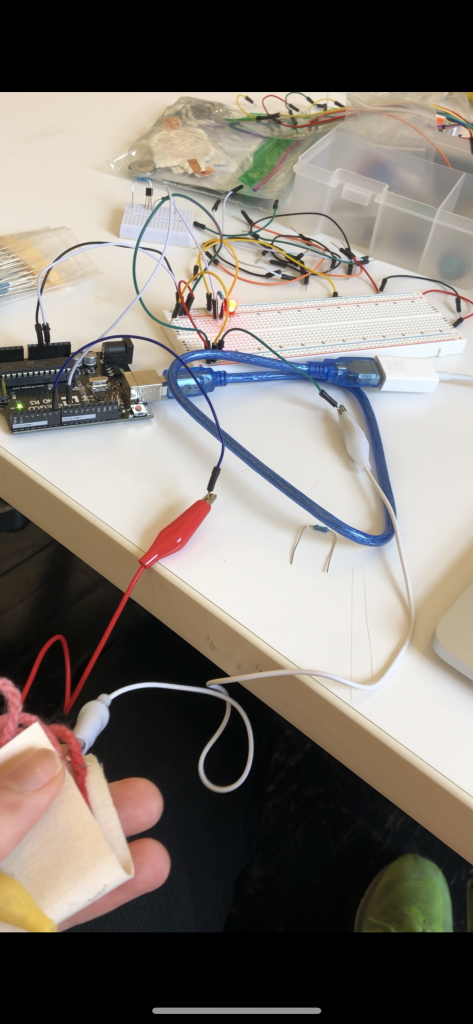
I decided to try out Lily tiny ( ATtiny-85). It quite tricky to set up and to control as desired. I got to control the LED with my soft switch.

2. Build a circuit with one constructed sensor (variable resistor), your Arduino, and 3 (or more) LEDs or an RGB LED. 

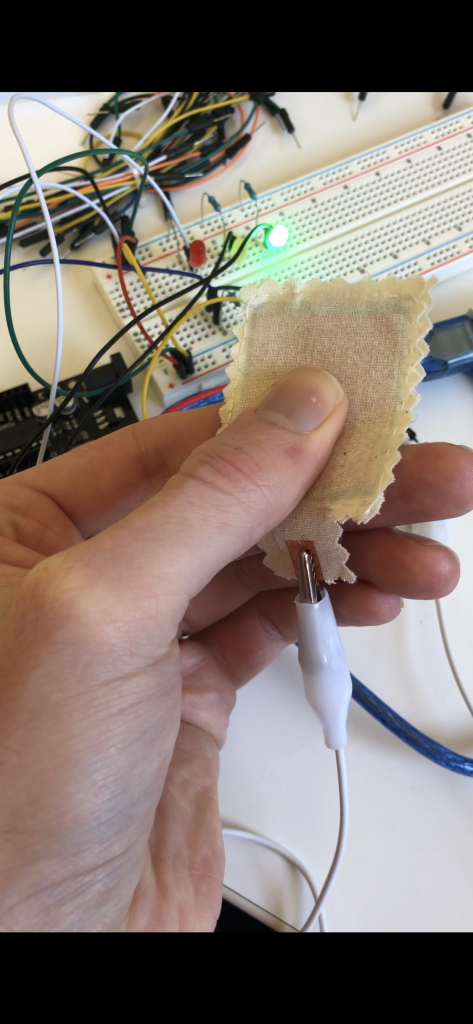
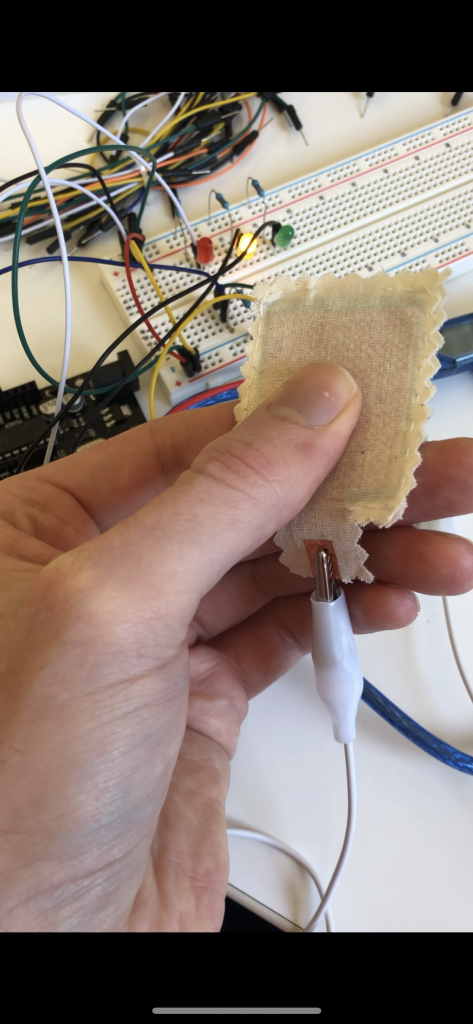
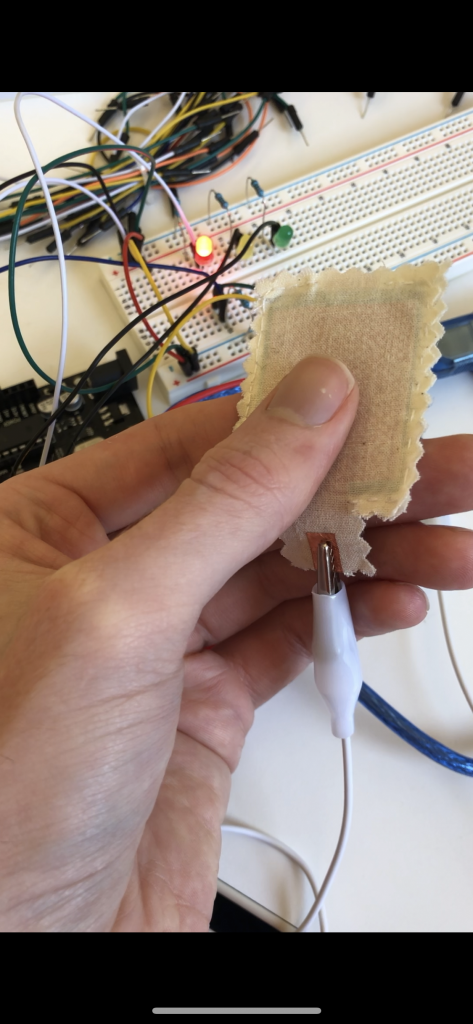
I tried with the Lily tiny but I didn’t manage to control the analog input properly. So I switched back to the Arduino UNO. I created a switch with copper fabric and Velastat that allows me to control the Leds easily.

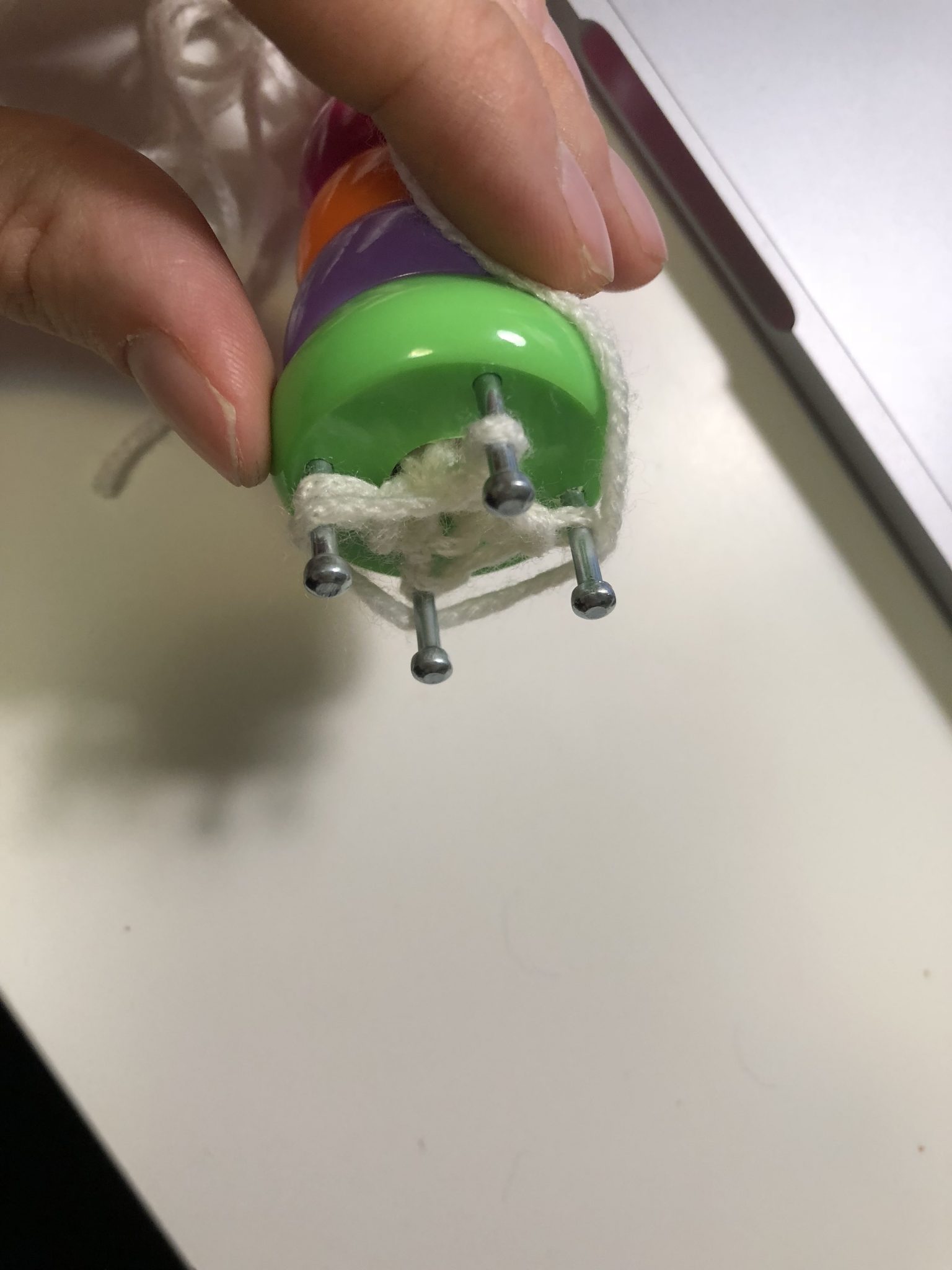
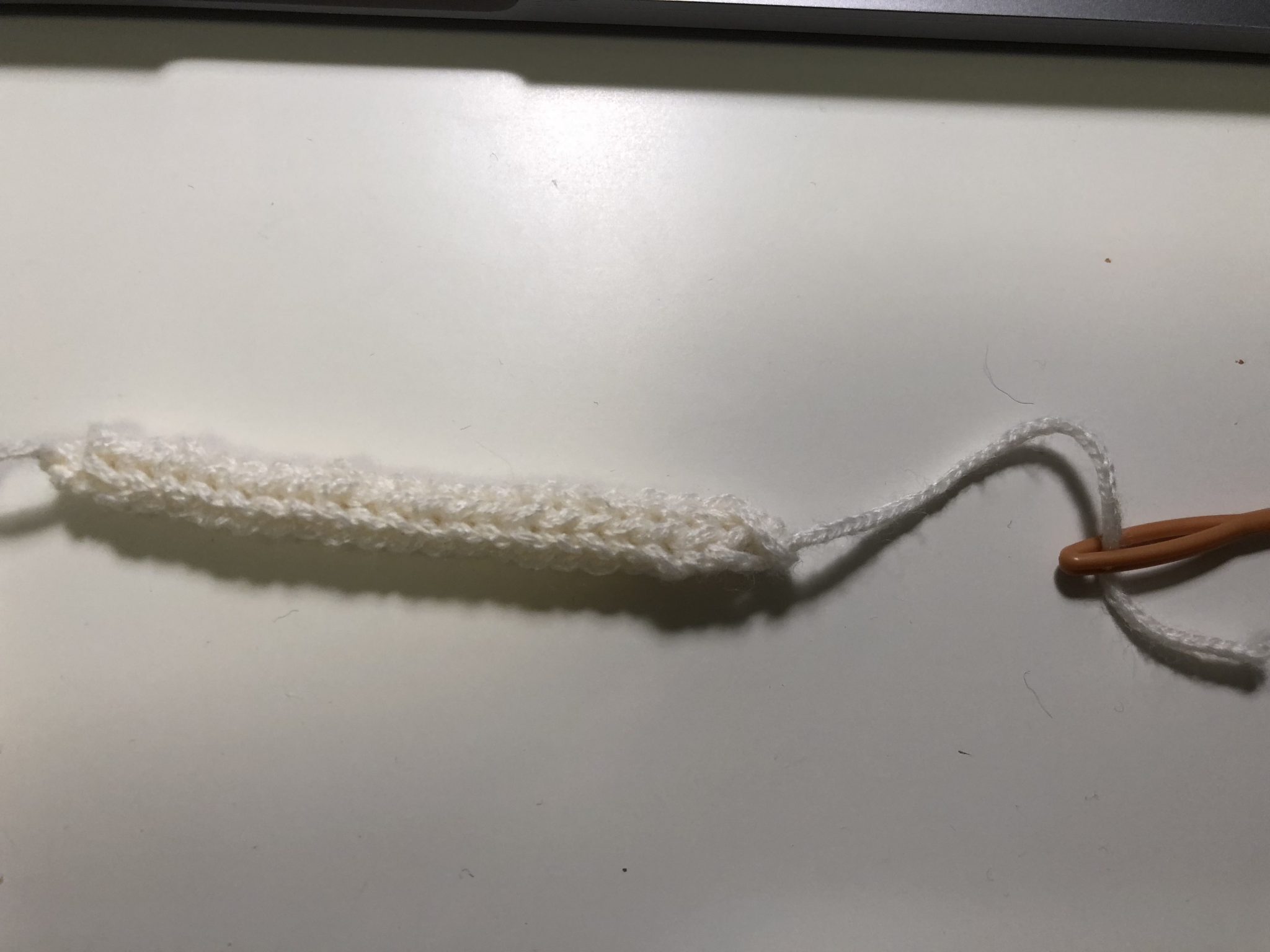
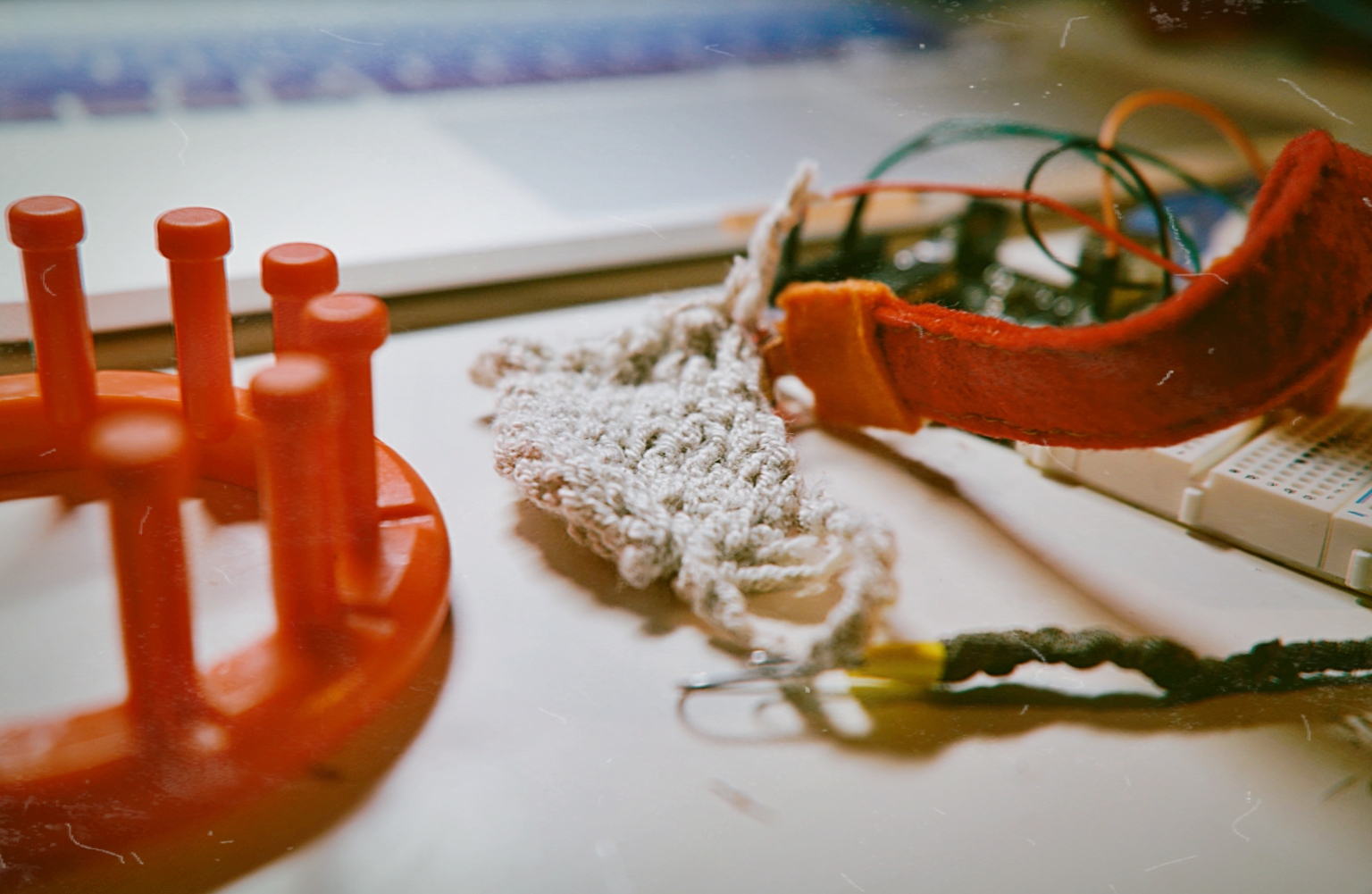
I wanted to create a stretchy switch with a french knitter, but I could use conductive yarn, so I used regular yarn.

It looks nice I could use it in the future.

Midterm proposal

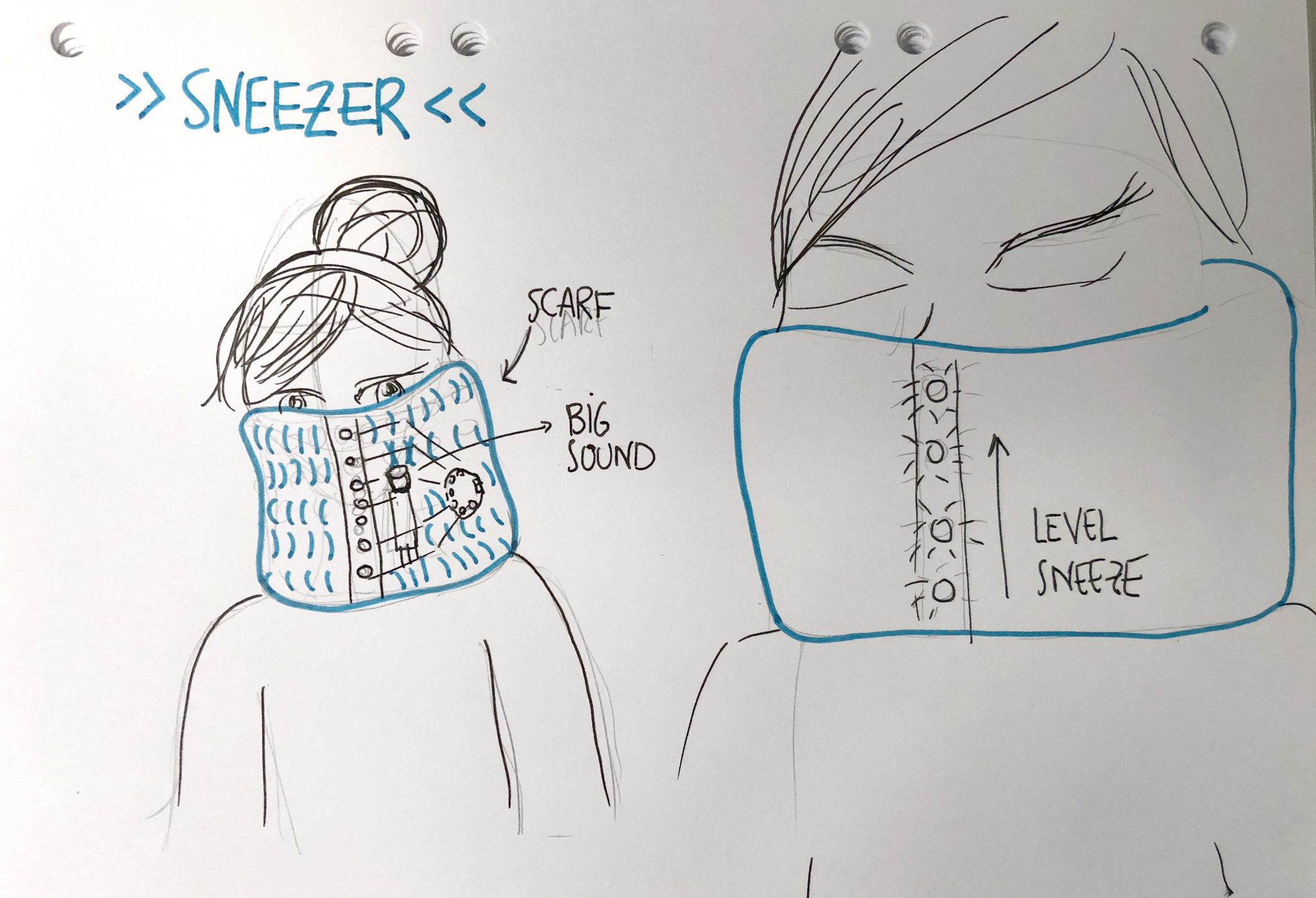
I’m planning on creating an interactive scarf. A very handy piece for those cold winters to measure the intensity of those persistent sneezes.

I have to figure out some details, such as how to control the signal with the lily tiny or how to power the system without wires.


Week6_Yixun

I used a knitting loom and the conductive yarn to make this soft sensor. The output of the sensor varies according to the shape of the knitting piece. If I fold the sensor, the output will decrease. So I wrote the code that if the output of the soft sensor reaches a certain number, the LED will be turned on.


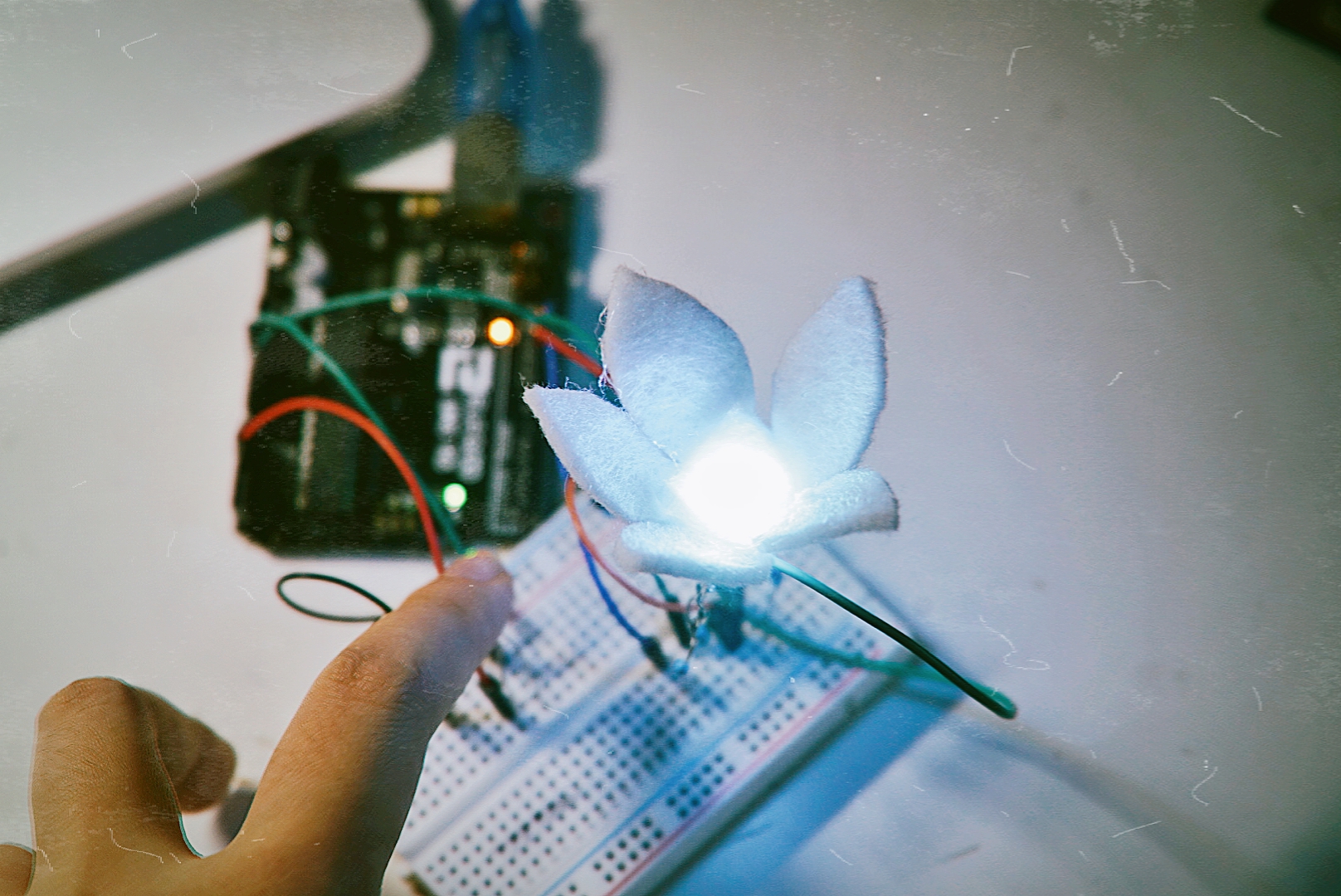
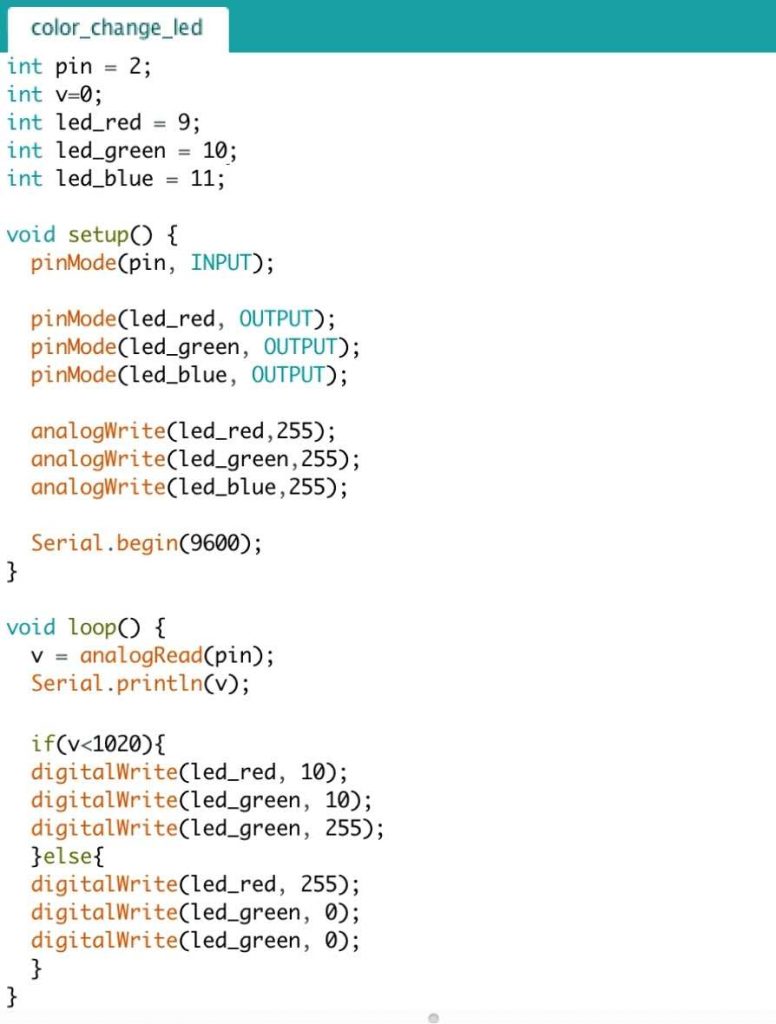
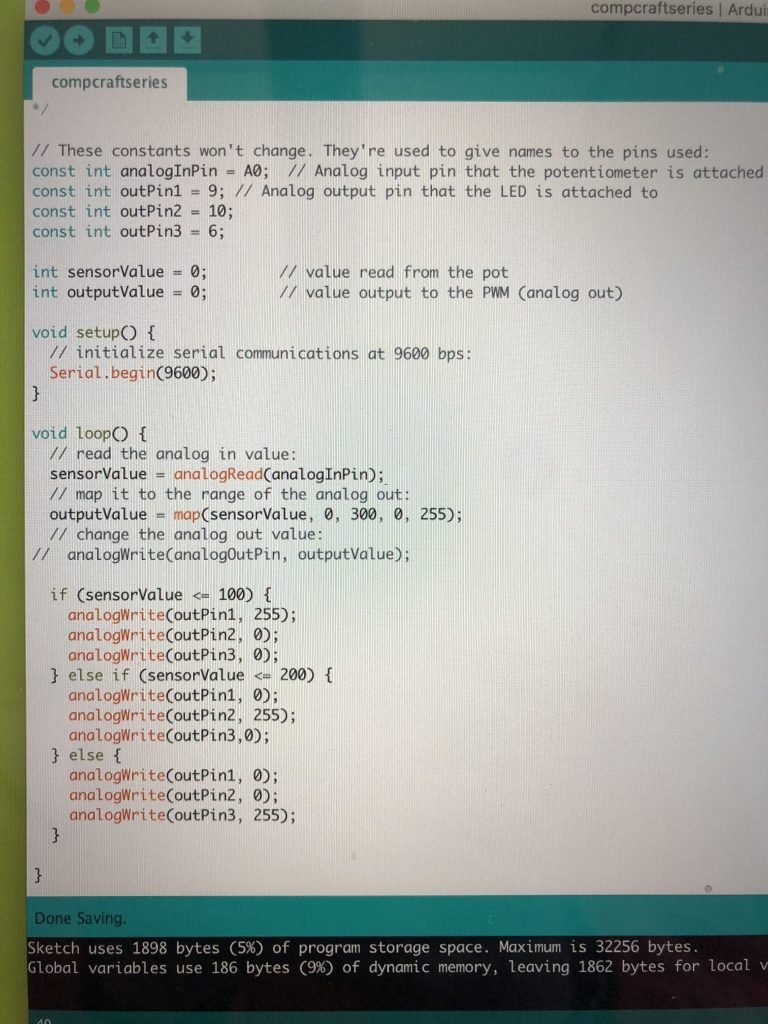
This is a fabric flower made by felt and an RGB LED. I used a photoresistance as the variable to change the color of the LED. Here is the screenshot of the code:

Midterm:

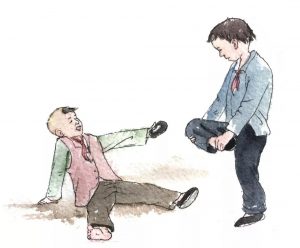
I am going to combine the midterm assignments from New Arcade and Computational Craft. This project will be game design garments that two players can wear and fight each other. The inspiration comes from a traditional Chinese game — Judose. It is a game played by standing on one leg and grasping the other, it is a physically competitive game with one simple rule, to knock your opponent over. The original version of the game is quite violent. What I am going to do is adding conductive fabric and LED instructions to the kneecap. Attacking your competitor on the particular area will cause your competitor to lose his points. The player who loses all the points first is the loser, and the other one is the winner.


Week 6- Adam Moore

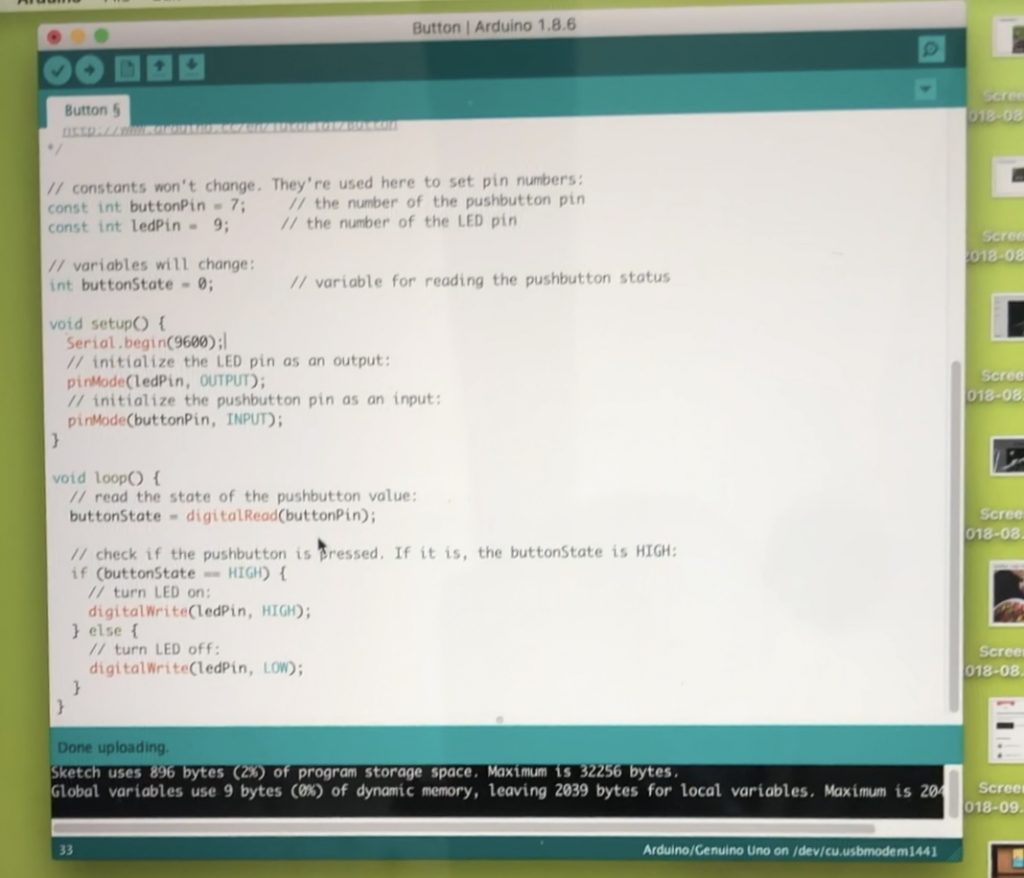
Here is the code for the two Arduino sketches I used to complete this homework. The first photo is the code for the button, the second is for the pressure sensor.

Here are screenshots of the pressure sensor in action!

Here are shots of the button working!

For the midterm I would like to build a modular lamp out of a cube of wood with holes drilled for LED’s. The base would be a the positive and negative terminals of the circuit. I’ll make a prototype and try to upload it before class on Thursday.

Week 6 – Neil V. Techapanichgul

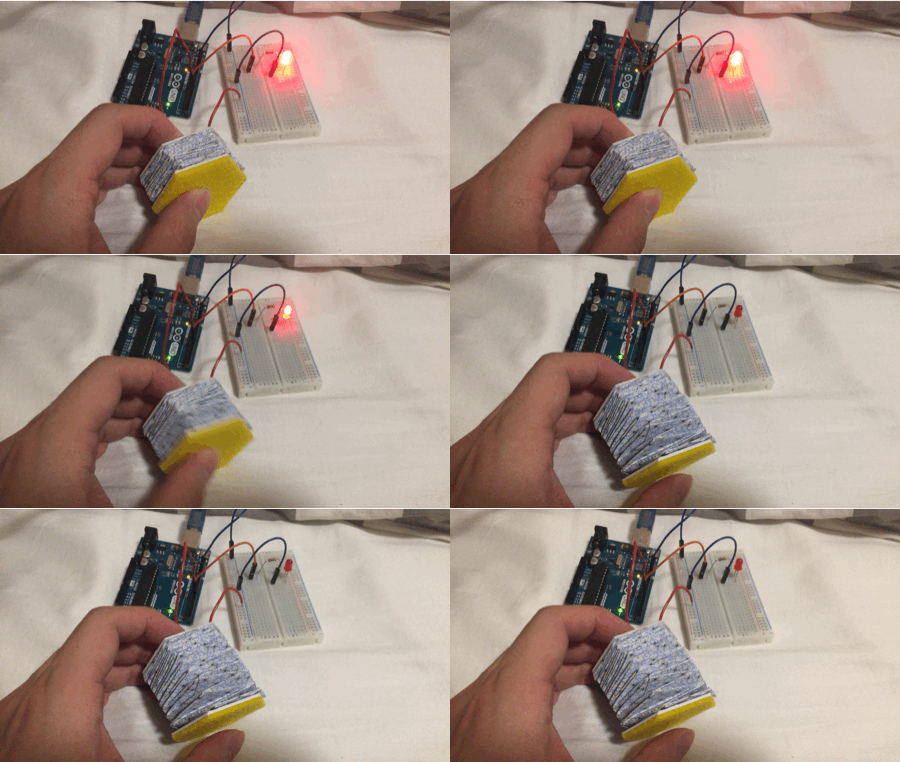
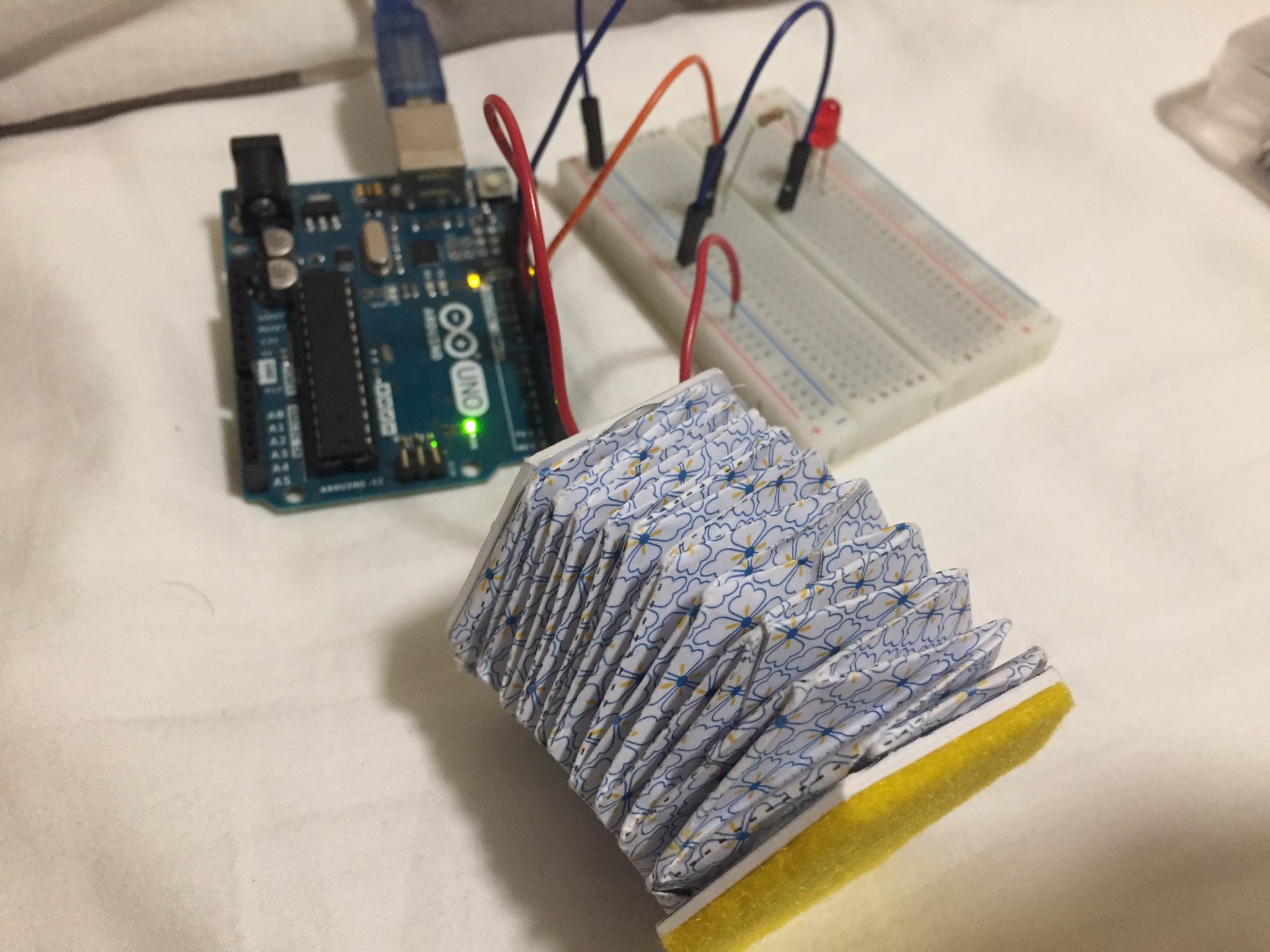
LED CONTROL VIA BUTTON

Thanks to Dario for the soft switch. It works perfectly fine. I like how squishy of the switch. The circuit is pretty simple. I use “INPUT_PULLUP” for the switch. It’s a quick tip for all buttons 😀
LED CONTROL VIA BUTTON CODE


/*
Button

The circuit:
– LED attached from pin 13 to ground
– pushbutton attached to pin 2 from +5V
– 10K resistor attached to pin 2 from ground

– Note: on most Arduinos there is already an LED on the board
attached to pin 13.

created 2005
by DojoDave <http://www.0j0.org>
modified 30 Aug 2011
by Tom Igoe

This example code is in the public domain.

http://www.arduino.cc/en/Tutorial/Button
*/

// constants won’t change. They’re used here to set pin numbers:
const int buttonPin = 8; // the number of the pushbutton pin
const int ledPin = 7; // the number of the LED pin

// variables will change:
int buttonState = 0; // variable for reading the pushbutton status

void setup() {
// initialize the LED pin as an output:
pinMode(ledPin, OUTPUT);
// initialize the pushbutton pin as an input:
pinMode(buttonPin, INPUT_PULLUP);
}

void loop() {
// read the state of the pushbutton value:
buttonState = digitalRead(buttonPin);

// check if the pushbutton is pressed. If it is, the buttonState is HIGH:
if (buttonState == HIGH) {
// turn LED on:
digitalWrite(ledPin, LOW);
} else {
// turn LED off:
digitalWrite(ledPin, HIGH);
}
}
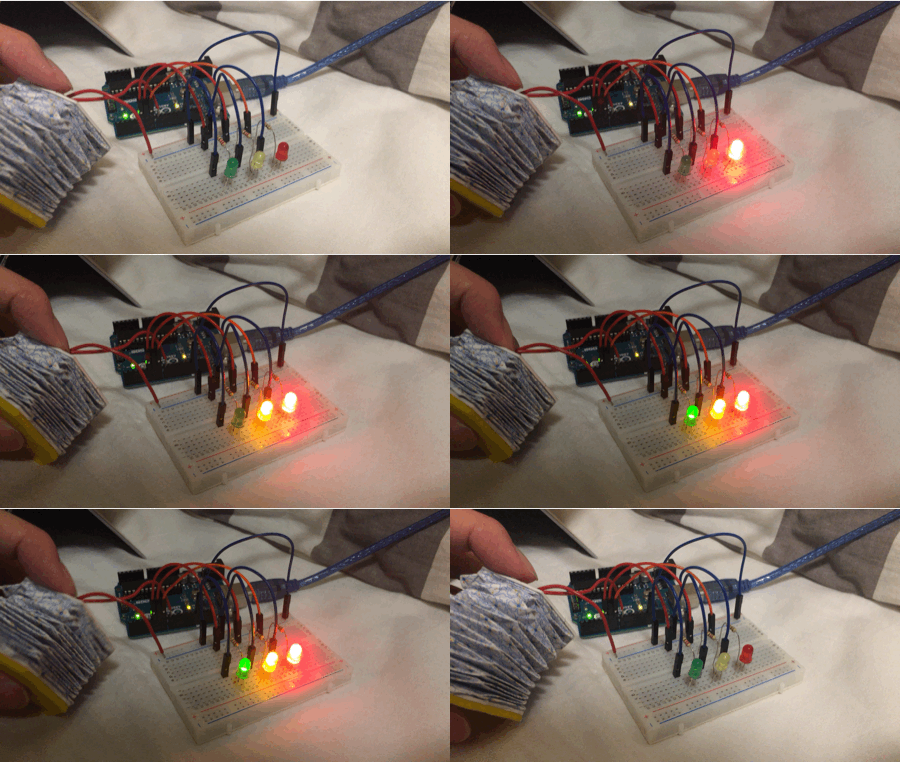

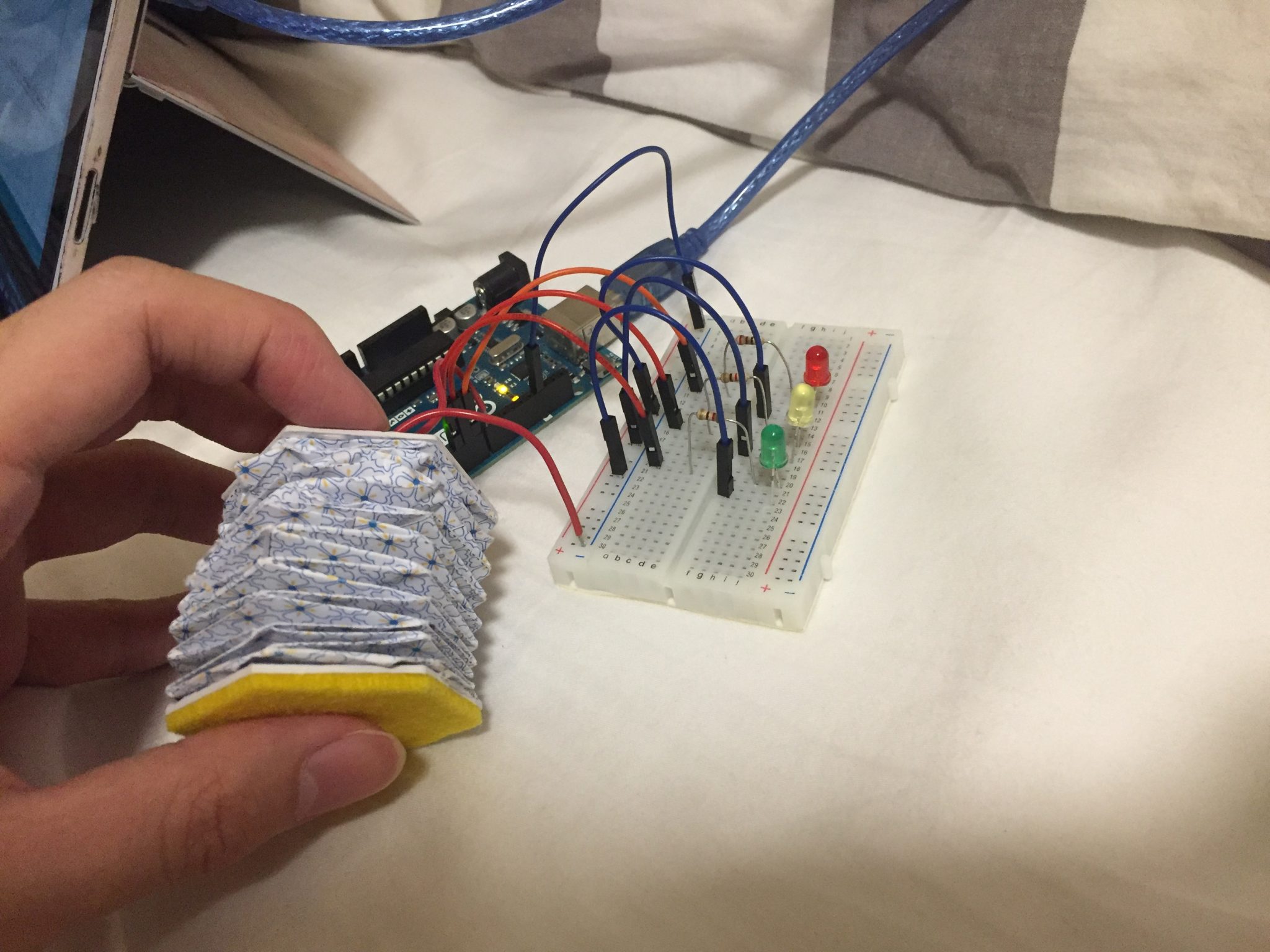
MARCH OF LEDs

It is tricky to make each of them light up when I press my switch. I have to make the specific states for them to light up in order. It’s pretty fun and cute with 3 LEDs with Red, Yellow and Green.
MARCH OF LEDs CODE


/*
Button

Turns on and off a light emitting diode(LED) connected to digital pin 13,
when pressing a pushbutton attached to pin 2.

The circuit:
– LED attached from pin 13 to ground
– pushbutton attached to pin 2 from +5V
– 10K resistor attached to pin 2 from ground

– Note: on most Arduinos there is already an LED on the board
attached to pin 13.

created 2005
by DojoDave <http://www.0j0.org>
modified 30 Aug 2011
by Tom Igoe

This example code is in the public domain.

http://www.arduino.cc/en/Tutorial/Button
*/

// constants won’t change. They’re used here to set pin numbers:
const int buttonPin = 8; // the number of the pushbutton pin
const int ledPin = 7; // the number of the LED pin

bool startCapture;
float Timer = 0;
float Duration = 10000;
int State = 0;

bool Pressed;
bool Added;

// variables will change:
int buttonState = 0; // variable for reading the pushbutton status

void setup() {
Serial.begin(9600);
// initialize the LED pin as an output:
pinMode(ledPin, OUTPUT);
pinMode(6, OUTPUT);
pinMode(5, OUTPUT);
// initialize the pushbutton pin as an input:
pinMode(buttonPin, INPUT_PULLUP);
}

void loop() {
// read the state of the pushbutton value:
buttonState = digitalRead(buttonPin);

Serial.println(State);

if (!Pressed && buttonState == 0)
{
Pressed = true;
}

if (Pressed && buttonState == 1)
{
Pressed = false;
Added = false;
}

if (Pressed && !Added)
{
State++;
Added = true;
}

if (State == 1)
{
digitalWrite(7, HIGH);
digitalWrite(6, LOW);
digitalWrite(5, LOW);
}

if (State == 2)
{
digitalWrite(7, HIGH);
digitalWrite(6, HIGH);
}

if (State == 3)
{
digitalWrite(7, HIGH);
digitalWrite(6, HIGH);
digitalWrite(5, HIGH);
}

if (State > 3)
{
digitalWrite(7, LOW);
digitalWrite(6, LOW);
digitalWrite(5, LOW);
State = 0;
}

}


MIDTERM IDEA

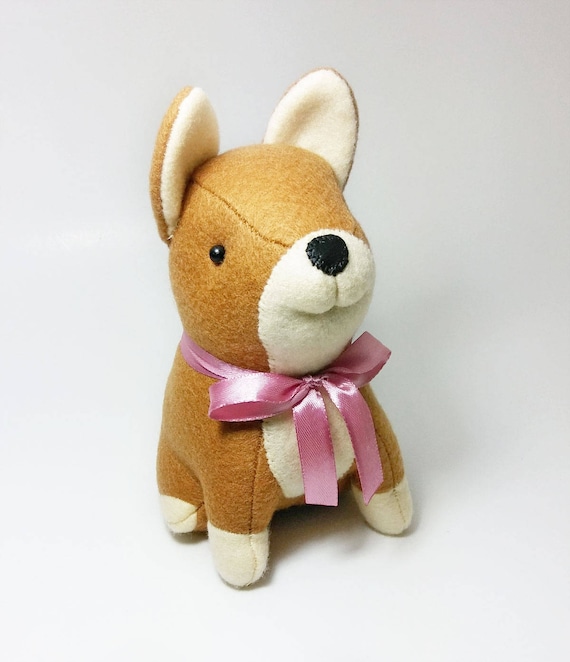
I want to make one big squishy doll that can emit some lights through its eyes by dragging the tail. It could be really cute! The technique I use is going to be wool felting.Image result for Felt Doll animal
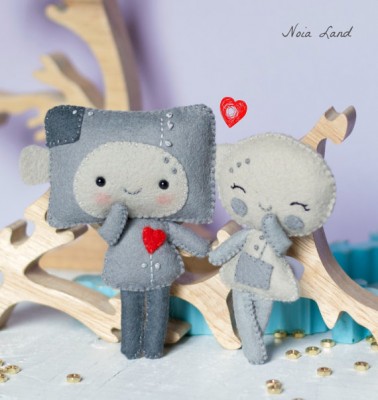
Image result for Felt Doll animal

Week 5 Homework – Lavonne Sun

I did two nodes: One is led one is for battery.

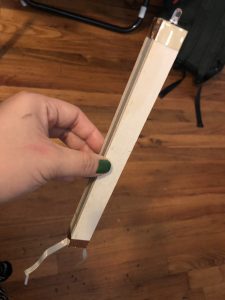
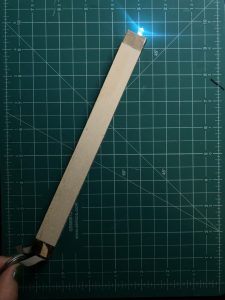
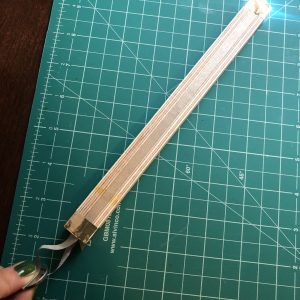
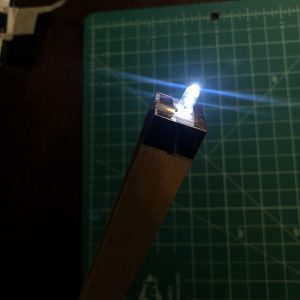
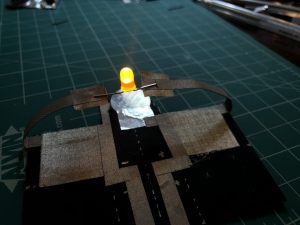
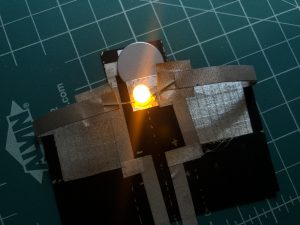
For the Led one, I always interested in taking the node into a more 3D form (jump out of plane paper/ fabric! ) In favor of wood and stick, this idea just came into my mind: A Led Fake Candle!

This idea excites me! I love the combination of this little toy:

 My “candle” ?


at the end side of my ‘candle’ leaves two string easy connect to battery;

Light it upppp!!!!

My ‘flame’ :))))))))))


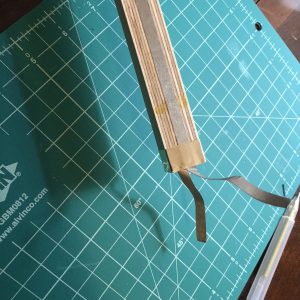
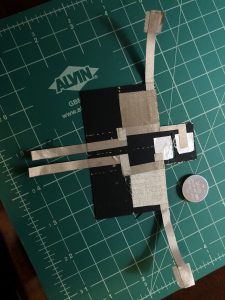
For the battery node also the tool I designed as a battery connector:

It’s all started with the idea: Sometimes when we are inserting led into a project and two legs of the led is stretched into a 2D surface which it’s not convenient to test with a battery in quick prototypes —— since the negative and positive side of the battery naturally form a 3D space!

So this idea came into my mind: I want to design a tool to hold the battery, but also has different way of connecting the power into different length, dimension, sizes; It can be plane, so when you stretched out the two legs of the led you can just simply put it onto the plane touching different the conductive area of negative and positive, then you can easily test the led;

Or when your led with two legs downward standing, you can easily manipulate the ‘arms’ of the tool which also connect to the battery, to place it with the led legs, leave plenty of connection forms and ways, makes quick circuit test much more accessible!

Also it looks like a cute guy with head (where the battery is); two arms (long distance connection point); two legs (close surface connection point).  Cute

Process:

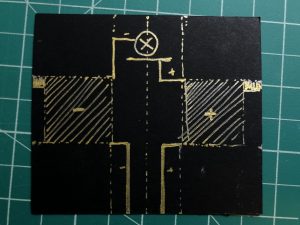
Circuit Diagrams; All golden parts indicate conductive area;

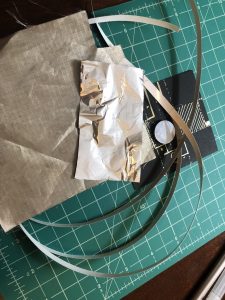
Material preparation;

The close-up of how the battery part works:

You can easily insert the battery into the ‘head’ of the guy; So you don’t need to worry how to fix a battery, and the replacement becomes very flexible and convenient;

Week 5 – Lisa Ho

Nodes & Connectors

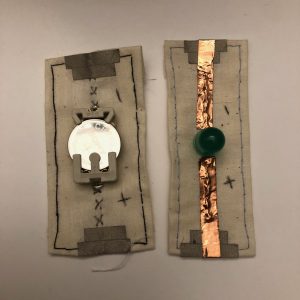
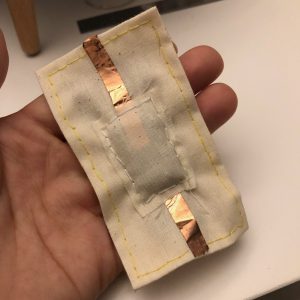
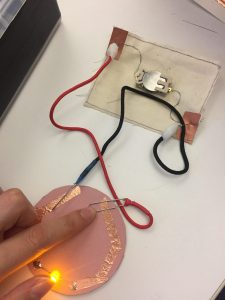
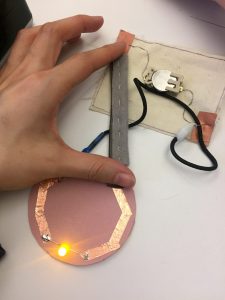
I built my two nodes- one with the battery with fabric and the one with LED with paper. I used the conductive thread and conductive fabric to make the battery node. I also sewed a lining at the edges of the rectangle fabric. For the LED node, I simply used a conductive tape and soldered the LED on it.

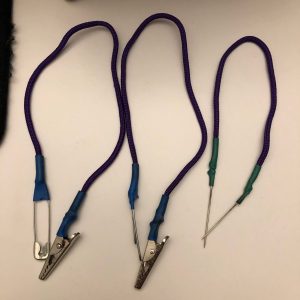
Two out of the three connectors I used the conductive thread in the middle of the rope and solder it at the ends onto either a paperclip. The other connector I used a stretchy conductive fabric and sewed a felt over it to make it look warmer and cuter. I used the sewable meta snaps in the ends.

A tool I would like to have in class

I would love to have a desk-sized ironing device where you can put your conductive fabric and the fabric you want to attach it to and just iron it quickly to it. You could leave it on and used it whenever without always having to heat the iron up.

Continue reading

Week 5 – Youchun Zhang

Nodes and Connectors

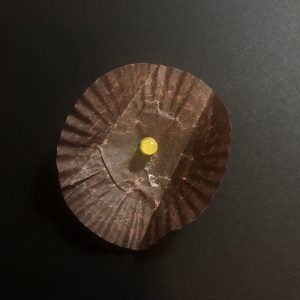
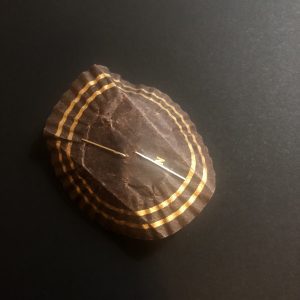
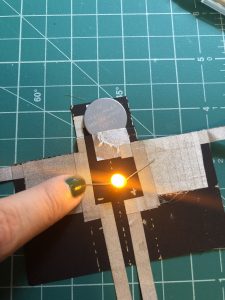
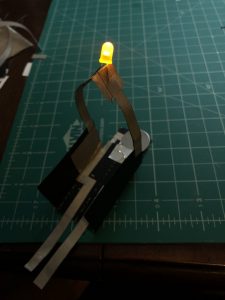
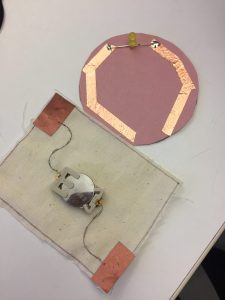
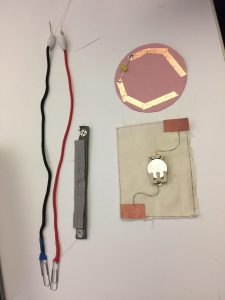
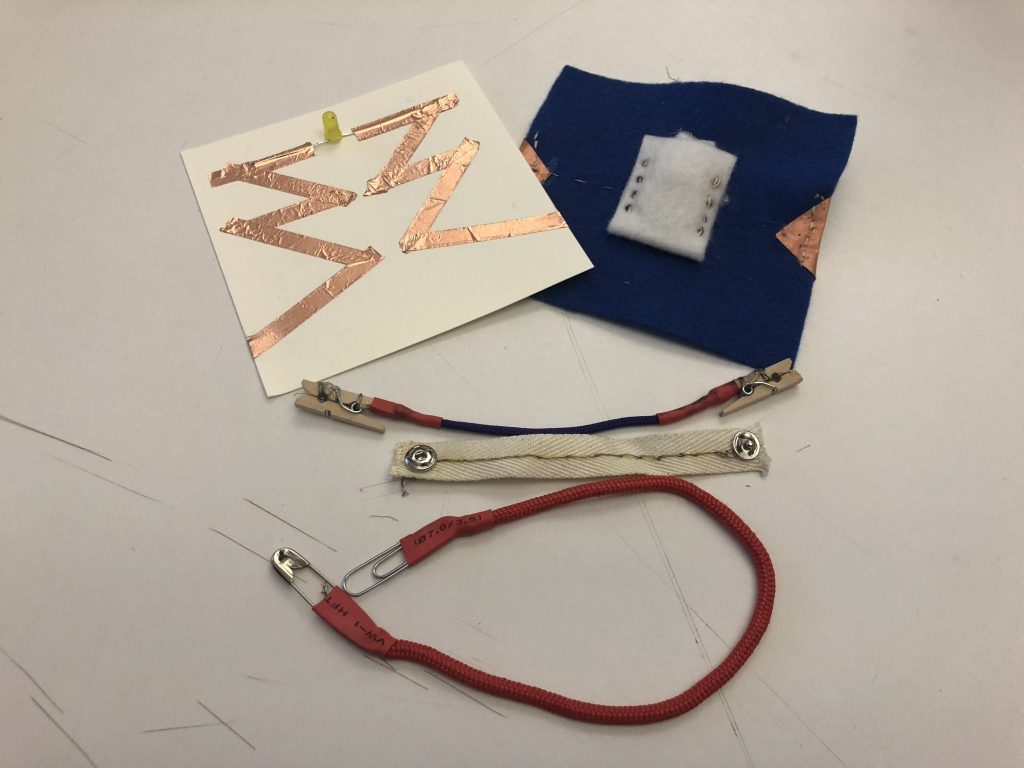
The two nodes I made this week are made with paper and felt. I used the copper tape, one piece of cardstock paper and a yellow LED to make the LED node. For the battery node, I used the conductive thread, the conductive fabric, a small piece of felt to make the battery holder, and a bigger piece of felt.

The three connectors are using the same structure in the middle – the conductive thread either sewed to a piece of fabric or inside the thick knitted thread. I explored different kinds of objects in the junction part. I found a small bag of tiny wood clips at the crafting store, which became a part of my first connector. The second one is made with the sewable meta snaps. In the third one, I used the paper clip and the pin.

A tool I would like to have in this class

I wonder if there is an embroidery hoop that can be changed to different shapes so that all kinds of size of materials can be fixed to it. Most of the hoops are either circular or in an oval shape, but since the shape we created sometimes can be really random, more flexibility here would be great. 

Week 6 Assignment

  1. Connect one of a soft switch to your Arduino. Use it to control an LED.
  2. Build a circuit with one constructed sensor (variable resistor), your Arduino, and 3 (or more) LEDs or an RGB LED. Use one of the following control structures to turn the LEDs on and off in any sequence when the sensor or switch value changes: if, if/else, while() (e.g. when the sensor goes above a threshold, the LED turns one color; when it goes above another threshold, it changes to a second color, etc).
  3. Document both of these to the blog with images and your code.
  4. Midterm ideas due on the blog next class.

Week 5 – Yao

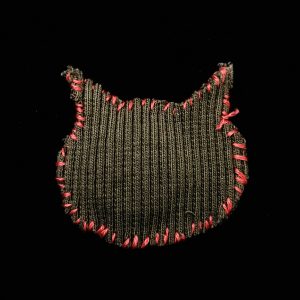
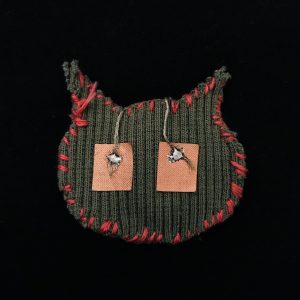
Node-battery materials: Conductive thread to connect the inside battery and outside conductive fabric, the usual fabric which from my useless hoodie and sewing the shape by the usual needle. The shape of node-battery is a cat pattern since I really miss my cat and I’ve never seen him for nearly two years. When I stay with him, I could feel the energy from him.

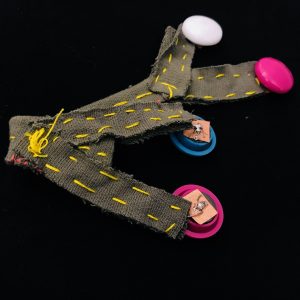
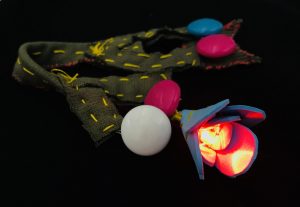
Connector tool materials: conductive thread inside the fabric and separate into positive and negative. Four ferromagnetic soldering with thread and conductive fabric.

LED materials: the flower LED is made by WonderFoam. Cut a couple shape of petals and stick around the LED then sewing them stable.