Alice in the Wonderland – Week 2 – Carla Molins


I’ve always loved Alice and the microworlds in which reality and scale always are reversed!

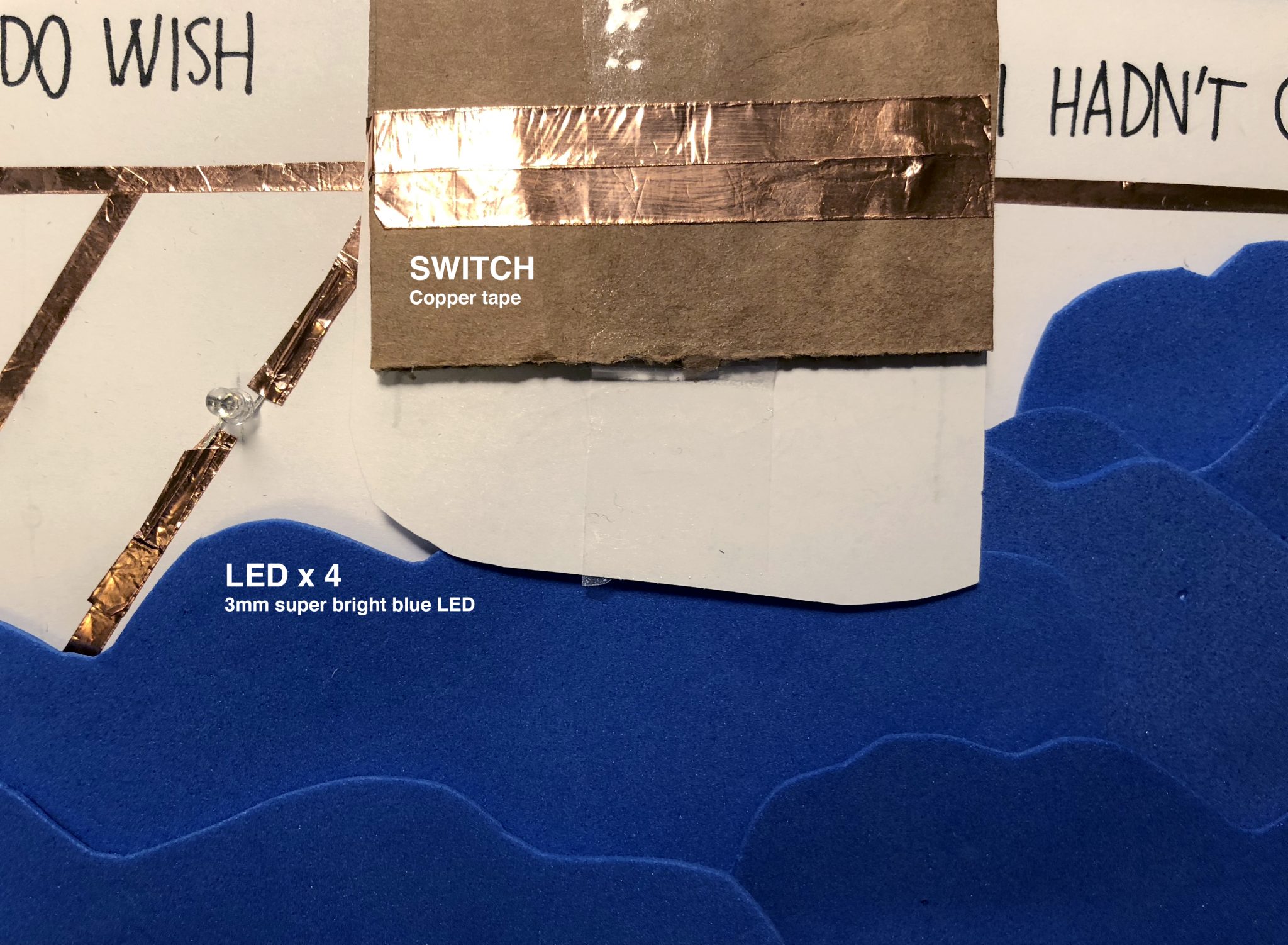
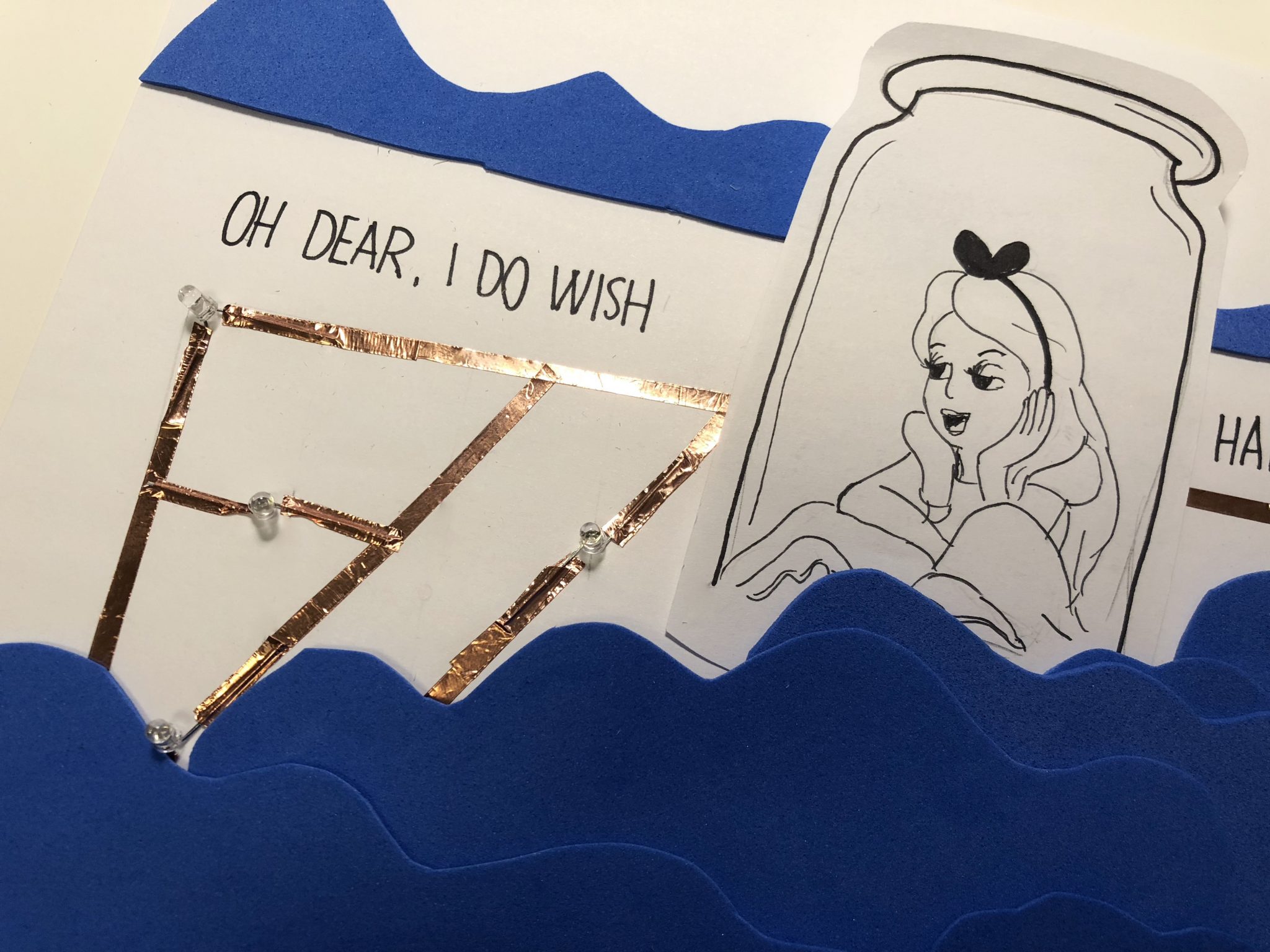
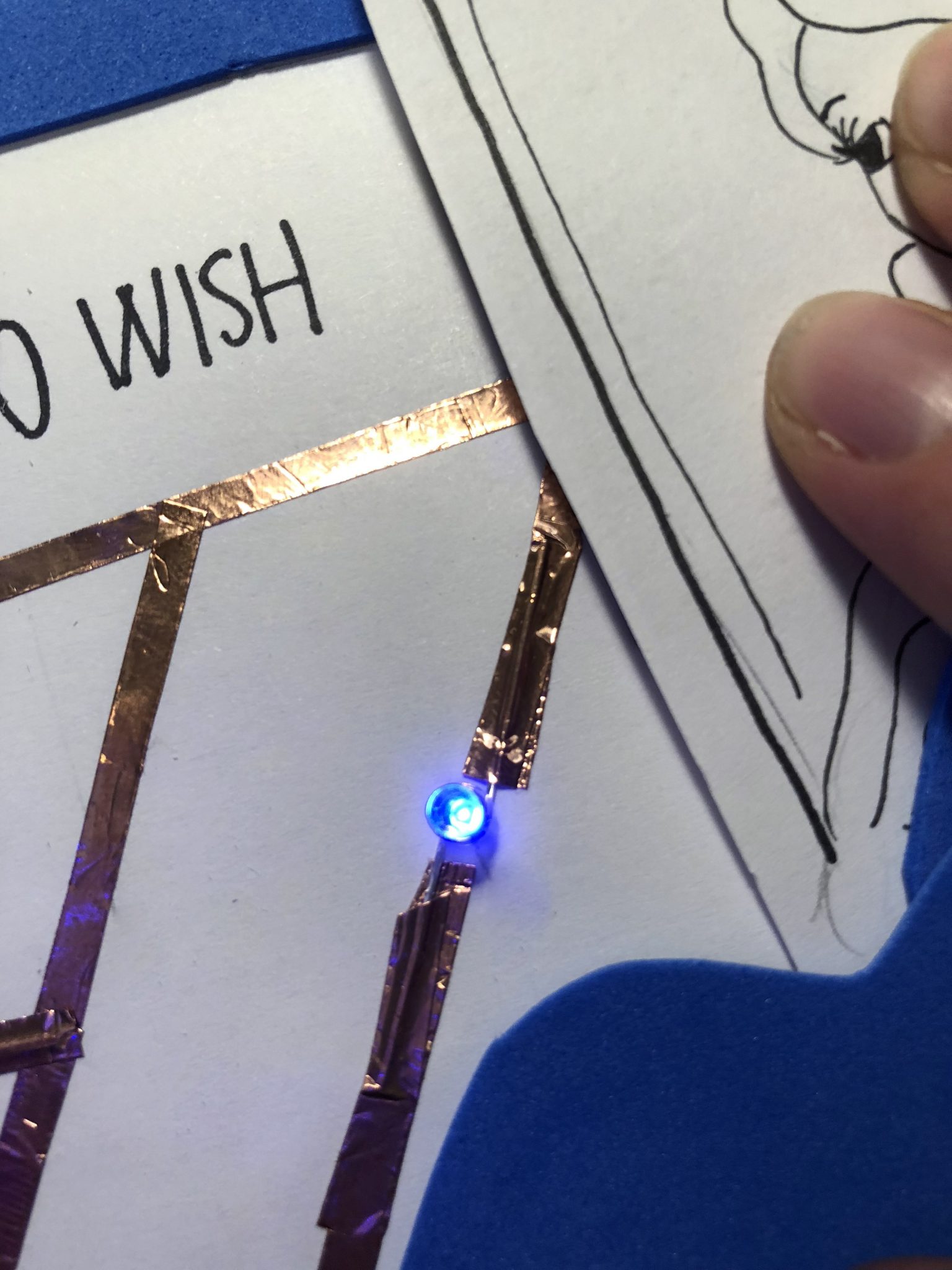
At first, I tried cutting curves but it didn’t work as expected, so I decided to think of other options. I’ve never used copper tape before and I wanted to try different arrangements. I wanted the lines to come from the bottle as if they were tears.

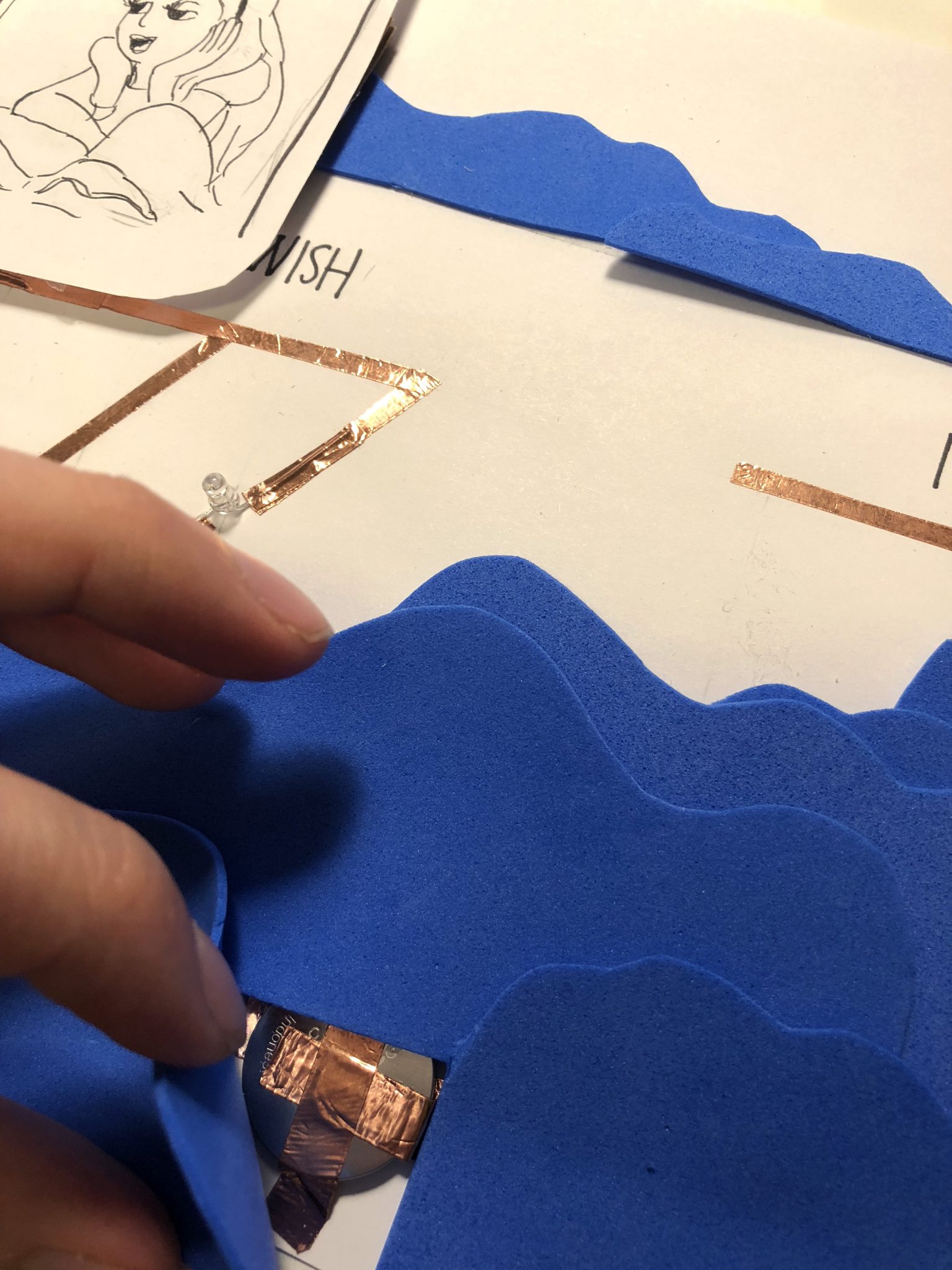
I created a bigger switch to be able to play around with the thinner connections and being able to blink those LED as if they were dropping.

I enjoyed working with this material, but I had the sense that it needs some practice to make really clean and polished cuts.


Week 2 – Erica

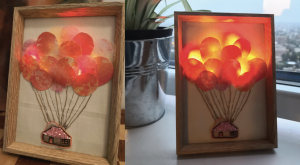
I was inspired by the quote “Adventure is out there!” from the movie ‘UP’. I really like the how colorful the movie is and the balloon element. So I decided to create the balloon house scene and integrate the LEDs into the balloons. The mediums I chose are fabrics, conductive threads, and embroidery threads.

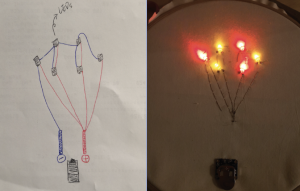
I started by drawing out how to connect all 6 LEDs together with the battery, then I sewed them on to the fabric.

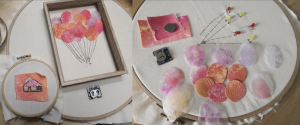
I dyed a small strip of fabric with watercolor, cut them into balloon shapes and sew them on top of the LEDs for diffusing. Then I added more embroidery threads next to the conductive threads so they look like balloon strings. Lastly, I did a small embroidery House and sewed it to the bottom.

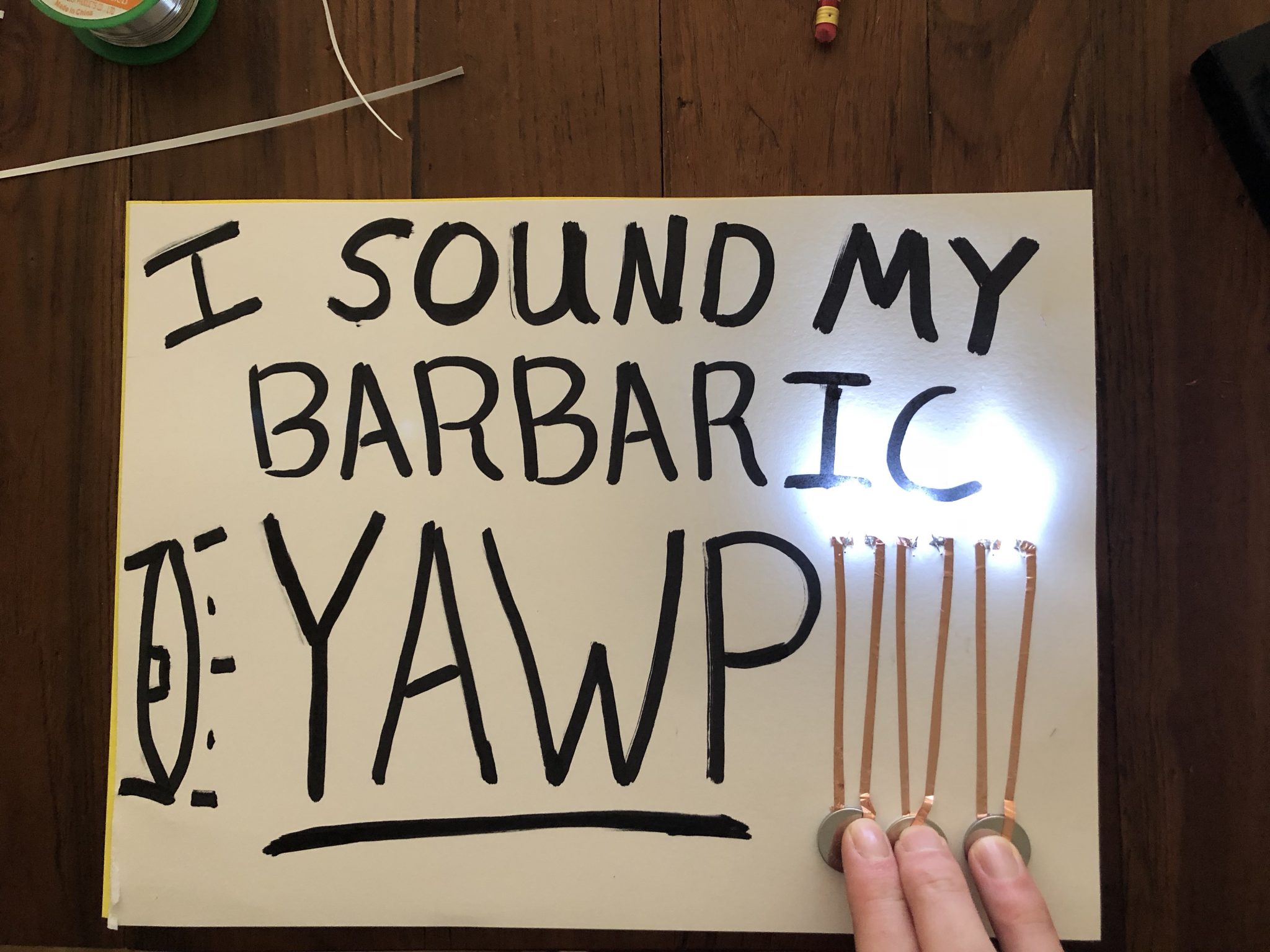
Week 2 Assignment – I Sound My Barbaric YAWP!

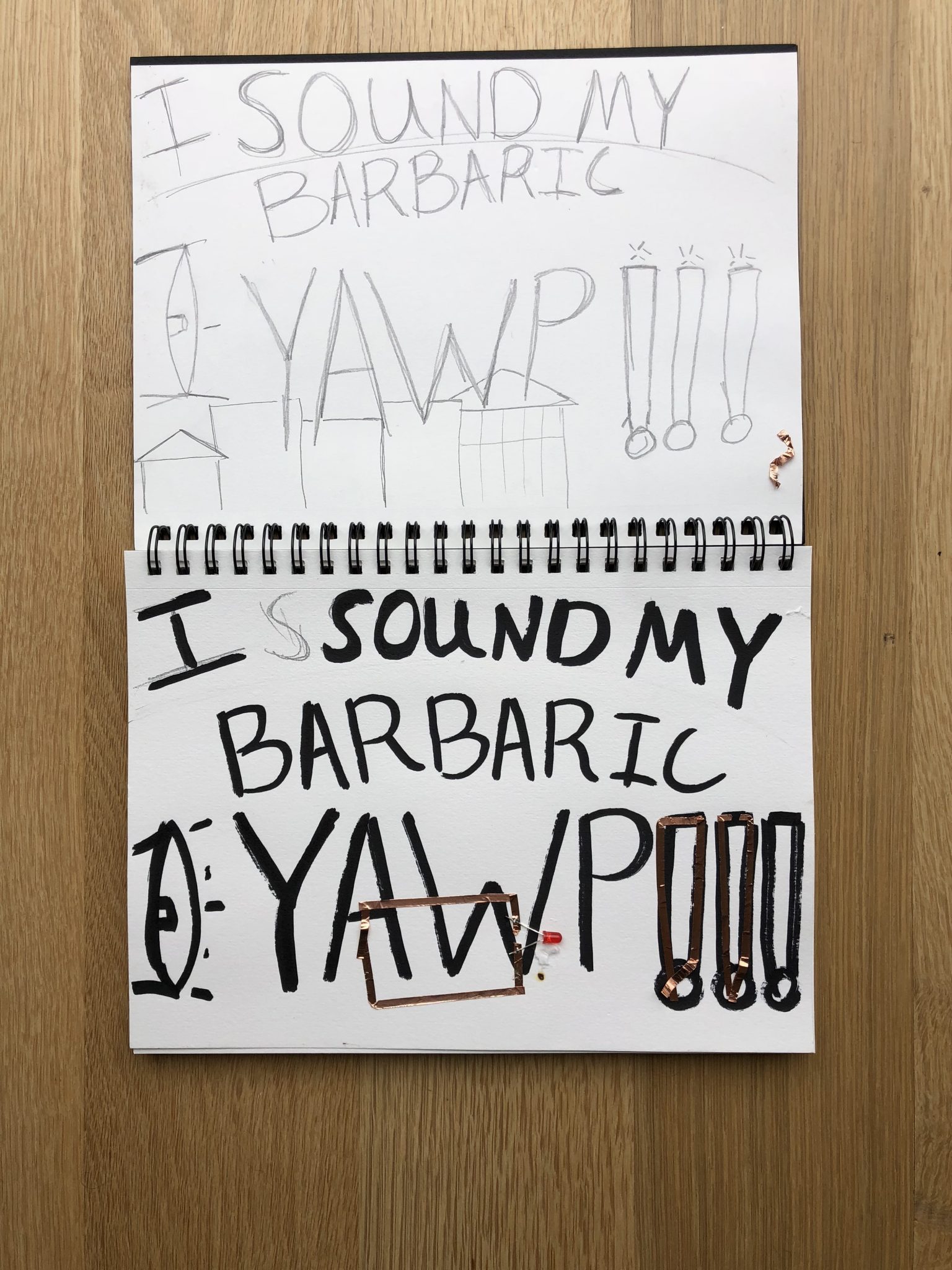
I chose to illustrate one of my favorite verses from Song of Myself by Walt Whitman. I’ve read this poem countless times. I felt this particular passage would work well with a loose looking style of writing using a simple marker. I wanted to accentuate the raw nature of the verse using simple tools. Above are a few of the practice sketches, beginning in pencil, and moving to marker once I felt like the proportion worked. I used the marker sketch to practice soldering. Below is the finished illustration.


Week2_Yixun

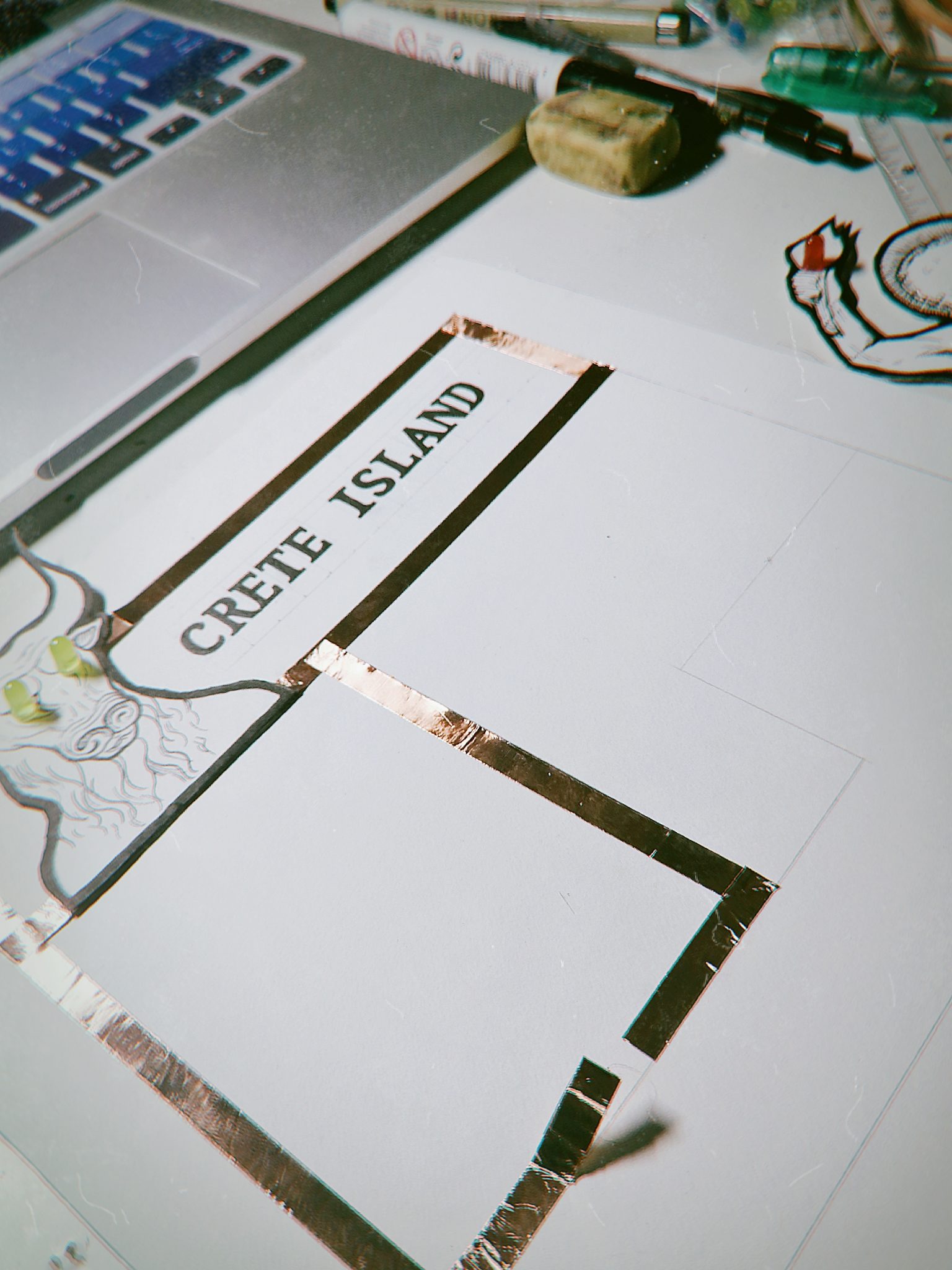
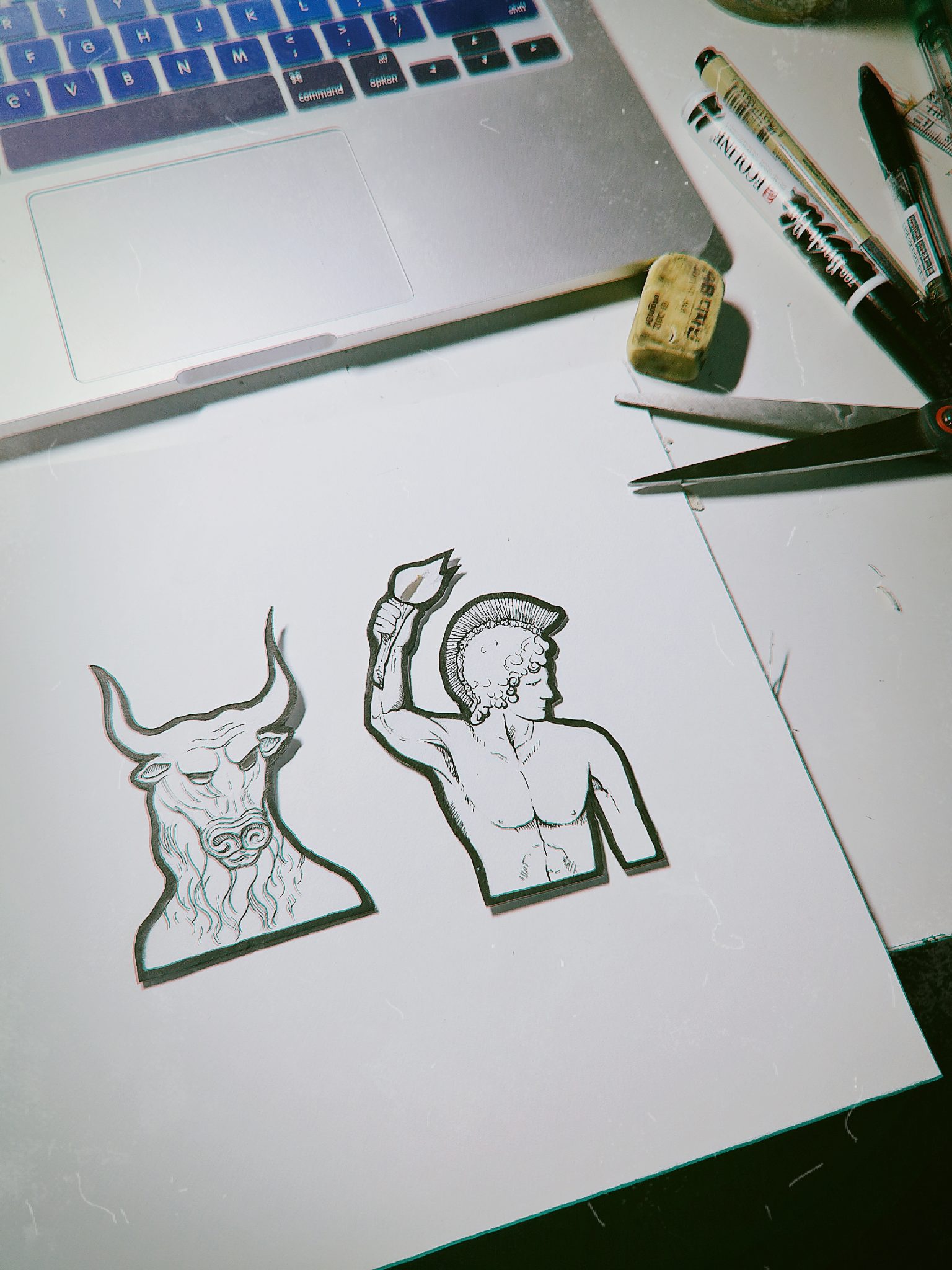
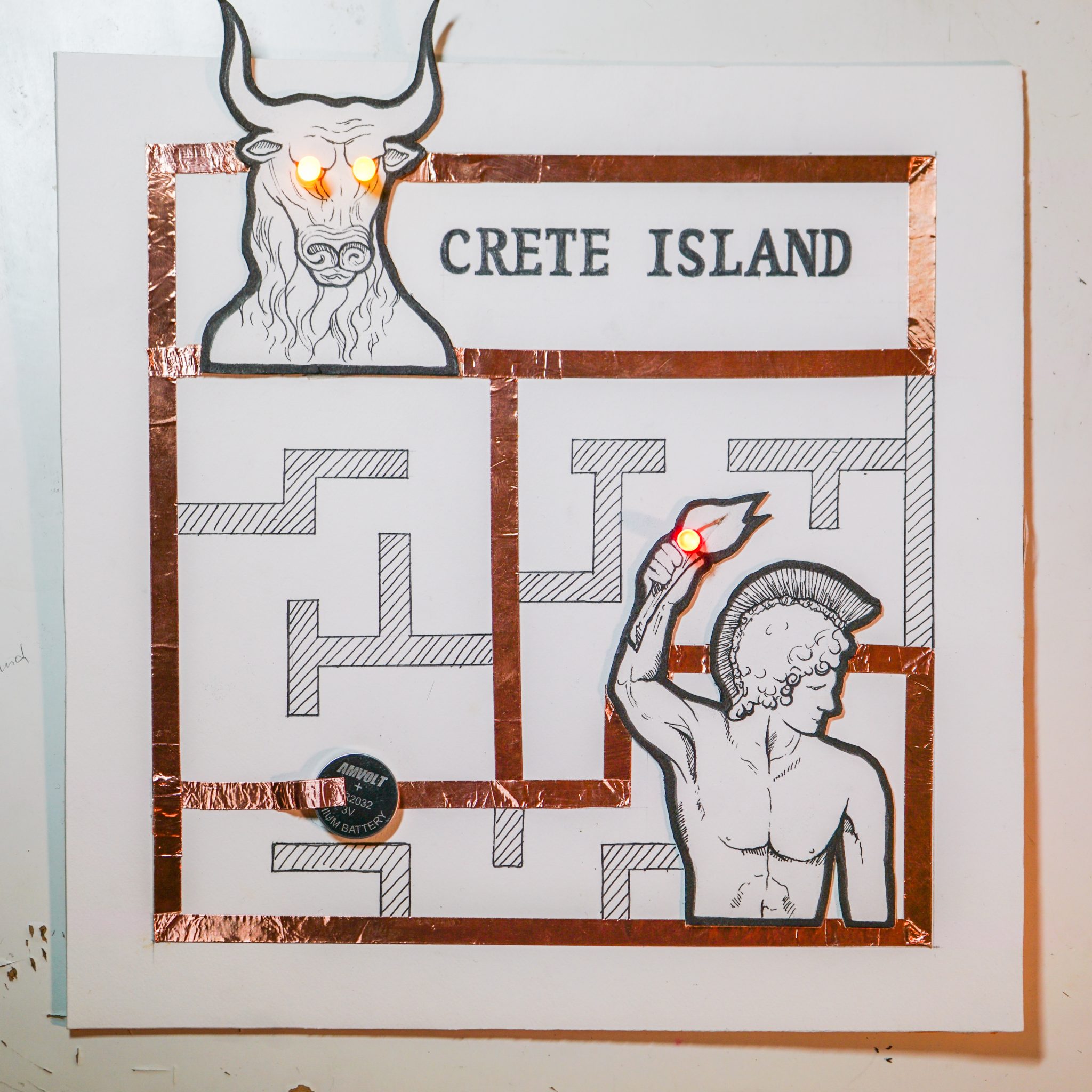
Minotaur is a monster with the head of a bull and the body of a man. It was kept in the Labyrinth in Crete, feeding on human flesh, until Theseus killed the Minotaur with the help of a princess. So in this piece, I use conductive tape to draw the shape of the Labyrinth. And the two yellow LEDs are the eyes of Minotaur. The red LED represents the torch in Theseuss hands.

Week 2 Assignment

Pick sentence or passage from a story that you like (children’s storybooks work VERY well), a song, a poem, etc that you like. Illustrate part of that narrative using a parallel circuit with 3 LEDs and materials we discussed in class.

Please focus on the construction and aesthetics. Think about how you will use other materials to diffuse your LEDs. Ideally, I would like the circuit visible in your illustration. Consider how you can use the aesthetic properties of the materials to design a circuit that is fully integrated into the illustration – not just a circuit on the bottom with a piece of paper on top.

Post documentation to the blog and bring your final product into class.

Here are a few examples from past classes:
These do not embed the circuit into the illustration, but are still very successful aesthetically:
Where the Wild Things Are, Vivian Lee 2017
Sublime Light by Sofia Aronov

These do embed the circuit into the illustration:
My Neighbor Totoro by Hayao Miyazaki, by Chanel Duyen 2017
Hug Me by Misung Kim
Ray Bradbury quotation by Eliza Bruce

Week 1 – Lavonne Sun

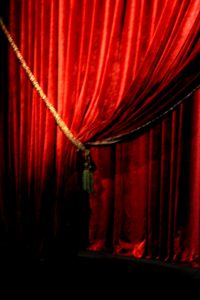
The project I like the most is < La Porte Rouge > by Clement Cogitore. I first saw this piece of work during my visit to Palais de Tokyo in Paris.

It was installed in the middle of a pathway hall where every visitors have to go through this final door before being able to continue their journey in the rest of the exhibition.

A heavy, monumental stage curtain, decorated according to the lavish codes of the opera, opens then closes again mechanically, but also chaotically, in an asynchronous and irregular rhythm. As a large passage in the form of a stage entrance for the visitors, this curtain comes over as active, living, haunted element: here, it is the set itself that becomes a character, putting on a show.

This is a piece of work that I would say using the simplest effect to create a strong experience. I was totally shocked the first time I saw it and strong feeling of impression it brings to me still haunting around even when I left the scenario. 

It was made by the film director and artist Clement Cogitore collaborated with Enrique Lopez & Germain Benoit – Manufacture Royale Bonvallet.

Week 1 -Yao

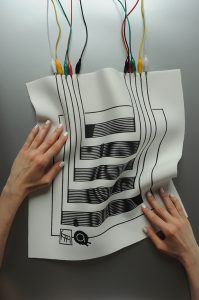
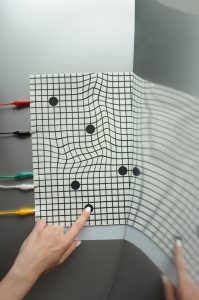
liquid MIDI is an experimental textile interface for sonic interactions, exploring aesthetics and morphology in contemporary design which made by EJtech.

The liquid MIDI is to create unique control and sounds through a medium.

I’m interested in this kind of technology is screen printed on the textile surface

directly, use Arduino mirco controller and MIDI protocol to communicate with the media. The interaction is the unique part of this project which makes medium be a part of the message.

Here’s the video of liquid MIDI project:

Week 1 – Dario Narvaez

Liquid Printed Pneumatics
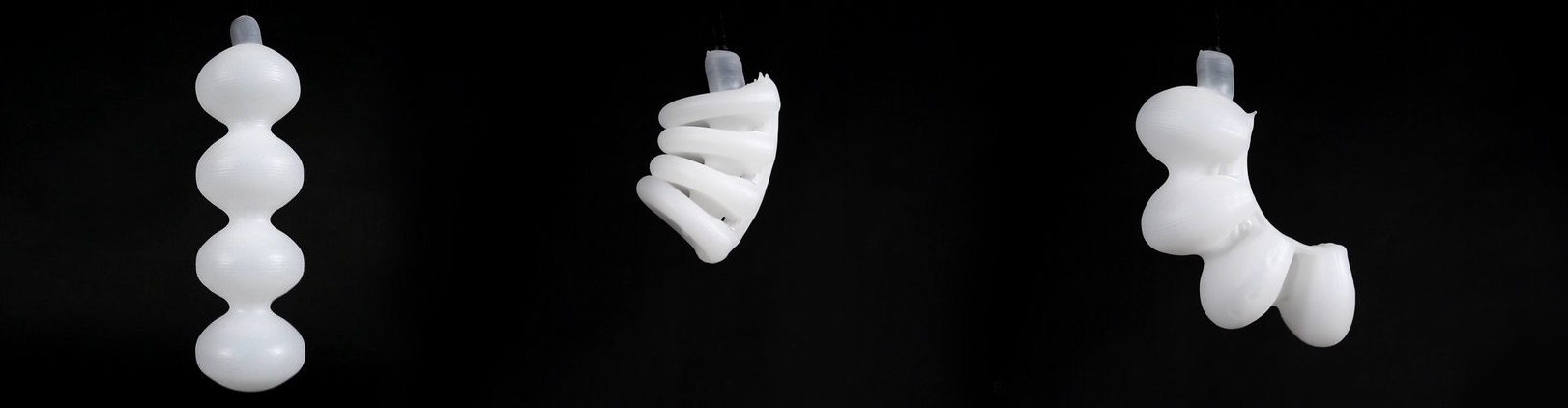
Image taken from Self Assembly Lab website

This is a project developed by the Self-Assembly Lab, a group of MIT researchers interested in exploring the properties and possibilities of programmable and smart material, as well as soft robotics, with the goal of re-inventing the way artifacts are manufactured today.

Although the material presented in this example requires a specialized process that is not yet available for market access; It can give us a glimpse of what the field of programmable materials with different properties, can provide us for future applications.

In this project in specific, the Self-Assembly Lab explores the properties of elastic materials (printed in 3D as silicone or rubber) with pneumatic (inflatable) abilities as a catalyst for the creation of new forms, postures and experiences: “4D structures that adapted according to function, performance and aesthetics.”

Self-Assembly Lab partnered with BMW to look for innovative solutions to apply in car interiors that can mutate and transform according to the specific needs of the user. The results in research in this field, can open new possibilities in other areas such as: architecture, aerospace, adaptive products, appareal, etc…

Self-Assembly Lab Team: Bjorn Sparrman, Shokofeh Darbari, Rami Rustom, Maggie Hughes, Schendy Kernizan, Jared Laucks, Skylar Tibbits

BMW Team: Sophie Richter, Akos Stegmar

Week 1 – Anna Garbier

I recently saw (and touched and heard) Tactile Orchestra at Cooper Hewitt’s “The Senses: Design Beyond Vision” exhibition. The installation is a soft, furry wall that– when stroked– plays part of an orchestra. Depending on the exact movement and location of your touch, different parts of the orchestra play; the more people stroking the wall, the more sounds that are played.

I loved the childlike simplicity of the interface and the fact that it allowed multiple, simultaneous interactions: both humans-to-wall and humans-to-humans. I felt like a kindergartener, surrounded by other kindergarteners, with my arms stretched out experimenting, playing, and exploring.