Week 1 – Zhenyuan(Christina) Shi

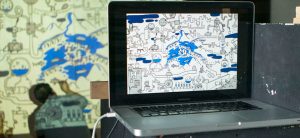
I’m very intrigued by this interactive mural project because it preserved how graphically satisfying it is and then added interactivity based on that graphic design. In the project they applied soft conductive materials — conductive paint and copper tape. Then they connected different parts of the mural to an electronic board which would tell the projector to project different motion graphics onto the mural.


Week 1 – Youchun Zhang

Awake is a project that uses electric paint, Arduino and projection mapping to create paintings that are alive and can respond to the environment. The experience begins with the audience touching the painted shape. As the interaction going, different shapes and narratives will appear, creating infinite possibilities of landscapes. This project combines the traditional medium with new technologies. It uses two materials: paint and light. Both have the poetic characteristic. It opens the door to the future of illustration and story-telling.

Week 1 Assignment – Adam Moore

I am very drawn to the piece Contours by Alicja and Fabio. Installation art that uses technology but is not specifically screen based is what made me interested in attending DT in the first place! The ability of technology to be incorporated into the physical environment is, for lack of a more erudite word, MAGICAL. Technology can make something as intimidating as installation art into a much more friendly experience because the viewer is able to physically interact with the piece rather than remaining passive. Installations that are interactive have the potential to be a gateway to a greater appreciation of art for people who are ordinarily intimidated by it.

Below is a video of Contours in action. Enjoy.

Week 1 – Carla Molins

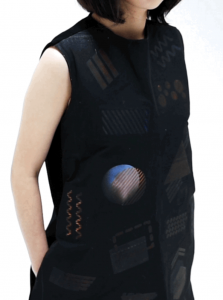
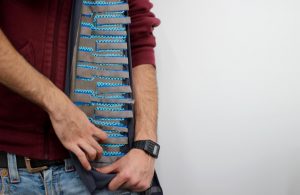
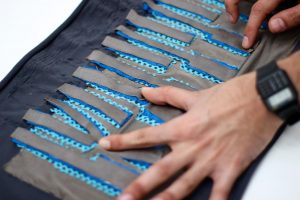
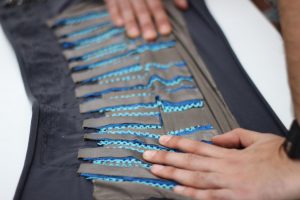
This project is part of a textile design students at MOME – Moholy-Nagy University of Art and Design performed by EjTech. It consists of different systems compound by sensors that play music/sound. The uniqueness of this project relies on its materiality, all natural materials, fibers, leaves, and some other elements that make this technological project break the barrier between nature and technology. I find it both poetic and visually compelling.

There is a wide variety of hand-crafted sensors made of textile in addition to different natural materials coming from different plants and vegetables.  Of course, I couldn’t try it and feel it, but it seems to me that it has to be really smooth and satisfying. I love every bit of this project! I’d like to try to work with natural materials combined with other synthetics that makes the interaction viable, efficient and reliable. It’s highly experimental, but I’m willing to explore new ways to play with senses and haptics.

Artists and designers have been proposing the ideas to grow textiles as the ways to think about environmental, sustainable, ethical issues surrounding the textile production.
We propose to think about these issues including how e-textiles and smart textiles plays a role towards sustainable living, creating possible futures for second skins, sensors and adaptive/responsive structures. EjTech.


Week 1 – Erica (Yiyun)

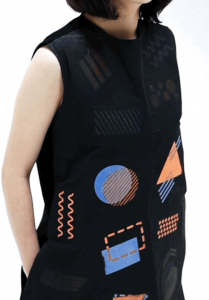
This project is from a guest lecturer I got to know from last semester. The project is a IOT dress that visualizes the user’s daily interactions and diary entries. The diary entry is analyzed by the server through keyword tags, then the matching thermochromic paint pattern will show up on the dress. I liked the personal and abstract aspects of this project, but I was more intrigued by the tech elements of this dress. It involves elements like Bluetooth LE module, phone app, cloud server, embedded heat packs, and thermochromic paints. I am really excited for the thermochromic paints class!


Week 1_Yixun


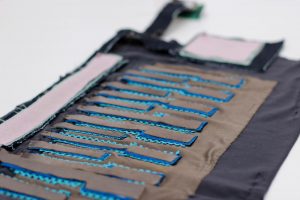
This is a project called FrabricKeyboard from MIT media lab. The fabric keyboard consists of multi-layer textile sensors machine-sewn in a keyboard pattern, and it detects different stimuli such as touch, pressure, stretch, proximity, and electric field. What I found interesting is that users can not only touch the interface to interact but also use non-contact gestures to play music. This project reminds me of another musical invention—Hand Roll Piano. With small size and low power consumption, Hand Roll Piano becomes a great portable musical instrument. Compare to Hand Roll Piano, FrabricKeyboard has made improvement in interaction design and music style that can be played.

Video:https://vimeo.com/213298236


Defining the language, examining the field

During the first class, we reflected on the different terms practitioners use to define the things they make and the processes they use to make them, then took a big picture view of the field since its inception in the late 1990s.

Terminology

The goal of this activity is to grapple with the language of the field and think critically about the definitions we use. As a set of hybrid practices that is emerging and evolving, questioning the assumptions and nuances built into the language lays a theoretical foundation to ground our making.

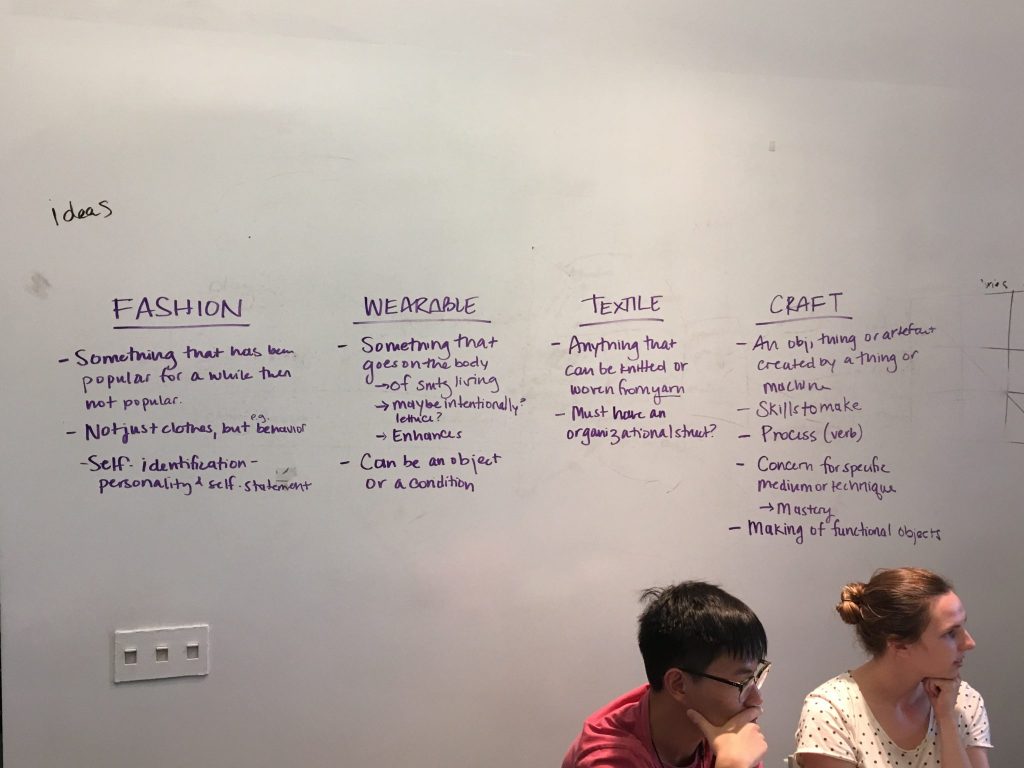
ROUND 1
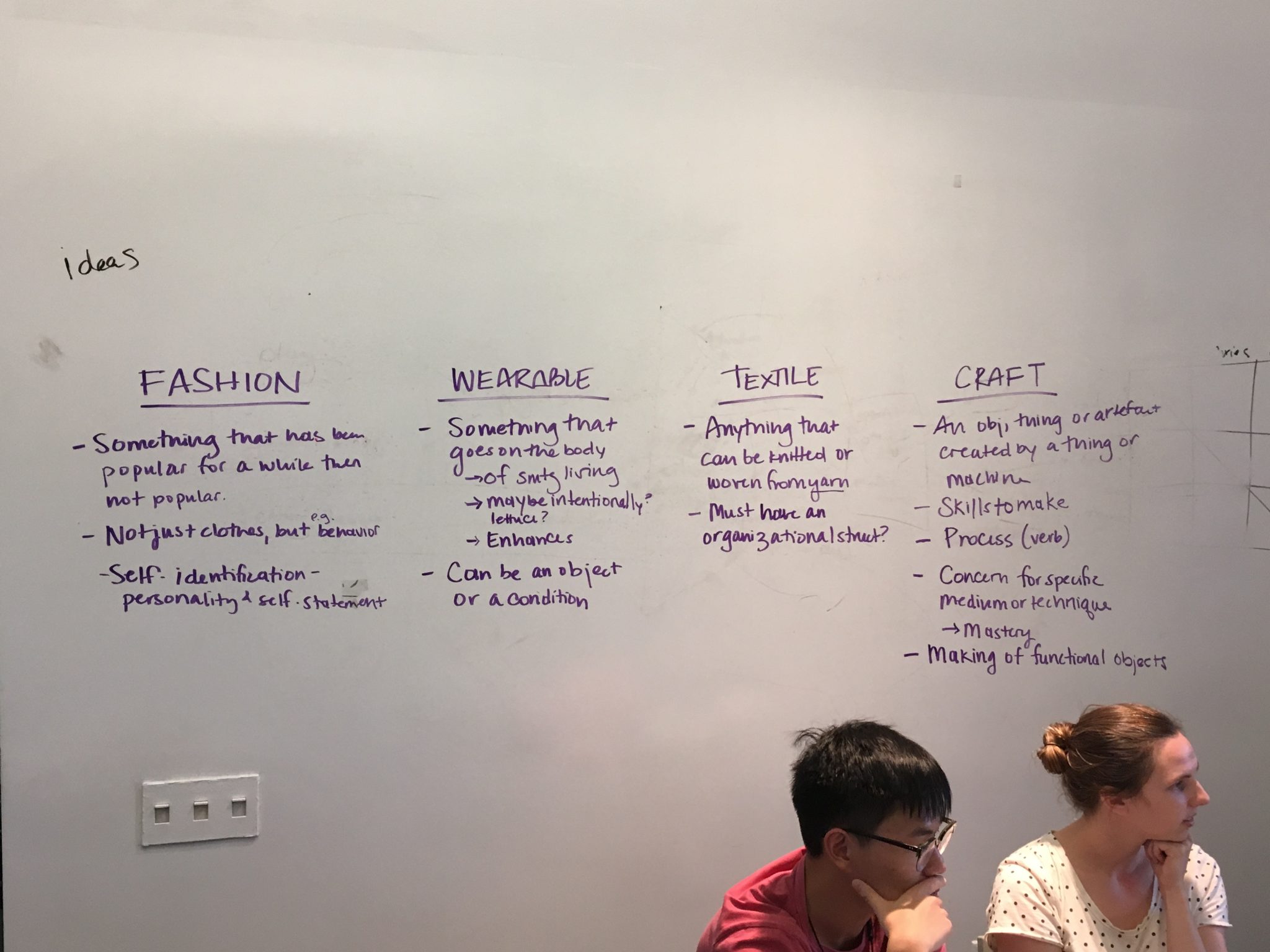
Each group received one or more of these words to define: FASHION, CRAFT, WEARABLE, TEXTILE. Here are the initial definitions:
Round 2 terms

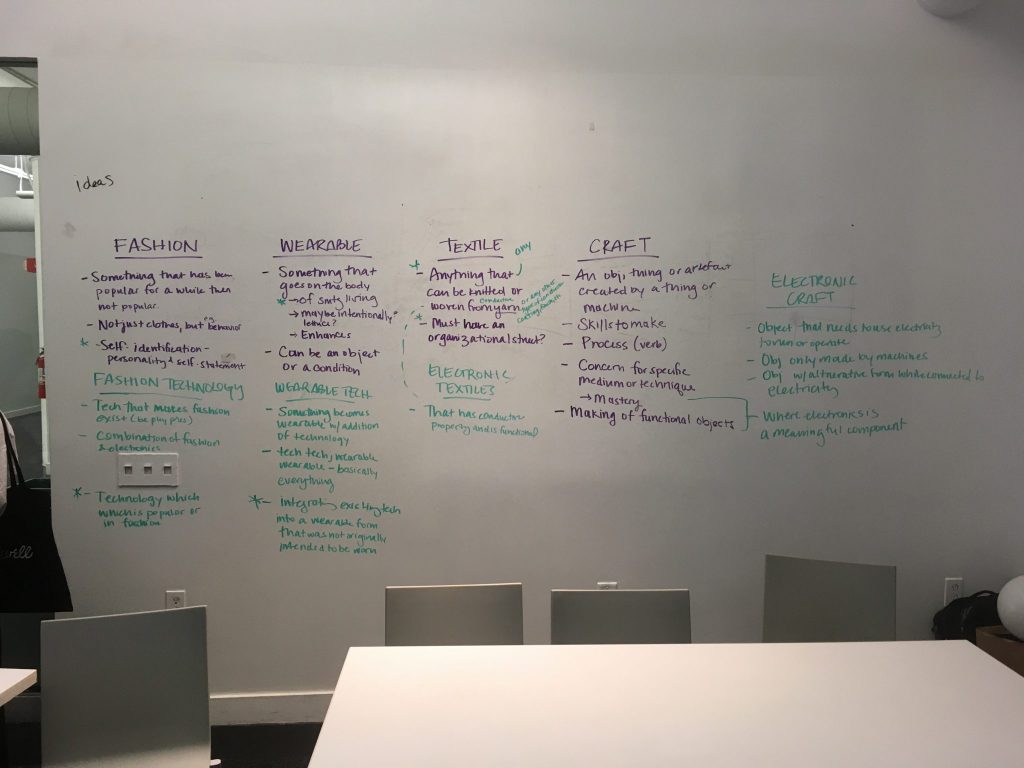
ROUND 2
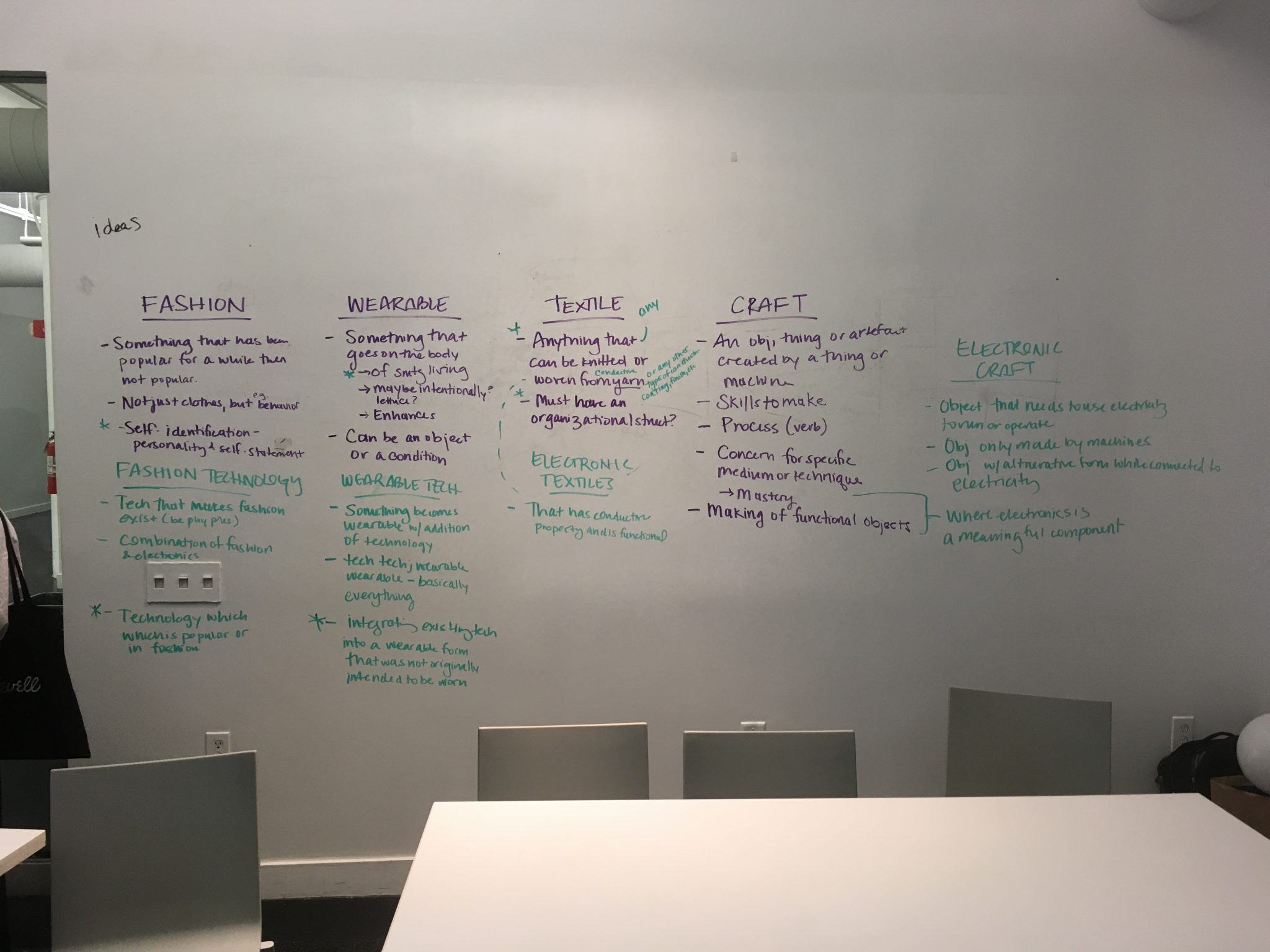
Each group received a second word, then created a new definition (in green).


Timelines

The goal of this activity is three-fold: (1) to introduce you to a range of eTextile, eCraft, wearable technology, and fashion technology projects; (2) put this practice in a historical narrative and context; and (3) to surface assumptions about the ways in which the materials, aesthetics, form, and presentation of a project influence how it is perceived along a technological timeline. Does a soft artefact belong to a earlier era than a hard one? What makes it difficult to tell which came first? Where do we currently stand in these fields in terms of innovation? Where might we be going based on where we’ve been? What gaps do you see?

ROUND 1: Small Group Timelines
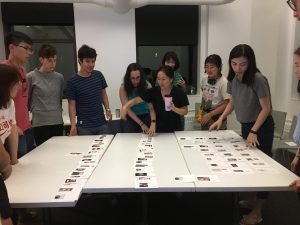
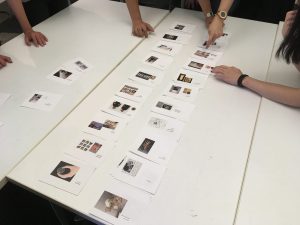
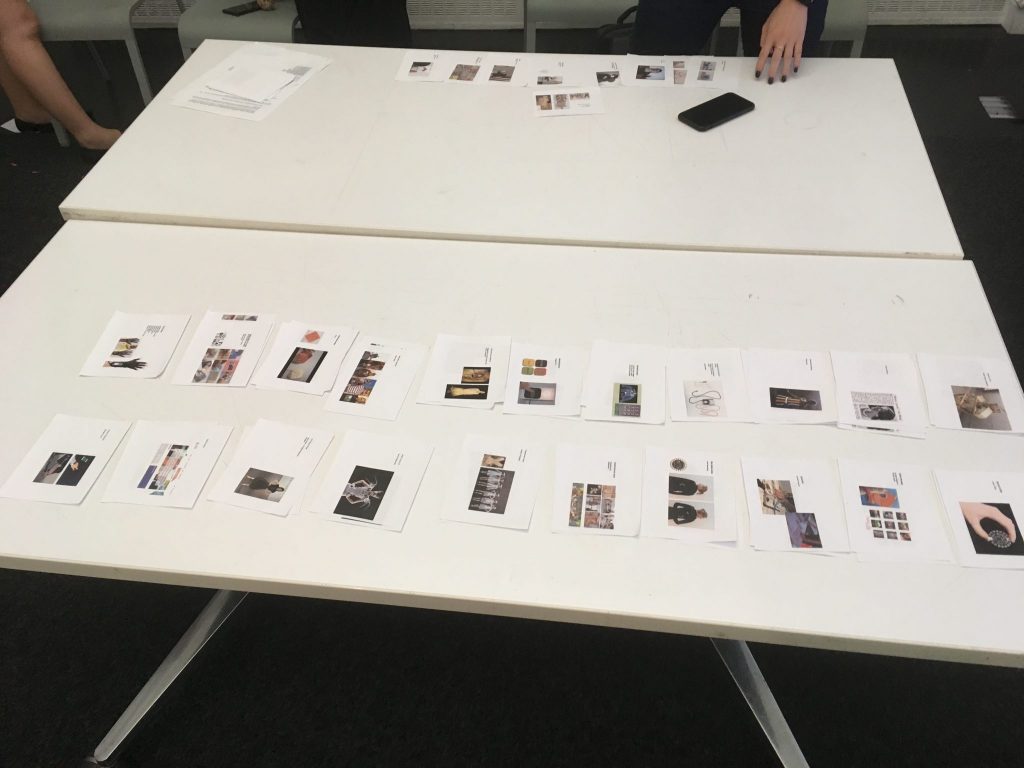
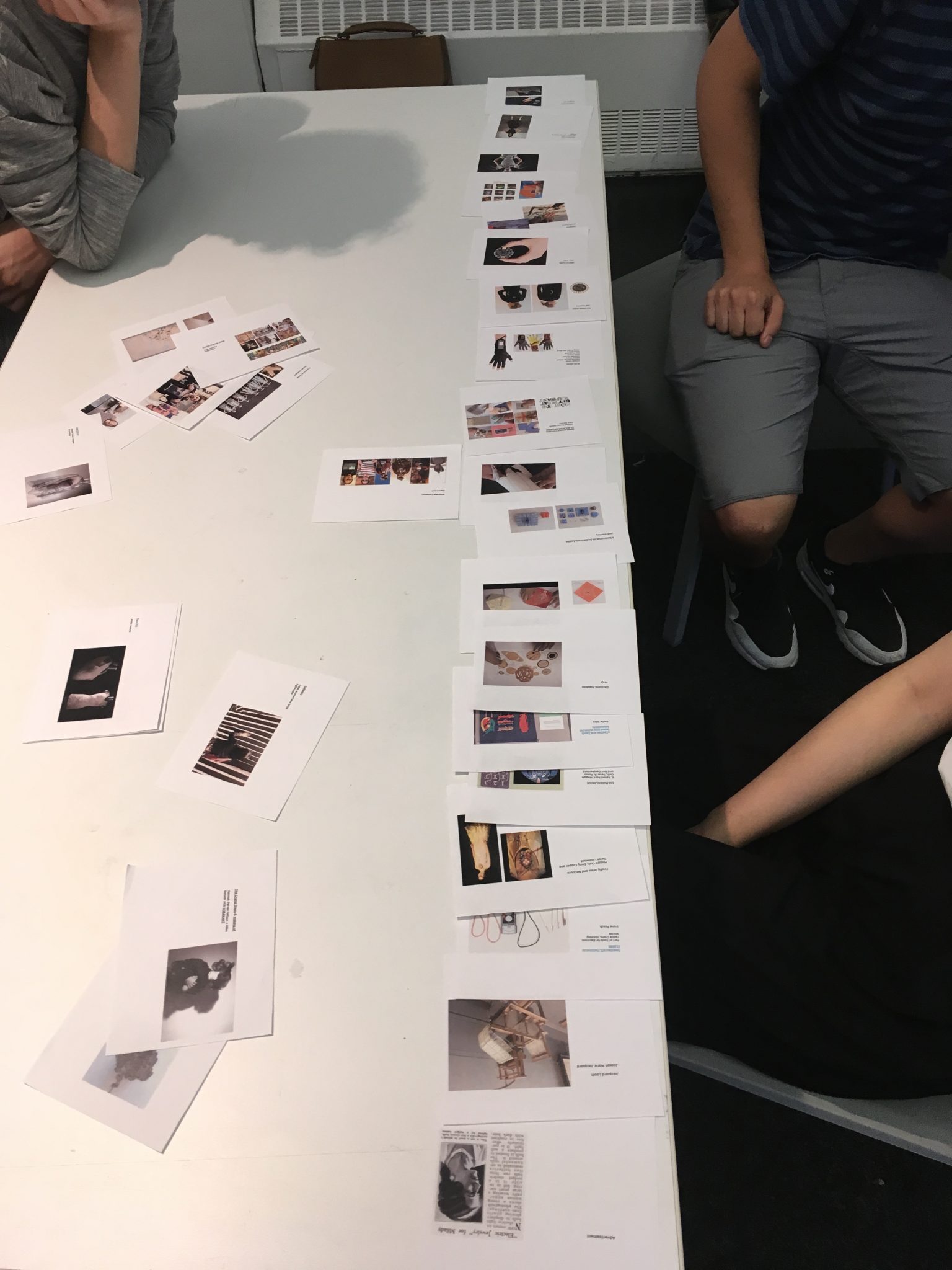
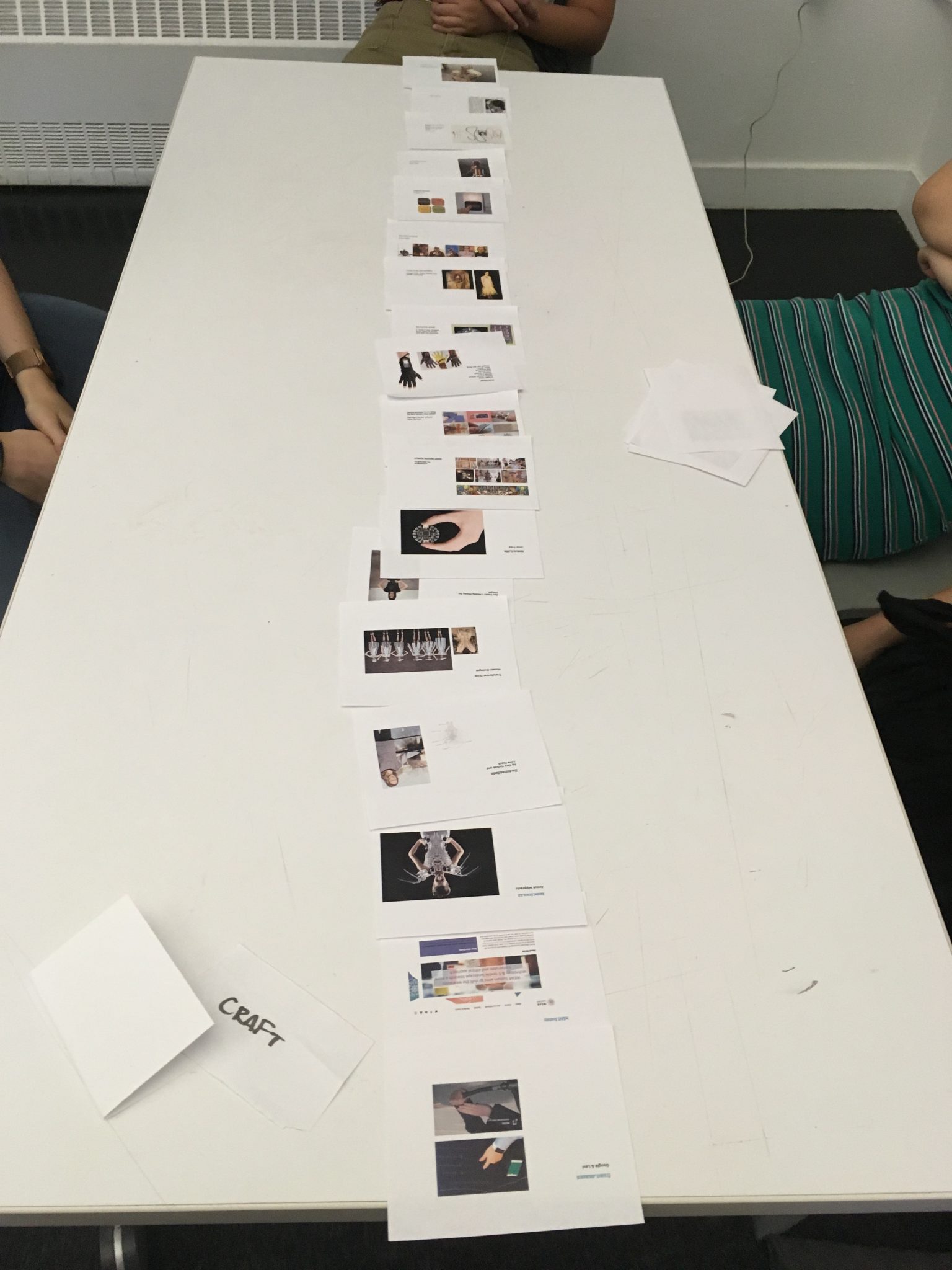
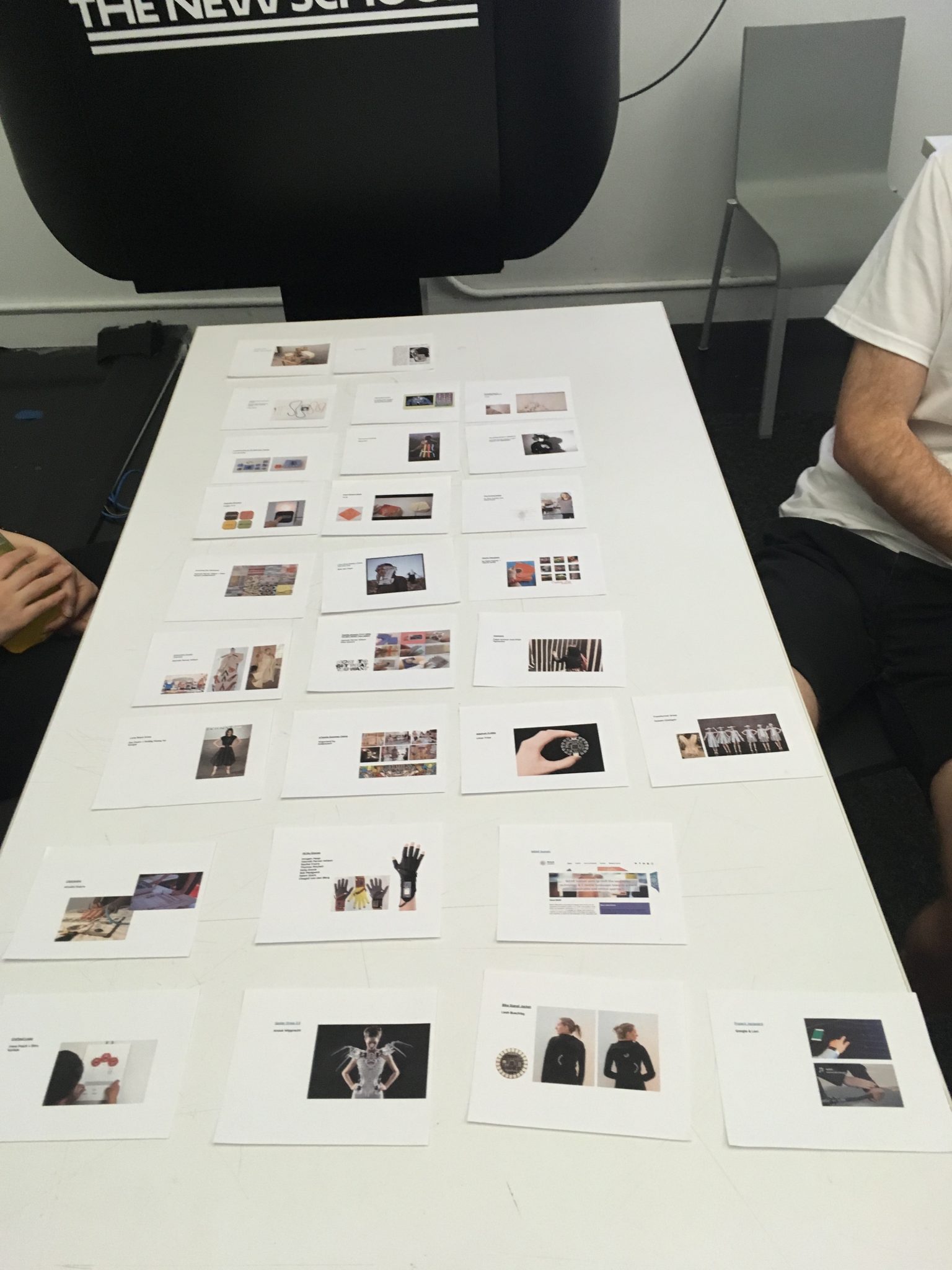
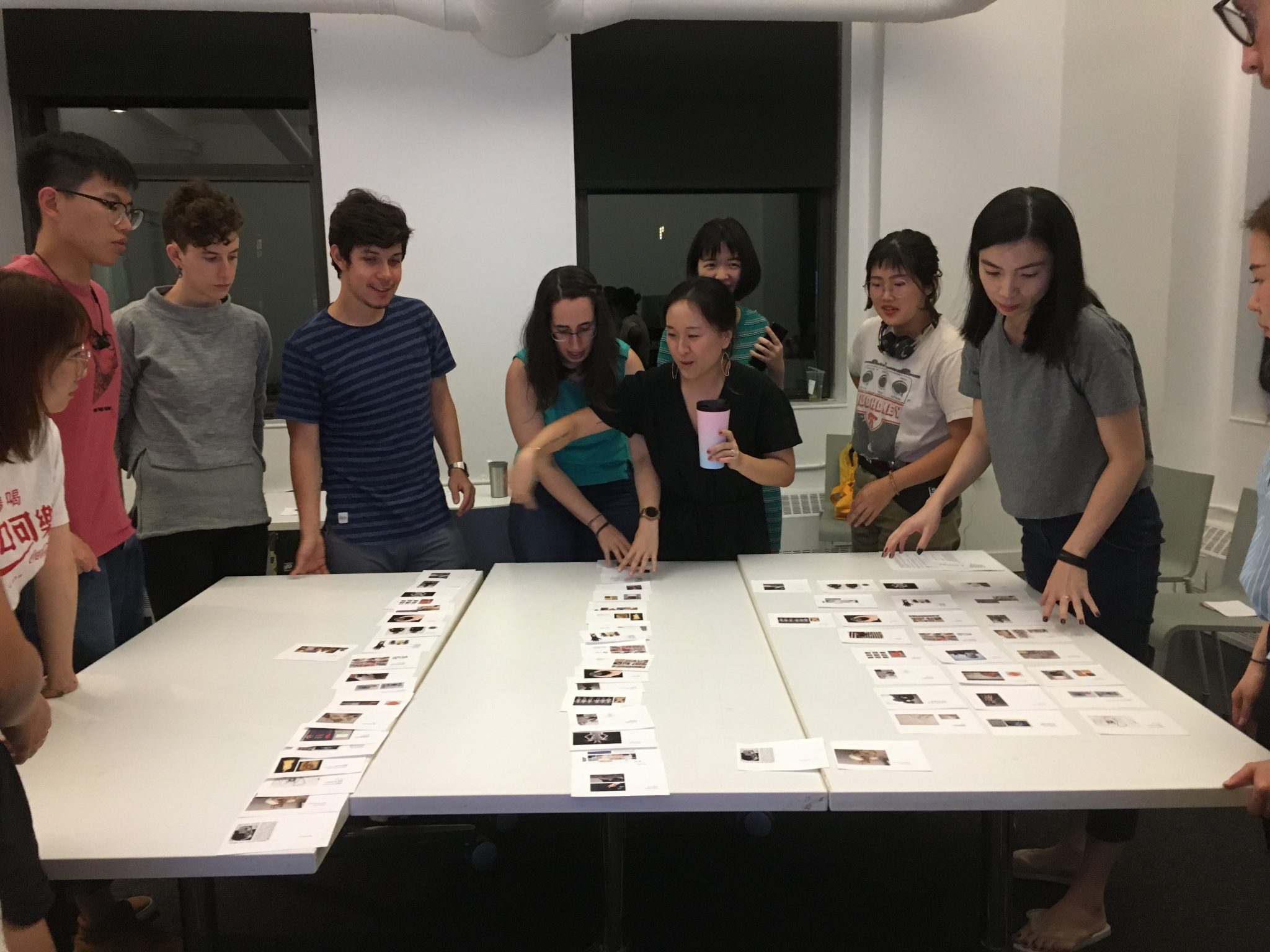
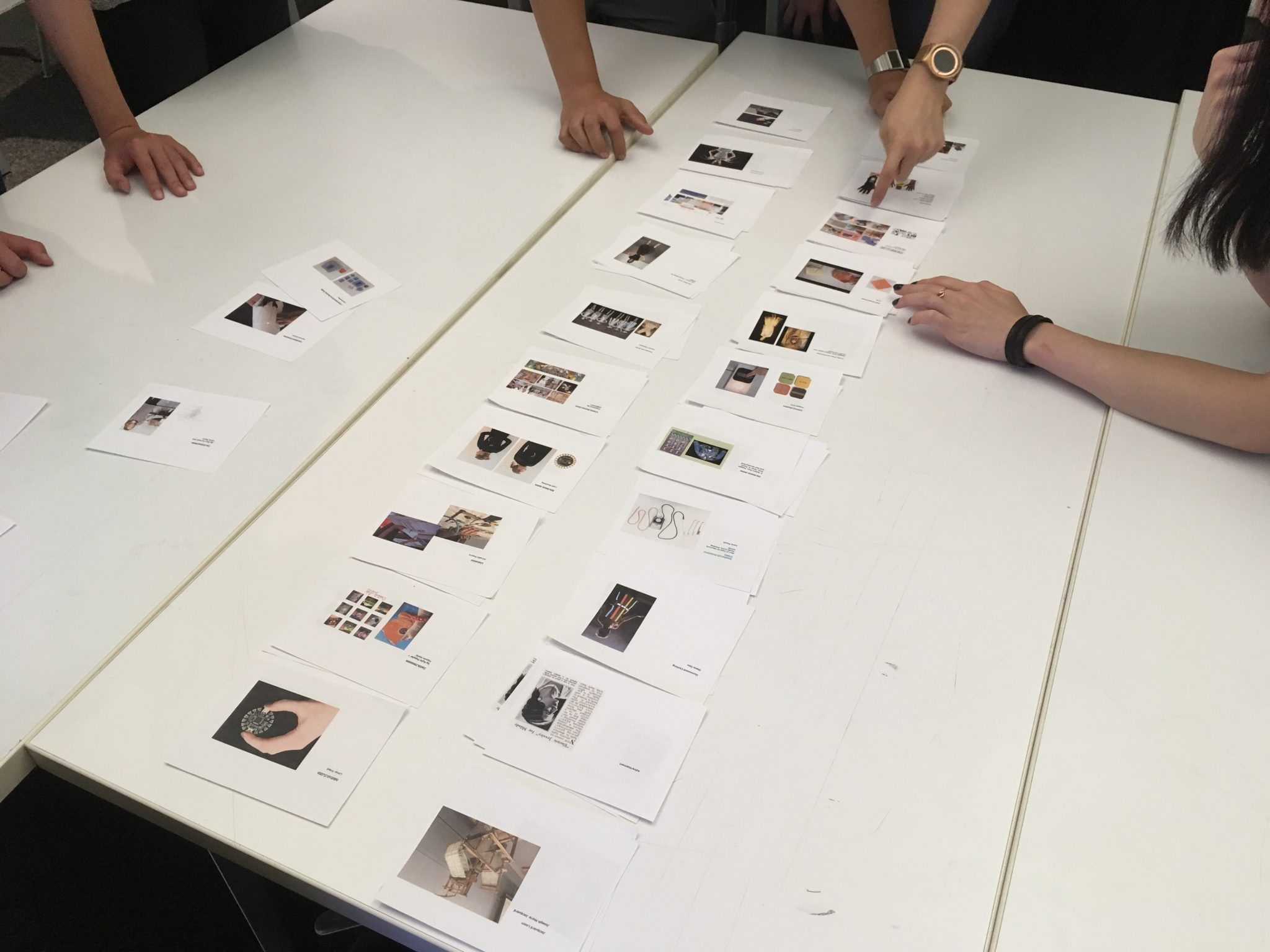
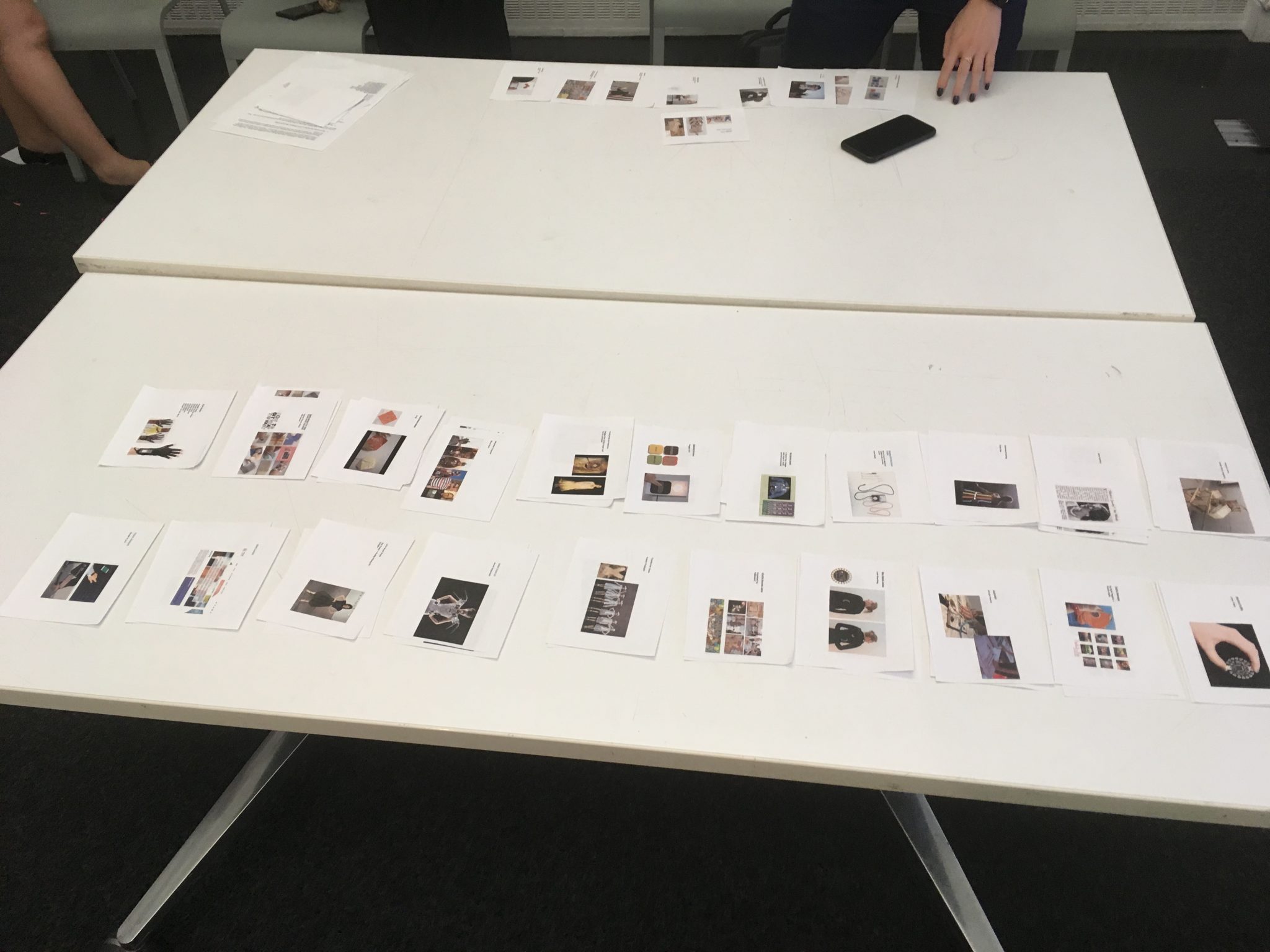
Each group received a stack of 37 cards each containing a project. Their goal was to choose 20 projects and arrange them chronologically in 10 minutes.

ROUND 2: Big Group Timeline
As a class, we then combined all group cards into a larger timeline.

The final timeline

You can find the full timeline and answers here.
Week 1 Assignment

  1. Get logged onto course website. Please change your username to your name.
  2. Find a project that excites you and that uses the materials we looked at in class. You can use one from today’s class or find something new.
  3. Create a post that includes, images, video, or other documentation. Write a brief paragraph explaining what it is about this project that intrigues you.
  4. Purchase materials listed in TOOLS today or tomorrow.