Week 2 – Dario Narvaez

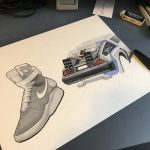
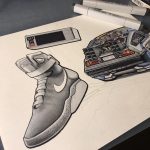
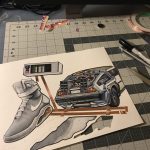
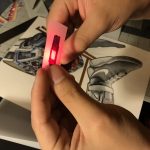
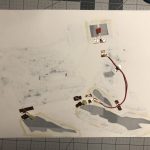
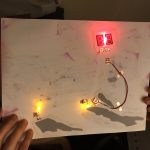
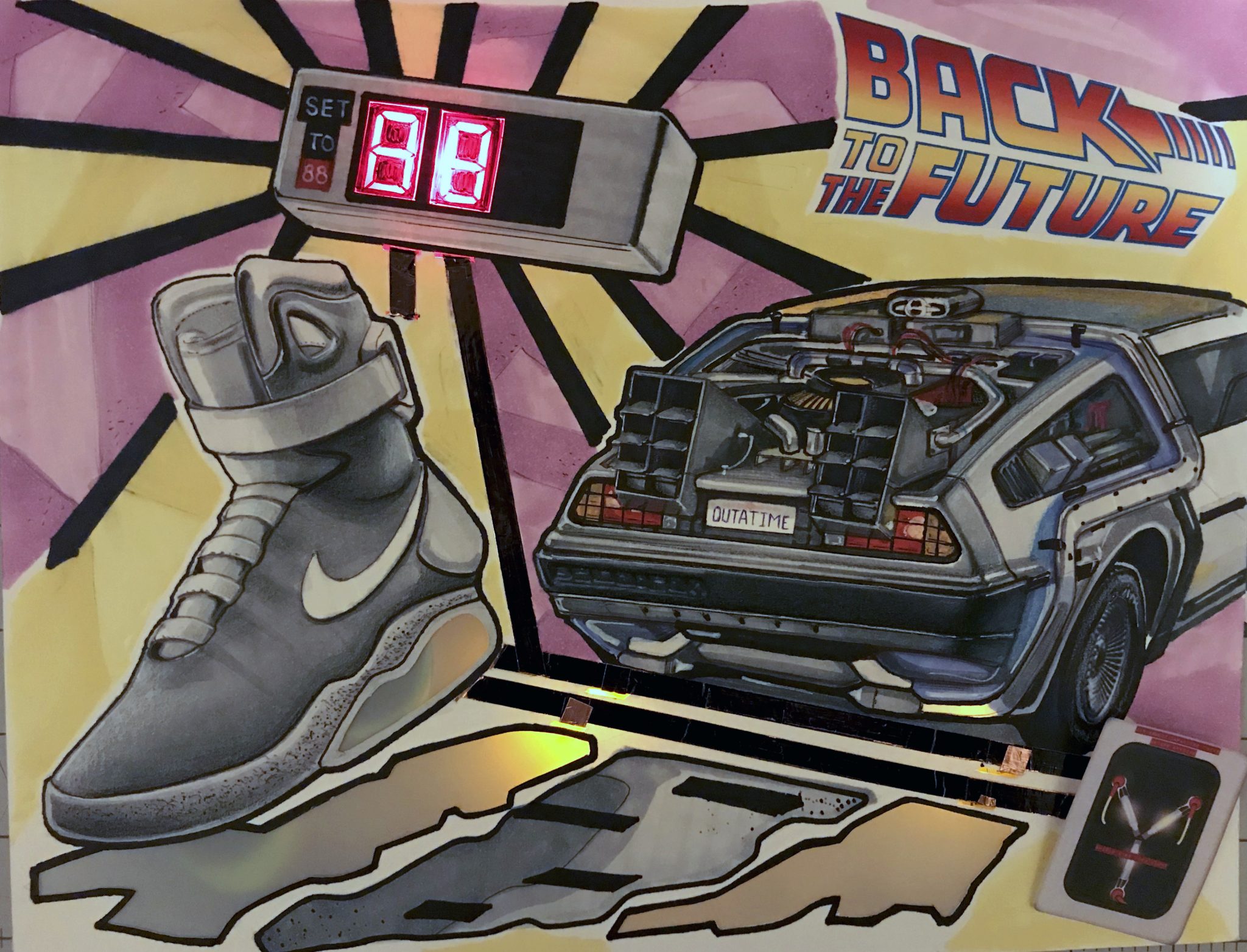
For the activity of this week I picked the famous phrase by -Doc- Dr. Emmett Brown from the Back to the Future movie: “If my calculations are correct, when this baby hits 88 miles per hour… you’re gonna see some serious shit”. I used the LEDs to give the effect of flame coming out of the tires and to create the back light from the speedometer.

I wanted to explore different materials to efficiently diffuse light. I tried painted over the material to add or change the color of the light coming from the LED, and also to obstruct light to represent symbols and numbers( in the case of the 88 speedometer), I took a milky/translucent paper to create a soft light and I also painted on top with black sharpie so the light could be visible only in the spaces I didn’t paint on.

I also experimented painting the cooper tape in black, the tape maintains its conductive properties after it is painted with markers. I wanted to do this to integrate the circuits into the composition of the illustration.

List of Components:

  • Cooper Tape
  • x1 RED LED
  • x2 Yellow LEDs
  • x 3V CR2032 type battery

How it works:

The LEDs are assembled in parallel using cooper tape. I had some issues with keeping the continuity in one portion of the circuit, so I had to use a wire instead.

Process:


Week 3 + 4 Assignment

Below is your assignment that is due 9/27. Remember: there is no class next week. Please make sure to bring your soldering iron to the 9/27 class.

PART 1: Computational Craft Swatch Exchange
screen-shot-2016-09-13-at-11-16-05-pm

~MFADT style ~

The exchange wishes to emphasize the importance of physicality and quality workmanship in an increasingly digital world.

~ e-Textile Swatch Exchange

A swatch is a microcosm: a small insight into a much bigger picture. It is the tip of the ice-burg, and it holds a world of potential inside. In creating a new swatch we are simultaneously cataloging knowledge and developing skills.

~ Definition from Swatch Exchange participant Becca Rose

A) Create a swatch. Design a switch or a sensor. You can use any materials you like. Document it on the blog using the same format as the post you made in class:

  • Title. Give it a name
  • Description. What does this swatch do? How does it work?
  • Materials. What materials are used? (cardstock, copper tape, conductive yarn, LEDs, etc)
  • Techniques. How was this swatch constructed? (e.g. folding, sewing, knitting, soldering, etc)
  • References. Where have you seen it before? What inspired you?

D) Make three more identical ones. You will give these to three classmates next class. (You will have 4 total swatches). They do not have to look exactly the same – you can play with color and aesthetic properties.

PART 2: Learn a New Craft 

Before next class, I would like you to try learning a new craft. That’s it. NO electronics. Make a swatch (small example) that comes out of your learning. This could include any of the following:

  • sewing (by hand or on the machine)
  • embroidery
  • knitting
  • crocheting
  • draping
  • paper engineering
  • woodworking
  • silkscreening
  • surface design / fabric printing
  • etc, etc, etc

Here are some tutorials from last year as inspiration (also, this was a much longer project last year – you do NOT need to go into this depth). There are also a TON of tutorials if you hit the Googles.

Next, create a post with an image of your swatch and reflect on the following questions.
After doing all of the above, write a blog post that answers the questions below. It doesn’t have to be long, but I would like you to spend a good amount of time reflecting on these:

  • How do you identify / classify your practice? Choose as many as you would like from the following and feel free to add to it. Briefly explain why you chose them.
    • storyteller
    • maker
    • engineer
    • coder
    • designer
    • artist
    • learner
    • hacker
    • research
    • educator
    • gamer
    • craftsperson
    • [other?]
  • What is your favorite tool and why? Yes, again ? (I’m going to put one restriction on this – you’re not allowed to say computer ?
  • Reflect on your experience trying out a new craft. Some questions you could address: What did you like about the process? What was frustrating? What insight did you gain? What advice would you give to someone?
Week 2 – Youchun Zhang


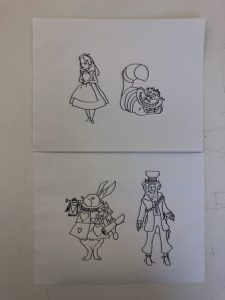
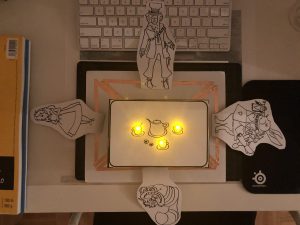
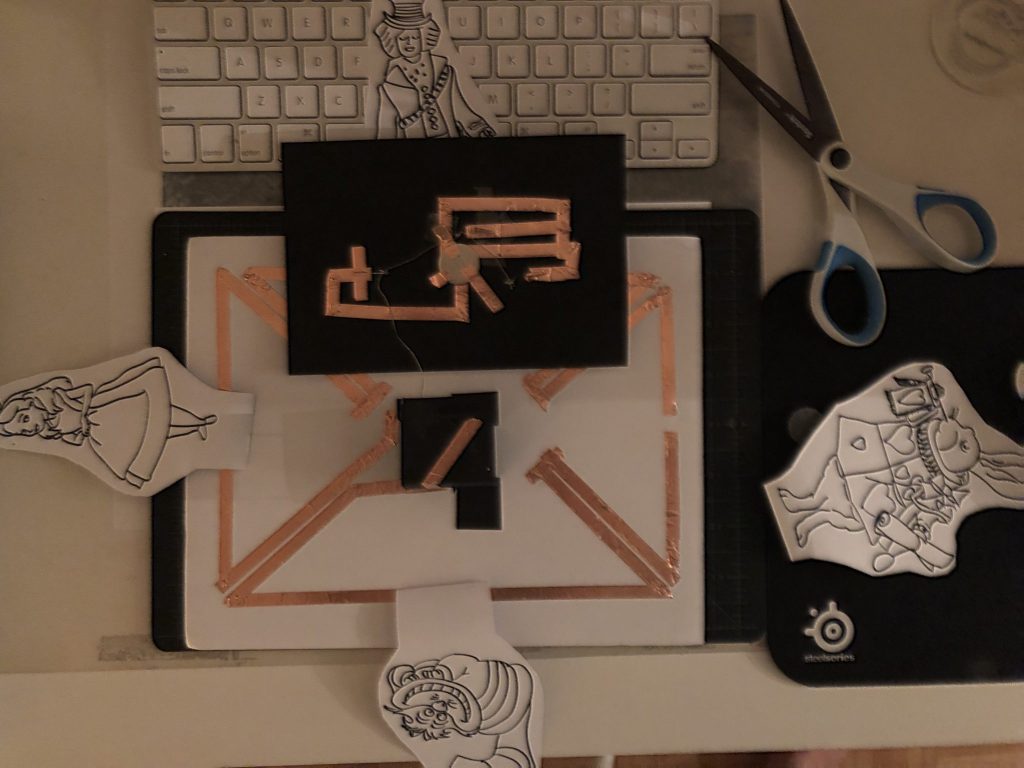
The illustration and the soft circuit I built is based on the story of Alice in the Wonderland. There are four characters: Alice, the rabbit, the mad hatter, and the Cheshire cat. The story was set up in the way that all the characters were gathering around the table. When all the characters were at the right position, the LED in the teacup would be lit up.

I started by arranging the copper tape as the pattern on the carpet, and I made small breaks on each side as a switch for the character to move to the position to turn on. But I underestimated the complexity of arranging the circuit and the power source when it came to two layers. It was a quite struggling process. I took the advice of using thread to connect the copper tape between layers, and I did a little bit of soldering.

Week 2 Homework – Neil V. Techapanichgul

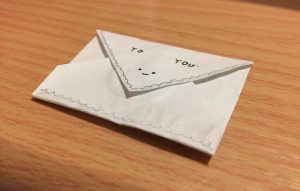
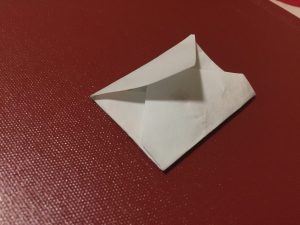
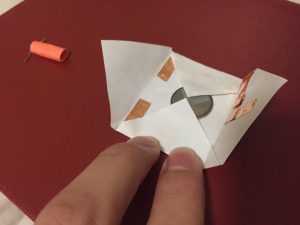
Smile Envelope

In Action

Process


Description

I always like the quote about the moment when you missing someone.

“Your words warmed my heart” – Unknown

At some point in our life, there is sometimes to get lonely and you are not expecting anything else except a mail from your loved one. My inspiration is when you received a mail from your loved one such as your family members, your boyfriend or girlfriend, you tend to be happy and get warmer.

Materials used

1 x Led Light

1 x 3v Battery

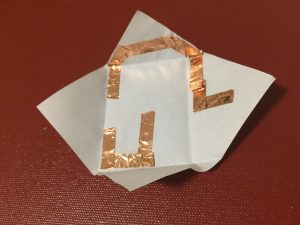
1 x Copper Tape

Challenges

It is hard to make a spring that blocks the circuit. I’m trying to use a letter to block the copper tape and it kind of works. I want to know a better way to use this in the future.

Week 2 Xu

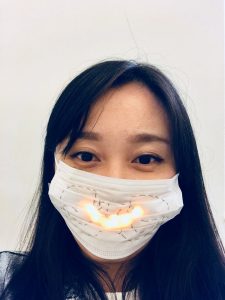
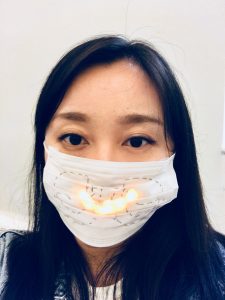
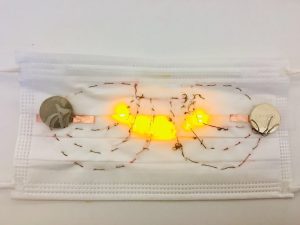
I am interested in how people communicate by using their facial expressions. Sometimes our facial expressions cannot reflect our thoughts as accurte as they were expected to be. That’s why we have the fake smile and genuine smile.

So my project tries to make a speculative mask to get avoid from such situation.

Week 2 – Anna Garbier

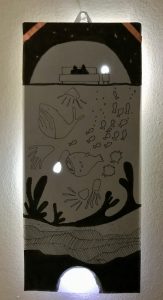
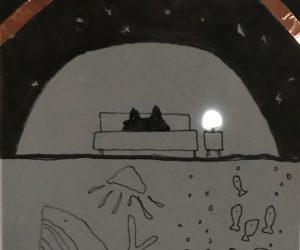
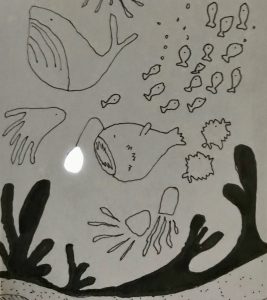
Crafting a Path, inspired by the last stanza of Osso Buco by Billy Collins:

In a while, one of us will go up to bed
and the other will follow.
Then we will slip below the surface of the night
into miles of water, drifting down and down
to the dark, soundless bottom
until the weight of dreams pulls us lower still,
below the shale and layered rock,
beneath the strata of hunger and pleasure,
into the broken bones of the earth itself,
into the marrow of the only place we know.


Week 2 HW- Yao

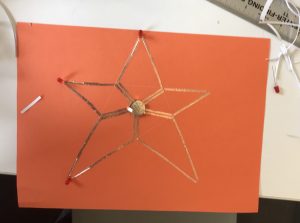
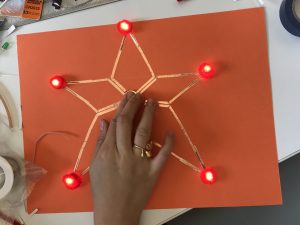
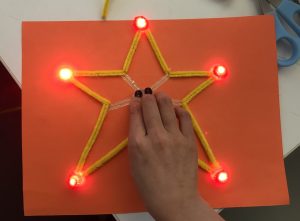
I was inspired by a song “twinkle twinkle little star” which written by Jane Tayler.

The sentence “‘Tis your bright and tiny spark, Lights the traveler in the dark” gave me the inspiration to make this shining star.

Hoping my shining star can light up everyone who walks in the dark.

Week 2 Homework – Lisa Ho

Description-
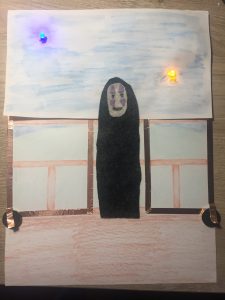
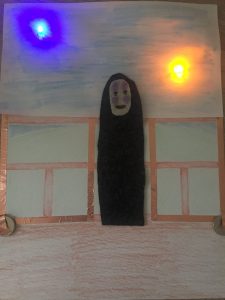
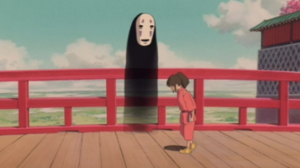
I was inspired by my favorite animation film called Spirited Away by Hayao Miyazaki. This character is one of my favorite characters named the No Face Man who always seems to quietly look after the protagonist, Chihiro Ogino, on the side. In this particular scene, the No-Face Man is waiting by the bridge, observing everything.

Materials used-

  • Copper Tape
  • 3volt battery
  • LEDs

Challenges-
I actually had to really draw out how my circuit was going to fit before getting started. I had a brief picture in my mind and resulted in many re-dos. I also realized that if you somehow trimmed a bit of your copper tape, it could result in the circuit not working.

Continue reading

Week 2 Assignment – Zhenyuan Shi

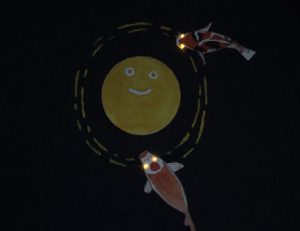
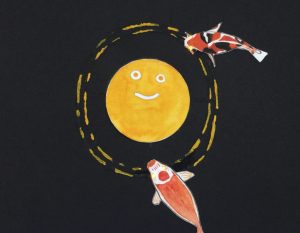
For this assignment, I made the illustration based on the quote “They found out that the small fish in the pound, will swim to the moon with a smile on their face.” in Jimmy Liao’s book When the Moon Forgot.

I used conductive ink to build the circuit, and I used SMD LEDs to create the shiny eyes of the fish. Then I painted the black conductive ink circuit with yellow paint to create the glow of the moon.