Week 3 & 4 – Neil V. Techapanichgul

NEW CRAFT

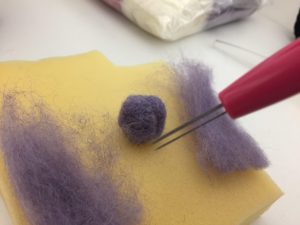
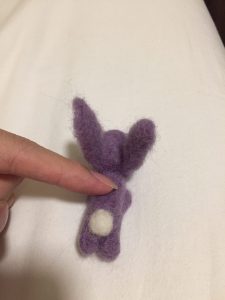
I chose Felting because the way you can sculpt an object by poking into a shape looks fun. I never have this kind of experience before but, it is so relaxing and mesmerizing.

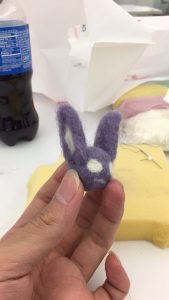
So I tried to make a sphere which took me about 3 hours to form the model. Anyway, I achieved the head of my rabbit, and I continue to work on the body.

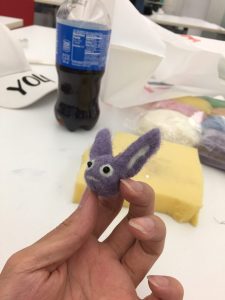
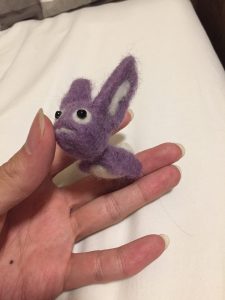
There we go! We got a little purple bunny!

SWATCHES

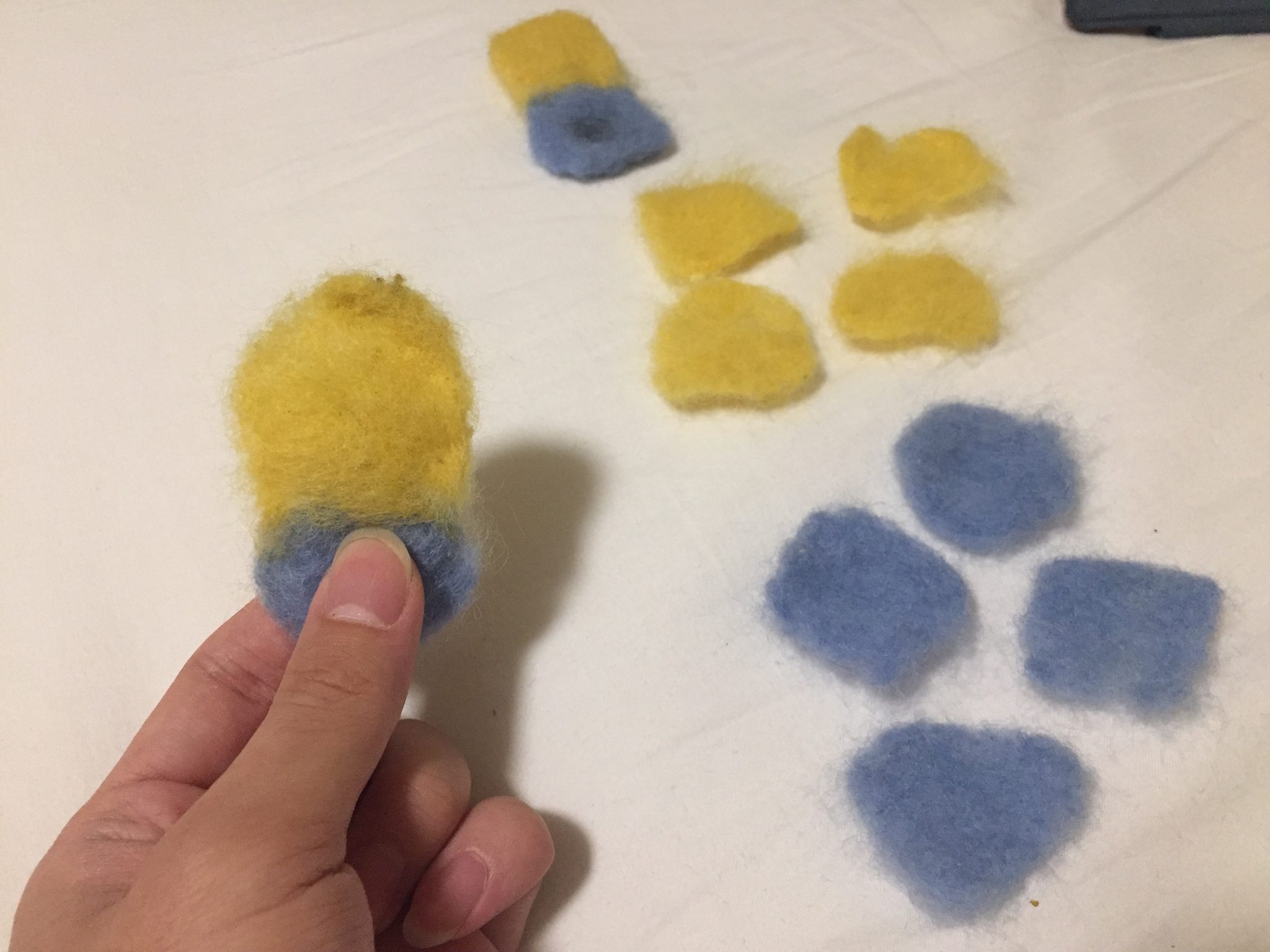
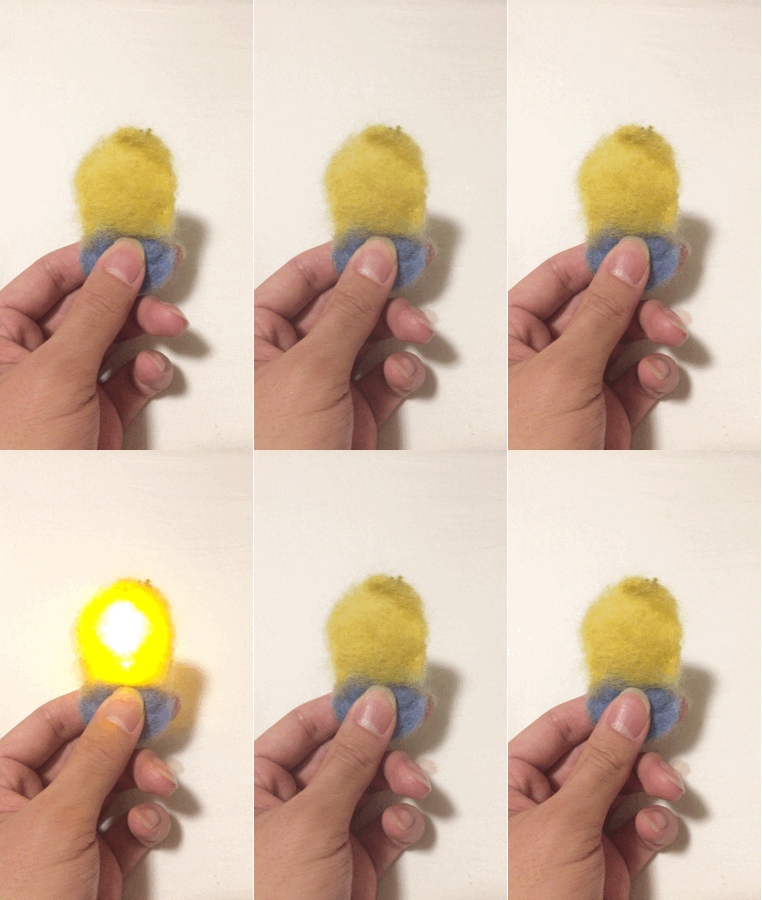
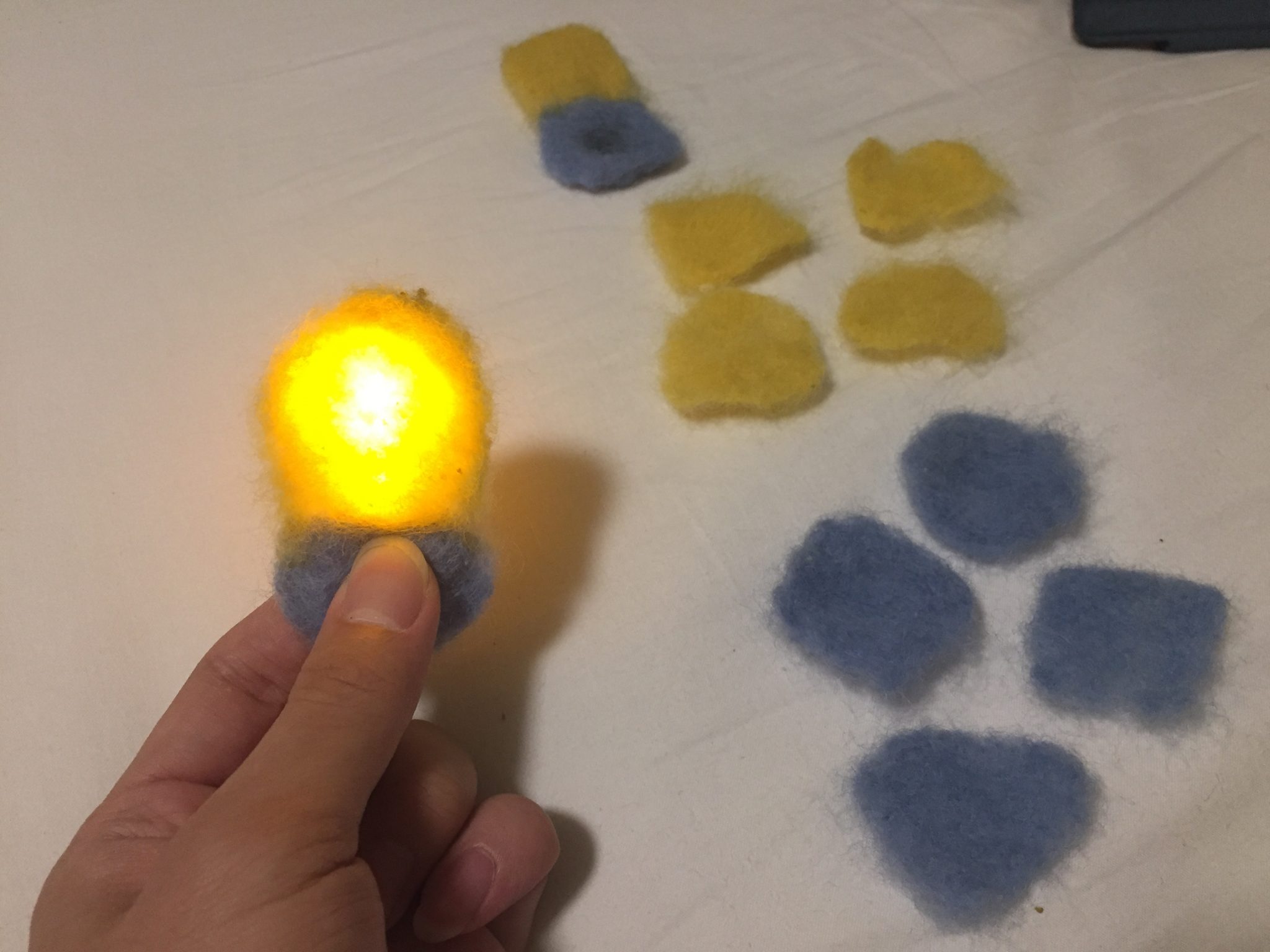
For the swatch exchange, I’m also trying to make a light bulb by using felting technique to make one. It’s a little bit tricky and hard to put electric components inside a piece of wool.

So I make two parts which a front and a back piece to connect to each other between a battery and a led.

I had fun working on these projects.

Thank you, Liza, 😀


Week5_Yixun

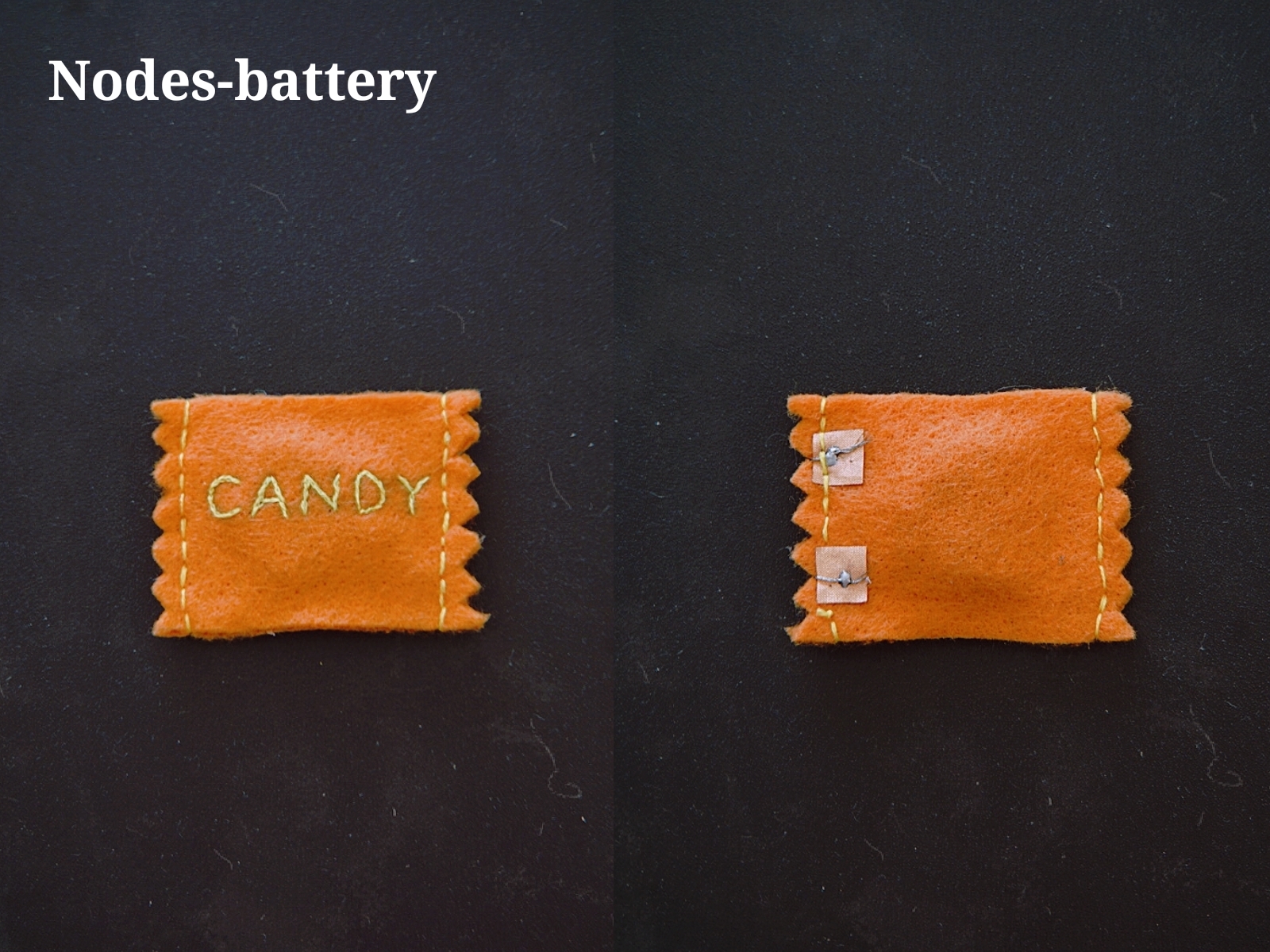
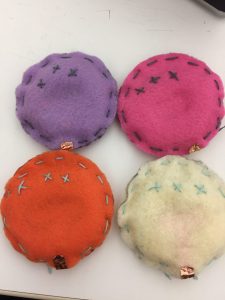
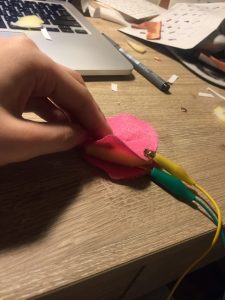
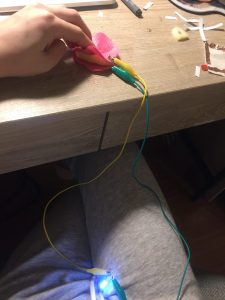
I used felt, conductive thread, and conductive fabric to make the battery node. The shape of this node originates from the candy wrappers.

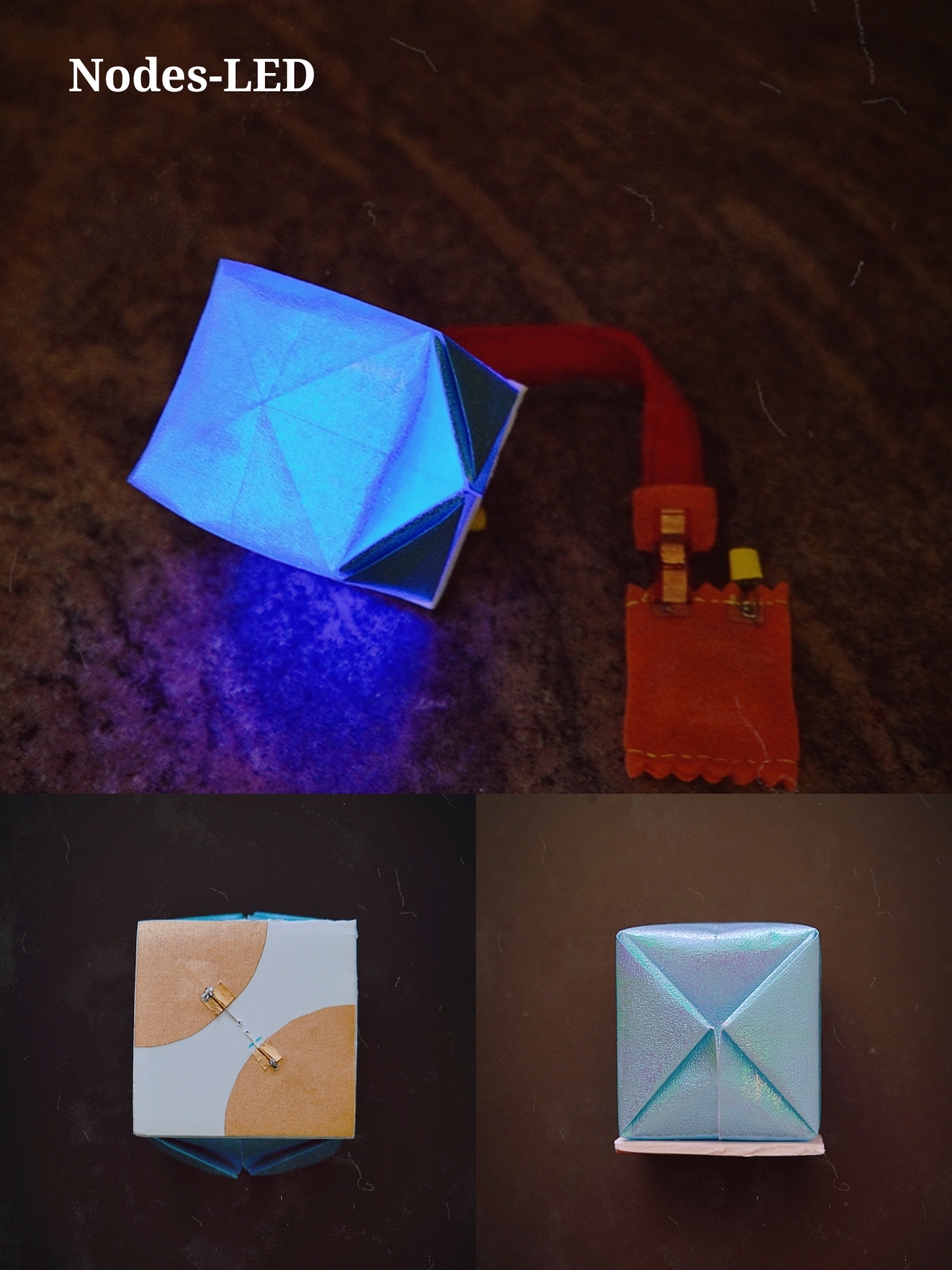
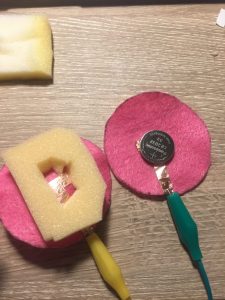
The LED node is made by paper, foam plastic and conductive fabric. Use clips to attach to the foundation of the lamp a battery will turn on the light.

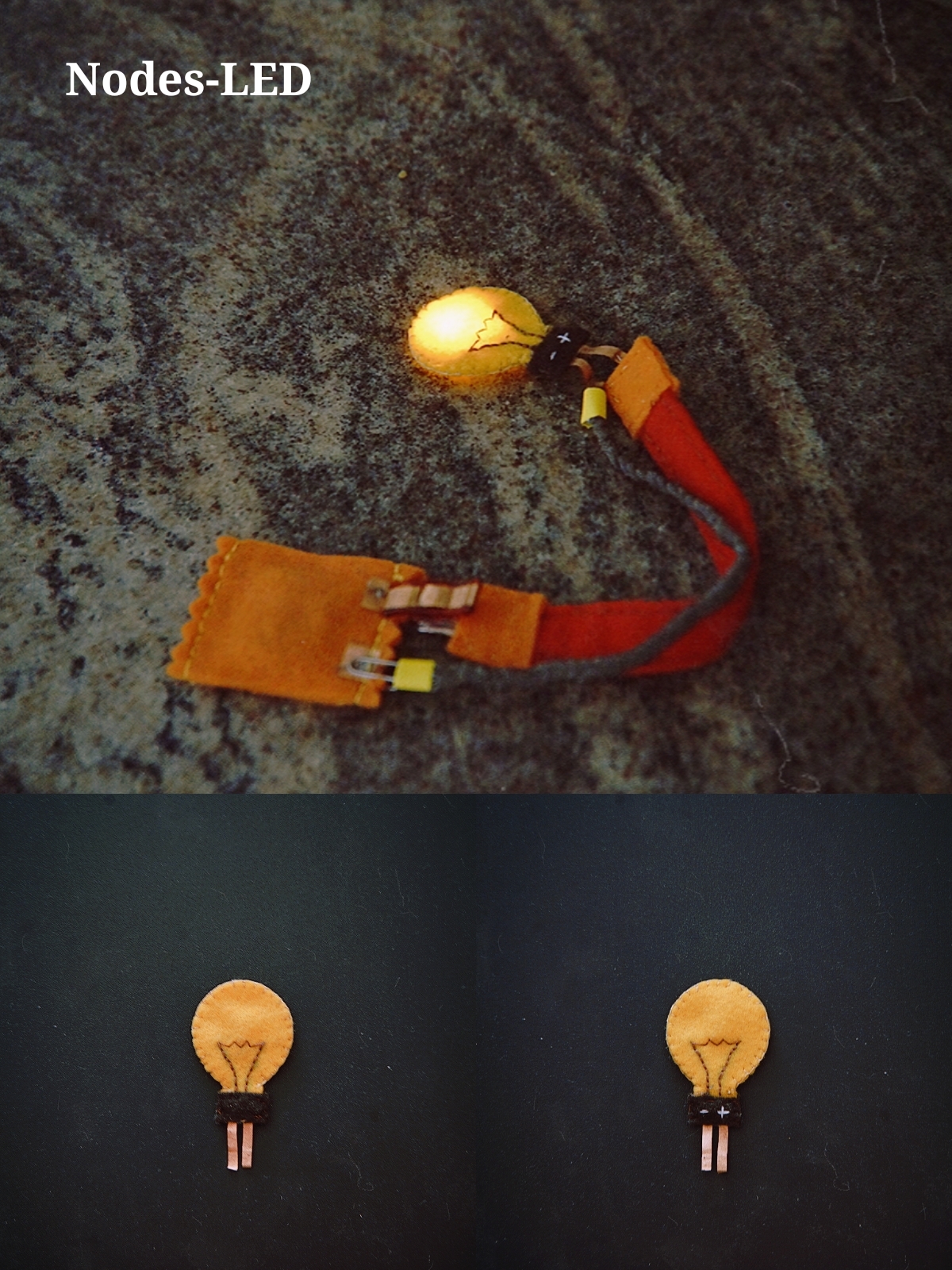
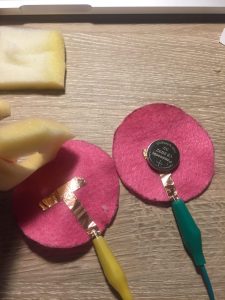
Another LED node is made by felt and conductive fabric.

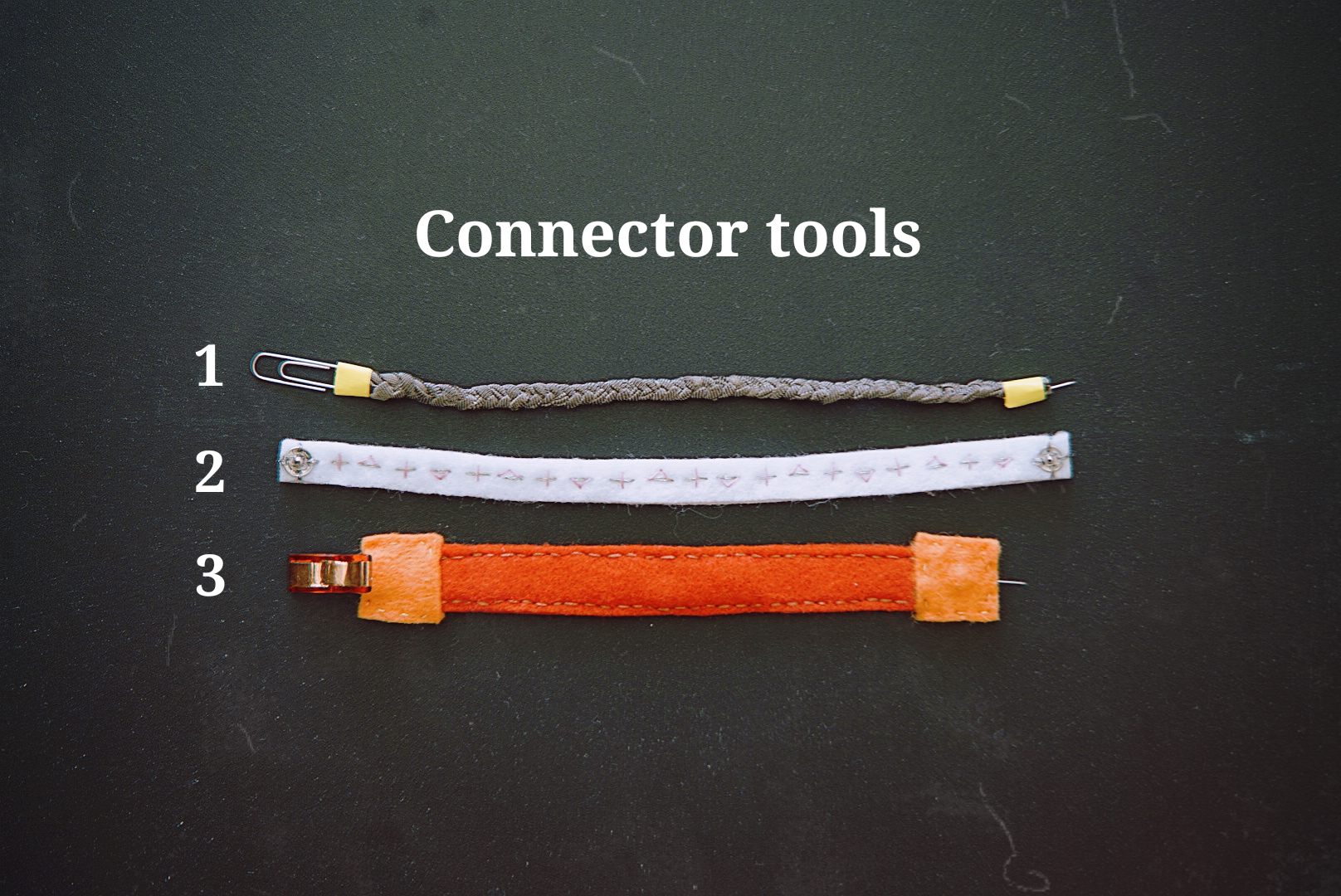
3 connector tools:
1. conductive fabric, pin, clip;
2. conductive thread, metal button, felt;
3. plastic clip, pin, felt, conductive fabric, conductive tape;

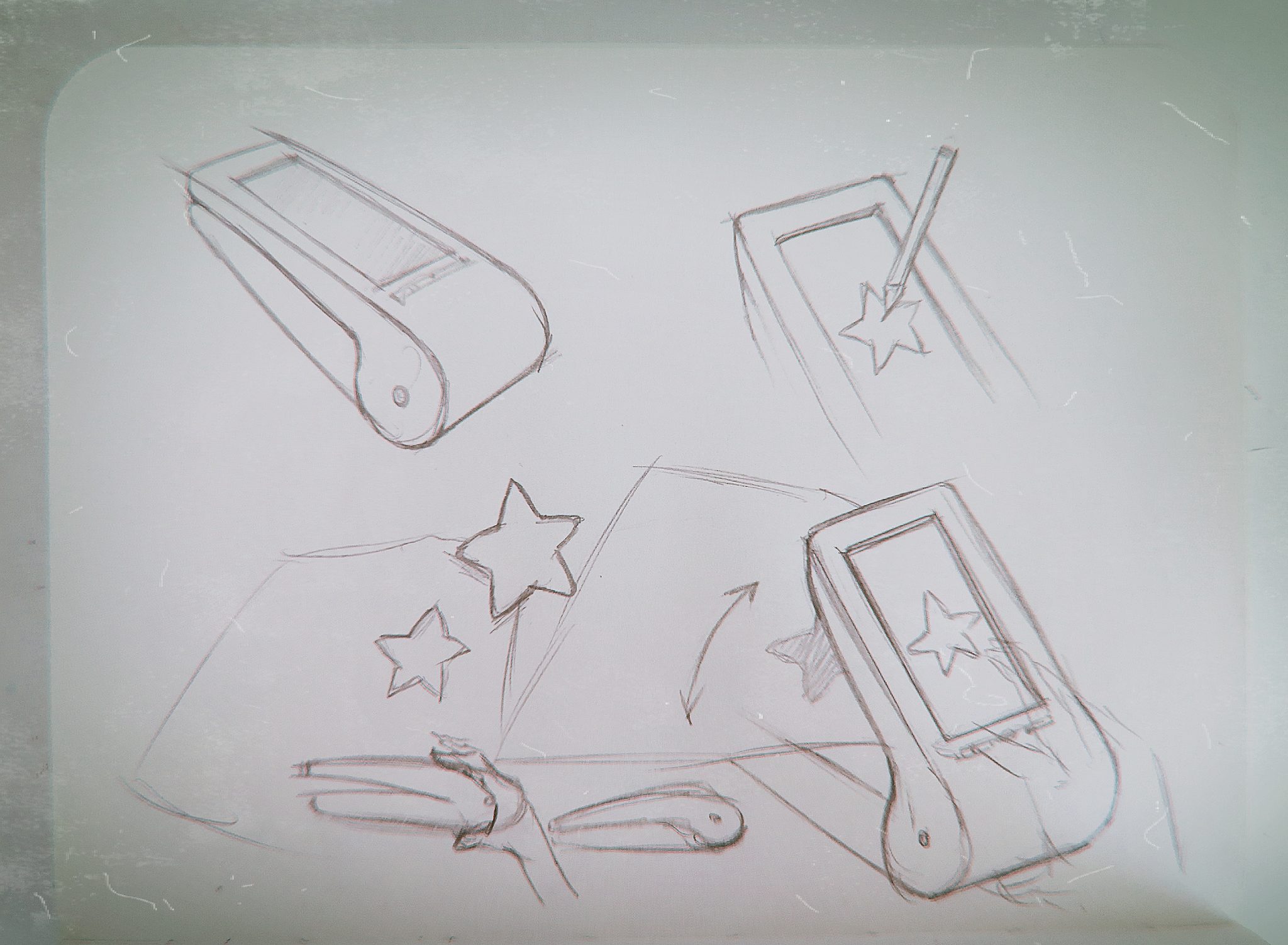
The tool I designed is for cutting patterns out of soft materials, such as paper, fabric, and foam plastic. It looks s like a stapler with a screen. Users are able to draw the pattern that they want to cut on the screen, and then put the material in the tool. Press the stapler to get the cutted pieces.

Week 3 + 4 – Lisa Ho

New Craft – Embroidery
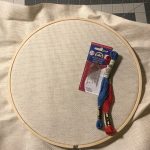
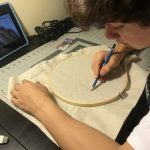
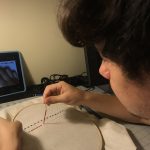
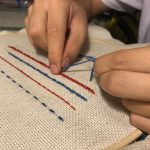
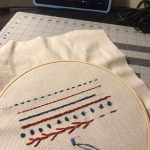
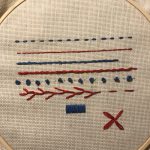
I started my homework with learning a new craft which was embroidery. I actually always wanted to embroider but never got my hands into starting one. This homework is my perfect reason to start.

I would consider myself a storyteller, maker, designer, and a craftsperson. I love anything that is hand-made which I feel really gives another aspect of warmth to it. That is why I would say I’m a craftsperson. I love anything physical that you can hold. I also love to tell a good story and hear a good story. I realized that storytelling’s importance from last semester’s motion graphic class in engaging other people to understand your situation or your perspective. I’m also a designer because I love to solve problems or even just noticing an issue and trying to design for or with a specific goal/outcome in mind.

I love hand lettering and embroidery. These two are something that really makes me relieved and relaxed. Although I am not an expert in both of these tools, I love using them to make things. The repetitiveness of these two tools somehow soothes my mind and makes me really clear-headed and satisfied.

Learning embroidery was really fun. I think the most frustrating part for me was that it takes so long and requires precision for it to look nice but hard work always pays off and the end product makes you really happy and satisfied. Therefore, I would suggest beginners give their full attention to it for the first time. I think learning it was not as intimidating as it looked and there are a lot of great instruction videos on YouTube and I would suggest beginners to start searching there.

Swatch – Poki Dots

The inspiration for my swatches was my love for polka dots. I decided to make polka dot push sensors. When you push on my poki dot swatch, you can turn on a LED. The materials I used were felt, yarn, conductive tape, and sponge. I was going to use conductive fabric did not find enough fabric and resorted to tape in the end.

The swatch was made by me cutting same sized circles and sewing them together. Inside I would tape the conductive tape inside with two stripes of conductive tape making a T shaped track and put a sponge in the middle to make the push button. I put the 3-vott battery to try if the circuit is ok and it worked fine.

Continue reading

Midterm Assignment

TRACK 1

Design a lamp using the techniques, tools, and materials we have been learning over the course. Lamp and presentation are due OCT. 18. You will have seven minutes total to present. I suggest 5 minutes for presentation and 2 for feedback. You do not need to have a slide deck unless you want to. You should plan to demo. Instructable due Tuesday, Oct. 23.

Constraints:
1) MUST use a switch or sensor. RE: You must have a way of controlling the circuit.
2) Must have at least two states (e.g. on/off, fading fast/slow, red/blue, etc) or more.
3) You do not have to use Arduino.
4) You cannot use jumper wires *unless* it is to connect your circuit traces to the Arduino. In this case, you should consider how to integrate your Arduino into the design. Depending on your time and financial constraints, you may want to explore other types of Arduinos that better fit your design, such as a Lilypad, Flora, Gemma, Arduino Mini, etc.
5) The midterm is an individual project.

NOTE: Please do not use a breadboard for the same reasons as the Arduino constraint above. Again, the goal of this project is to evaluate your comprehension of the materials, techniques, and processes. Only using wires and a breadboard or Arduino will not help me understand that you have mastered what we have been doing in the semester.

I will be evaluating you along the following categories:
Process
– Paper prototyping interaction and structure
– Grasp of assembly and how to integrate electronics with materials
– Material is appropriate for the project

Concept + Design
– Clear design goal
– Desired interaction accomplished (What should the user be doing or feeling? What action do you want them to perform?)
– Intuitive interface (or convoluted depending on the design goal)
– Articulated audience – who is this for?

TRACK 2

You may propose another project for the midterm, but it MUST be approved by me first. This can take the form of in-depth material research, etc.

ALL TRACKS

Documentation
– Create an Instructable documenting your project. Due October 23.

DUE OCTOBER 11
Post initial ideas, sketches, and any prototypes to the blog.

Week 3&4 – Youchun Zhang

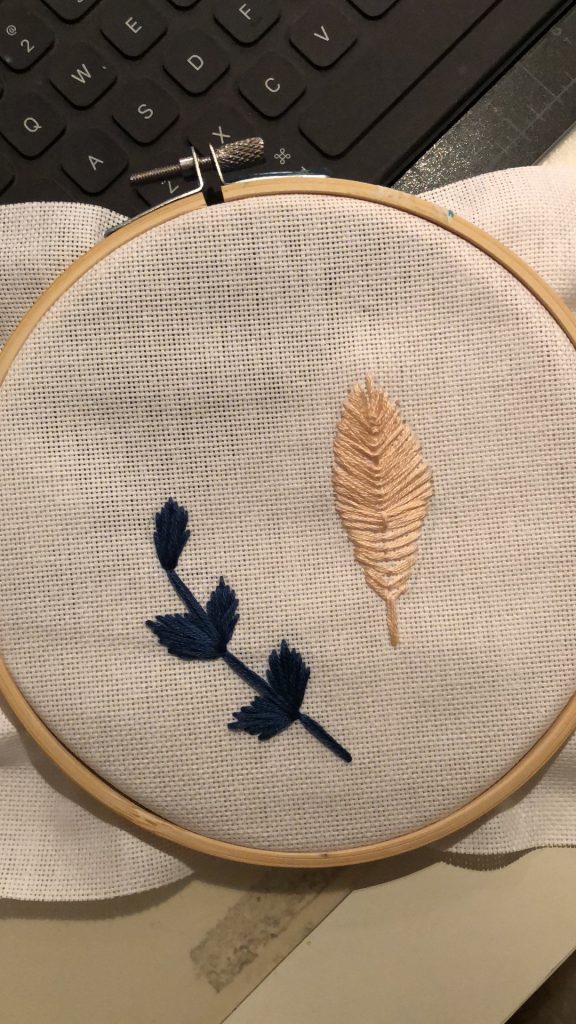
Learning embroidery

I started this week by learning a new craft – embroidery. I always enjoy the texture created by embroidery and how simple but persuasive about the threads that form their own visual language. In this practice, I think I am a maker, learner, and craftsperson. I spent most of the time getting used to the techniques and trying different topics until I get to the current version: plants. My favorite tool inside this process is the needle threaders. I like the mechanism of how it works, smart and helpful. My most frustrating moment during the process is when I was standing at Michael’s and trying to decide what are the right tools. Following a simple YouTube video is definitely an option, however, due to the fact that there are so many tools targeting at so many things, it is better to learn the system first.

Swatches

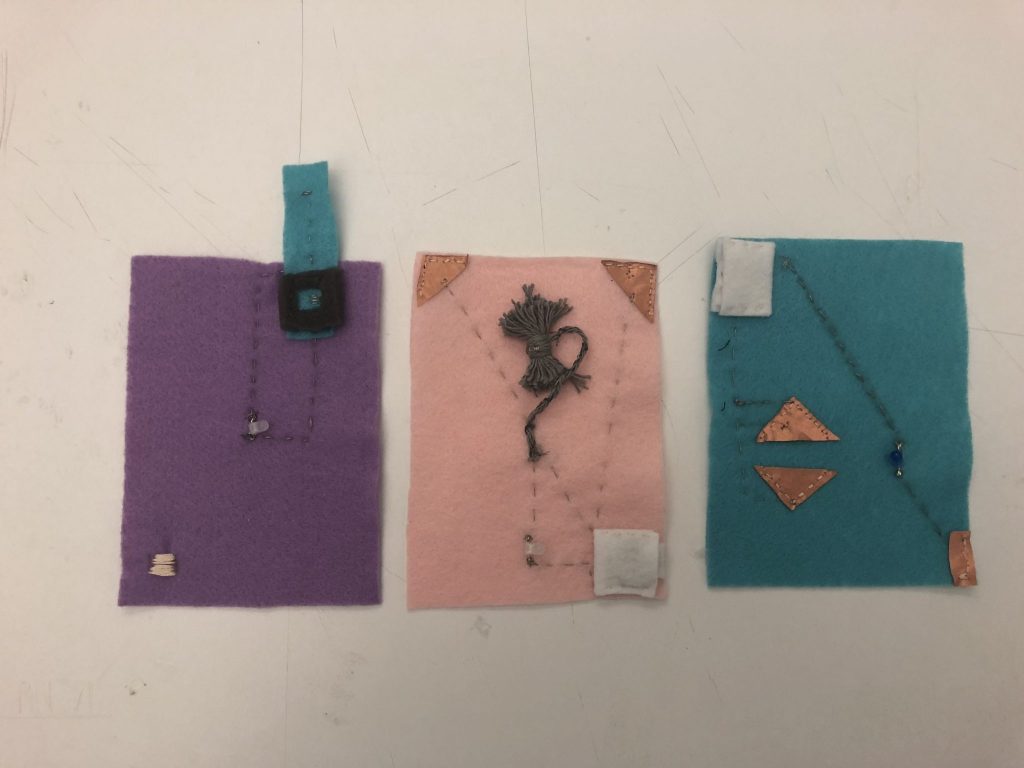
Title – Trace the Light

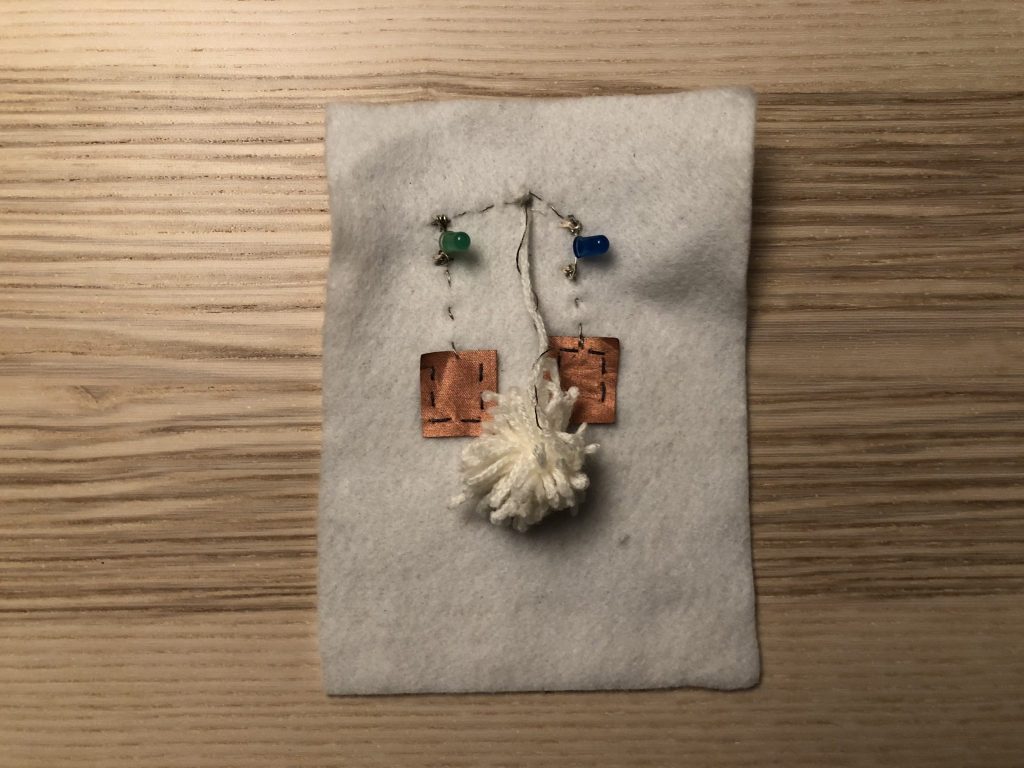
Description – Trace the Light is a set of switches that play with the pattern and the control of lighting up LEDs. It uses a battery pocket, tilt switch or the most simple switch but you will need to solve the puzzle.

Materials – Felt, conductive thread, conductive fabric, yarn

Techniques – The main technique I used is hand sewing. The two key parts are using felt to make a small pocket that holds the battery and using yarn to make pom poms.

References – https://youtu.be/uMBjCjk19GU

I started with thinking about the batteries and then working on positioning different components on different places. I saw this video explaining how to use yarn pom pom as part of the tilt switch, and I really liked it. Although most of the soft circuits were quite similar, I altered the style of the felt and the color of the LED to make it a different piece in the same set. I did see how I gradually have a more mature planning when I hold the felt and start my first thread.

Week 5 Assignment

1) Build two “nodes”, one for a battery and the other for LEDs. Use a different substrate for each (e.g. paper, wood, fabric, ceramics, etc).
2) Use your zine to build three more connector tools to connect your “nodes.” They can be all the same or all different.
3) Design a tool you would like to have in this class. It can be completely fantastical or gravely functional or both. You do not have to make this – it is a brainstorming exercise.

Document these all on the blog and bring them to next class.

Week3,4

  • Title. “Tight it to Light it!”
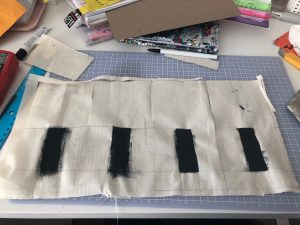
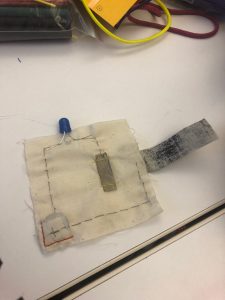
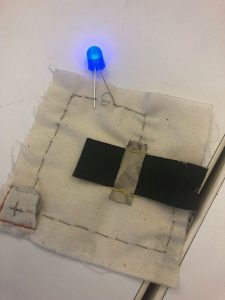
  • Description. This swatch (when light and the battery are in place) is to light a LED when the belt is tightened.
  • Materials. conductive fabric & paint & thread are used.
  • Techniques. Conductive threads are hand sewed onto a fabric that is used for embroidery.
  • References. I wanted to be creative with surface contact activated circuit. And thought a way of making two surfaces lock up to light the LED. (the belt!)

I’m using conductive paint spread on the fabric! and the thread.

belt type switch! using conductive fabric also. I liked that even a thin layer of the paint was able complete the circuit. I enjoyed hand sewing experience =].


Week 3,4 – Dario Narvaez

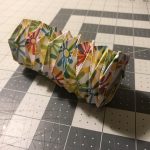
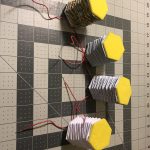
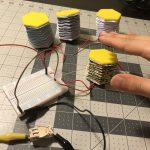
Accordion Switch: A playful push-button made out of paper and foam.
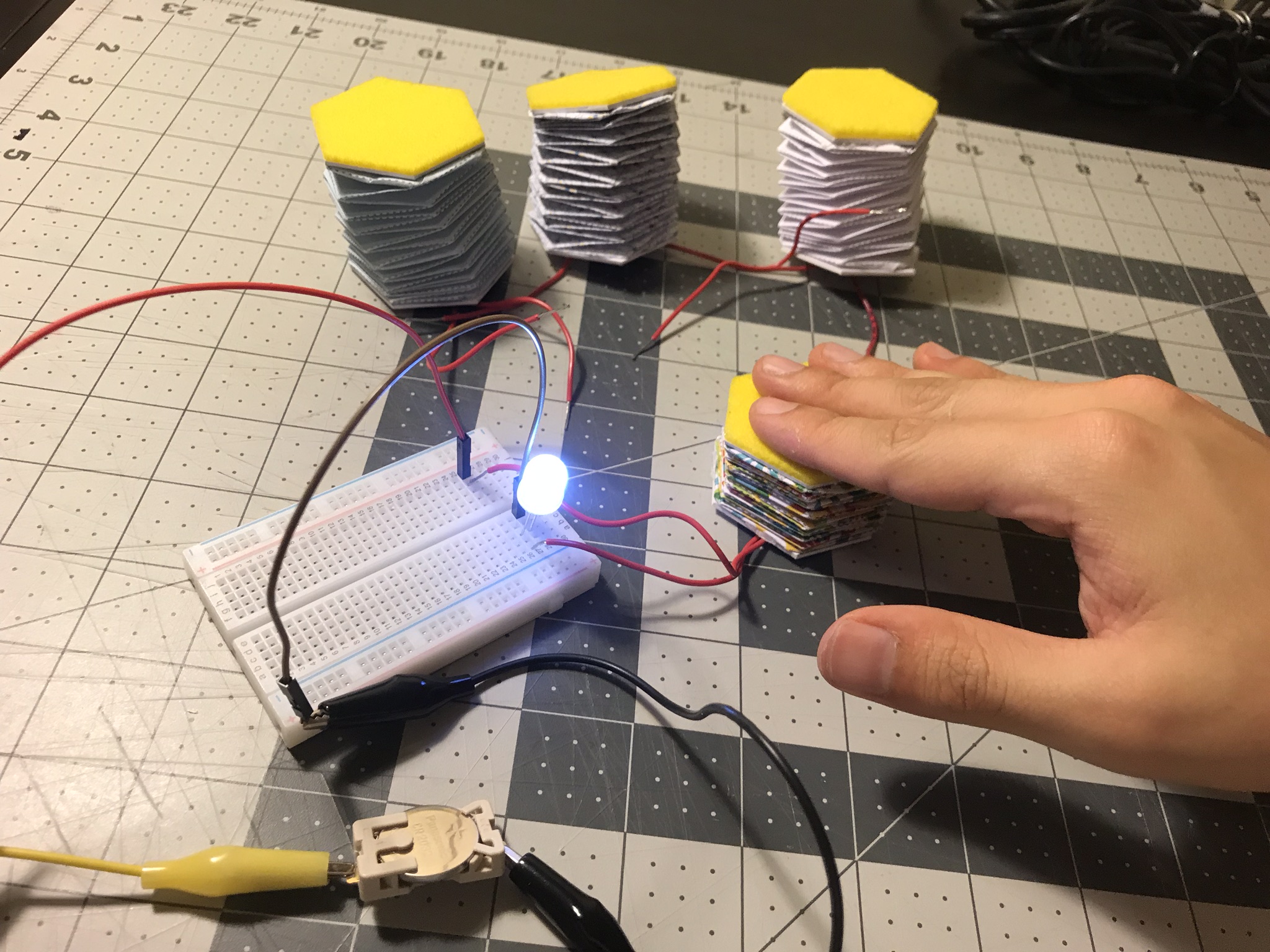
 

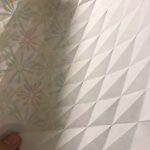
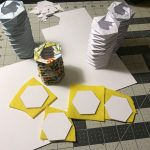
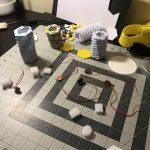
This switch explores a fun way to activate and control a circuit, by using the spring properties derived from forming intricate geometries with paper. The paper and the mechanism derived from the folding have ‘memory’ (return to the original state – usually all kind of elastics have memory), so the button can return to the initial position and state after is released, and therefore, opens the circuit. The key in this exercise is to use the properties of the materials without the need to add mechanisms or extra parts such as a spring. It is interesting how a non-elastic material can become elastic by modifying with various triggers, in this by changing the geometry. Can hard-flat materials, such as wood, metal and plastic become elastic by changing properties?

Materials:

  • Paper with accordion template – Letter Size
  • Conductive flat surface (I used cooper tape and coins)
  • Foam for touch feedback (There is foam in the push surface and in the inside of the accordion to achieve a better physical feedback)

Construction:

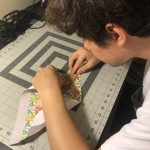
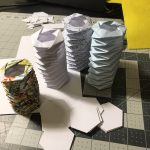
The switch was made using paper engineering (template and design downloaded from https://www.robives.com/product/make-your-own-paper-squeeze-box-accordion/). This involves a complex and very persevering process of bending and gluing in different angles, as well as being able to find the right way to form the volumes. I had never worked with paper engineering, it is an exciting field, but one that requires a lot of time and patience (above all patience!!!).

The switch and the mechanism are simple; I used two conductive surfaces that allow the continuity of electricity. I also used different types of foam (at the top and inside) to provide physical feedback that is appropriate with the action of “pressing”.

References: 

This project was inspired by the amazing work of the paper engineer and artist Rob Ives. I also was inspired by this visual reference of the popular goofy glasses with elastic eyes. What would be the interaction of a button that is constantly moving and that has a goofy appreciation? Perhaps an answer that goes against the principles of ‘good’ design (maybe?), but that explores affordances and interesting mechanisms for game …


New Craft Endeavor

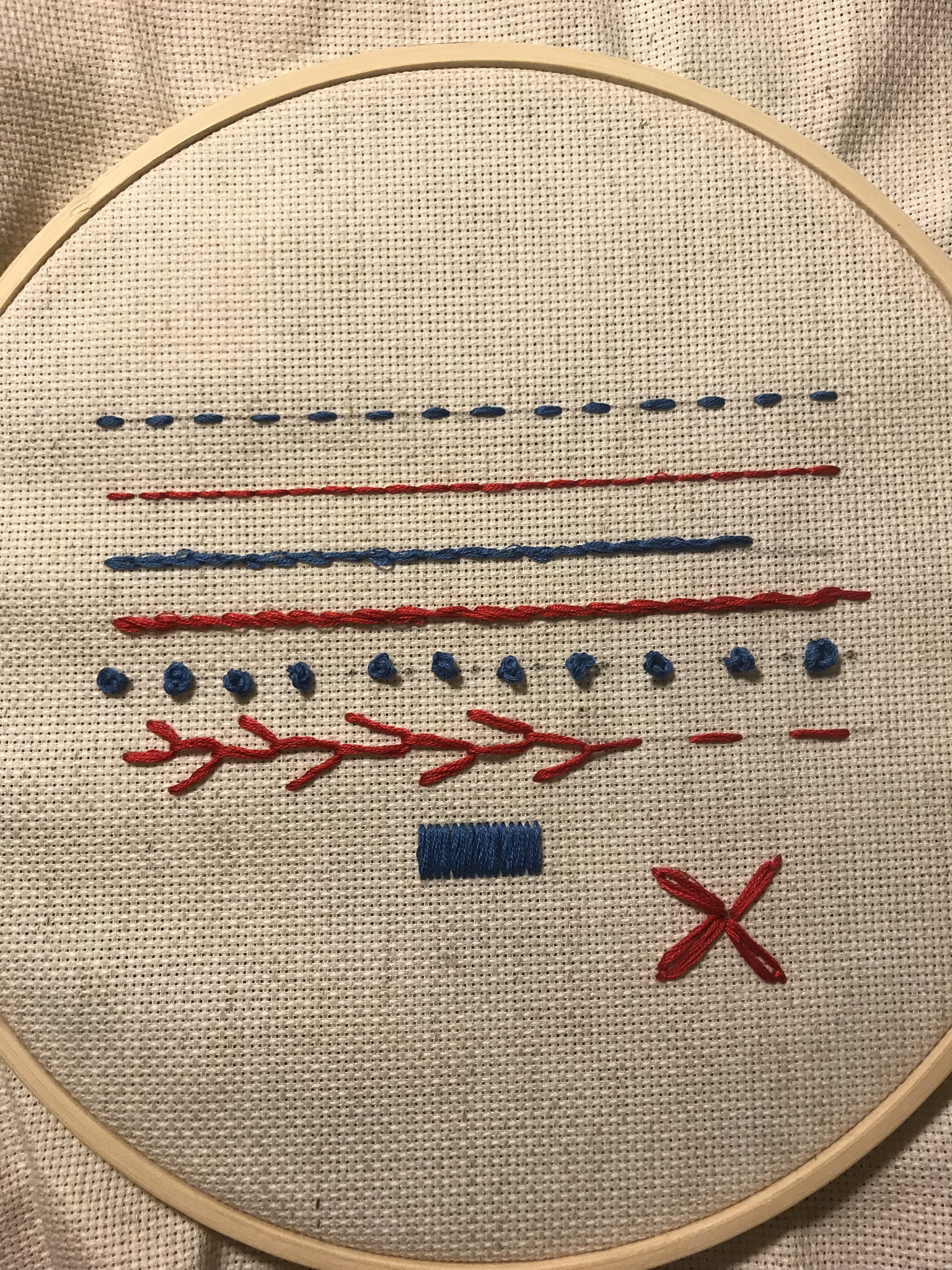
The craft that I started learning and exploring was embroidery (I followed the tutorial on the basics of embroidery from this youtube video). It is interesting how I was surrounded all my life of this craft for the beautiful work of my grandmother, but I had never tried it. There is an emotional connection with textiles and embroidery that I find motivating to explore. In this particular case, I spent a very good of time doing it, it was not so difficult, and it was definitely relaxing. I want to continue exploring more and more types of increasingly complex stitches. It is amazing to see the work of people who work in this craft, and the potential this field has to be mixed it with other fields.
I consider myself a designer and maker. I am always thinking about exploring materiality and construction methods but having a conscious process that involves constant communication with a specific user. I’ve also been intrigued by hacking processes and materials, as an interesting way convert a design in a sustainable system, where the life of use of a product is not limited to its vital functionality, but to possible and innovative alternatives to revive it.

My favorite tool is the pencil. With it, I can capture and plan what the brain is producing. It is often difficult to represent these ideas, which are often abstract, in the brain itself. They have to validate with reality, and the easiest way is to communicate them through a pencil. I also love calipers. I use this measurement tool in my everyday as an Industrial Designer. It’s always on my side while I’m modeling in 3D or constructing models.