Week 11 – Anna Garbier

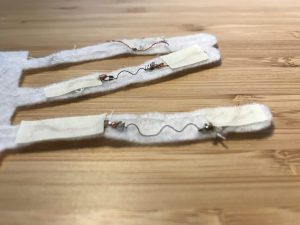
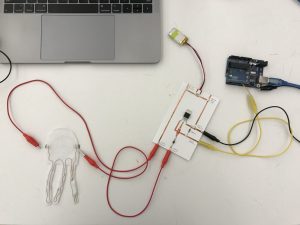
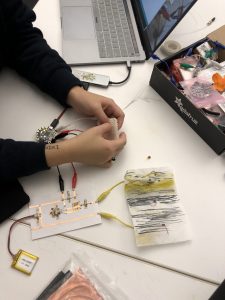
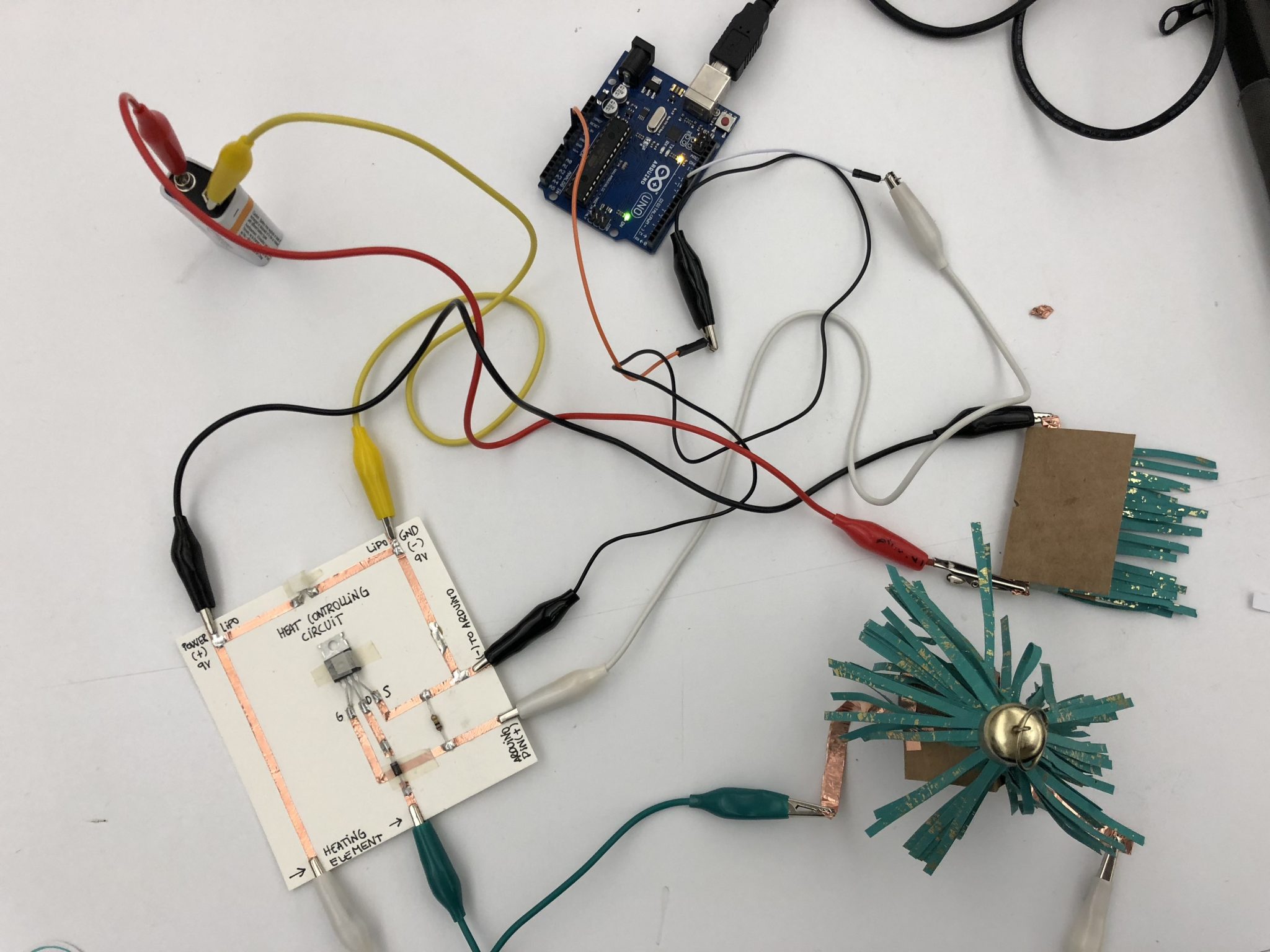
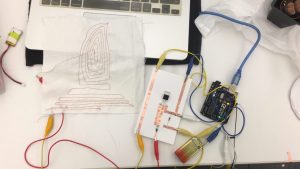
I attempted to make a fabric jellyfish, whose tentacles can be programmed to curl and relax using nitinol and electricity. As of class-time, I still need to do some debugging.

So far, I’ve confirmed that my “circuit board” (the same one from Week 10’s heat circuit) works, but I suspect I have some loose connections in my actual jellyfish circuit. I’ll further secure the connections, and update here with the working result. For now, some initial pictures:


Week 11: American Sign Language ILY

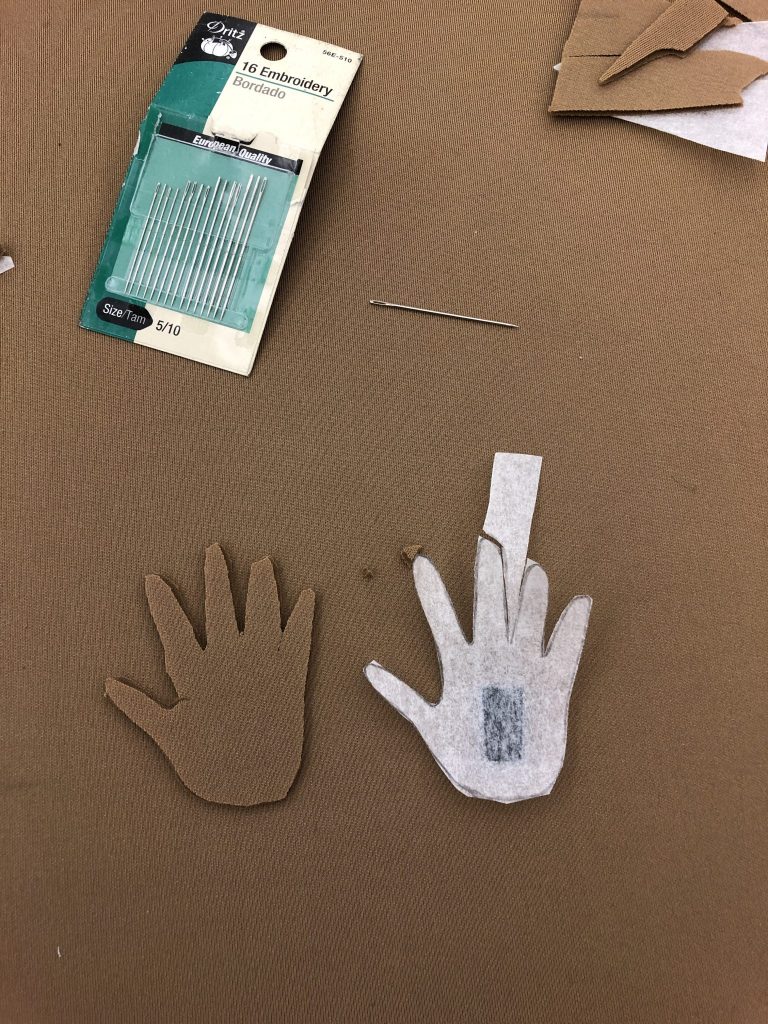
For this week’s assignment I decided to use a hand as my starting point. Mostly because the organic movement of the material could mimic a human hand somewhat.

Given that the material was quite short I couldn’t execute my original idea of making a hand that closed into a fist. Naturally this ended up being a good thing. Because of the length of the material I used it to make the hand lower it’s middle and ring fingers creating the sign for “I love you” in American Sign Language. I then used one of the pressure sensors I made earlier in the semester, and mapped the values it delivers to control the force that the two fingers lower with.

IMG_6529

Honestly this is a much more interesting finished product for me than a fist.

Final Project Design Brief

Final times! Woohoo! Here are your final deliverables:

DUE THURSDAY, 12/13

1) WORKING PROTOTYPE
You MUST bring your prototype to show – even if it is not working. If you require a specific environment, please email me.

2) PRESENTATION
You will have 7 minutes to present. This includes time for feedback, so structure your presentation accordingly. Your should include the following in your presentation ( in whatever order you like):

  • Concept
  • Precedents
  • User testing + feedback
  • Process documentation
  • Video of project demo
  • Challenges you faced
  • Future iterations

3) VIDEO DOCUMENTATION
You should make a short video introducing your project. It should include the title of your piece, your concept, and a prototype demo.

DUE TUESDAY, 12/20 AT MIDNIGHT (I will not accept late submissions)

1) BLOG POST

  • Create a short post on the blog with The link to your Instructable.
  • Text of your project description from the Instructable
  • Any other documentation links.
  • A short reflection on your process. What were your wins, challenges? What did you learn?
  • Where would you take it next?

2) INSTRUCTABLE
Here are the components you should have:

  • Title. IMPORTANT: Make your title descriptive or catchy so it easy for people to find. If you have a more abstract title, include a subtitle. For example, Vague textiles VS Vague textiles: Using thermochromic ink to change fabric surfaces
  • Intended audience. Who is this for? Beginners? Textile coders of the 23rd century? Elementary afterschool STEAM club? Let people know what prior knowledge they need so they don’t have unreasonable expectations before jumping in.
  • Description of the project. Write a few sentences on why you made it, what it does, what you hoped to accomplish, challenges you might have faced, and where you would take it next.
  • Materials list. List the materials you used and link to where people can purchase. Here the materials list for the class. Email me if you cannot find a link to a material we used.
  • Video documentation. Include the video described above.
  • Steps to make it. Write all of the steps needed to recreate your project. Include images or diagrams to supplement.
  • Circuit diagram. Be sure to include a circuit diagram or drawing.


ASSESSMENT GUIDELINES

I will assess your project by the following criteria:

Ideation, Concept, and Design

  • Incorporates computational concepts discussed in class
  • Able to translate ideas/concepts into project form within a given environment
  • Thoughtful integration of design elements
  • Presents functioning prototype.
  • Presents working documentation if was unable to get working
  • Synthesizes design and technology to create interesting and contextually significant work that makes contributions to the domain

Process + Materials

  • Thoroughly documented according to class guidelines
  • Uses materials and processes learned in class
  • Synthesizes materials and processes to make relevant contributions to field
  • Iterated prototypes
  • Demonstrated effective problem-solving/ finding skills
  • Scoped approach to project and sculpted according to personal goals, strengths, and weaknesses

Presentation

  • Articulated concept and problem statement clearly
  • Prepared for presentation (slides ready and prototype set up)
  • Addresses all required elements for presentation
    • problem statement/question you are trying to answer
    • audience (who is this for? we are designers, which means we design for someone or something.)
    • concept statement
    • precedents/inspiration
    • process/prototypes
    • what you learned
    • where you would take the next iteration
Week 11- Breathing X-Mas tree – Carla Molins

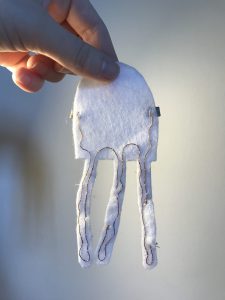
My idea for this project was to bring to life a tiny Christmas tree. Winter season is here to stay for a couple of months but Christmas trees will join our households just for a couple of weeks. I was planning on keeping the tree alive by interacting with it.

This is the circuitry, heating circuit + swatch + breathing tree +9V battery.

Detail of the breathing movement when applying current.

After some failed attempts this version kept the movement quite subtle but smooth. However, the connection of the Flexinol wasn’t strong enough. So I had to reinforce it.


Week 11 – Erica

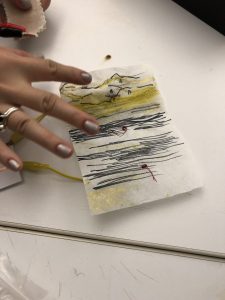
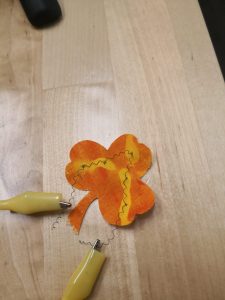
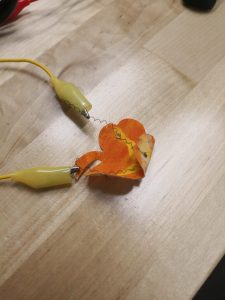
For the exercise for week 11, I combined the shape memory alloy with the thermochromic ink, and the sensor I used is a pressure sensor. The circuit was turned on when I press the sensor and the alloy started to move. I was trying to mimic the motion of leaves becoming dry in the fall and changes color at the same time.

Week11_Yixun

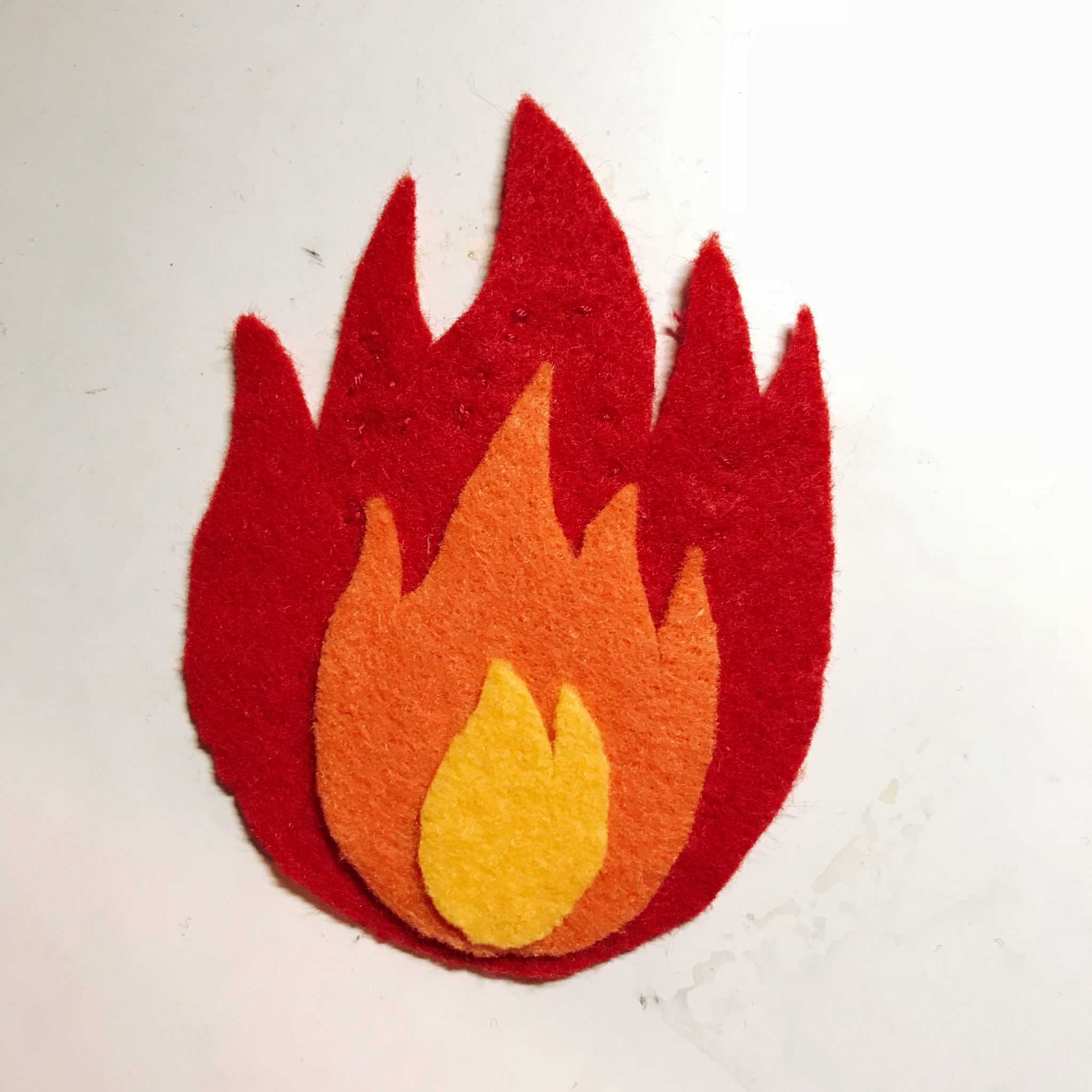
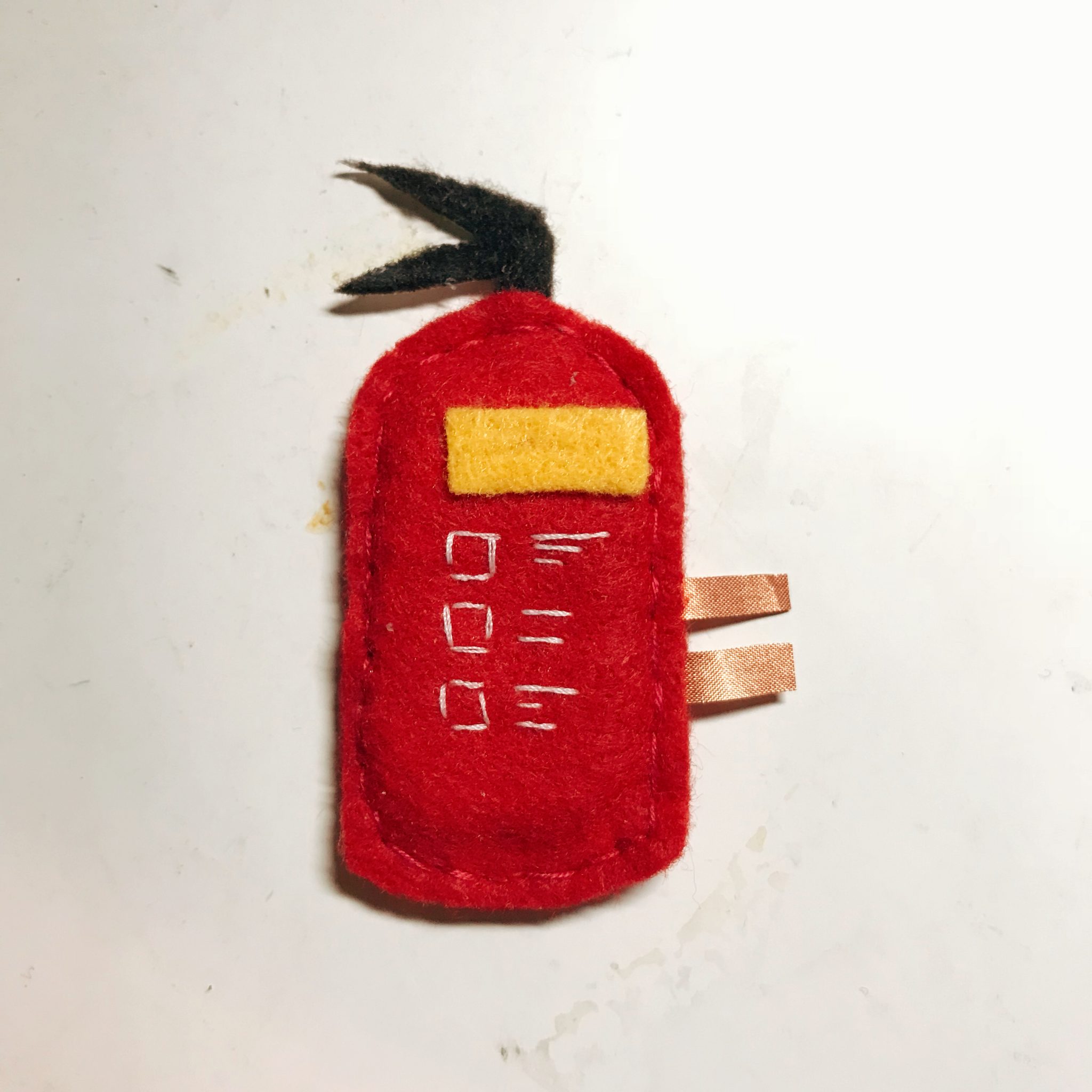
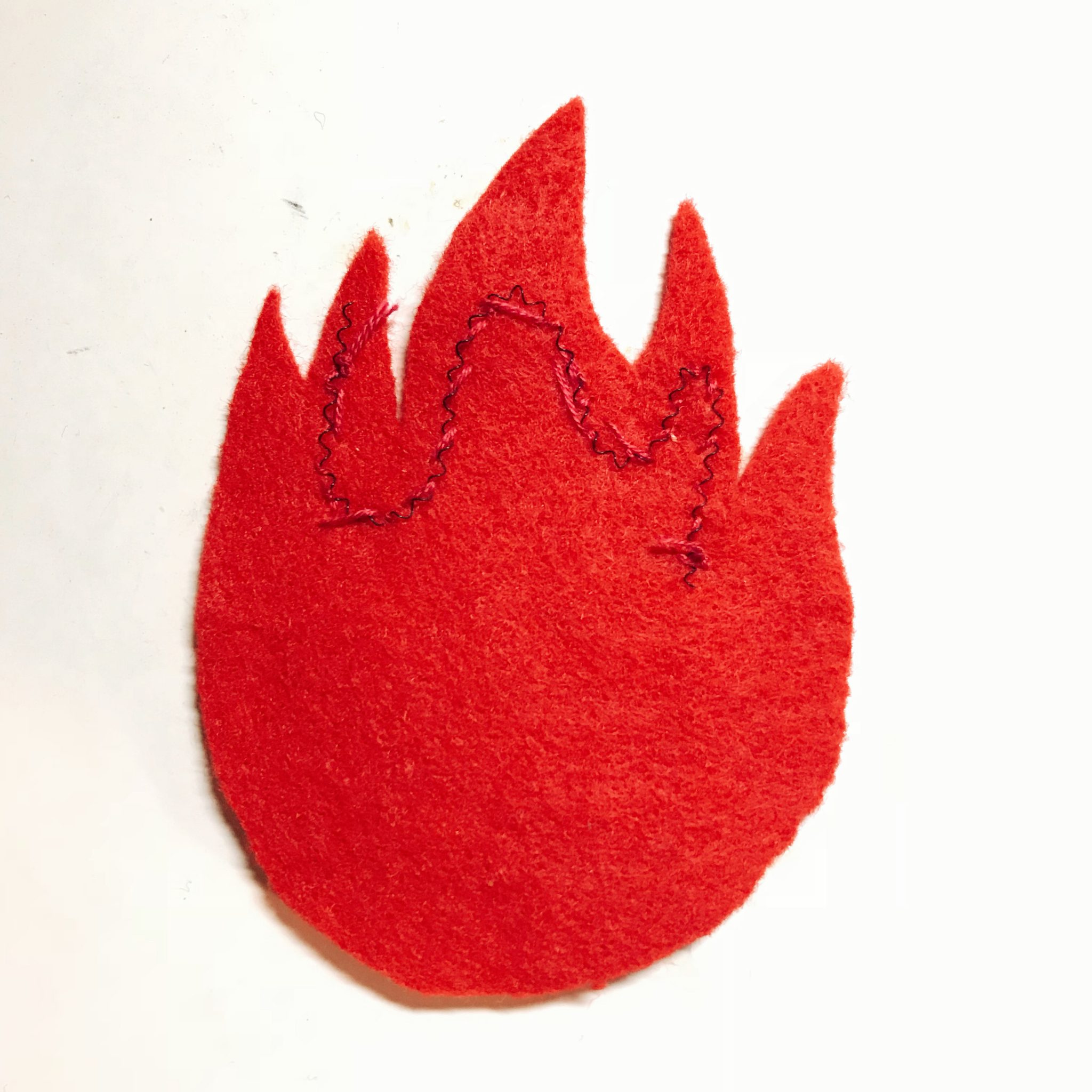
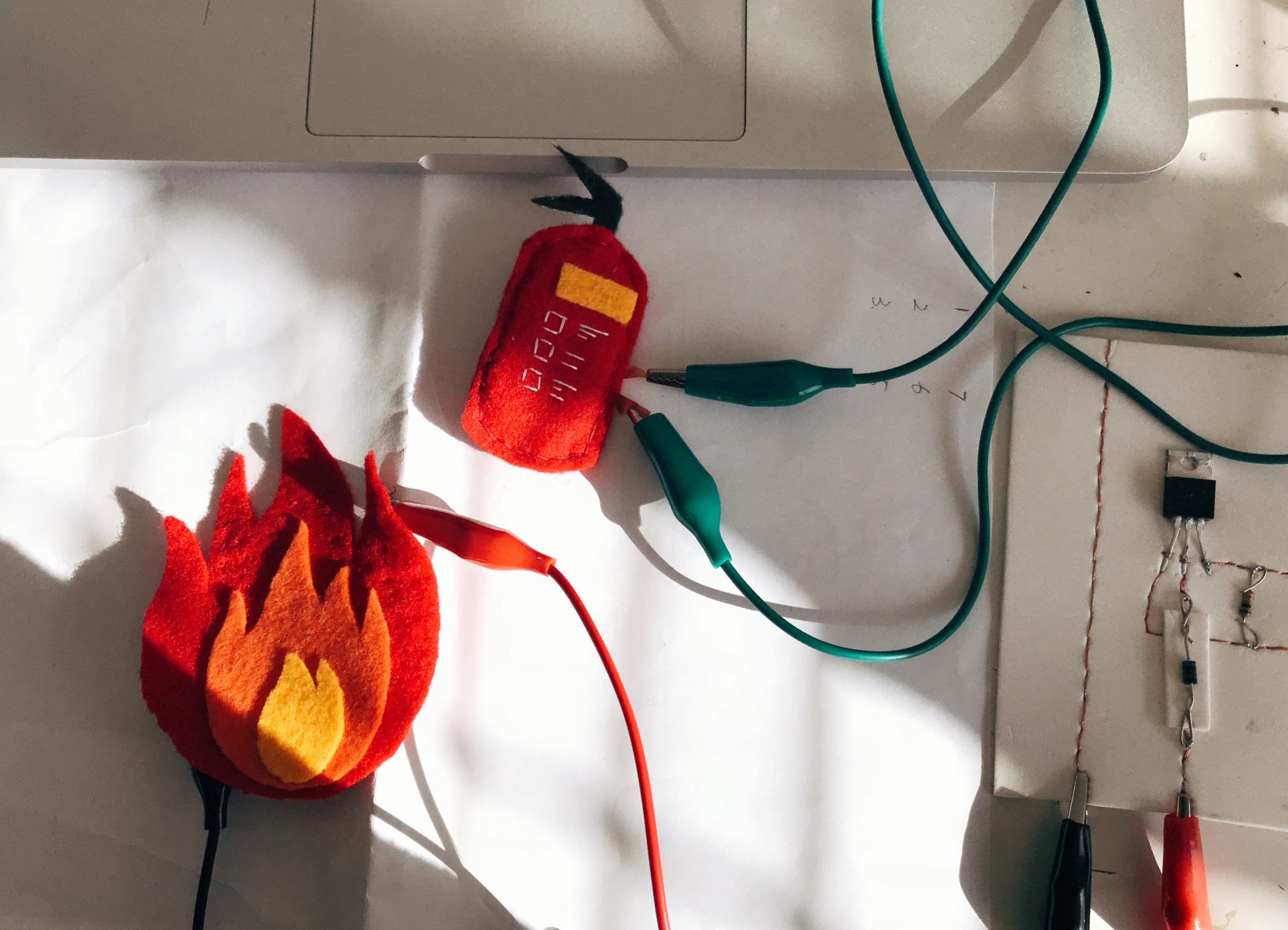
Here are the fire extinguisher and the fire. I sewed the flexinol with the red felt to get the fire. And the fire extinguisher is a soft button that I can press it to connect the Arduino circuit. The inspiration came from the motion of the flexinol which reminds me of the sparkling flames. So I decided to use the fire extinguisher button to trigger the fire. The button can be pressed to put out a fire.

Week 10 HW – Zhenyuan Shi

For this week’s assignment, since the material we are given are electricity and thermochromic ink, I came up with the idea of creating a project related to global warming to raise awareness of people’s use of electricity.

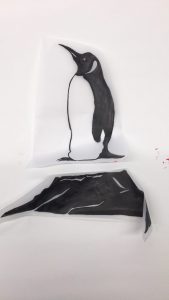
In order to have a more better graphic quality, I chose to apply ink with screen printing. Here are the illustrations I created for the screen printing process:

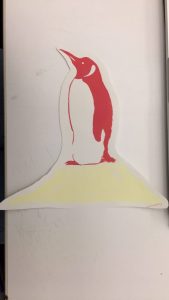
During the process, I realized it is very hard to mix thermochromic ink with screenprinting paint. It required a lot of thermochromic pigment to actually mix with the screenprinting paint. Here is the screen-printed illustration that I have:

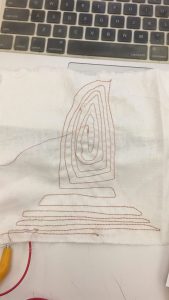
After that, I created the circuit for it using copper conductive thread and fabric:

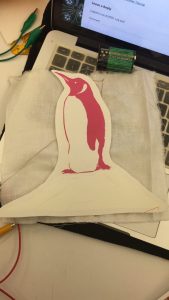
When the circuit is connected to electricity, the ice-cube under the penguin will fade away and the penguin will become redder: