Category Archives: Workshops

Jane, Charles, + Wes – Final Project Concept

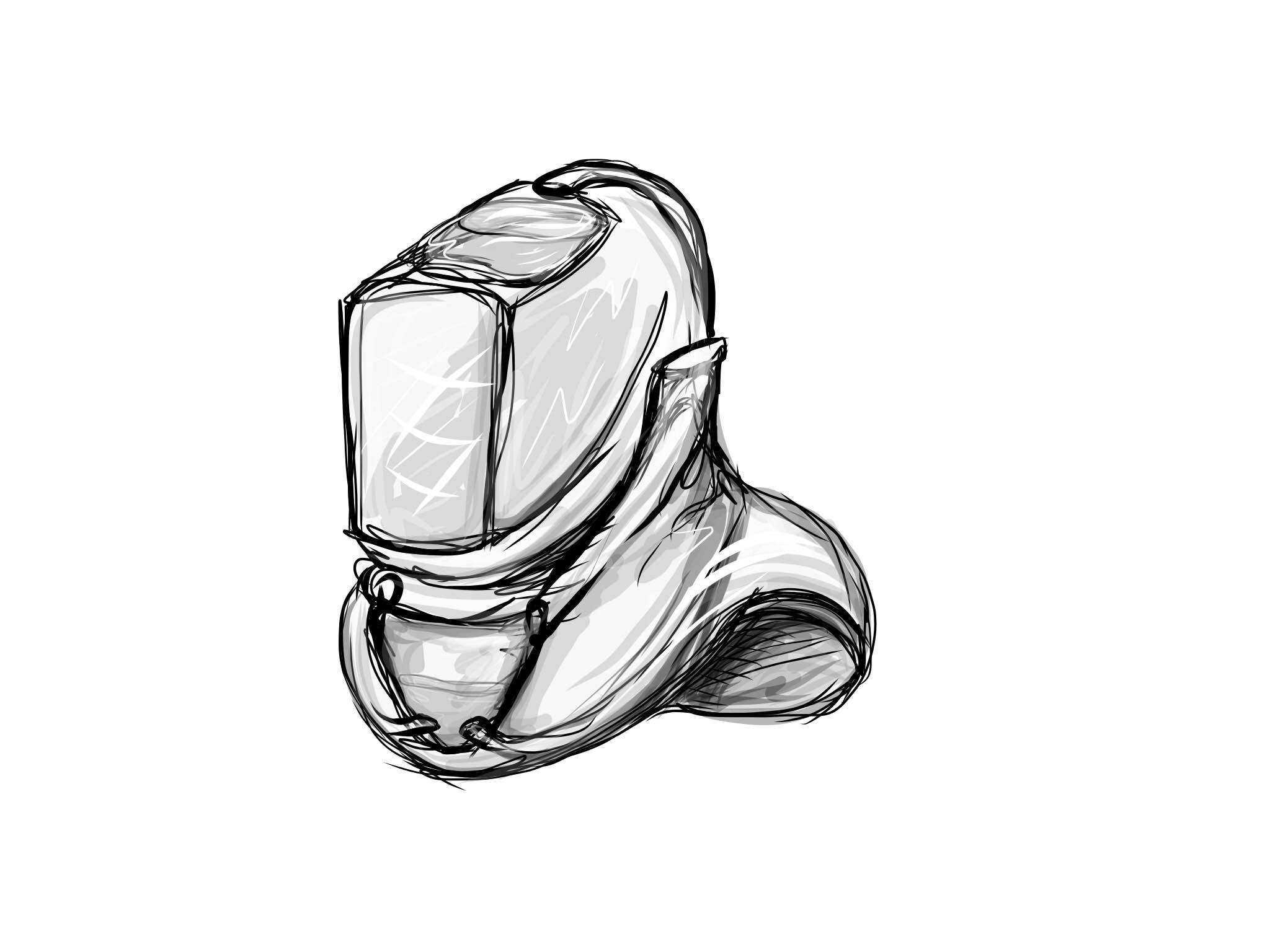
Our project  is a wearable piece or collection of pieces that explore the relationship between sensory-based perception and memory, experimenting with the idea of how experiences are encoded into memory through the senses and what might happen if these senses are altered, augmented, or limited by the worn artifact. Our project’s initial iteration will use water to interfere with perception (visual and aural) in order to convey this sensation of the altered experience of the present that is also representative of the fading memories of the past.

To begin, users are presented with a helmet/head covering. The front of the helmet contains a clear plate or viewport, allowing the user to view their surroundings. Though their ears are covered, users are still able to hear. Once the helmet is on, water begins to trickle down the viewport. As time progresses, more and more water runs down through the clear plate, obscuring the users’ vision. Simultaneously, water droplets fall into small metal disks next to the users’ ears. With two senses affected by the passing of time, the helmet begins to simulate the blurring of experience and fading of memory.

So far, we have been experimenting with different materials – including plaster of paris and copper sheeting – and different ways of initiating this sequence of events. We would like this prototype to possibly be one of a few variations, all of which would occupy the same sort of “universe” and would address different ways of altering experience and memory through the senses.

IMG_1485

Updated Concept

Concept

It’s a drum machine fabricated as a table runner. It’s an exploration in soft circuit and new instrument.

I wanna create a new drum machine that helps musicians (users) break through their habit to create music. So hopefully it can give more opportunities for creating fresh music. I have made a MIDI glove last year. It is more for easy playing. But after that project, I realized instrument is not for easy playing, It’s more for fun and providing more opportunities to break existing habits.

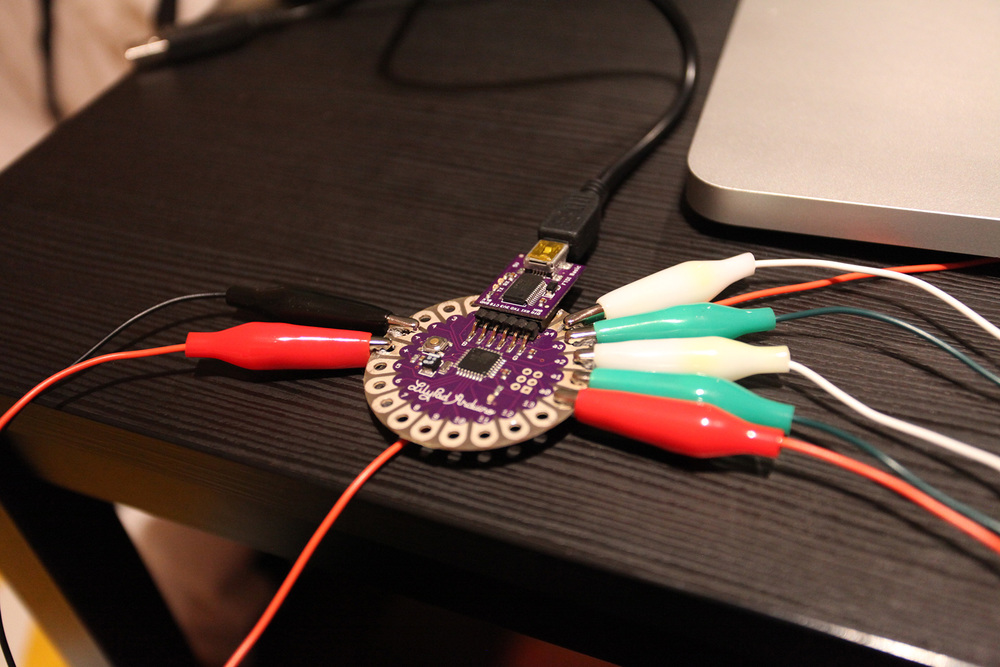
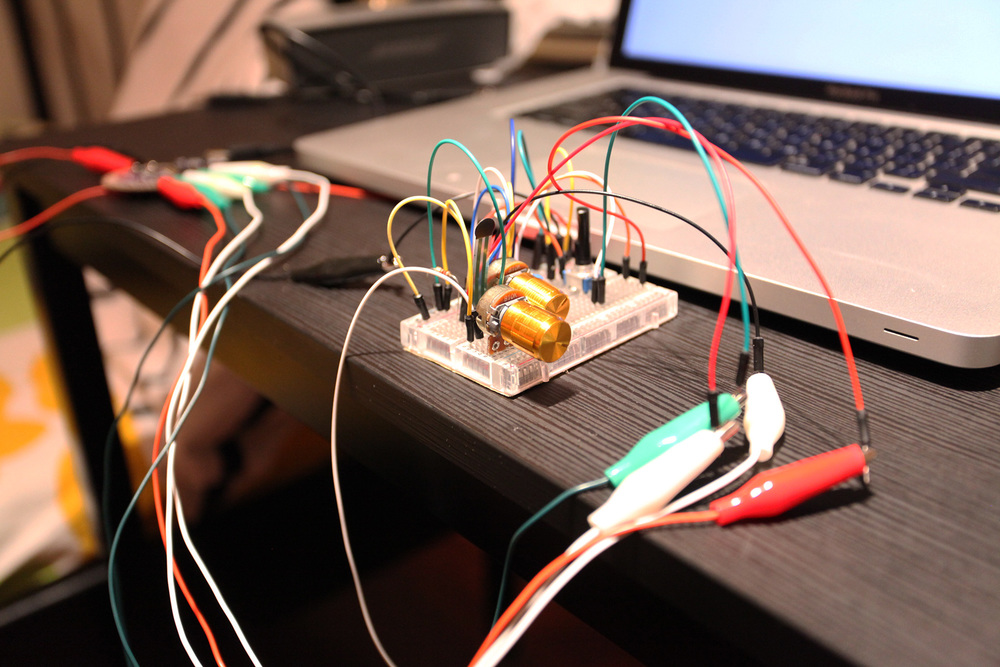
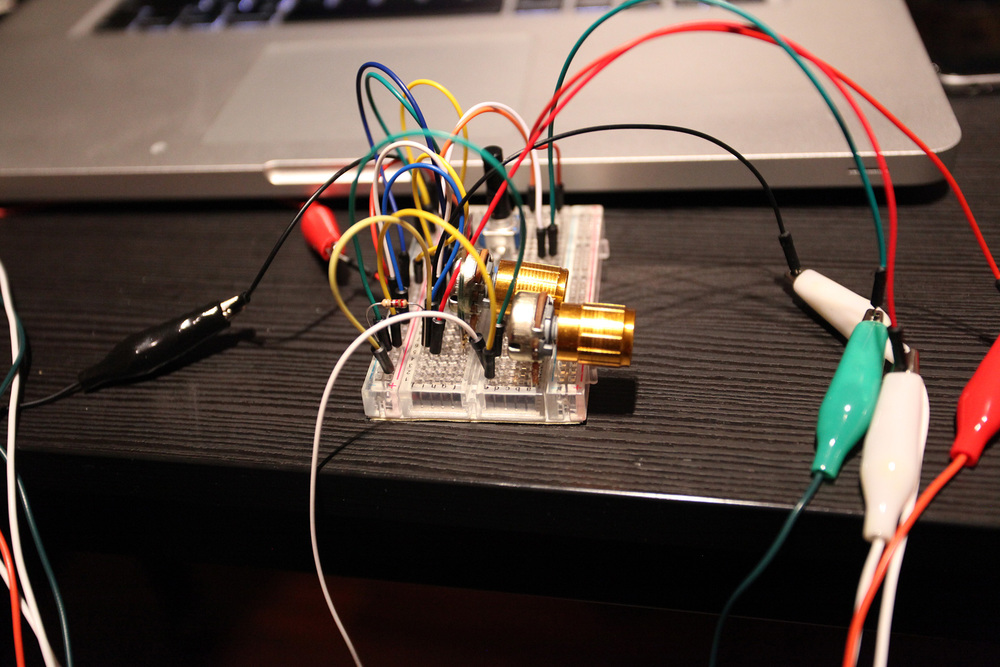
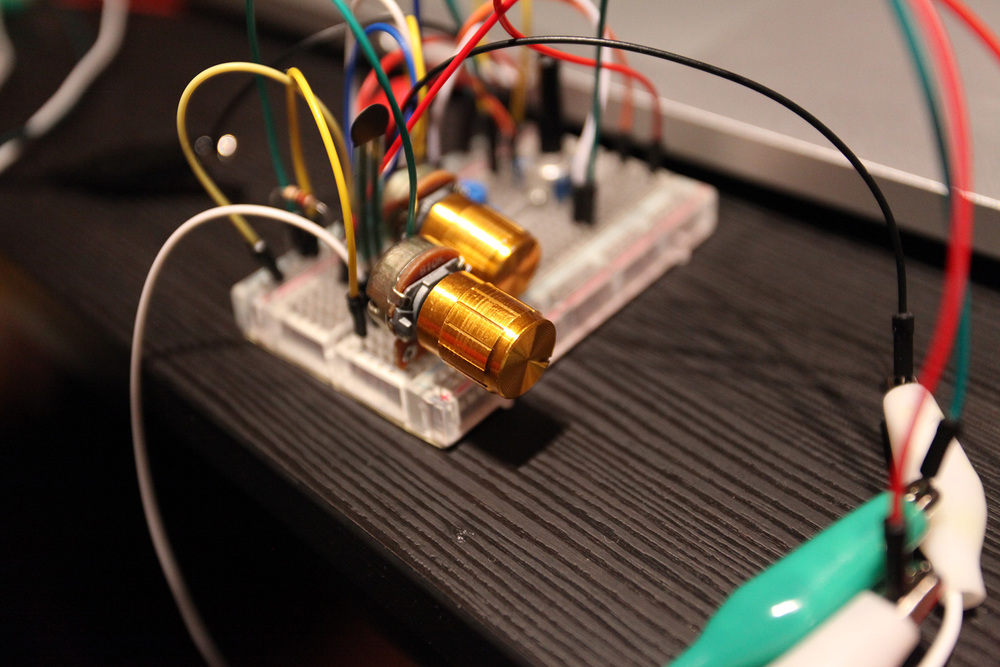
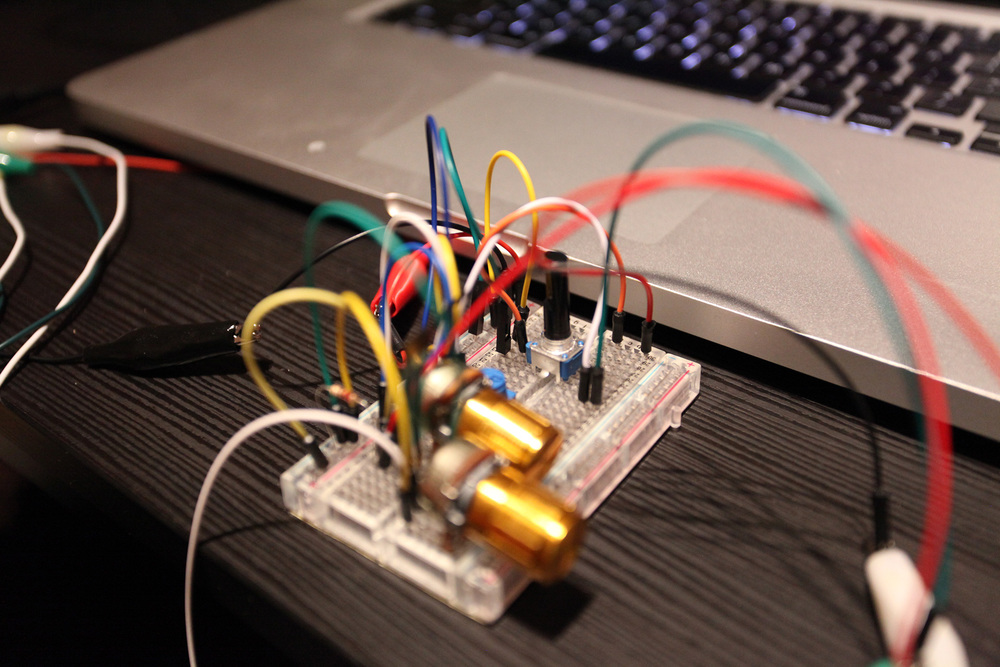
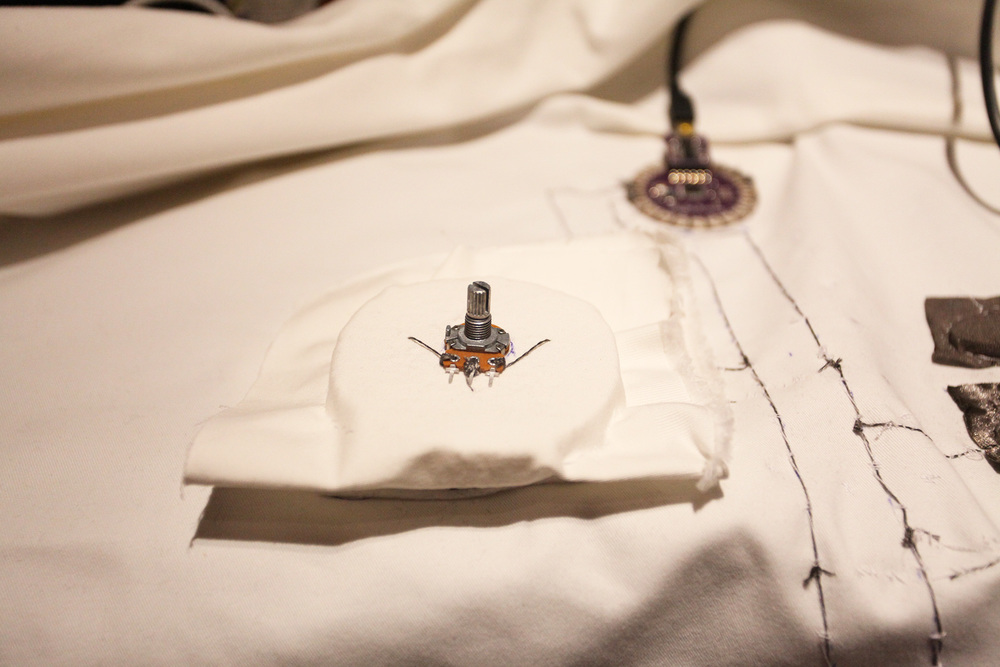
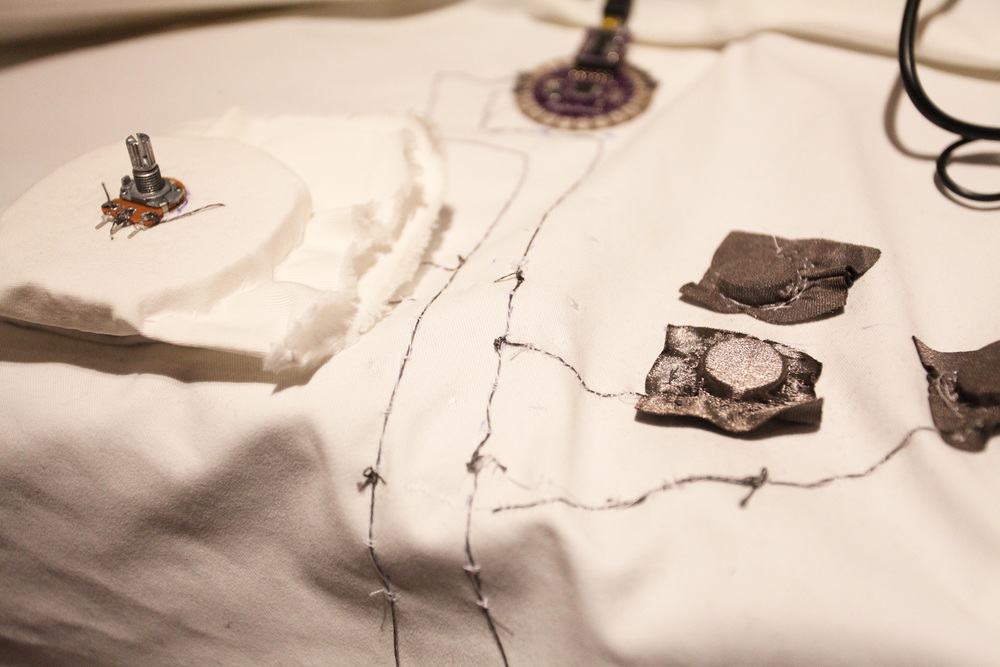
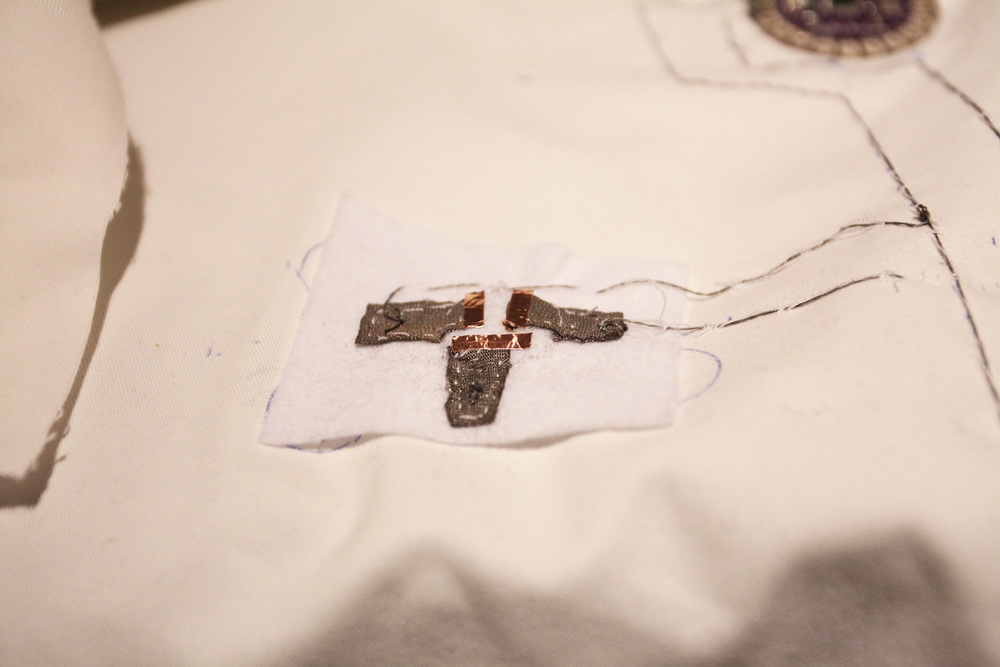
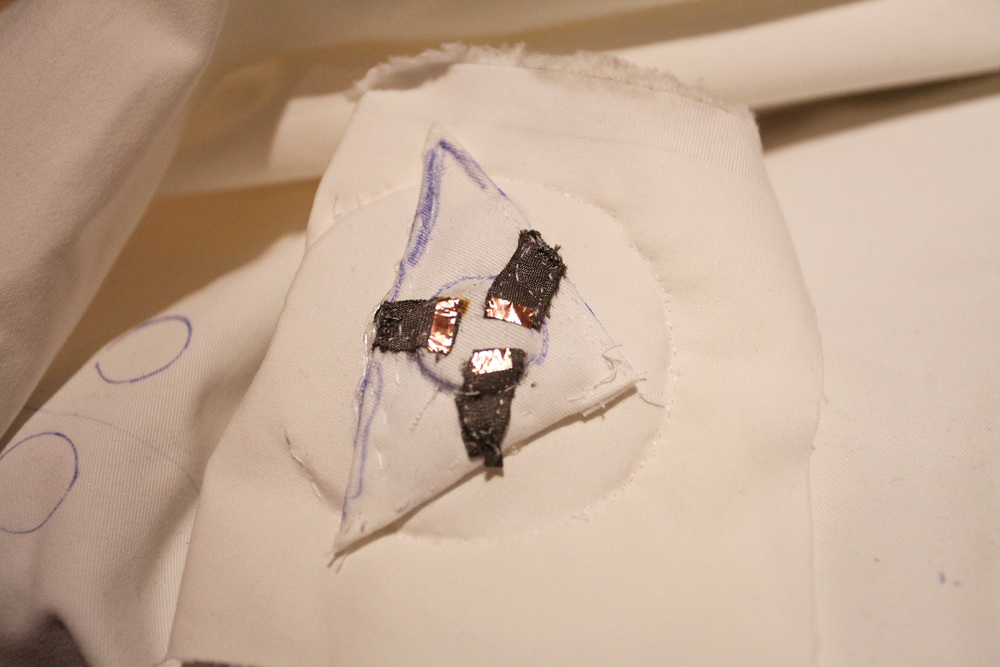
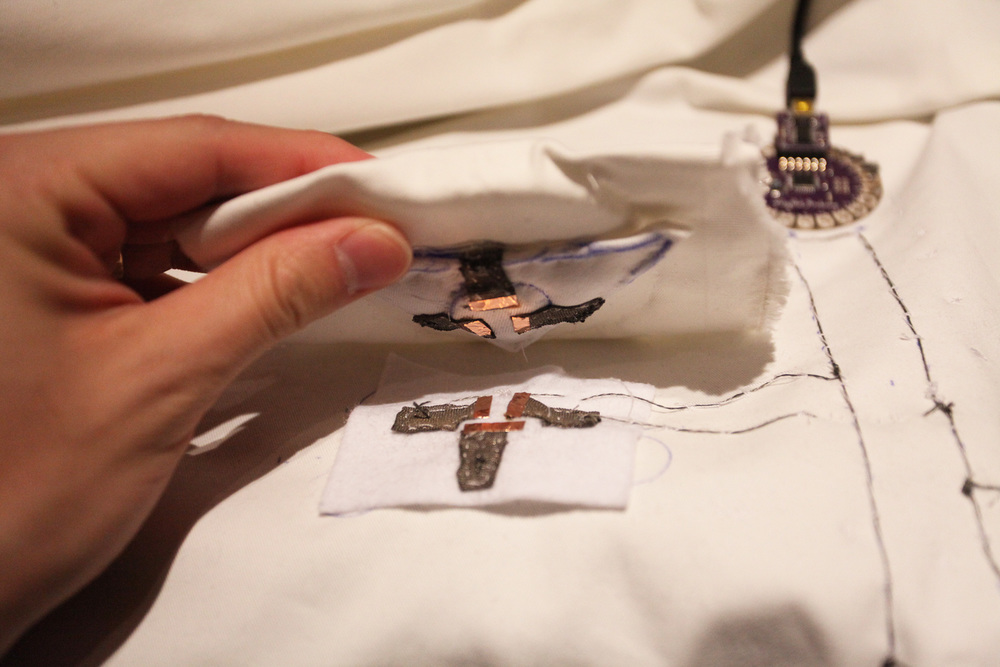
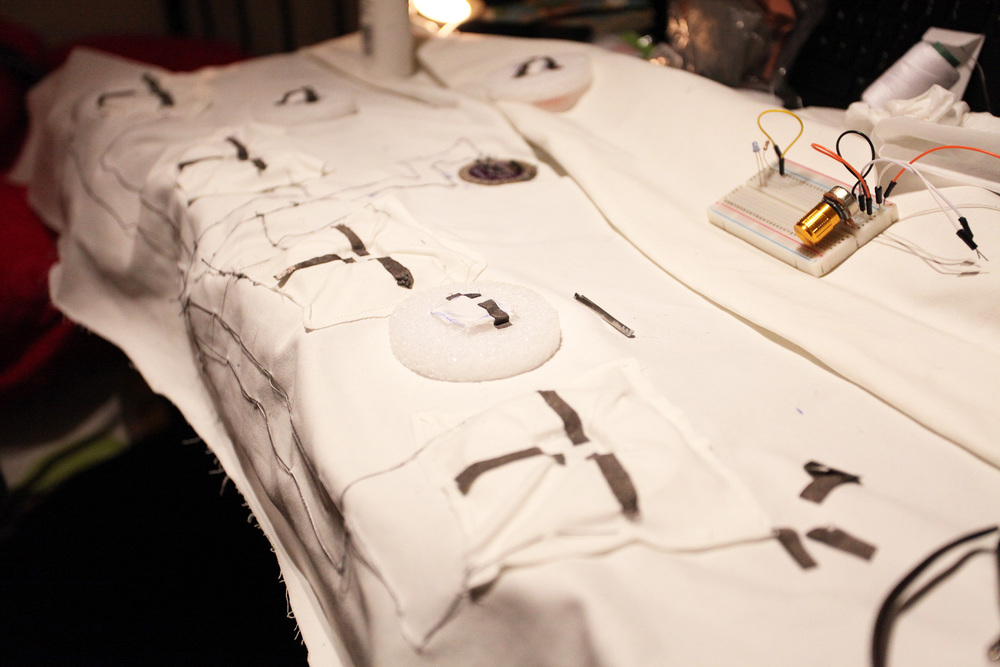
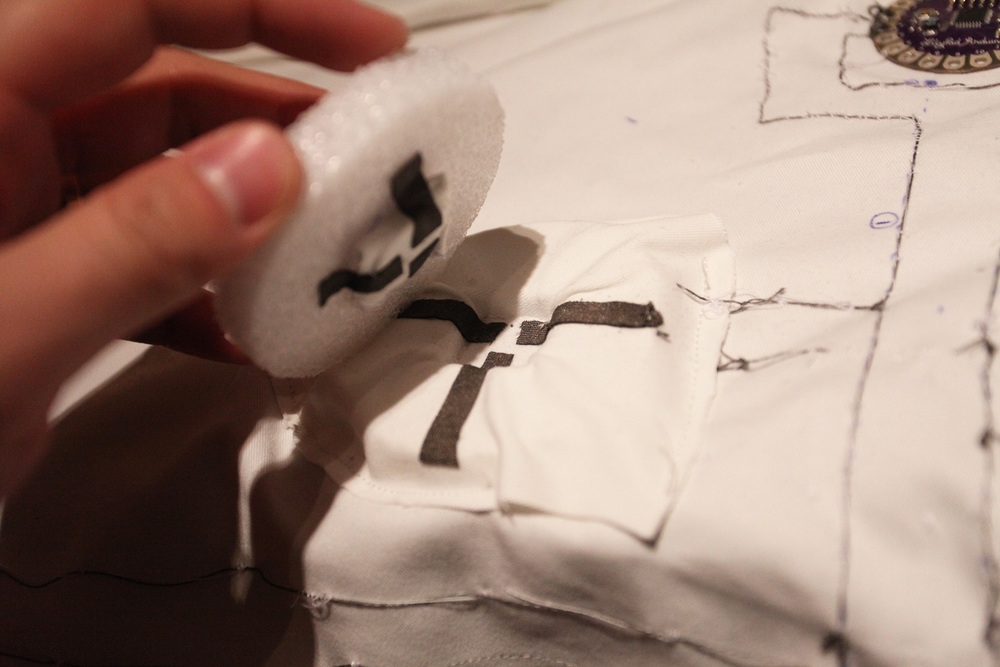
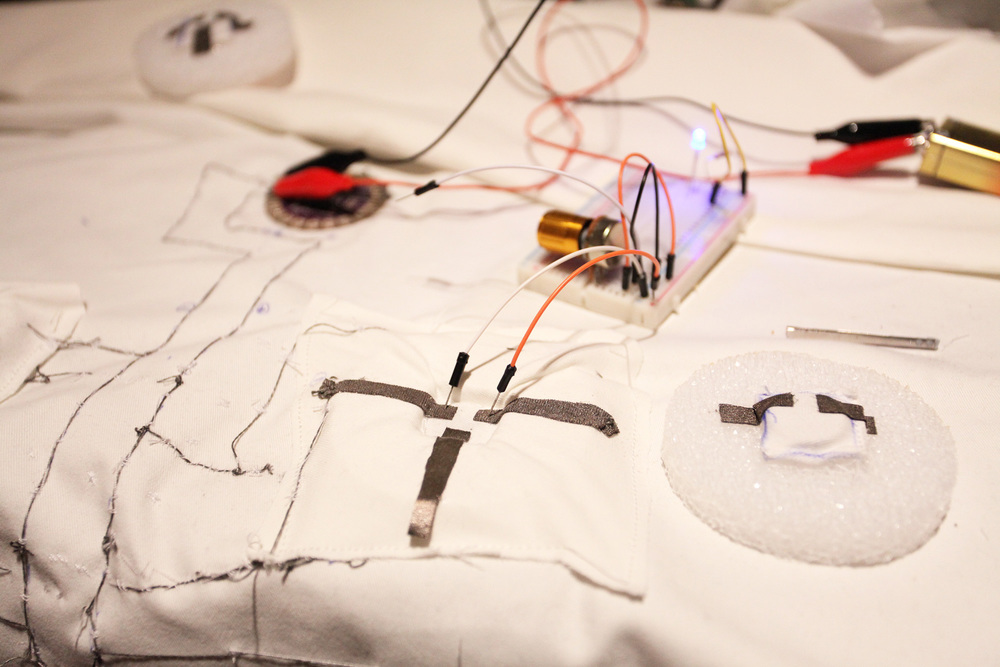
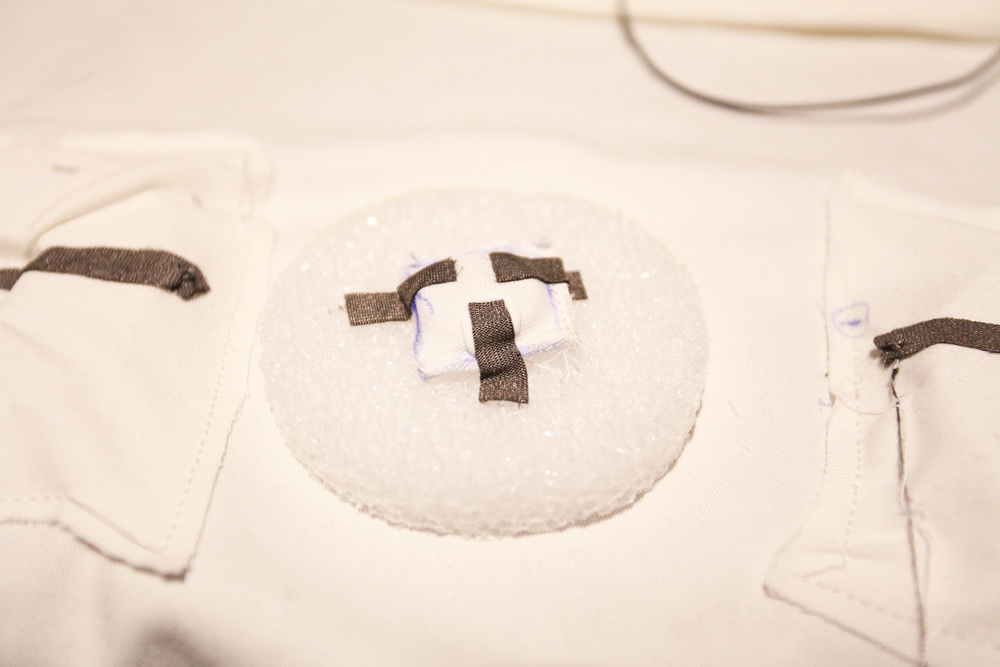
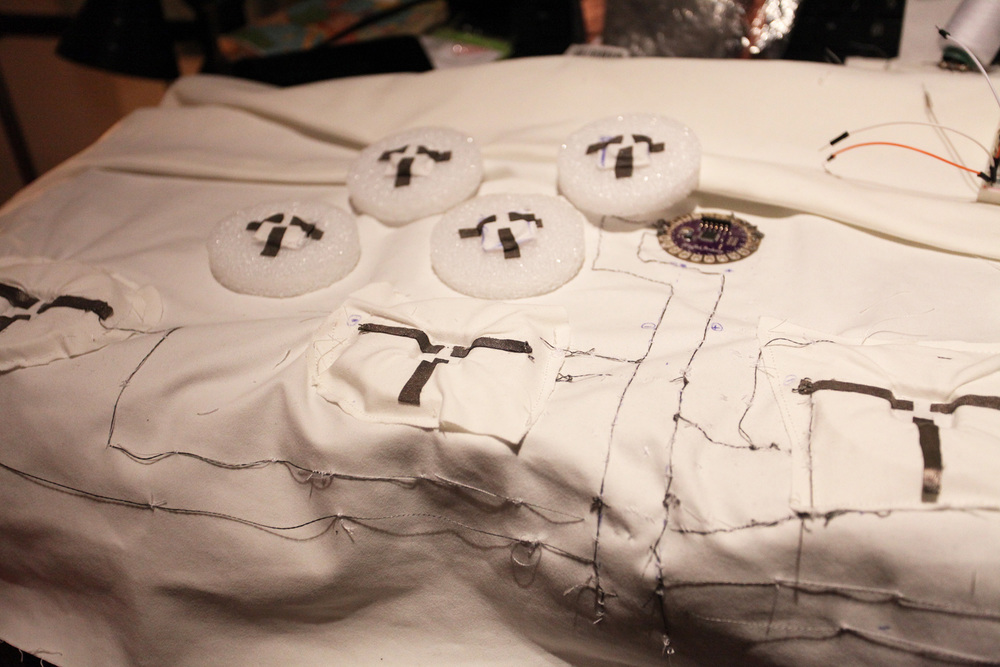
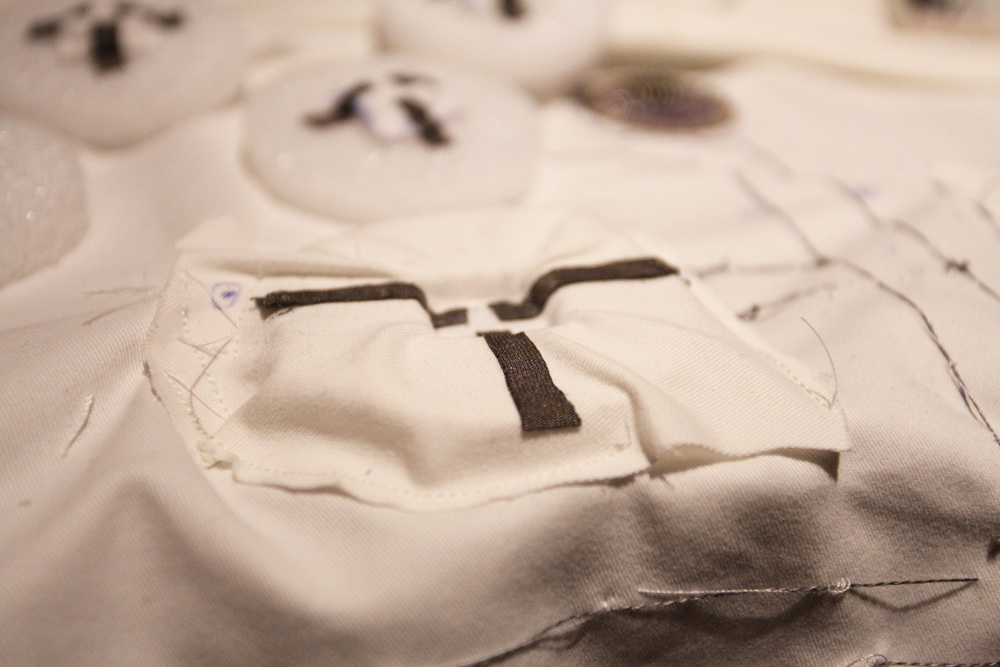
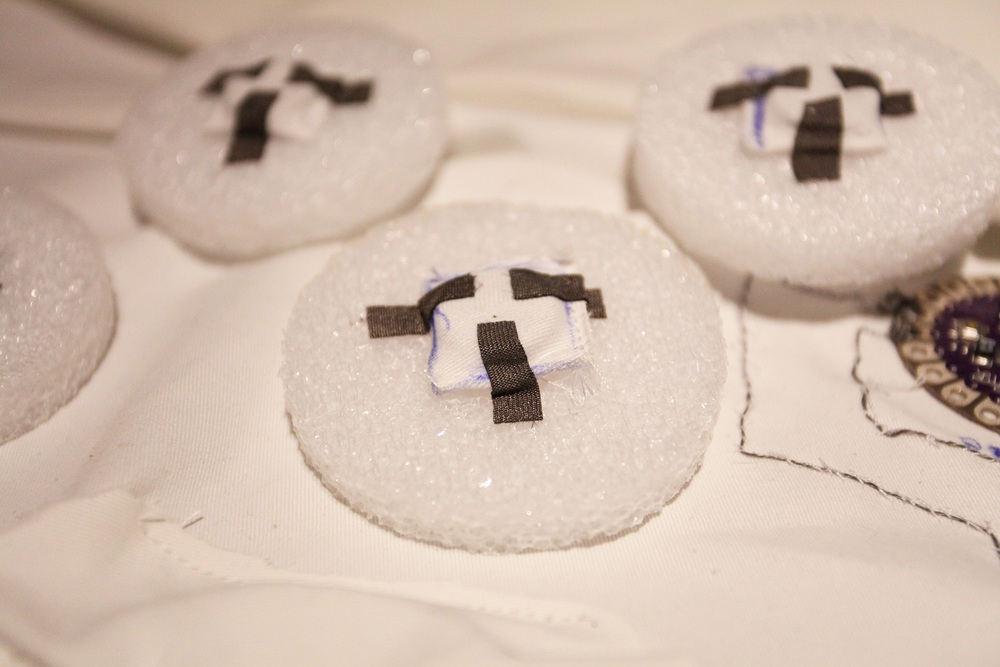
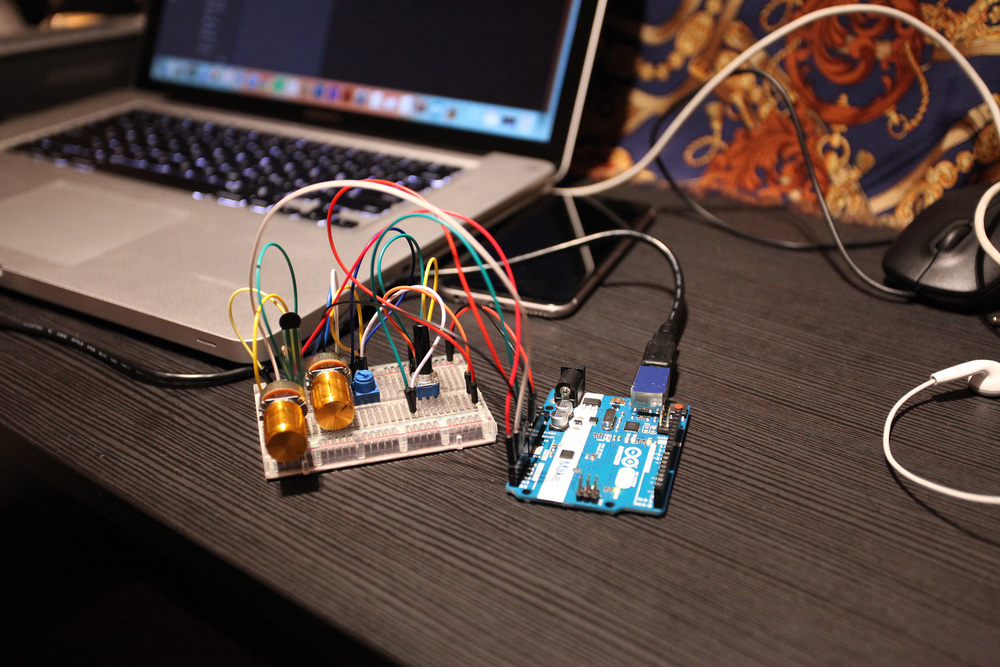
For the technology part, there are 4 potentiometers and 1 press sensor cooperating through Lilypad Arduino. Each potentiometer connects the main circuit by magnet. Arduino can send signals to GarageBand for creating sounds. This drum machine can play sounds in sequence and loop. By rotating potentiometers, it can change different sounds in each position for creating new sequence patterns. By pressing press sensor, it can switch the 4 sounds to another 4 sounds. We even can pull potentiometers out from the main circuit and put them back to different positions for making new sequences. So it can help us create more different sequences for fresh music.

In Class Feedback

I was suggested to use one potentiometer to set sounds for each position. For example, I can set a value on the first position by attaching and rotating potentiometer. Then set another values for the second and following positions. That is a interesting way for triggering sounds. But I think if I can use multi potentiometers to change sounds on each position, that will be faster. Besides, I am also limited by time. So I keep my original idea.

Here is the documentation for my design process. The video below is testing the function part on breadboard. The drum machine can trigger sounds like this finally.

IMG_7506 IMG_7510 IMG_7523 IMG_7527 IMG_7533 IMG_7536 IMG_7538


The video below is for testing the connection on soft circuit.


The video below is for testing the potentiometer on soft circuit.

IMG_7545 IMG_7546 IMG_7547 IMG_7548 IMG_7549


Then I changed the way for connecting modules. I tried 3 ways for connecting potentiometers with the main circuit. Finally I find the most suitable one in my 3rd prototype.

IMG_7547


Now I have done the main circuit. I’ll make the potentiometer modules in the following days.

IMG_7553 IMG_7560 IMG_7562 IMG_7566 IMG_7568 IMG_7569 IMG_7571 IMG_7572 IMG_7573 IMG_7574 IMG_7576 IMG_7579 IMG_7580

Cihang’s final project updated proposal

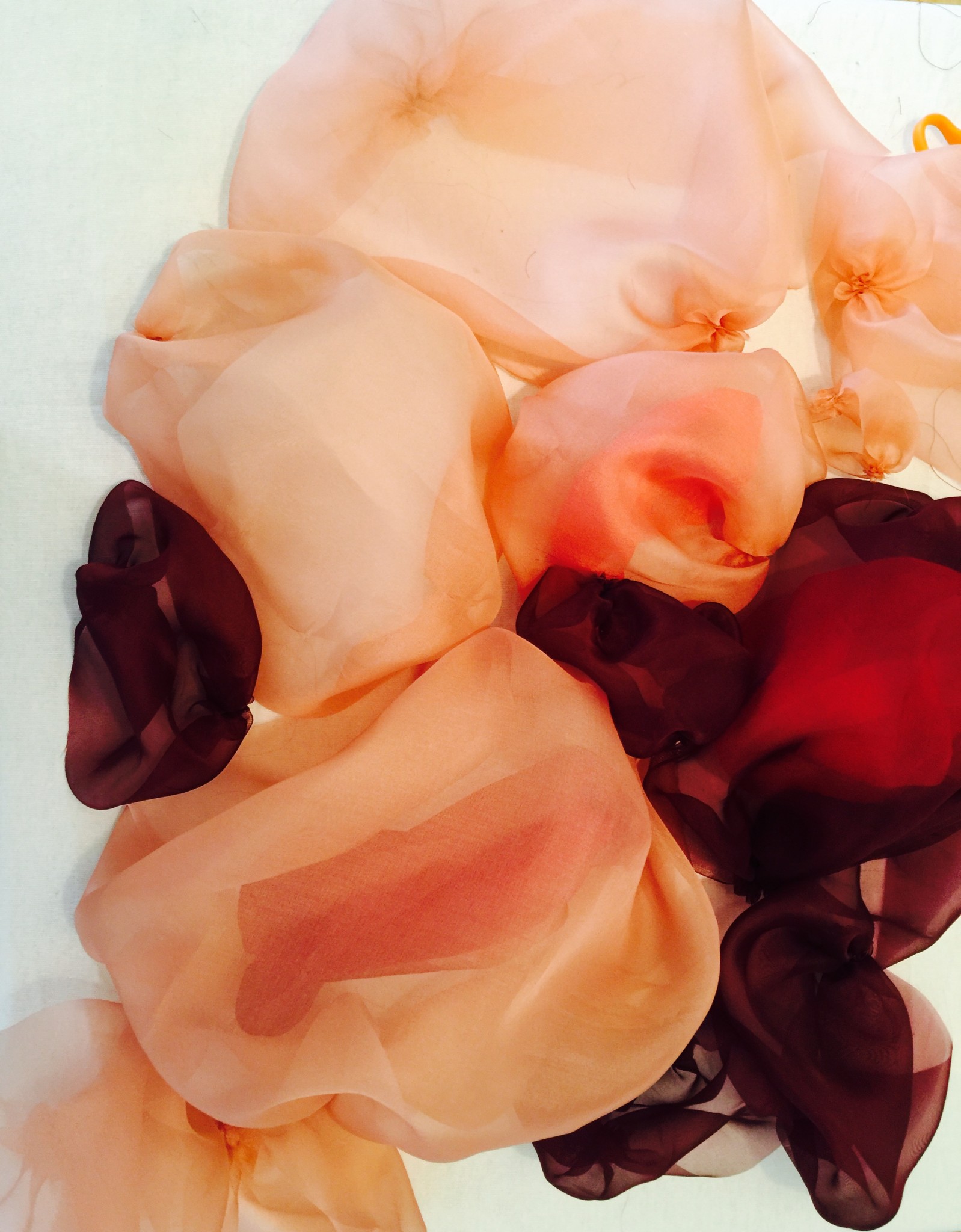
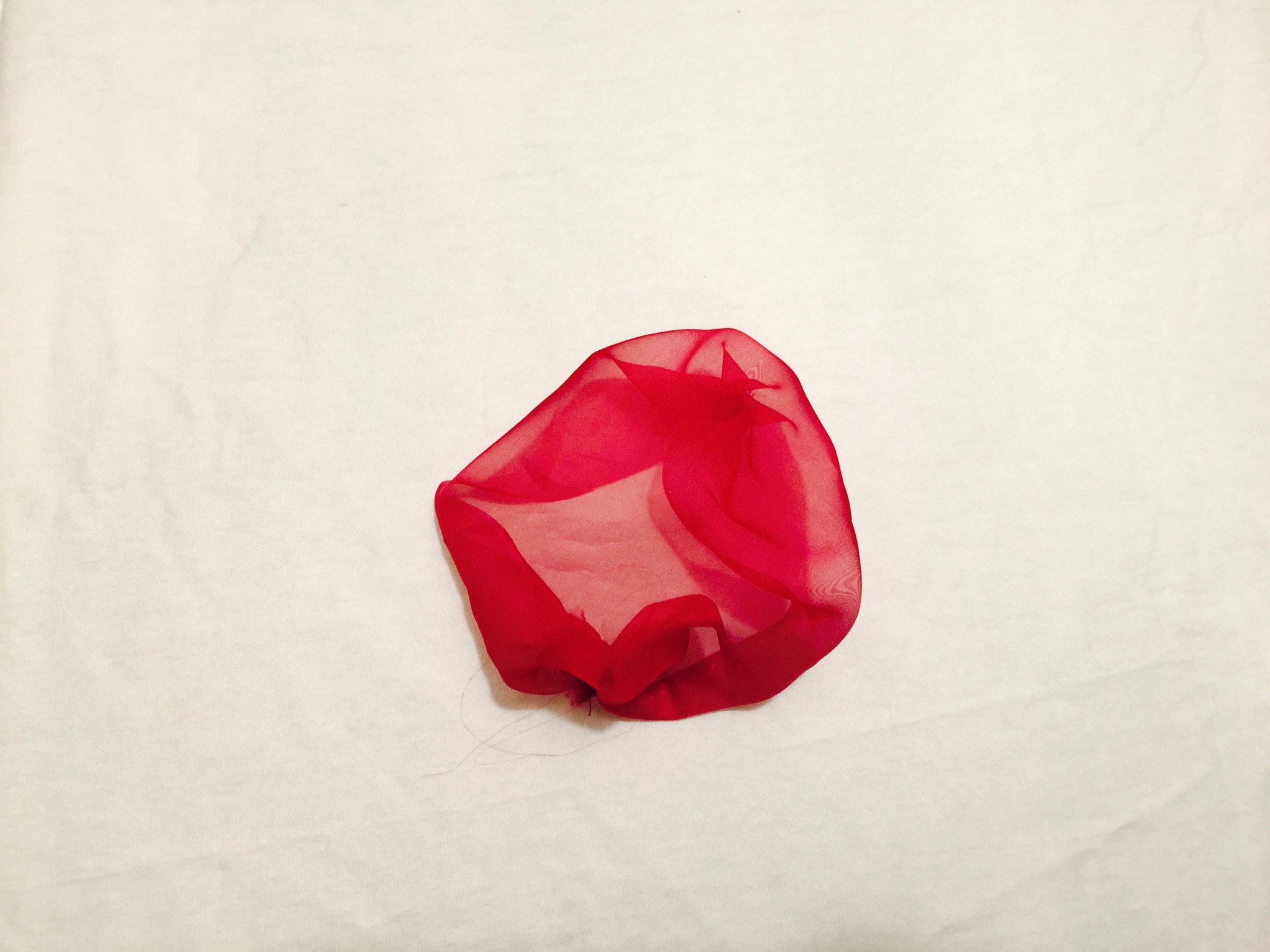
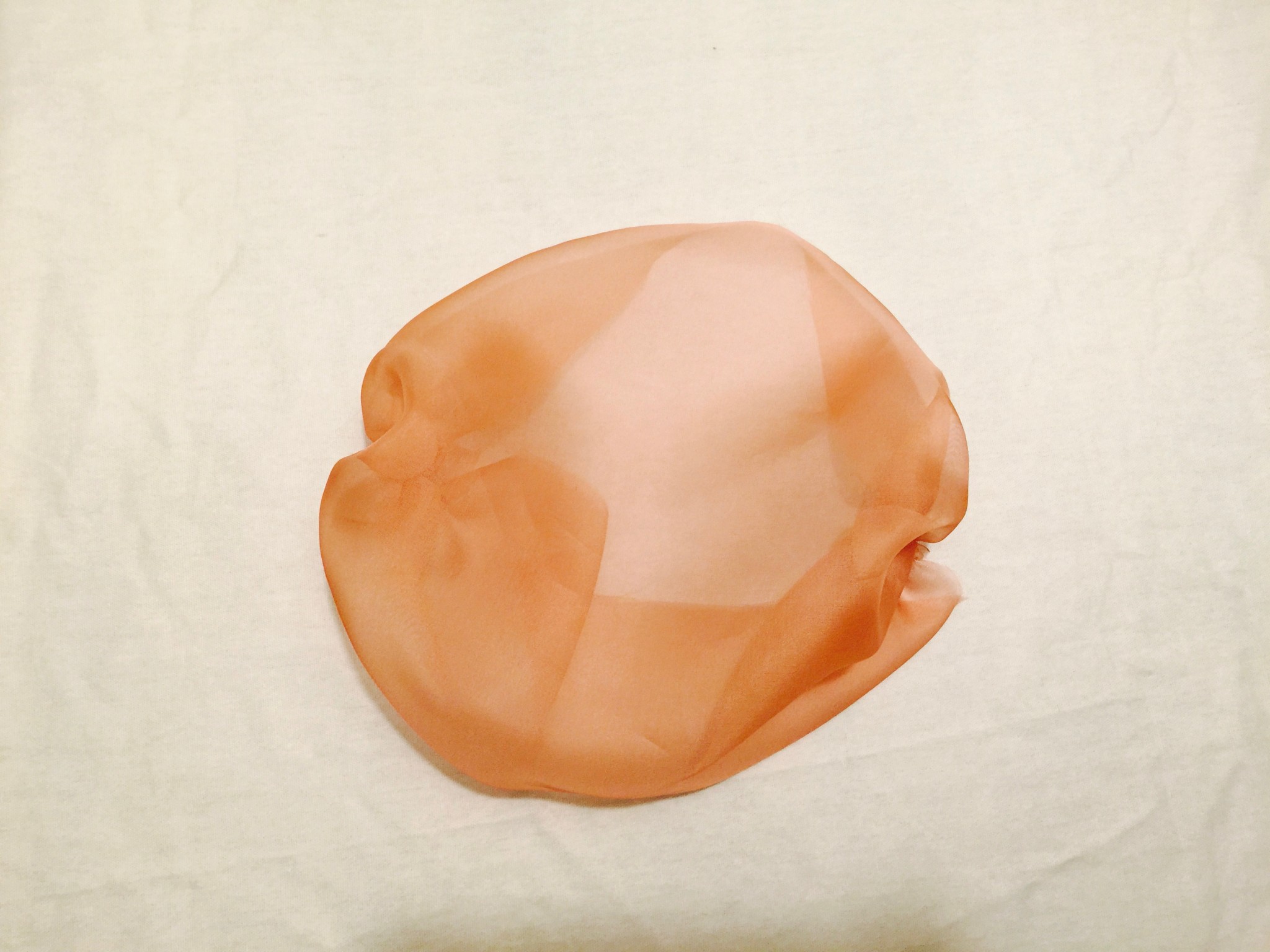
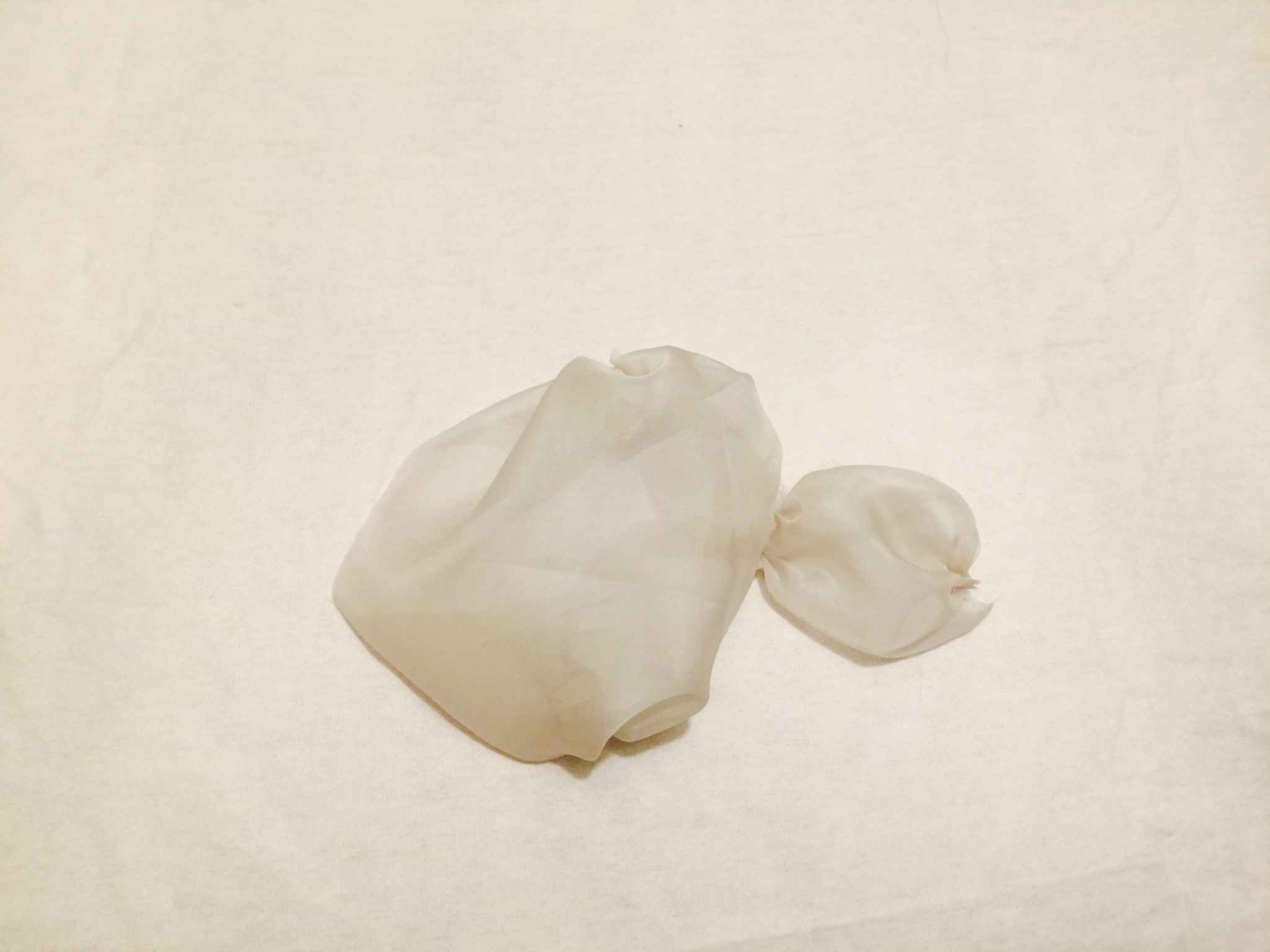
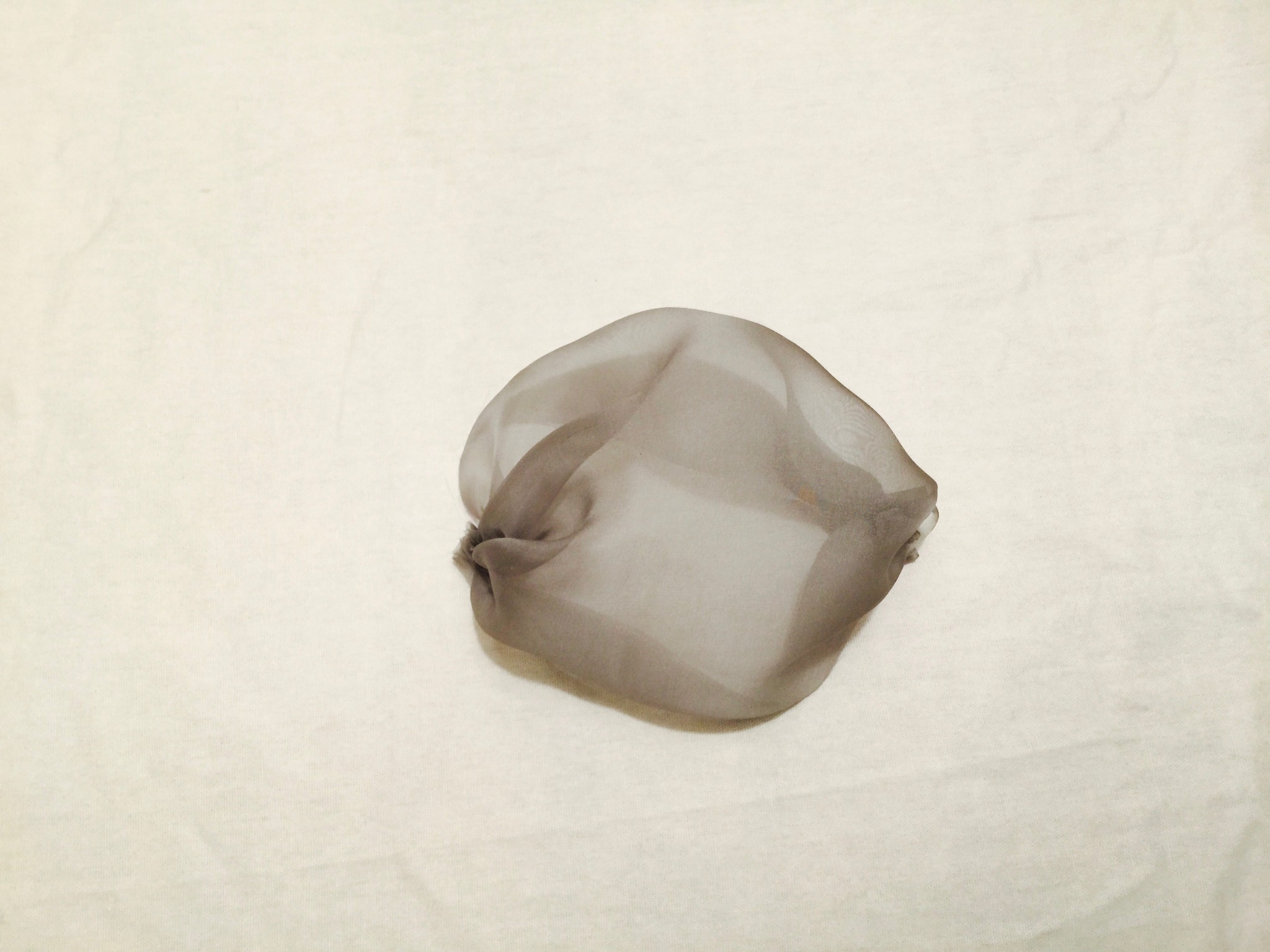
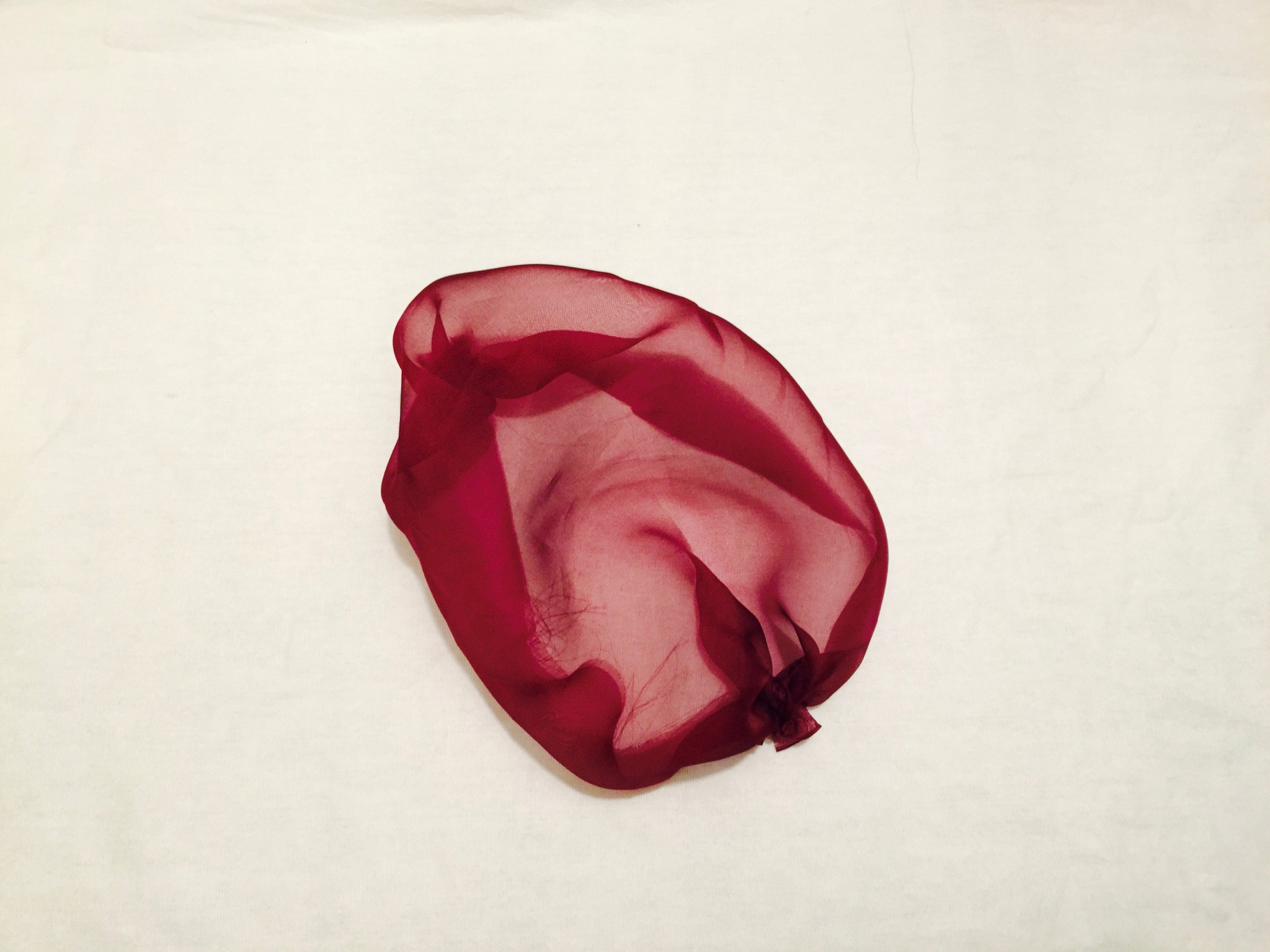
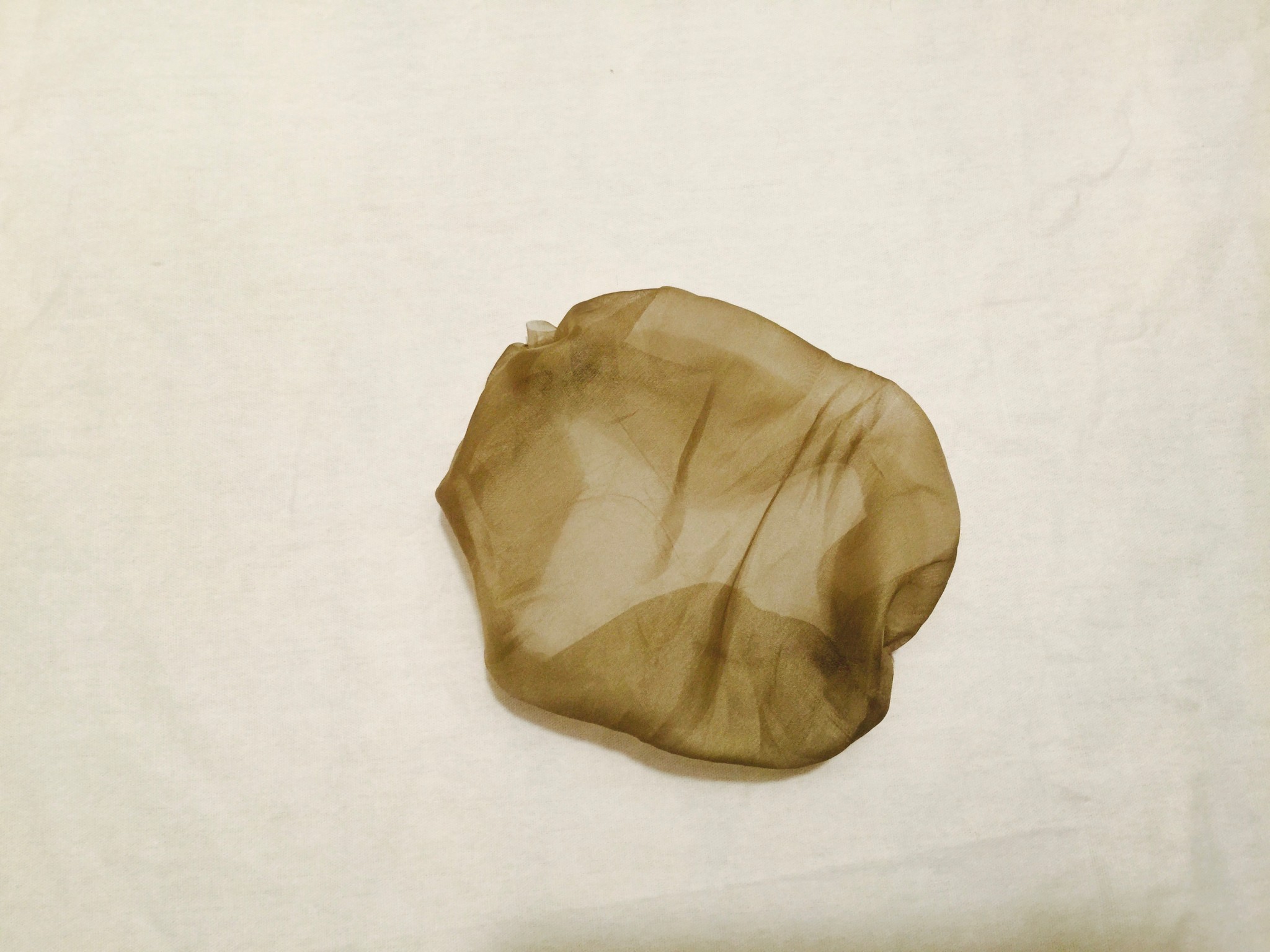
For the Computational Craft final project, I am creating an interactive installation use silk organza as the material to make a large scale living creature, through participants interact with this living creature to simulate that human’s sexuality reaction. There will be two three parts of the project- Stroke sensor, silk organza bubbles and blowers behind the bubbles. The whole pice would be look like human’s internal organs. When participants stroke the Stroke Sensor, it will trigger the blowers start blowing the bubbles being inflate and shrink like breathing. I envision this piece will give participants a very uncomfortable atmosphere and very private experience, I wanna my piece visually looks very creepy so that it can make people feel disturbing.

First Prototype

red bubble orange IMG_3282 IMG_3283 IMG_3285 IMG_3286 IMG_3287 IMG_3288

Updated proposal

Jaeyoung & Daruswat

Updated proposal

At this present time, people tend to forget their identity and view of life because of their environment. This being the different people who surround us, the fast-changing technology and society that force them to move forward too quickly. People don’t have much time to think about who they really are, what they like to do, and consider what they really want to do. Sometimes they forget about these  thoughts in their daily lives, and are likely to just blend into their environments.

For the final project, we will make a memory box for people who need to be reminded of their beliefs and identities. When a person touches outside the box, the sound and voice will play by showing the images from their memory on what they want to be reminded of. During a person listens to the sound and voice in the box, the images on the memory box will fade away. That means the images are being absorbed as memories to the person. It would be private enough that each person could keep the memory inside the box, even though the images are displayed outside of the box which other people can see. 

This project will use a soft sensor, soft circuit, Thermochromic Pigment, and magnet to represent the memory and to make the sound speaker. When the box senses someone expecting to get some experiences, it can use the body heat and heart rate of a person to reveal their memories as images.

Feedback in class

We got good feedback from our classmates and professor. They told us it is a good concept and idea. They asked us where to install the memory box. We decided to place it in the living room because it is the center of the house and a comfortable place. The images that will be shown on the box will be abstract, which is not too obvious and better than real pictures or exact shapes.

Prototype

Compcraft_prototype1

Undated[Week15] Dec 15 – Prototypes + feedback to Artisanal Tech

Prototype 2. and Progress 

Materials 

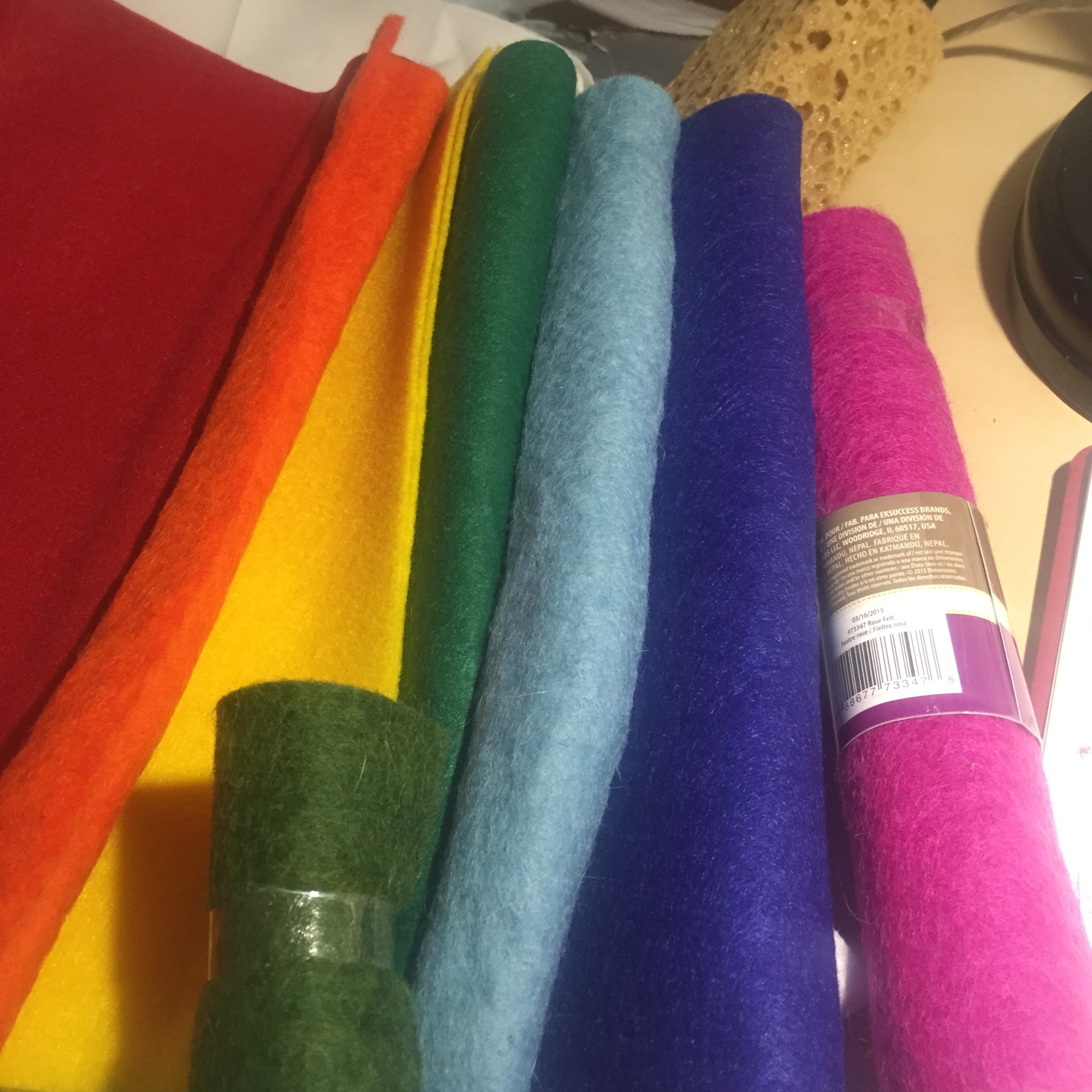
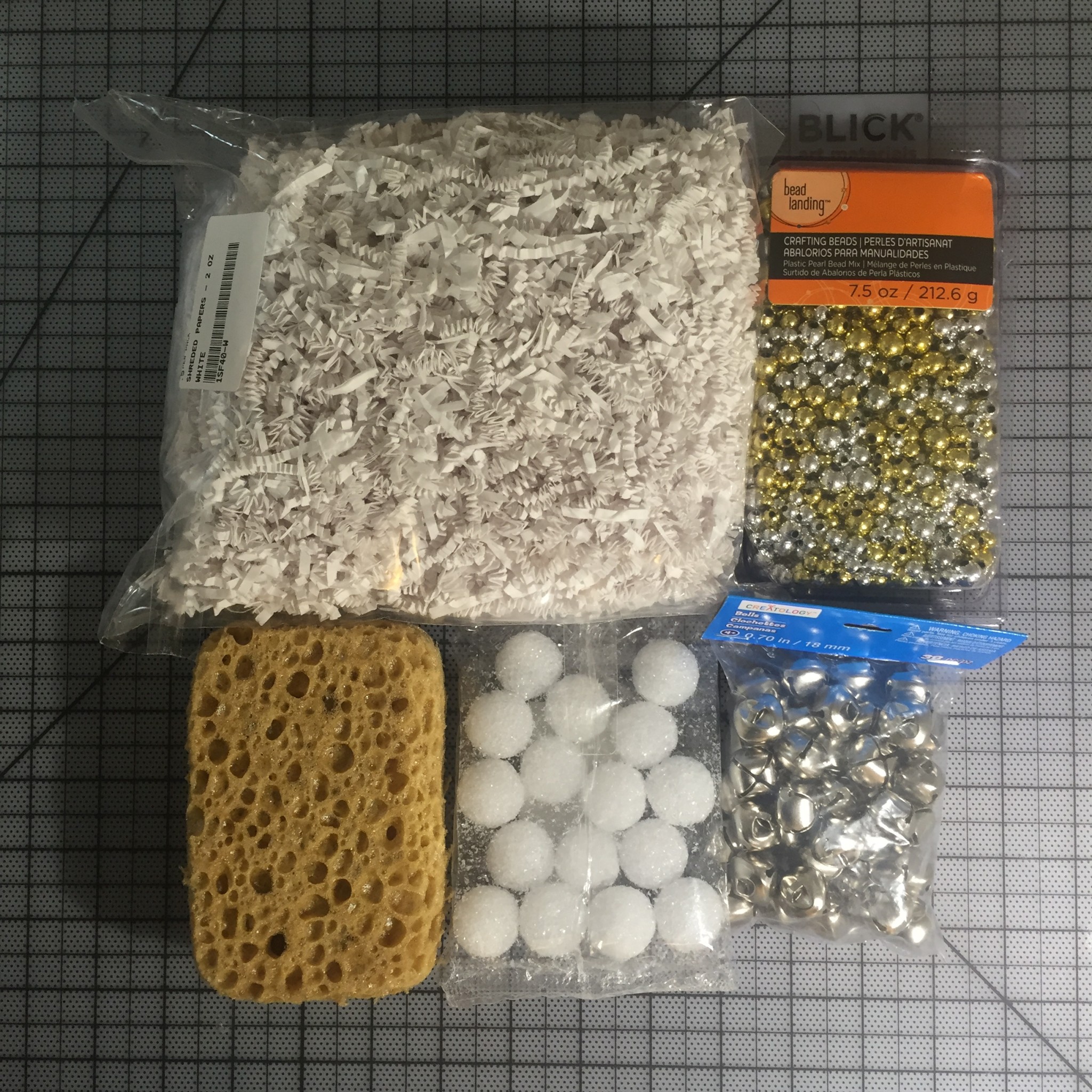
  • Big(36″ x 36″) and small(12″ x 12′) felt sheets – polyester and wool
  • Wool roving rolls
  • Feltworks replacement needles and multi-needle / embroidery needles and threads
  • An Embroidery hoop
  • A sponge or a felting mat – it helps smooth needle-punching works into your base fabric
  • Pins
  • Cotton
  • An Iron and a thin fabric scrap
  • Iron-On Adhesive
  • Poppers and conductive threads
  • A solder
  • Hot glue gun
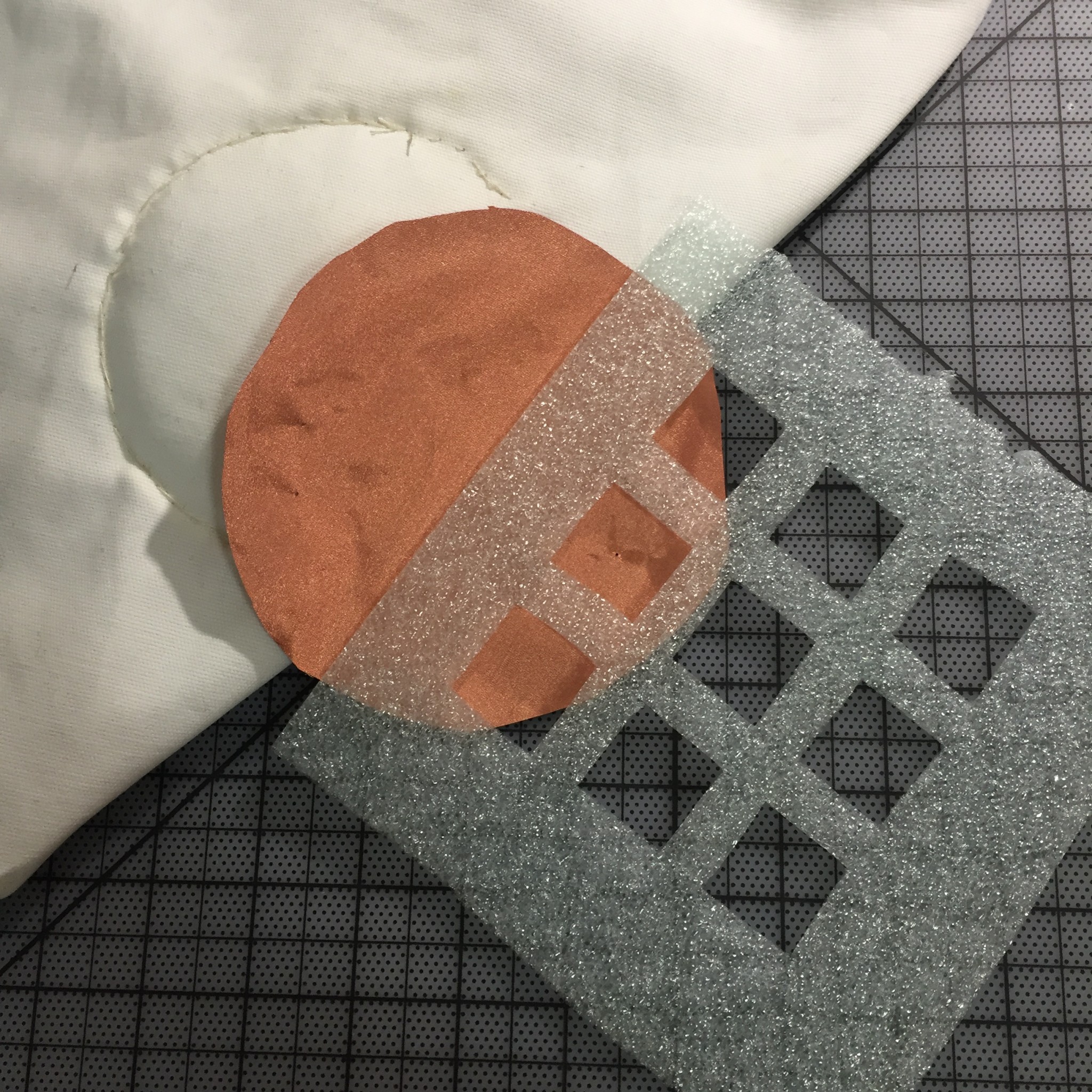
  • Conductive ink and stencil sponges
  • A table lamp
  • Foam sheets
  • Hook wires
  • A plier

– You can buy materials for fletwork at Michael’s and Amazon. (Tip: If you joinMichael’s membership, it will send you discount coupons)

IMG_1560

Sketch

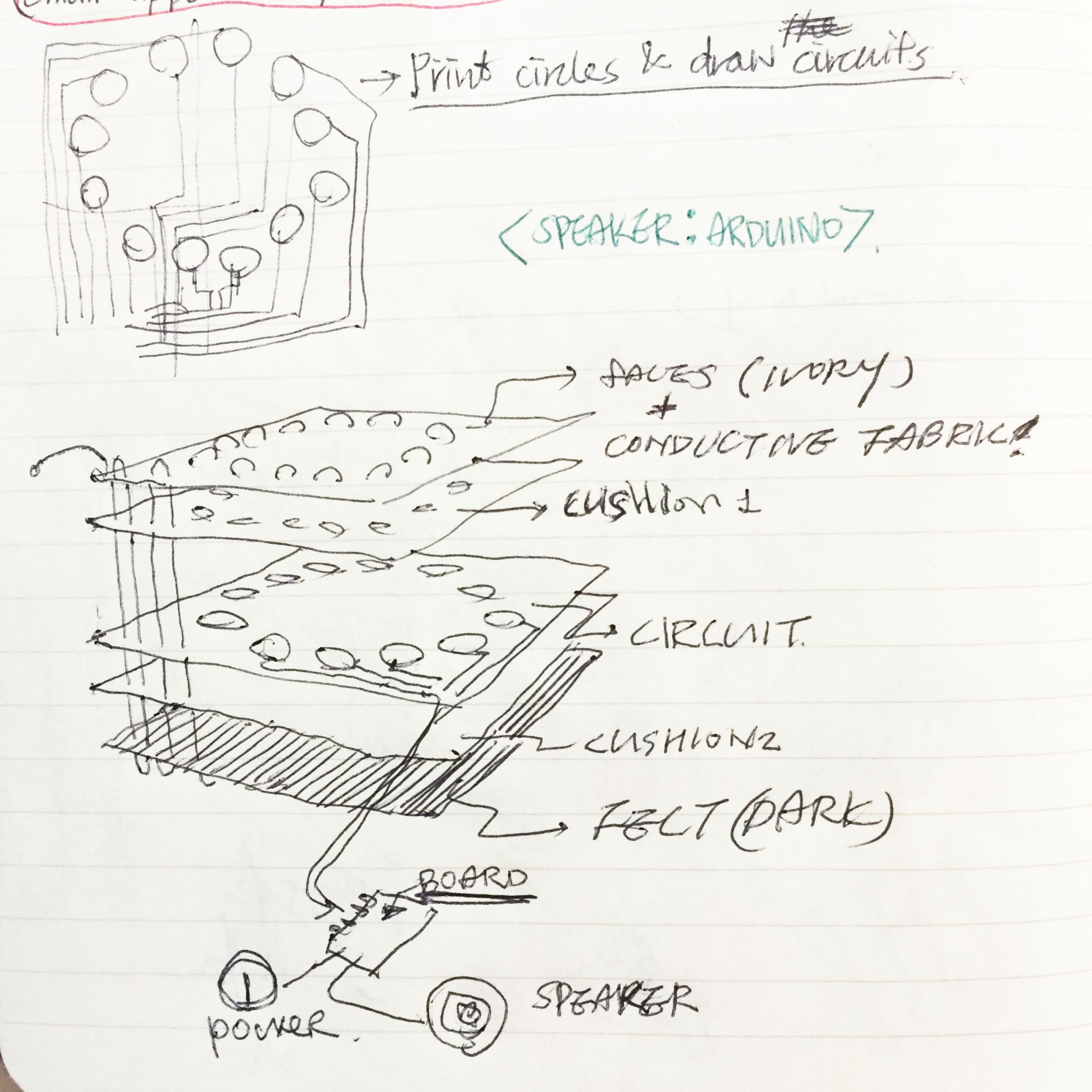
  • how to build circuit and put all layers together

sketch_layers


Ddesign Execution 

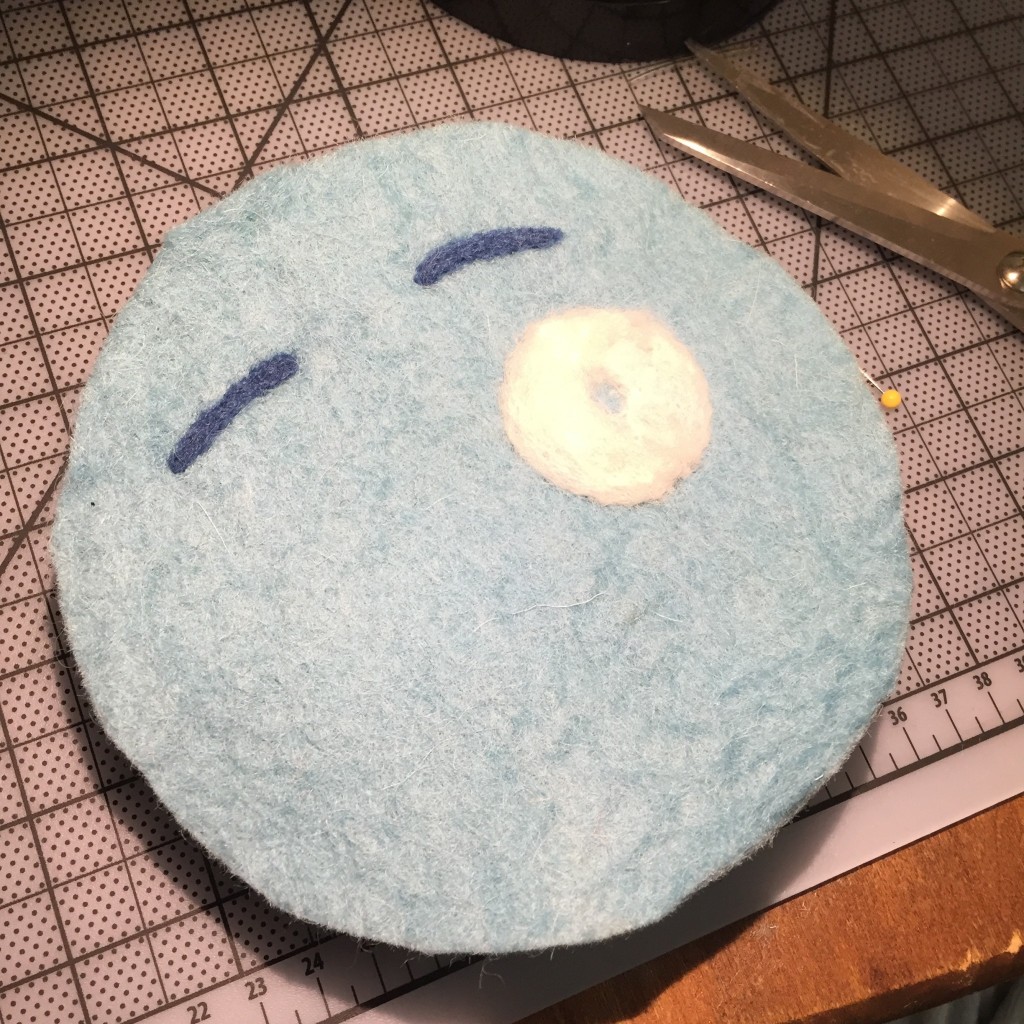
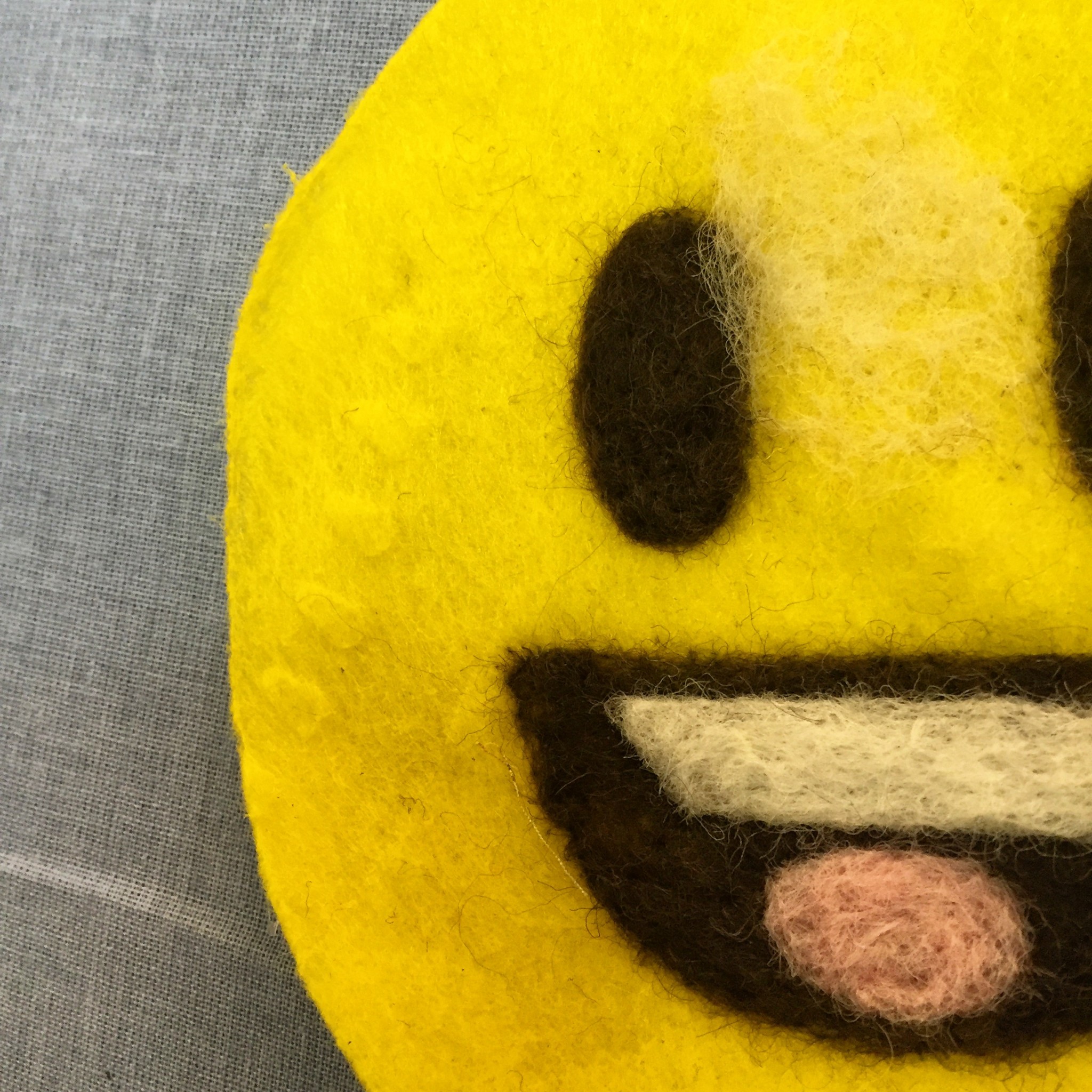
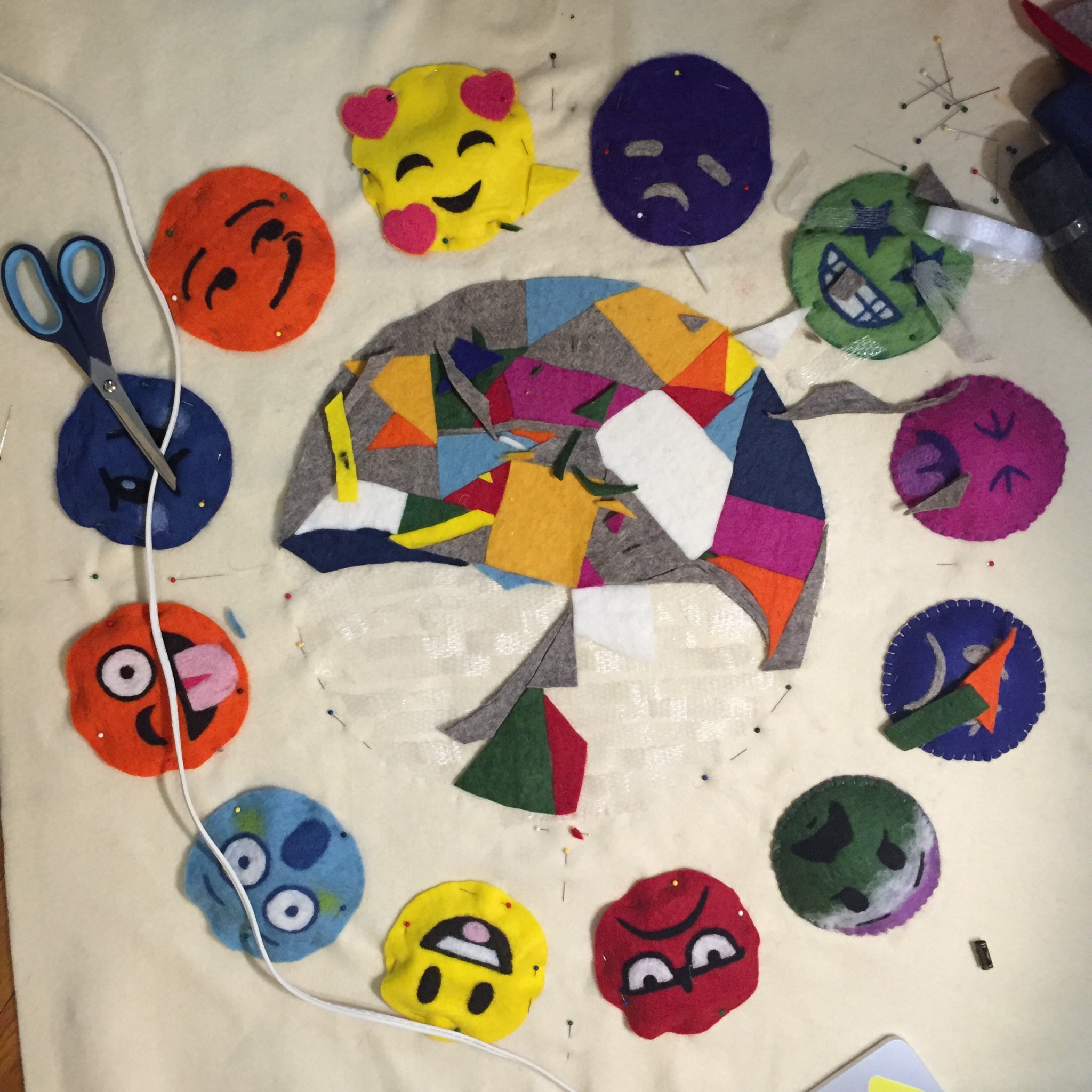
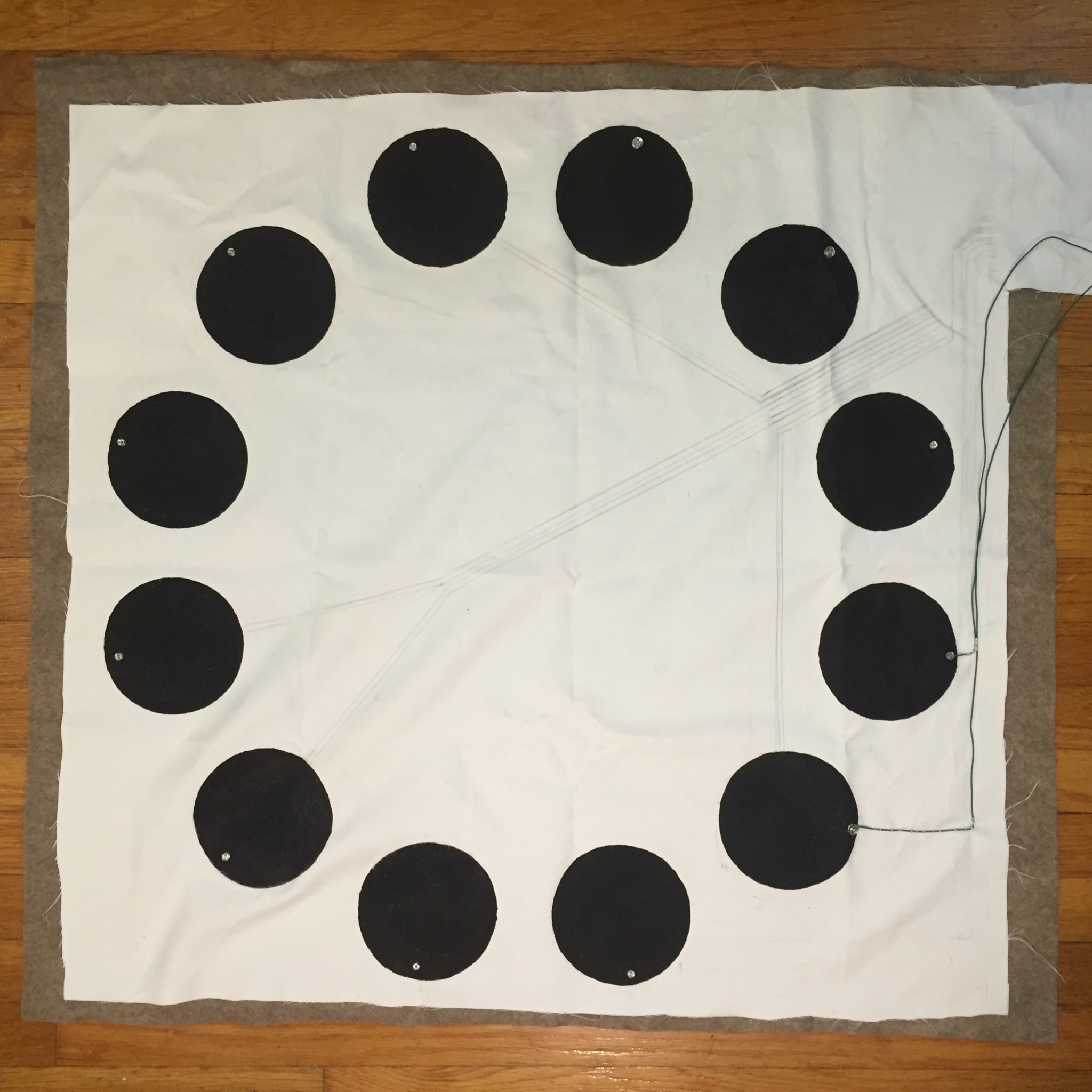
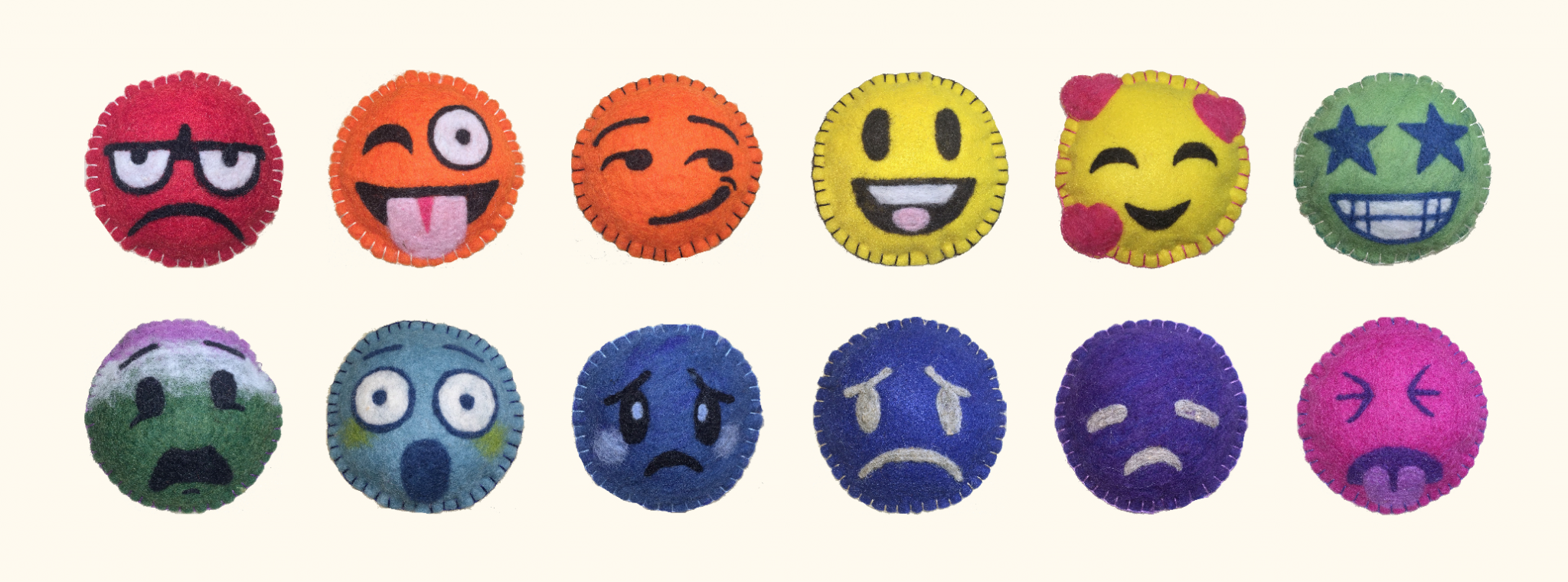
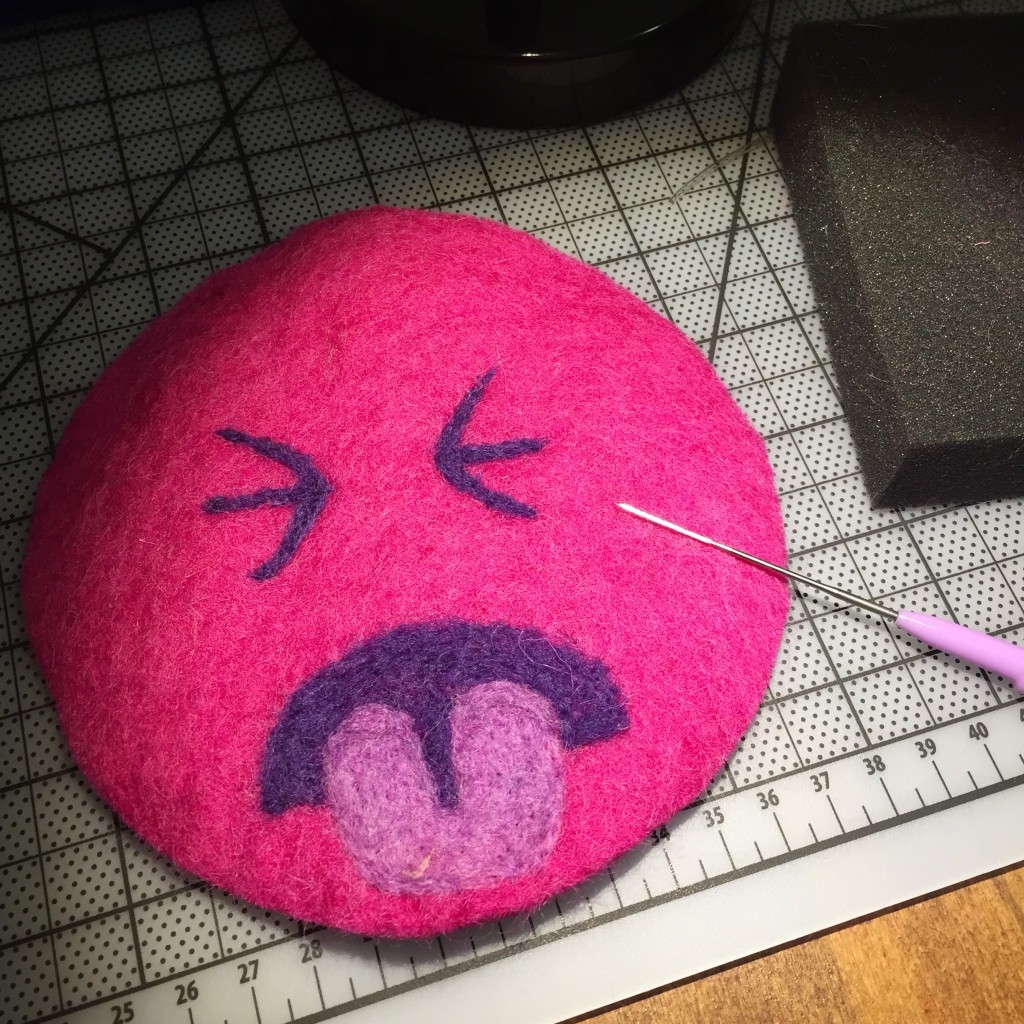
  • Cut felt into 12 circles to make faces. With a felt needle ( there are different needles: coarse and fine) make patterns you want. Tip: keep poking!

IMG_1584IMG_1585

This is the video of how I did felt work.

final copy

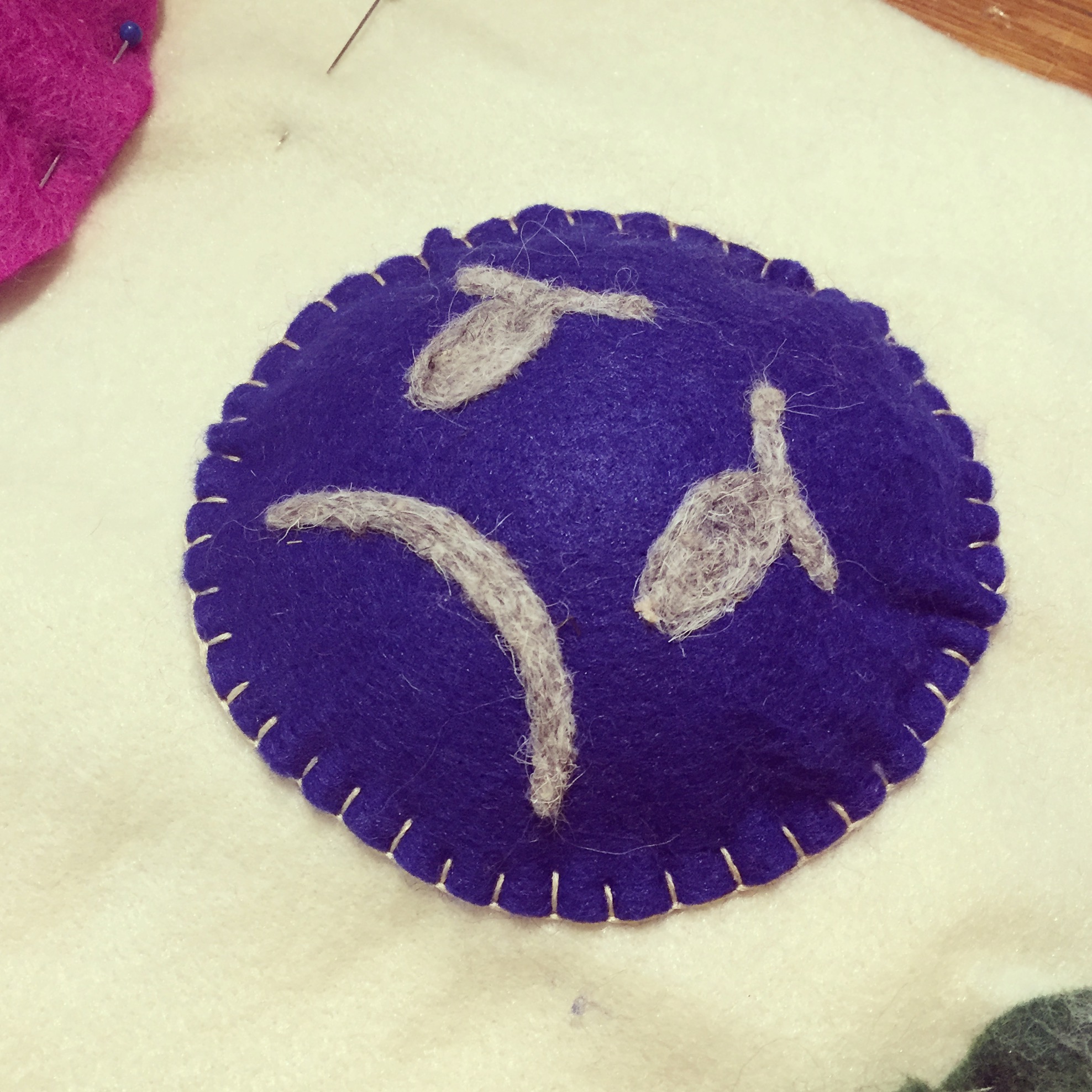
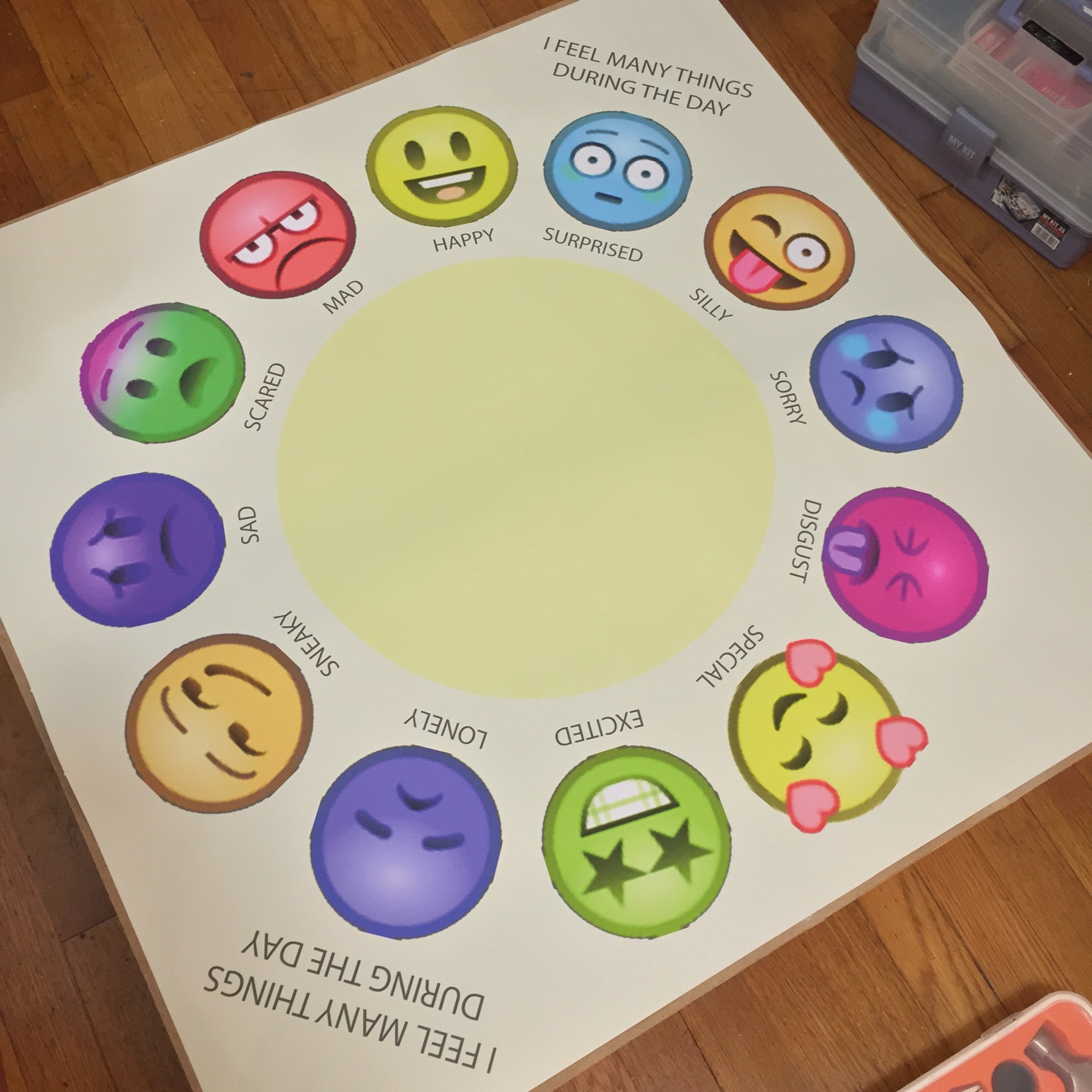
[TIP: When you cannot find certain colors in wool or polyester felt, don’t worry. You can add wool on other felts and needle it to make your own color. (Example: scared face with green color and Lonely face with violet below)]

IMG_1605If you use polyester felt, be careful to use iron because iron heat will melt polyester felt. I knew iron heat melts it, but made this mark on Happy face. You need a thin fabric scrap and out it between iron and your felt to iron.

  • I learned how to blanket stitch through This video. It’s easy to follow.

blanket stitching_0

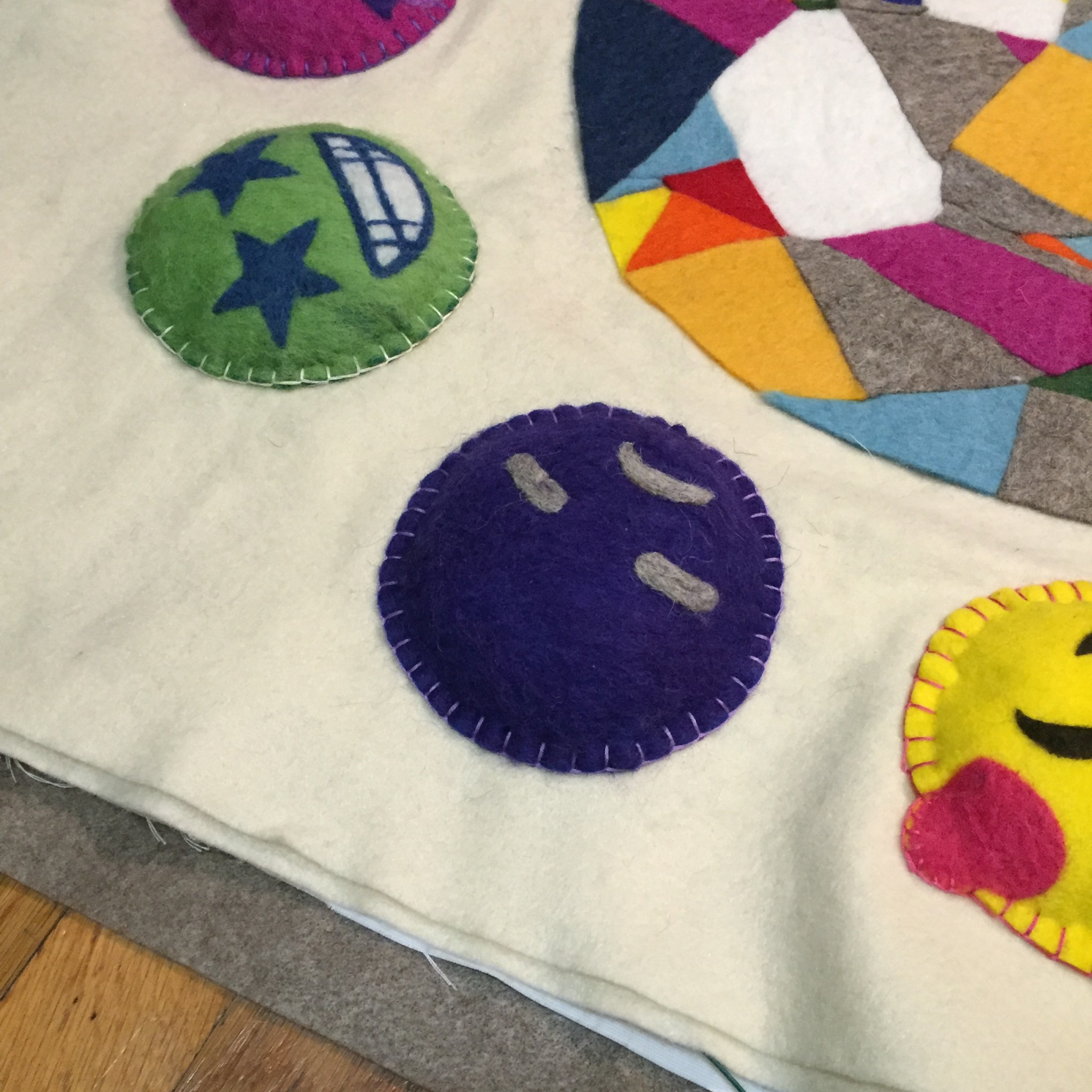
  • [Embroidery threads and needles] let’s do blanket stitch. I used an embroidery hoop and pins to hold face onto top layer while stitching, which made work so much easier and fun!!

process_1 process_3process_2

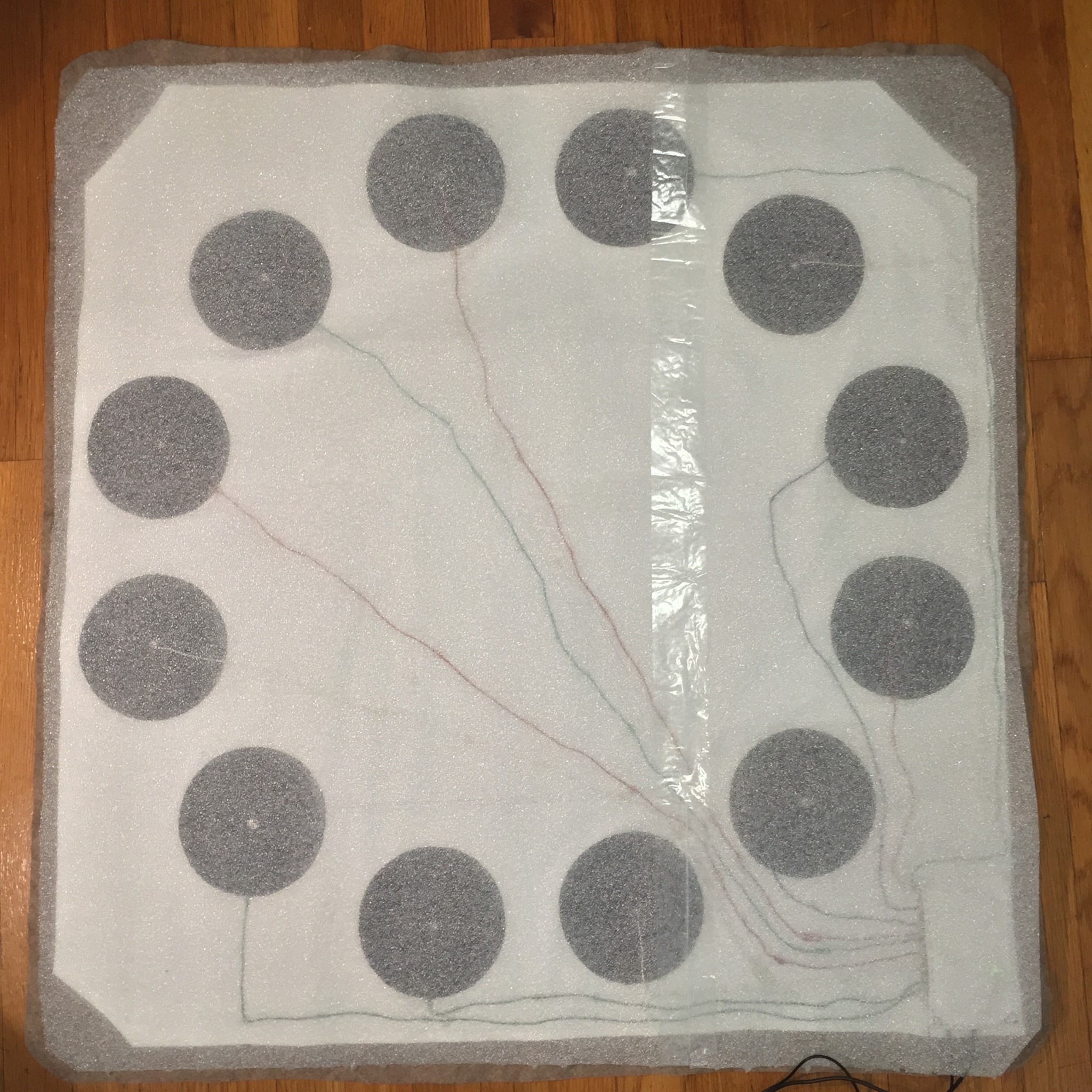
  • Aligned faces with the circle.
  • [Cotton puff] – Don’t finish blanket stitch!! Have to add cotton stuff to fill faces. THEN complete stitching!

process_4

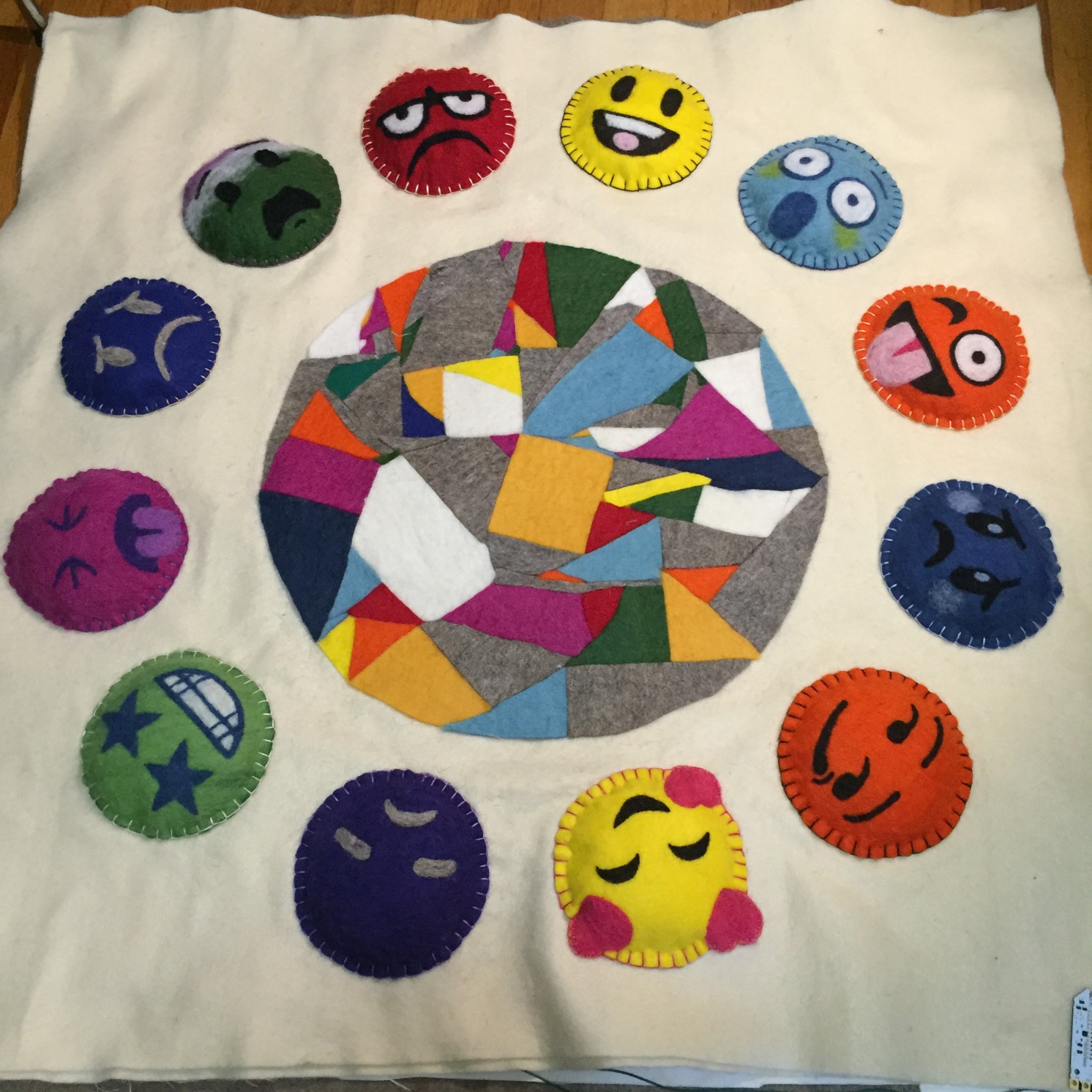
  • With felt scraps. Made the seat for the kid in the middle of the mat. I used iron-on adhesive in order to put all the scraps together onto the top layer. It was way faster than stitching. [TIP: Use a cotton fabric scrap when ironing felt. If you use polyester felt, you MUST use a cotton fabric sheet to iron. If not, iron will burn your felt]

detail


Top layer

the top layer final

Process of Making Circuit

painting toolspopper detail_2FullSizeRender 9 popper detail_1

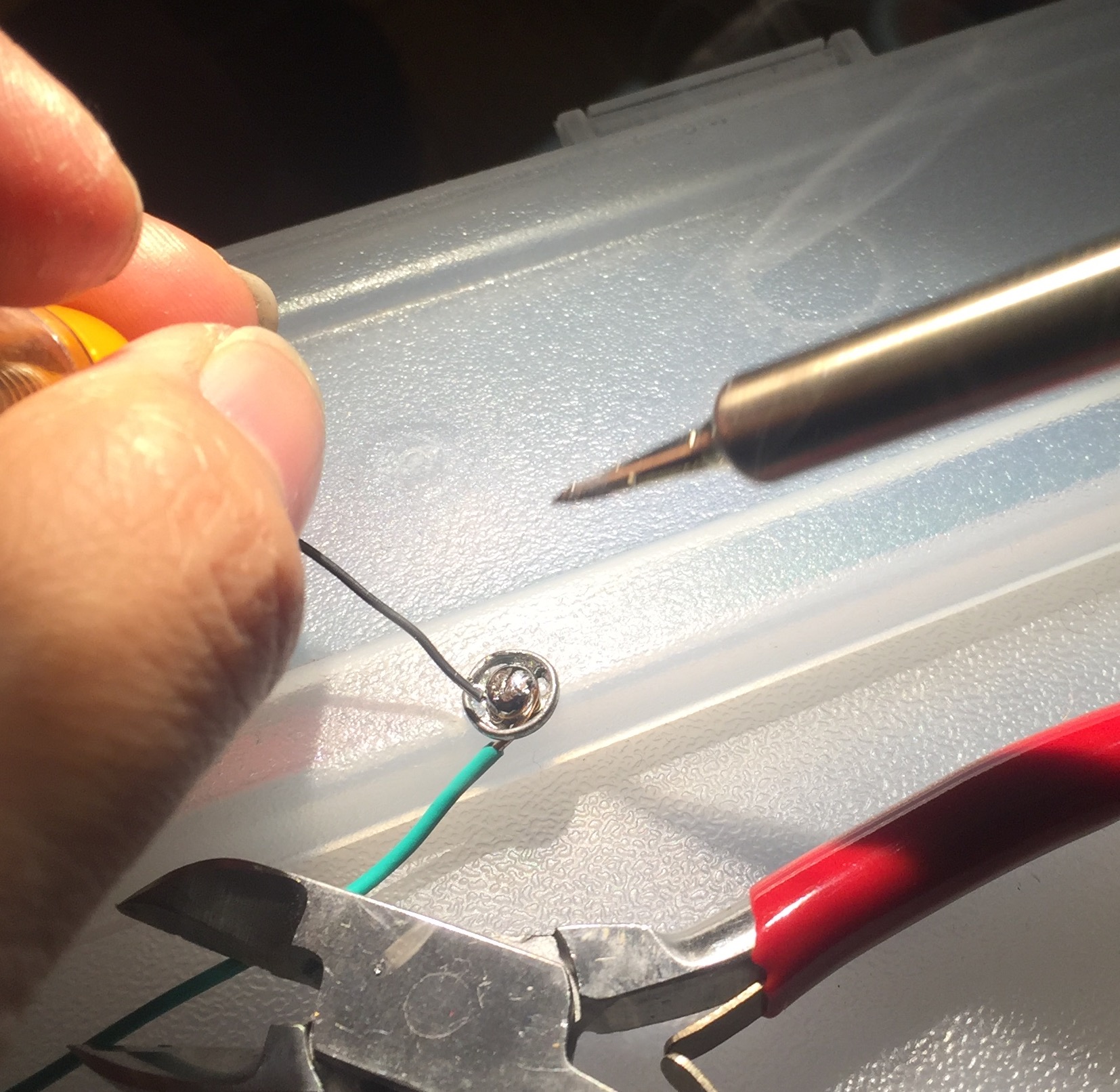
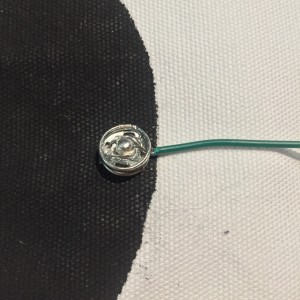
  • Sewed male poppers onto the fabric and soldered hook wires to female poppers

IMG_1656

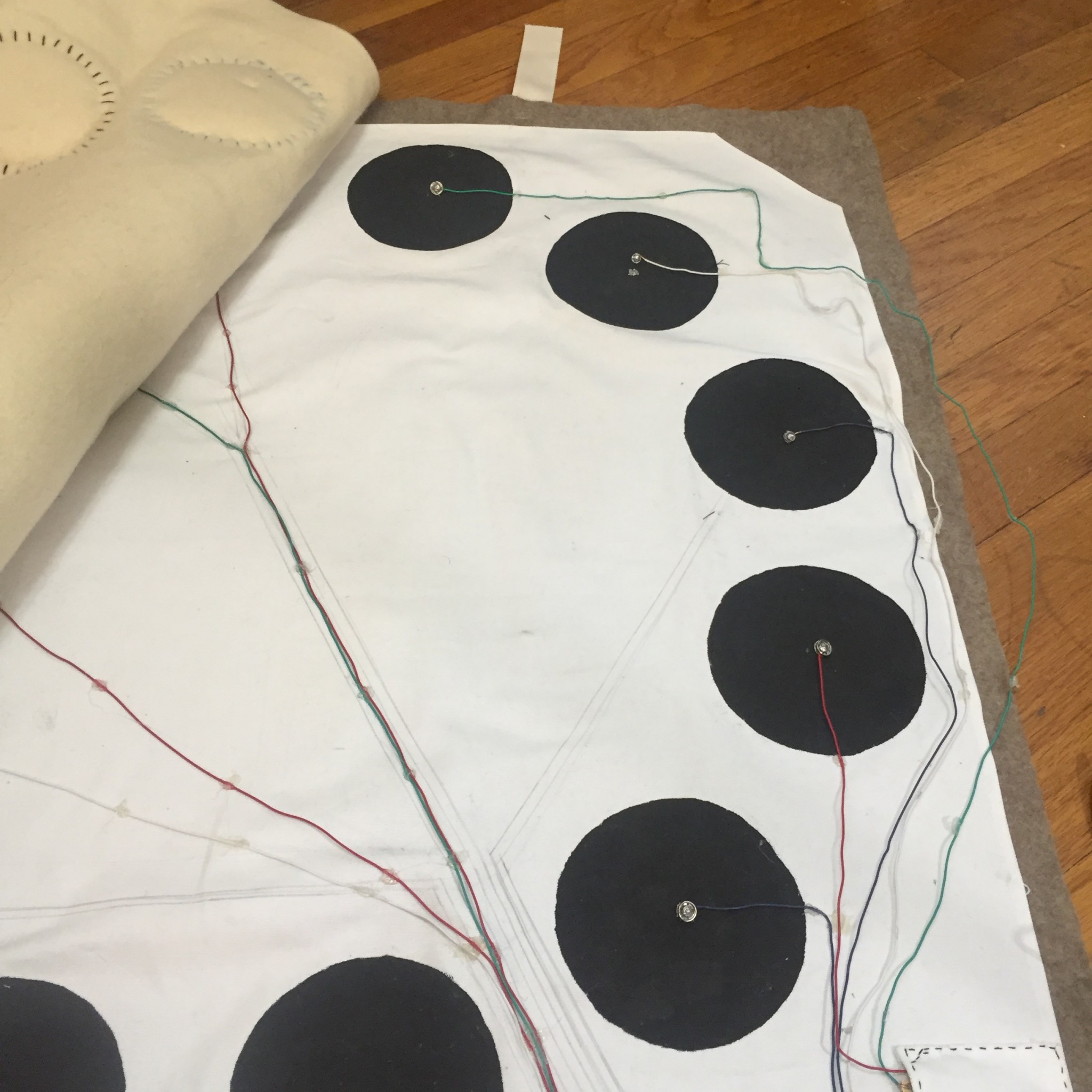
  • sewed hook wires connected from the board to the circuit to fix the wires onto fabric, in order for the users to make fold and unfold the play mat easier.

PROBLEMS

I found the FIRST problem when testing sounds as Jane, Charles and Wes pointed out when the group feedback: on the underbelly of the project, the wiring and mechanics. 

Connectivity between under faces and poppers was unstable when people pushed faces because of popper’s location. I changed the popper position from the circle border to the center in order to enhance pressure sensors. IMG_1716

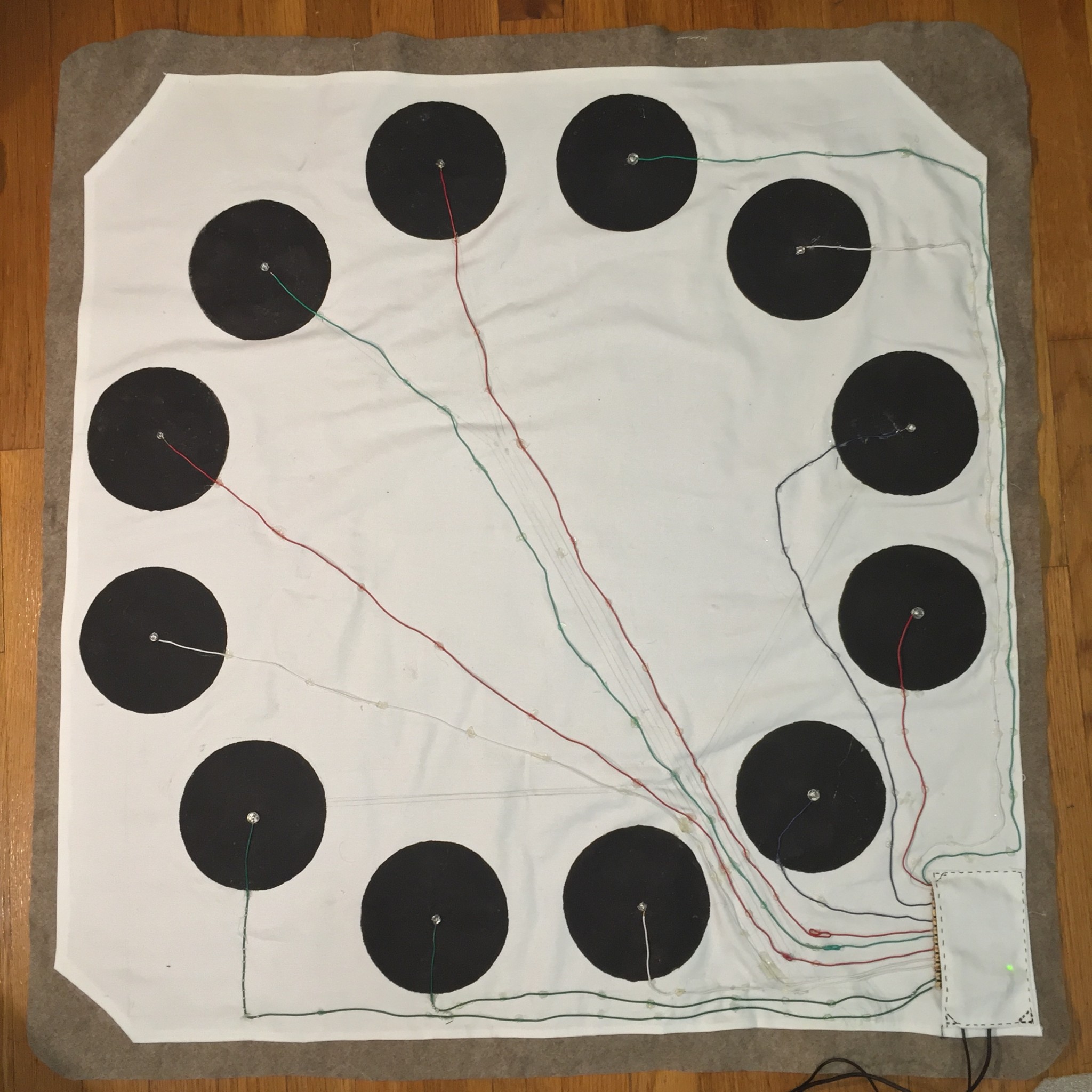
Used hot glue to hold wires in the fabric as a circuit. This wouldn’t aesthetically look good (future iterative: improvement necessary), but it anchored wires better in the fabric and it was better for usability.  Previously I said, it was uneasy to fix wires onto the circuit fabric with sewing because they twisted and moved.  

IMG_1739

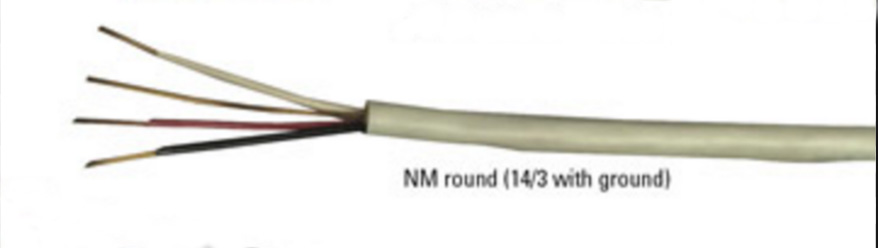
The SECOND problem was sound. Some sounds didn’t work, after connecting wires to the board and poppers. After investigating the circuit, I found the culprit of the issue. It was that wires touched each other, hindering inputs from flowing through wires. I used hookup wires for five faces and standard household wires for seven out of twelve faces. I found that faces with standard household wires connected to the board didn’t work, but with hookup wires did. Therefor, I separated each wire and fix each of them on the circuit with hot glue.

household wireScreen Shot 2015-12-26 at 6.46.05 PM

I tried to build a couple of circuits with conductive ink, conductive fabric and threads. But They didn’t work. The problem was the wiring underneath of the play mat. Due to the seat, when the kid sits on the seat, he cannot hear certain sounds that he is sitting and pressing buttons at the same time.

problem


IMG_1726

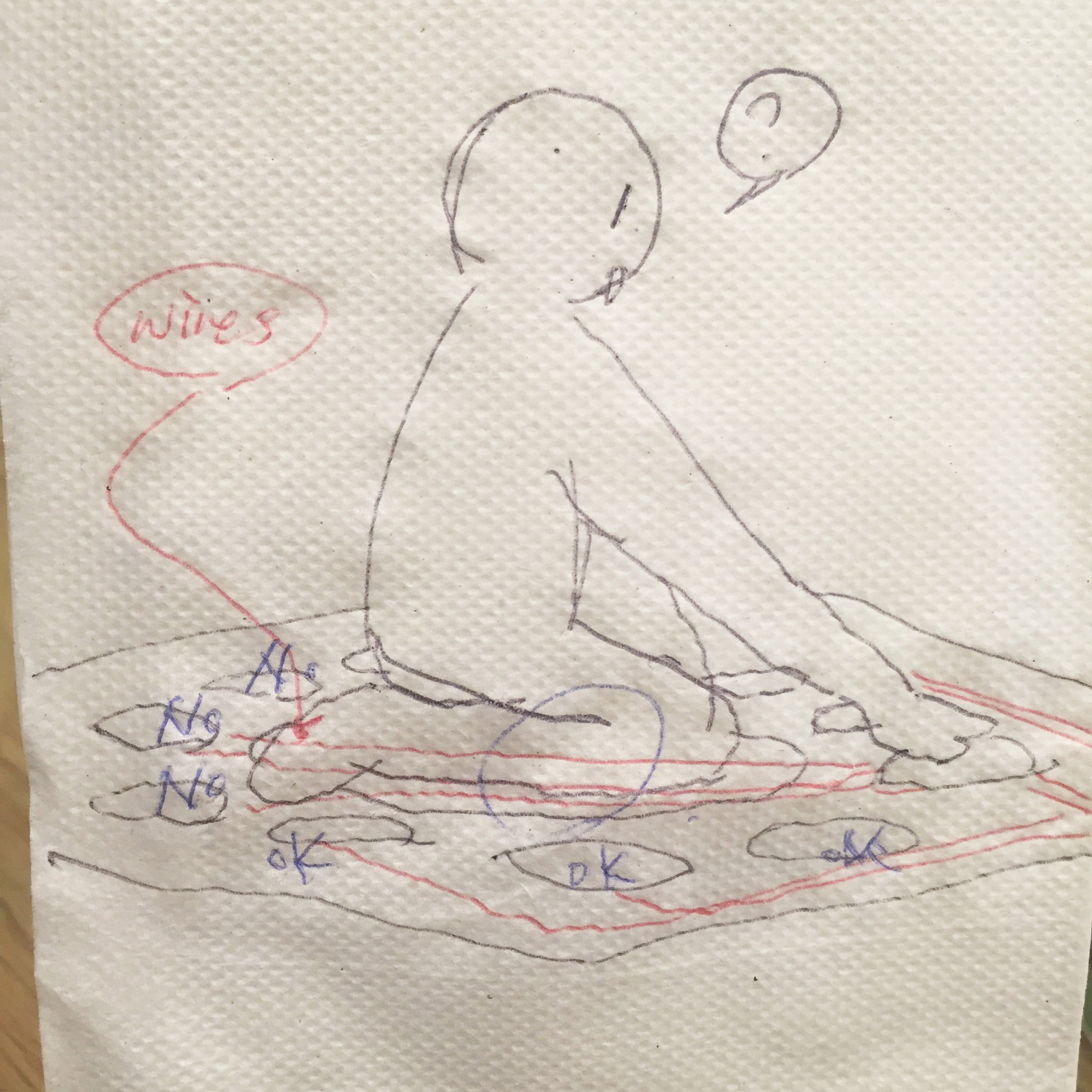
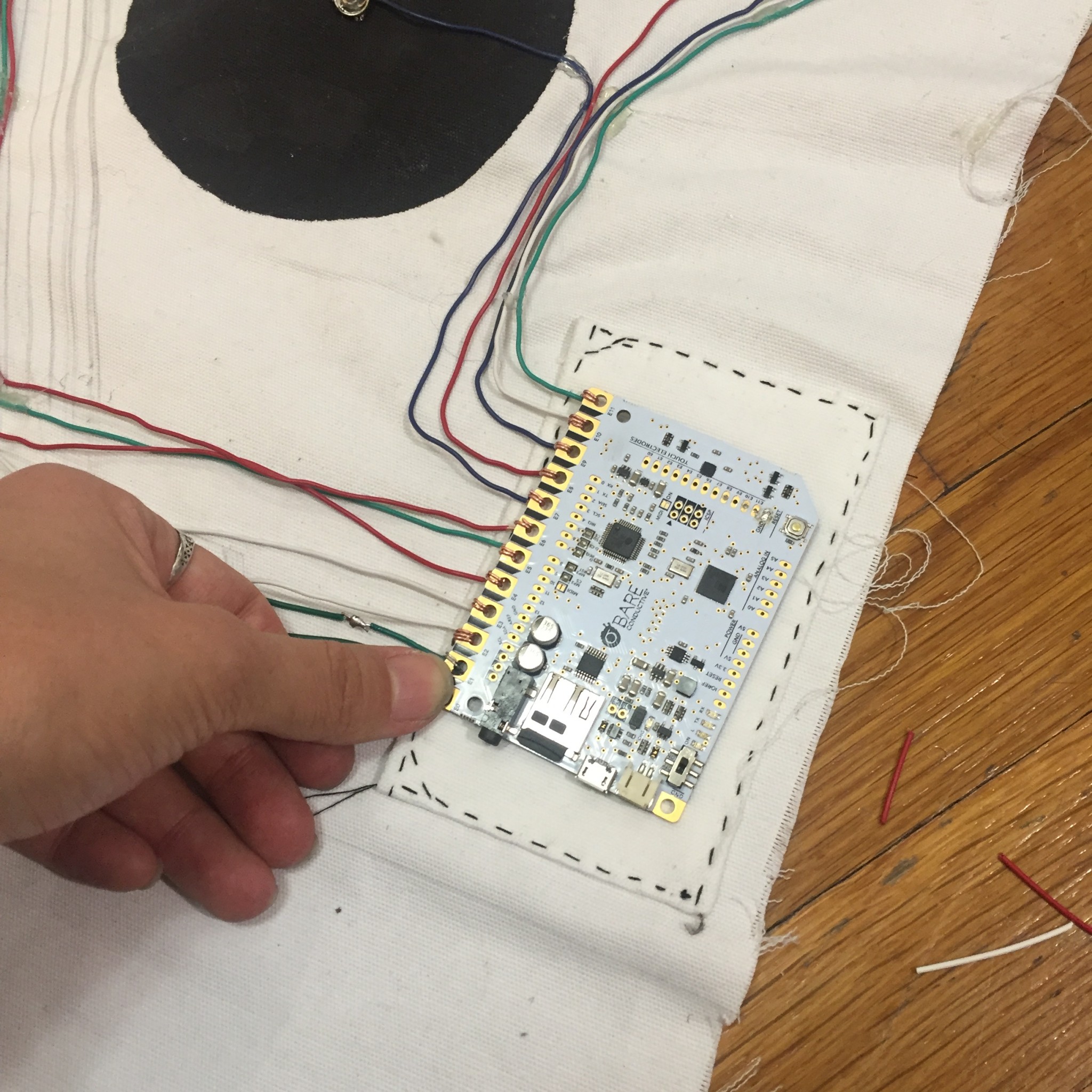
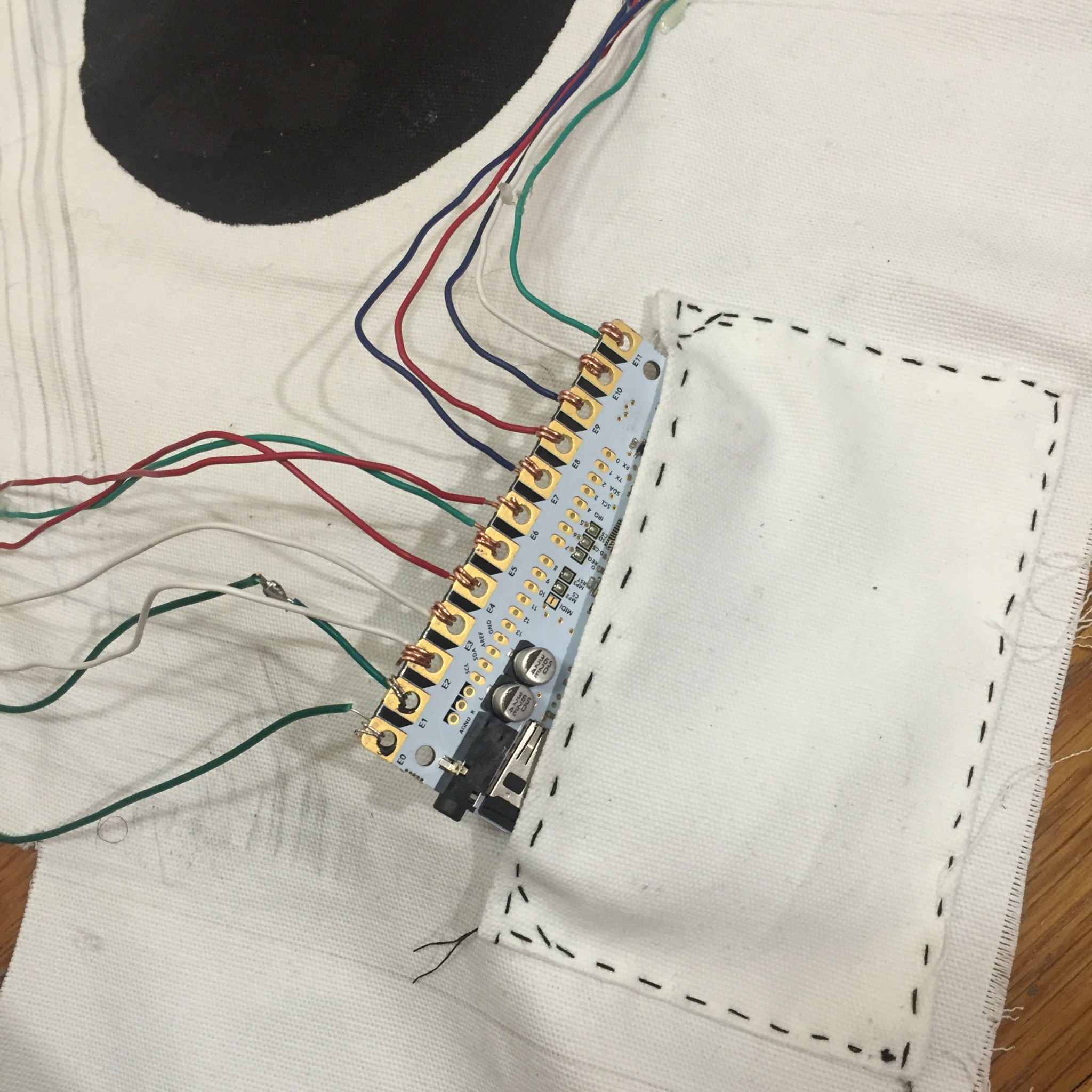
  • Wired each line to the board. Connected each wire to each signal on the board.

IMG_1717

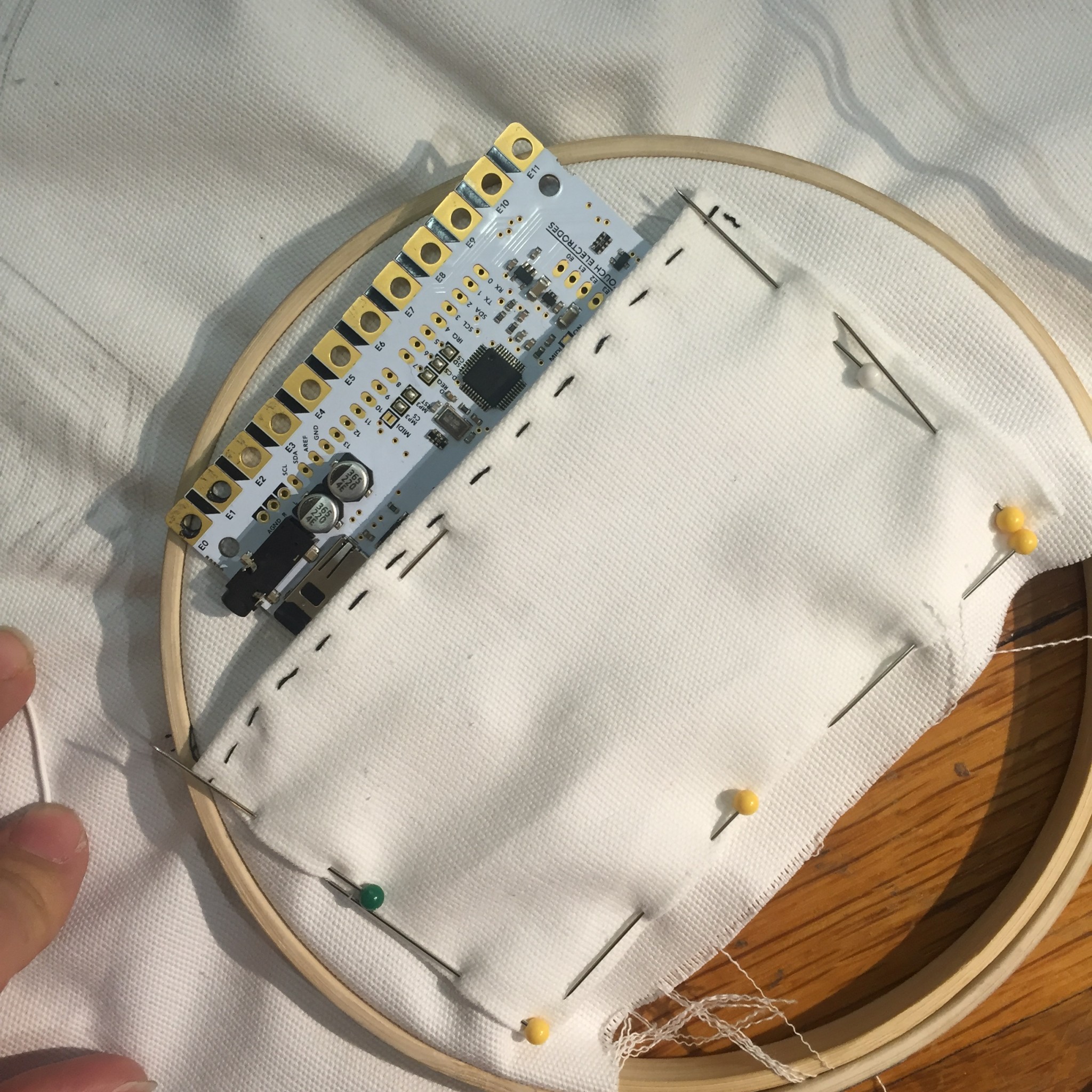
  • Made a pocket for the board not to move around the underneath of the play mat. It allows me to fold and unfold the play mat without worries about what if all the wires and the board are tangled.

IMG_1728IMG_1729

Later I unstitched the left side of the pocket to make a hole for ON / OFF switch and speaker / headphone jack to reach to power sources.

IMG_1733

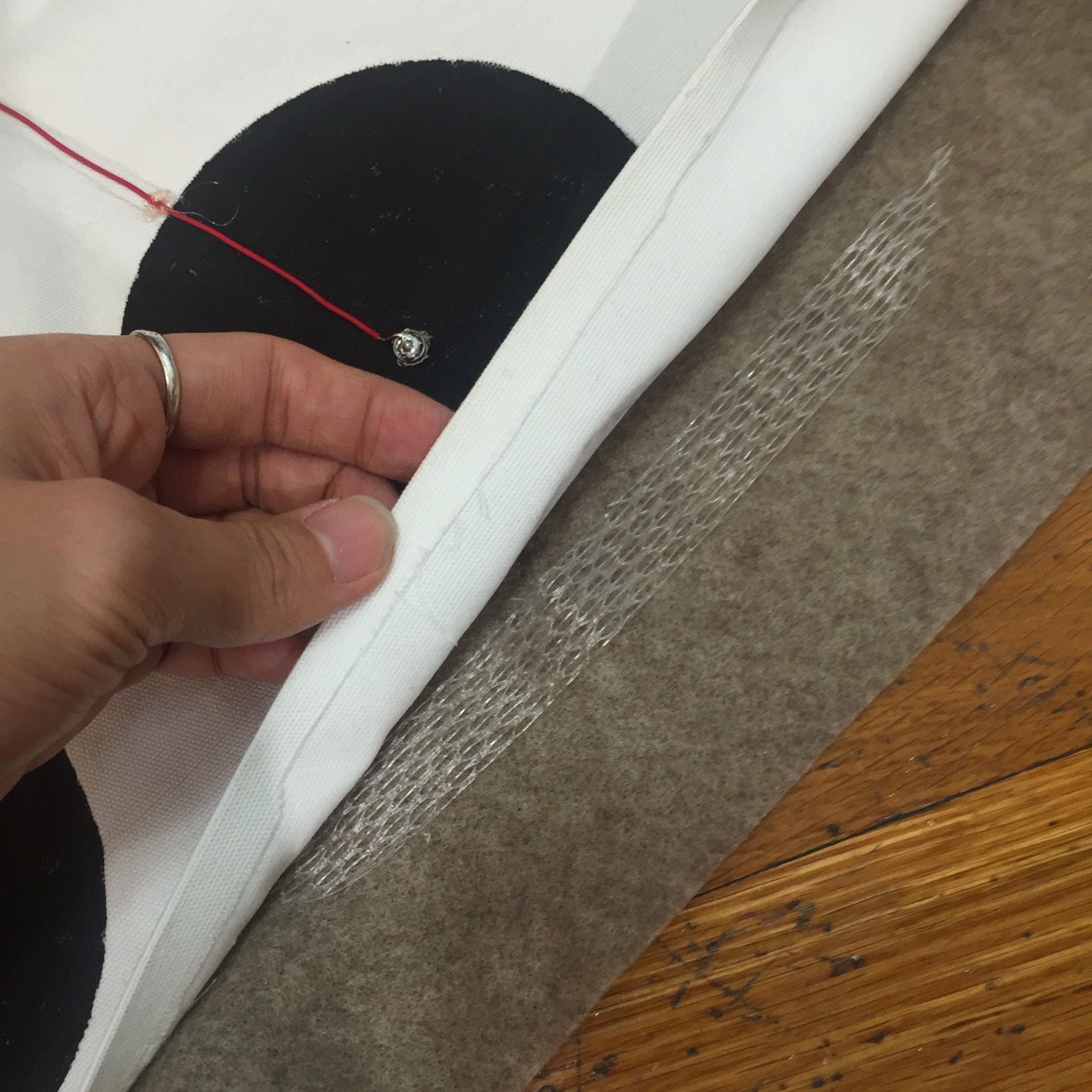
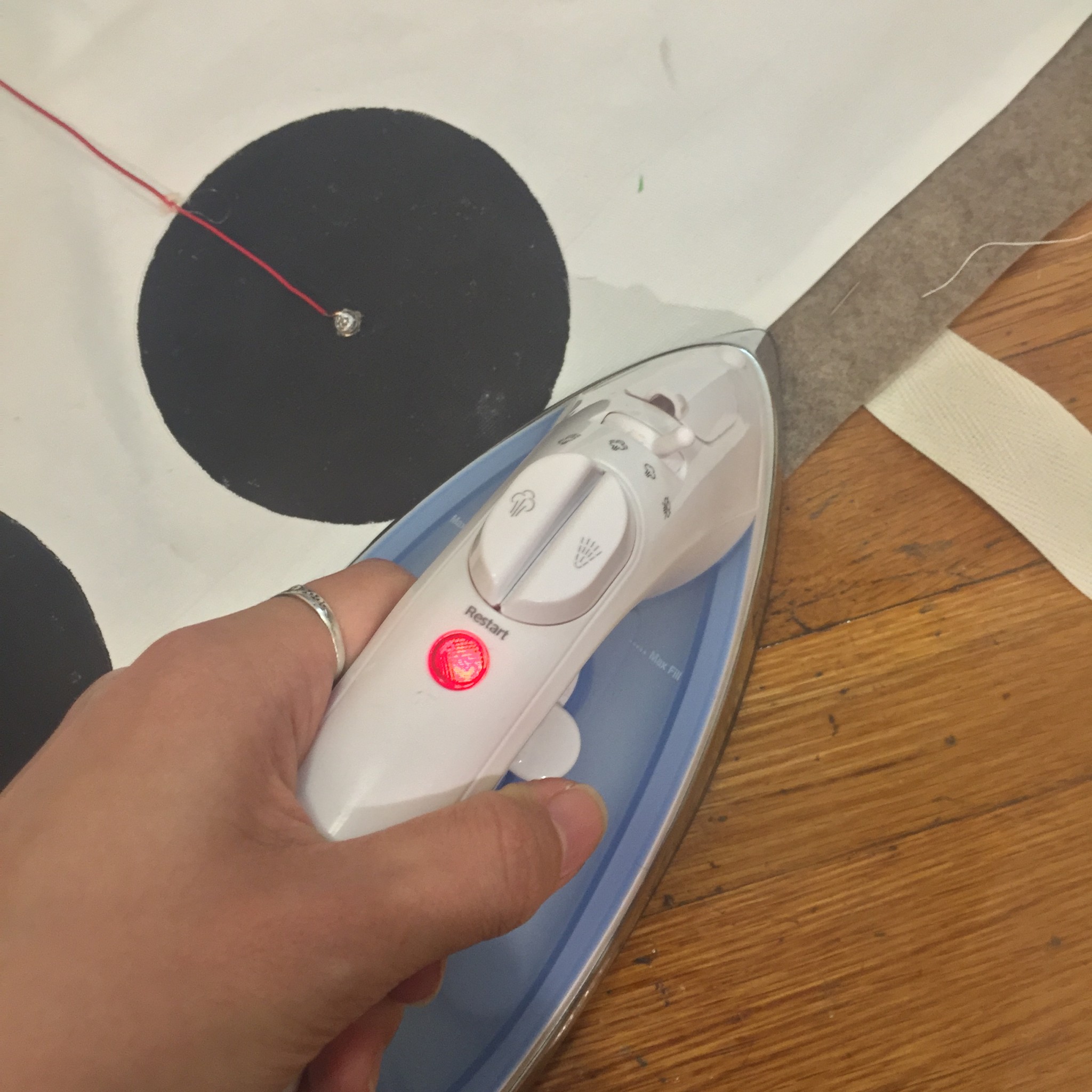
  • [Iron-on adhesive and iron] In order to glue the circuit to the bottom layer, I used iron-on adhesive and an iron.


IMG_1734

IMG_1737


IMG_1918

  • [feltwork title] I printed and cut out the title and then used it to needle wool on the top layer which made my work look neat. [TIP] You could make different patterns as well as typography, which give you a lot of opportunities to create different designs.

IMG_1920

IMG_1946

Finalization 

IMG_1949

TOP layer

IMG_1929

CIRCUIT

IMG_1935

CUSHION


Narrative in emotional vocabulary

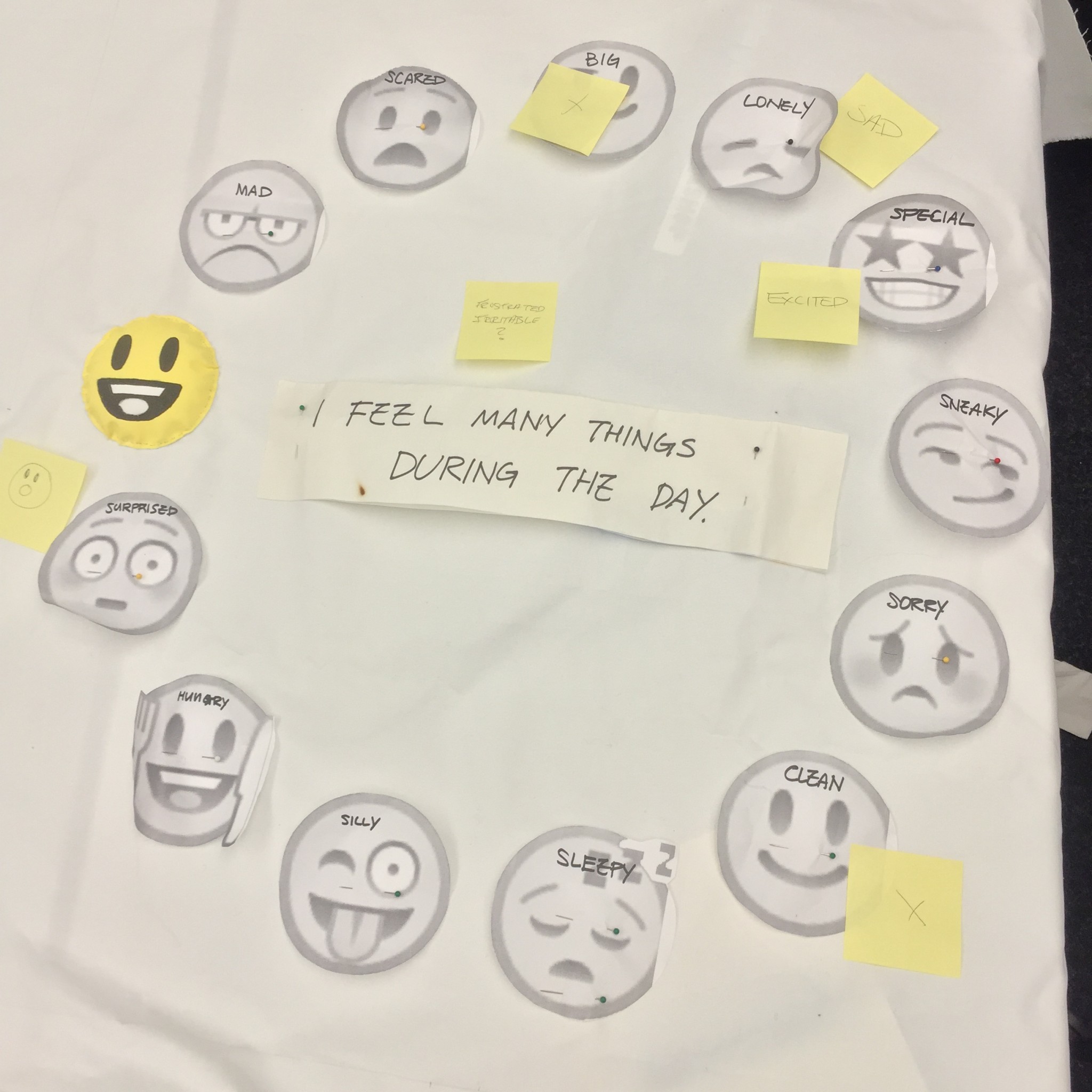
I selected 12 emotions out of 15 and Daniel J Edwards, a musical and voice actor in Pokemon(XY), Yu-Gi-Oh(Zexal Arc V) and Psychic School Wars (TBA 2016), recorded this script.

Screen Shot 2015-12-26 at 8.28.22 PM

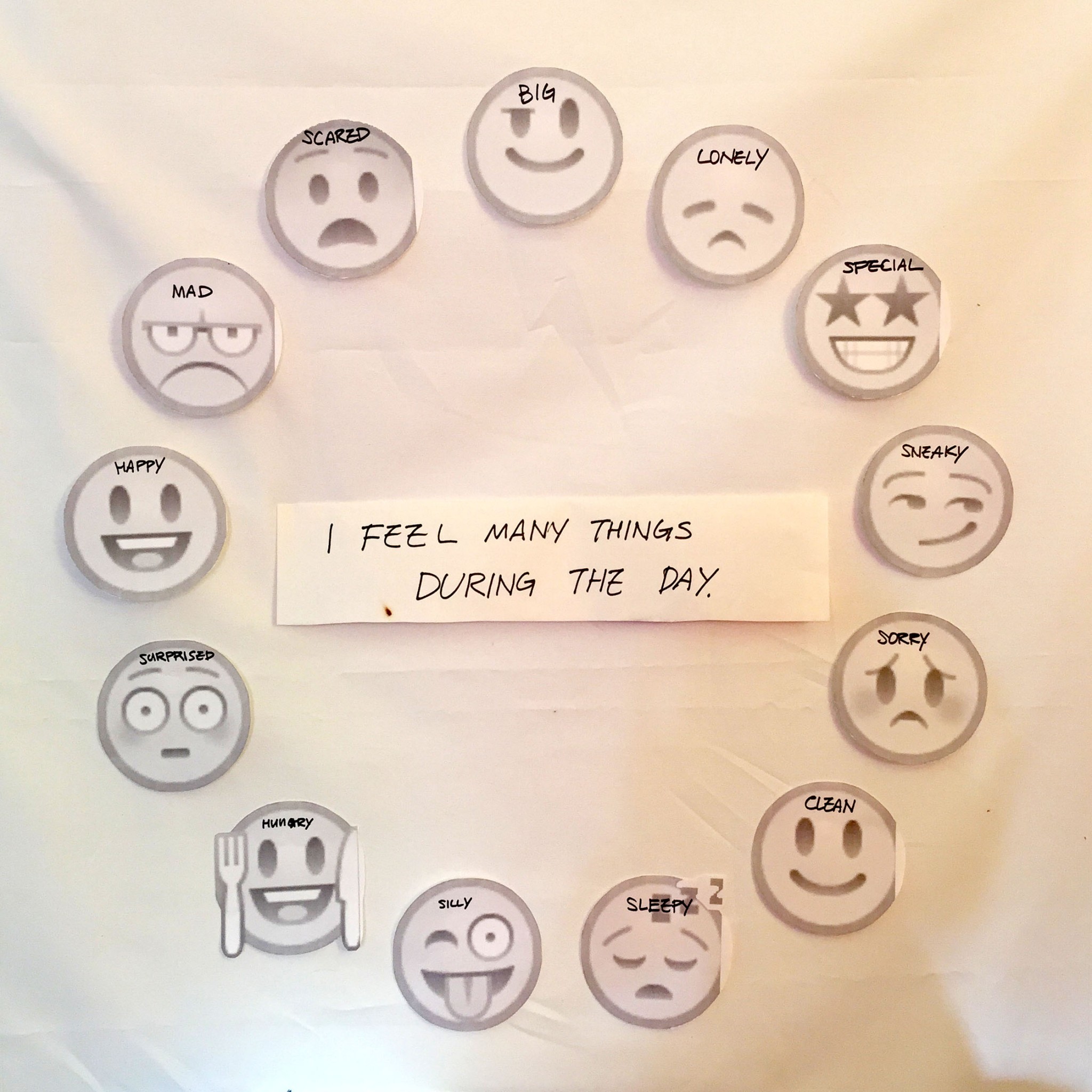
I Feel Many Different Things During the Day

  1. When I tickle my daddy (daddy laughing) in the morning, I feel SILLY. When do you feel SILLY?
  2. Before I eat breakfast (growling/rumbling), I feel HUNGRY. When do you feel HUNGRY
  3. When I hear a loud noise, (door banging) I feel SURPRISED. When do you feel SURPRISED?
  4. I feel HAPPY, (music playing) when I hear music. When do you feel HAPPY?
  5.  When someone takes away my bucket(/toy) (“GIVE THAT BACK!!”) I feel MAD! When do you feel MAD?
  6. When a dog comes running after me (dog barking), I feel SCARED! When do you feel SCARED?
  7. When my friend cries (sob sob), I feel SAD. When you do feel SAD?
  8. When I help put my toys away (toy sounds), I feel GREAT. When do you feel GREAT?
  9. When my mommy is on the phone (phone ringing “uhum, uhmm”) I feel LONELY. What do you feel LONELY?
  10. When I think about what I want to be (“Oh oh oh!!” (something find)), I feel EXCITED. When do you EXCITEDfeel?
  11.  When grandpa visits (muack muack), I feel SPECIAL. When do you feel SPECIAL?
  12. When I hide behind the couch (shh~~~), I feel SNEAKY. When do you feel SNEAKY?
  13. When I hit my sister (“Hey stop it!” (annoyed)), I feel SORRY. When do you feel SORRY?
  14. At the end of the day (YAAAWN), I feel TIRED. When do you feel TIRED?
  15. When I see garbage on the floor, I feel DISGUSTED. When do you feel DISGUSTED?


Sanie’s feedbacks from Artisan Tech

Hi Binna!

your process is really well illustrated, detailed, and executed from start to finish. As a product, it works well aesthetically and catches the attention of children and adults alike. The pattern in the center is especially well done, and your care and handling of technique really comes through. Even your considerations for the childrens’ safety is spot on. 

My only question is how did you come up with the sounds and the emotions for the faces (did you record/create them or take them from somewhere)? It seems that the voice recordings are a bit too detailed and might not be relatable to all children – is there any variation in the phrases?  

Overall amazing and beautiful work! :)

Q – It seems that the voice recordings are a bit too detailed and might not be relatable to all children / is there any variation in the phrases?  

– My answer: a vocabulary of feeling words on the play mat should be detailed moments for kids to grasp and further use them. Hence, I got the ideas of narratives from daily life where kids generally experience.

 I agree with what Sanie pointed out. I believe that the twelve audios with limited stories in each emotion could limit kids to fully understand and related to each situation.

I need to add more contexts for kids to perceive feeling words in accordance with meaning of behavior, contextualizing behavior, and consequences of behavior. 


Undated[Week14]Dec 8 – Prototypes for in class feedback

Iterative Prototypes of I feel many many things during the day


Prototype 1. 

IMG_1264

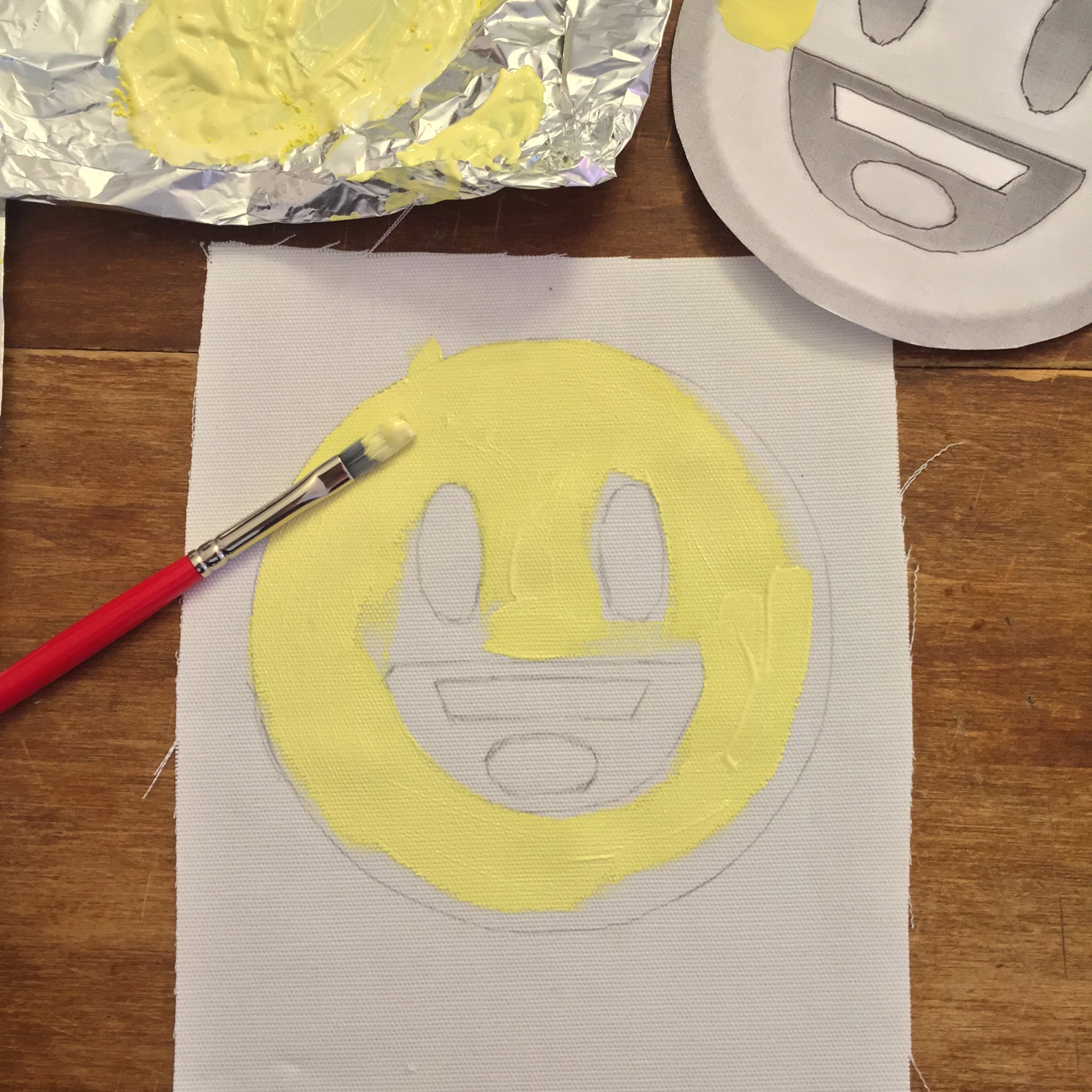
In order to paint faces with thermo-chromic pigments onto fabric and sew them on top fabric layer, I prepared materials.

Materials

  • Acrylic colors and binder
  • thermo-chromic pigments
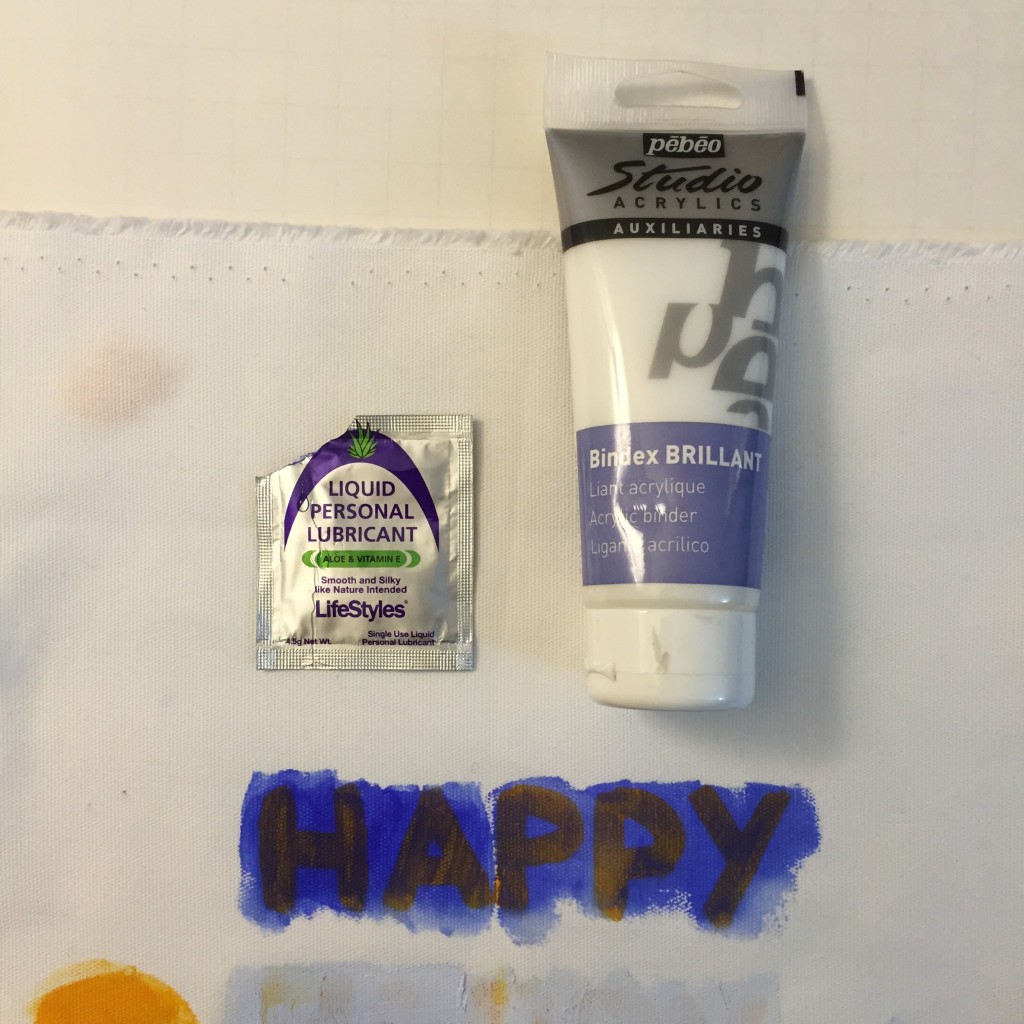
  • foil to mix thermo-chromic pigments and mixtures ( white acrylic color, acrylic bind and human lubricant) with disposable wood sticks or forks
  • 2 yards of canvas
  • cotton puff
  • copper conductive fabric
  • needles and threads
  • pins to hold fabric and faces together

first prototype- IMG_1276

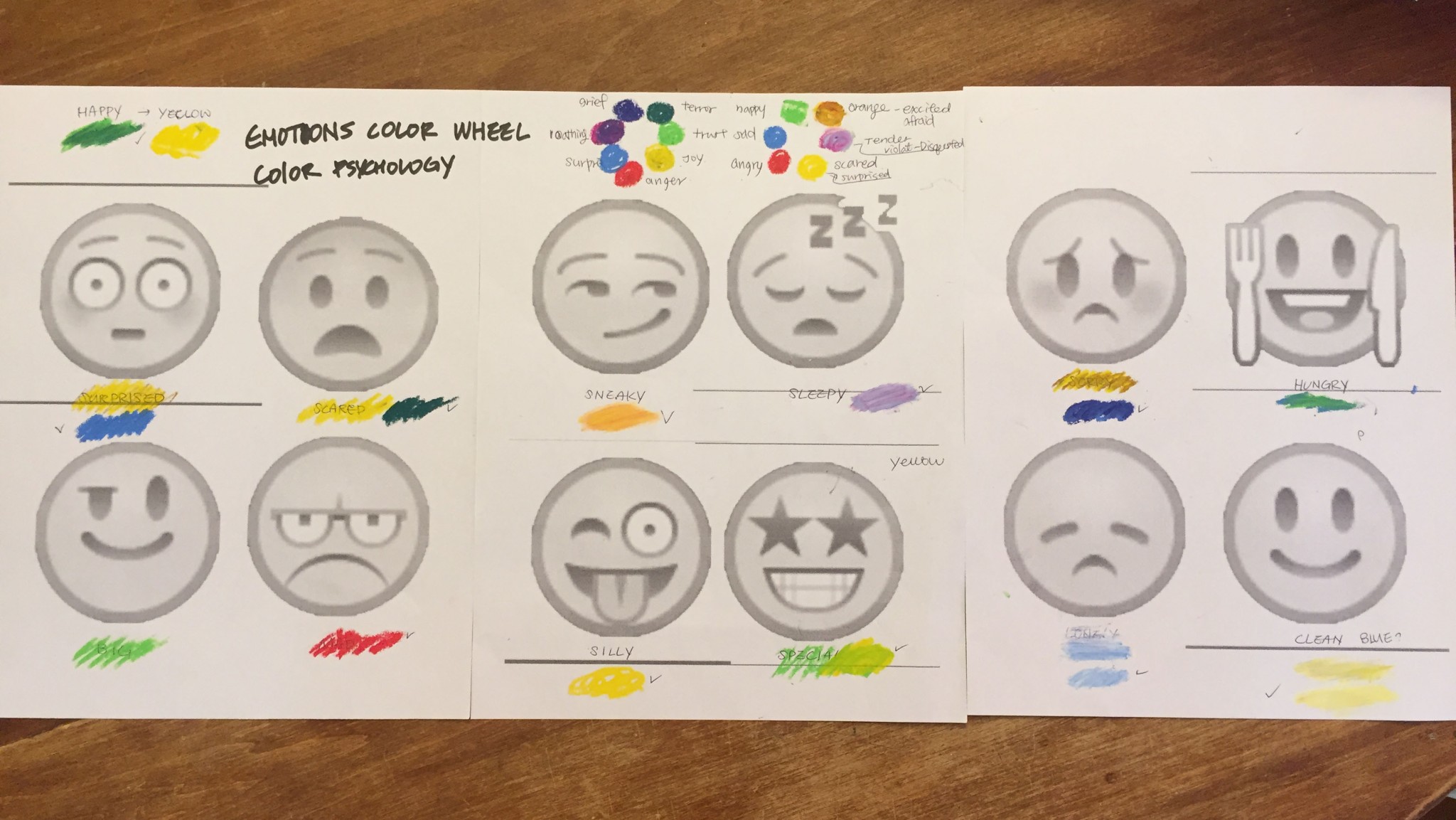
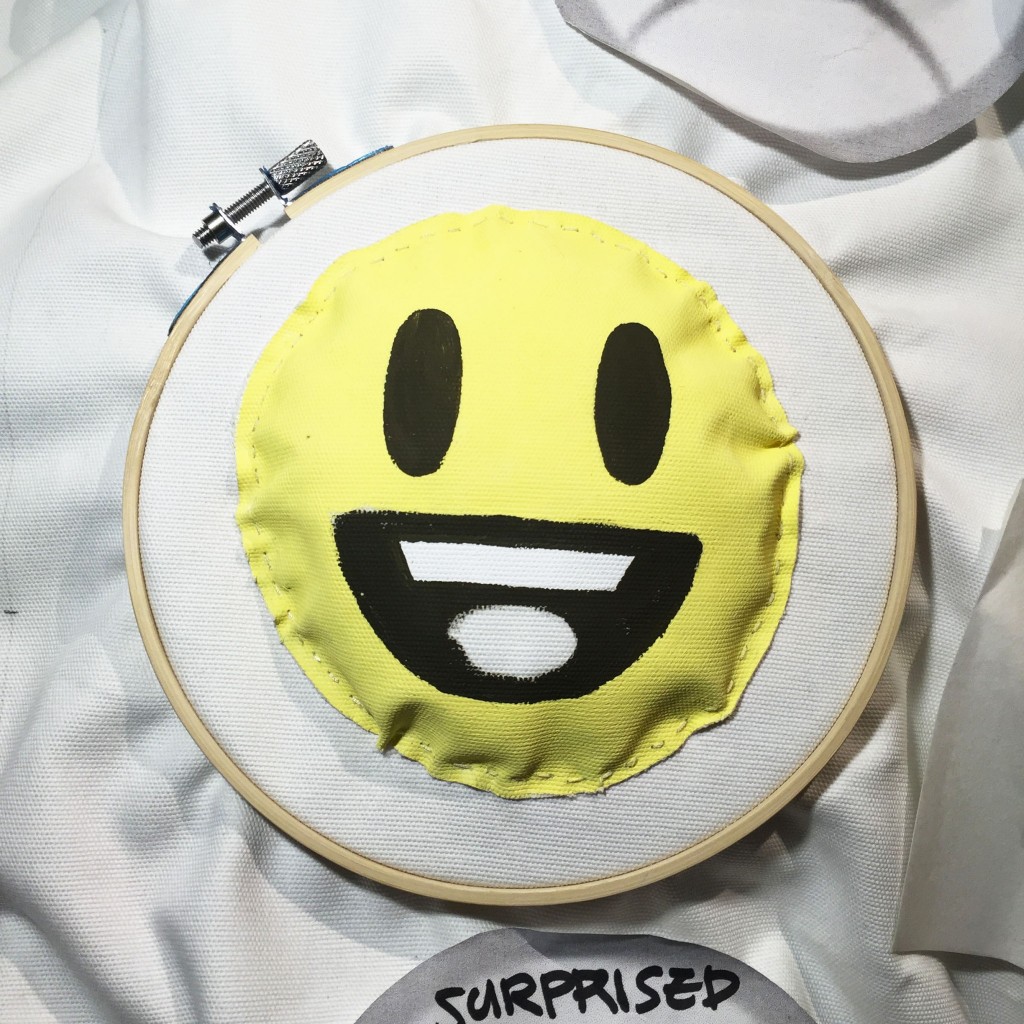
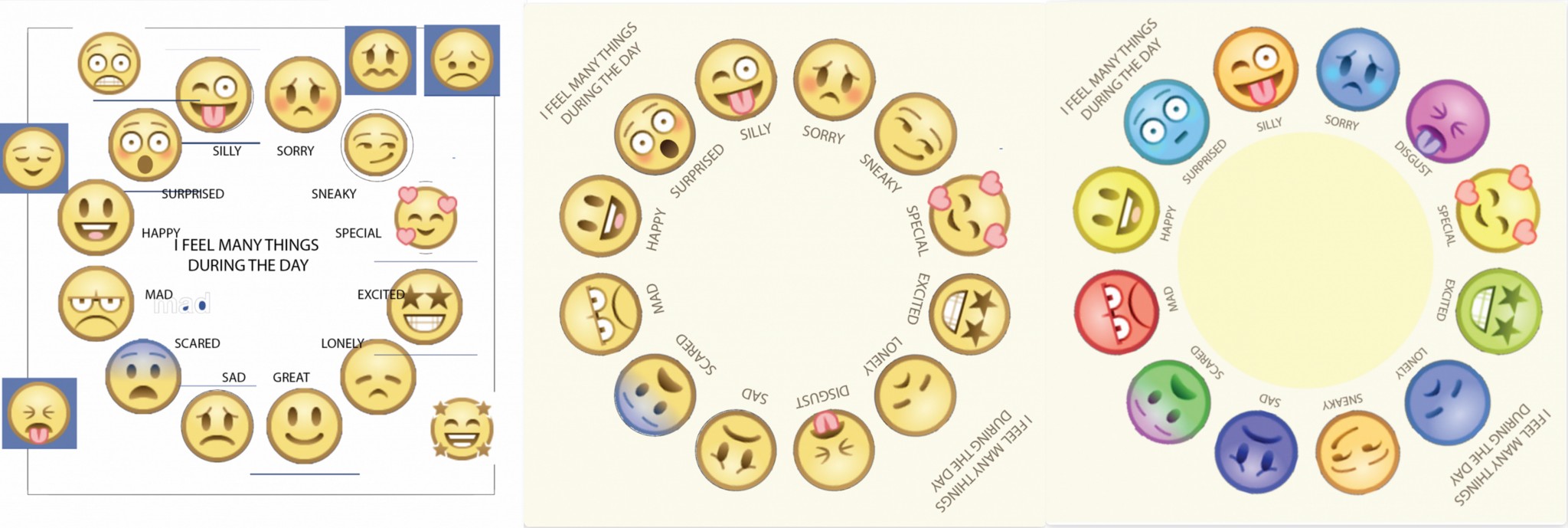
First step: I designed my play floor with faces. At the first prototype, It was 13 faces: silly, scared, mad, happy, surprised, hungry, sleepy, clean, sorry, sneaky, special, lonely, and big. I researched color scheme for faces and found color psychology. Yet ,I got confused because there were so many different ways of pairing up emotions with colors. I ended up using two color charts most frequently seen. I applied the one of them below to faces. However, later one of my classmates, Greg, told me that color psychology is not reliable because it is very subjective and its meanings are varied from culture to culture. Thus I decided to take just colors, not meanings, to contrast each face.

emoticon colors PLUTCHIK’S COLOR WHEEL OF EMOTION

IMG_1270IMG_1275IMG_1284

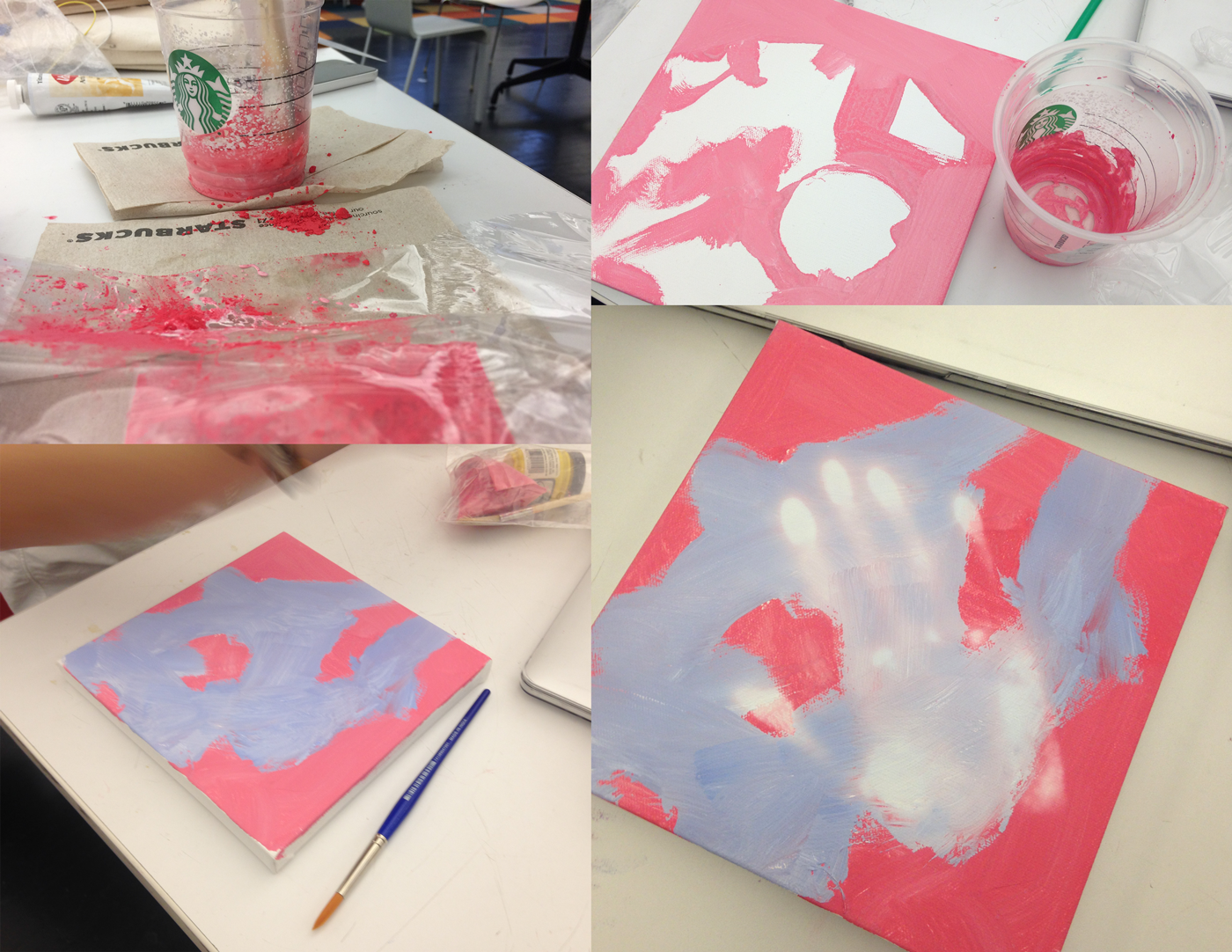
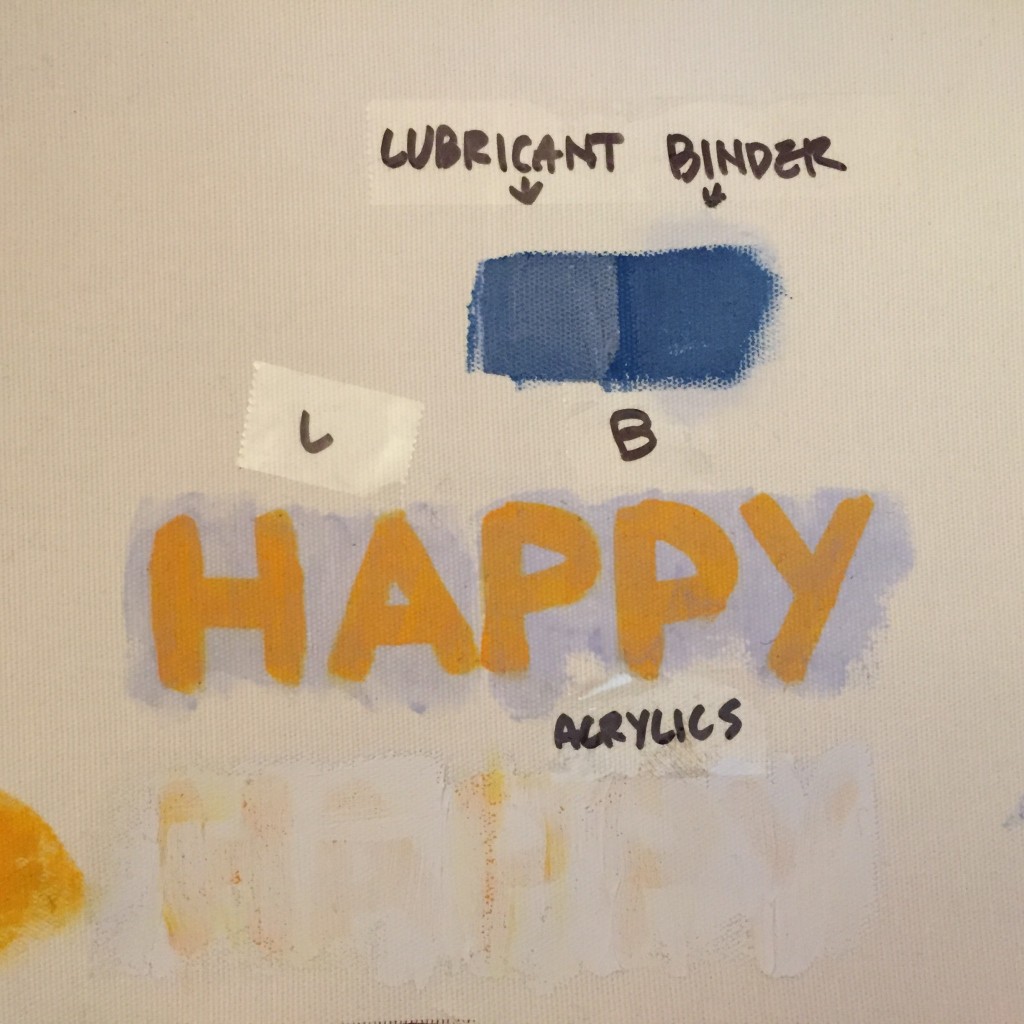
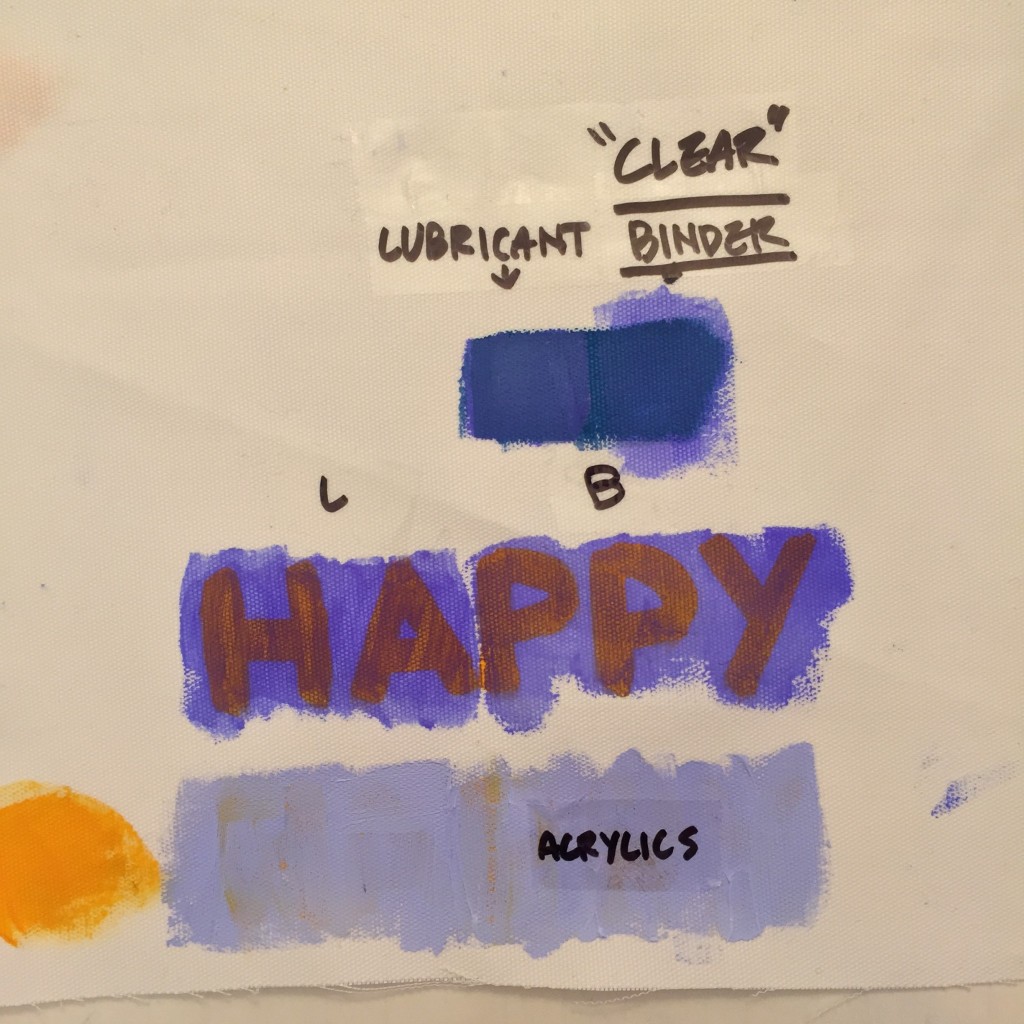
Next step is thermo-chromic test. I tested mixtures (white acrylic color, acrylic bind and human lubricant) to find out which mediums would keep thermo-chromic pigments vivider. As a result, acrylic binder was the best one.

happy_thermochromic pigment IMG_1308 IMG_1313 2

Then, I applied yellow thermo-chromic pigment on happy emoticon and painted eyes and mouse with black acrylic color. When paining the face, it took a while to color on it with a brush. After coloring step, I thought about using a sponge and stencil it would be a faster way. I sewed happy face on the top layer. I wanted to create the reaction that you can see the face color is only disappeared when you touch it, but eyes and mouth are still there.

IMG_1323

I got some feedbacks from Major Studio 1.

  • Some face expression do not clear, so kids would get confused.
  • Dimension of my project is 35 x 35 inches and a kid could sit in the middle of it.
  • Change faces to look the middle of circle so a kid see the faces towards him when playing.

IMG_1494IMG_1497IMG_1498As I chose a thin canvas as a top material, thusI needed some material act as a cushion to keep children from getting hurt by the hard floor. In order to make sure the cushion layer between circuit and top cover work, I tested it worked well.


IMG_1513

Also, I got more materials to stuff faces to give children different tactile experiences. Why I got them because I believed faces are not enough to attract children. I tried to touch, hit, and step on the faces filled with harder materials. I found some materials could hurt kids because some kids get really excited and could smash or hit on faces. I decided not to use different materials.

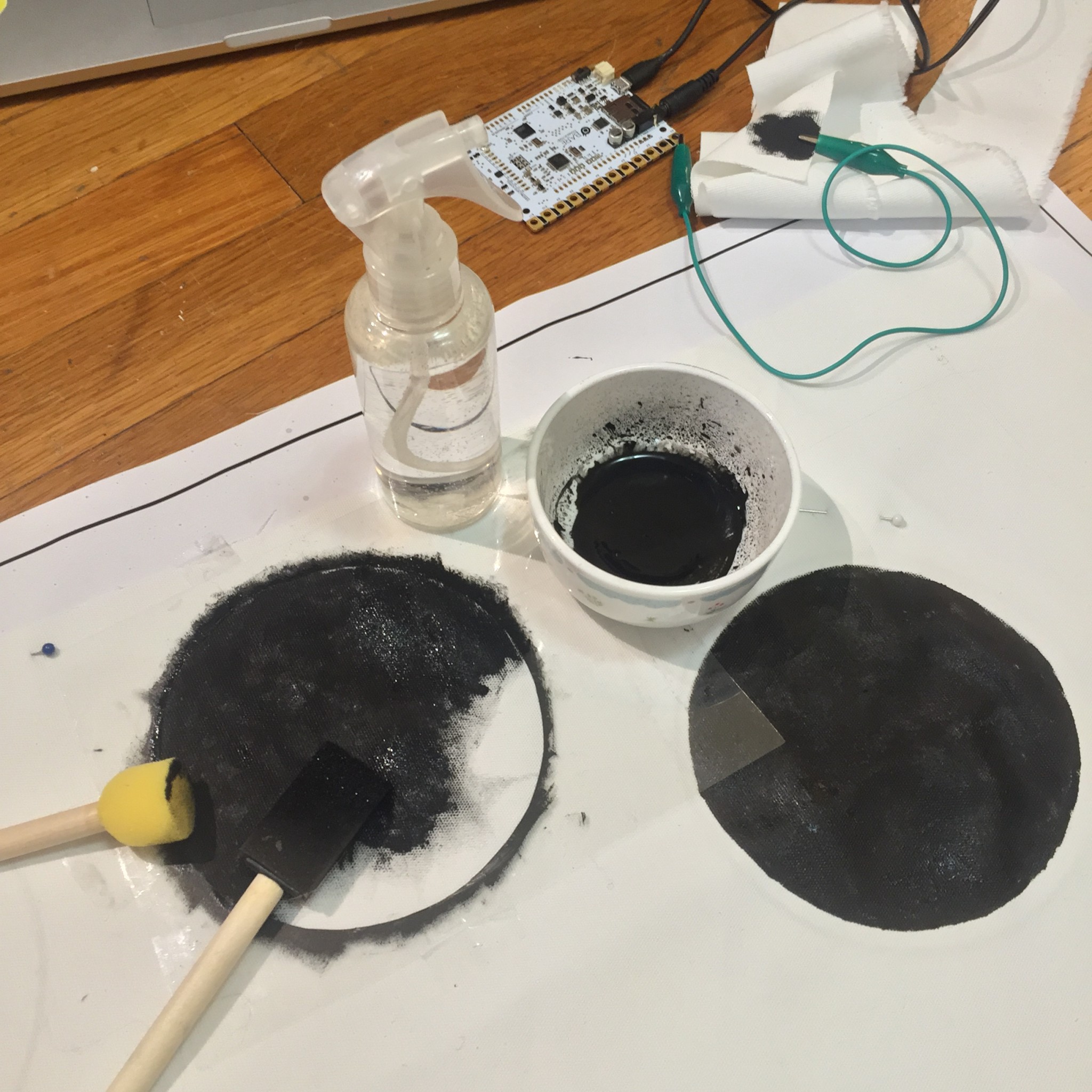
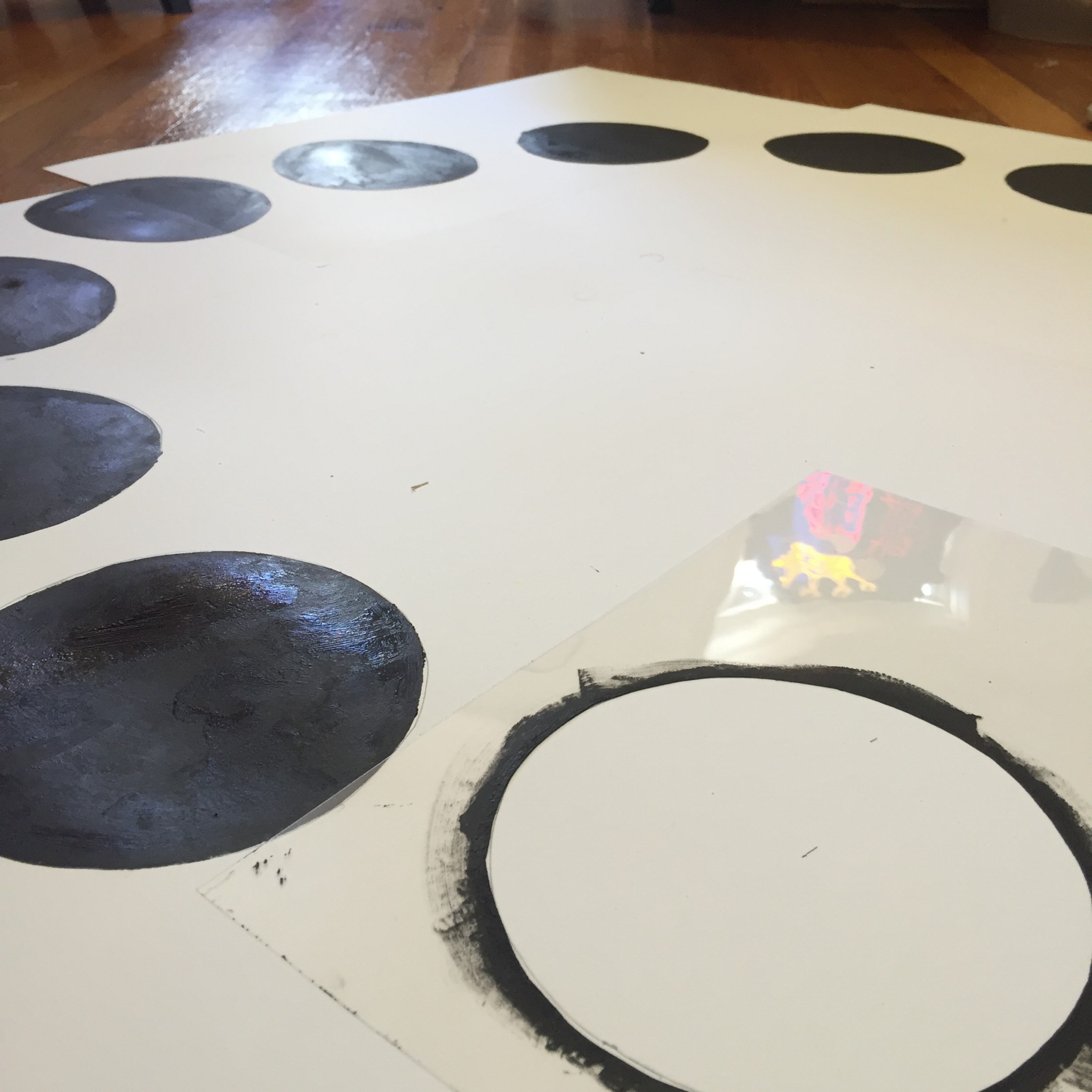
IMG_1311IMG_1312Painted paper circuit with conductive ink.

After making sure the testing circuit work, I painted the actual circuit on paper. I used a transparency film to fill out the ink.

Designs


design progress


Final design was faces with colors. each color on faces goes with each emotion.

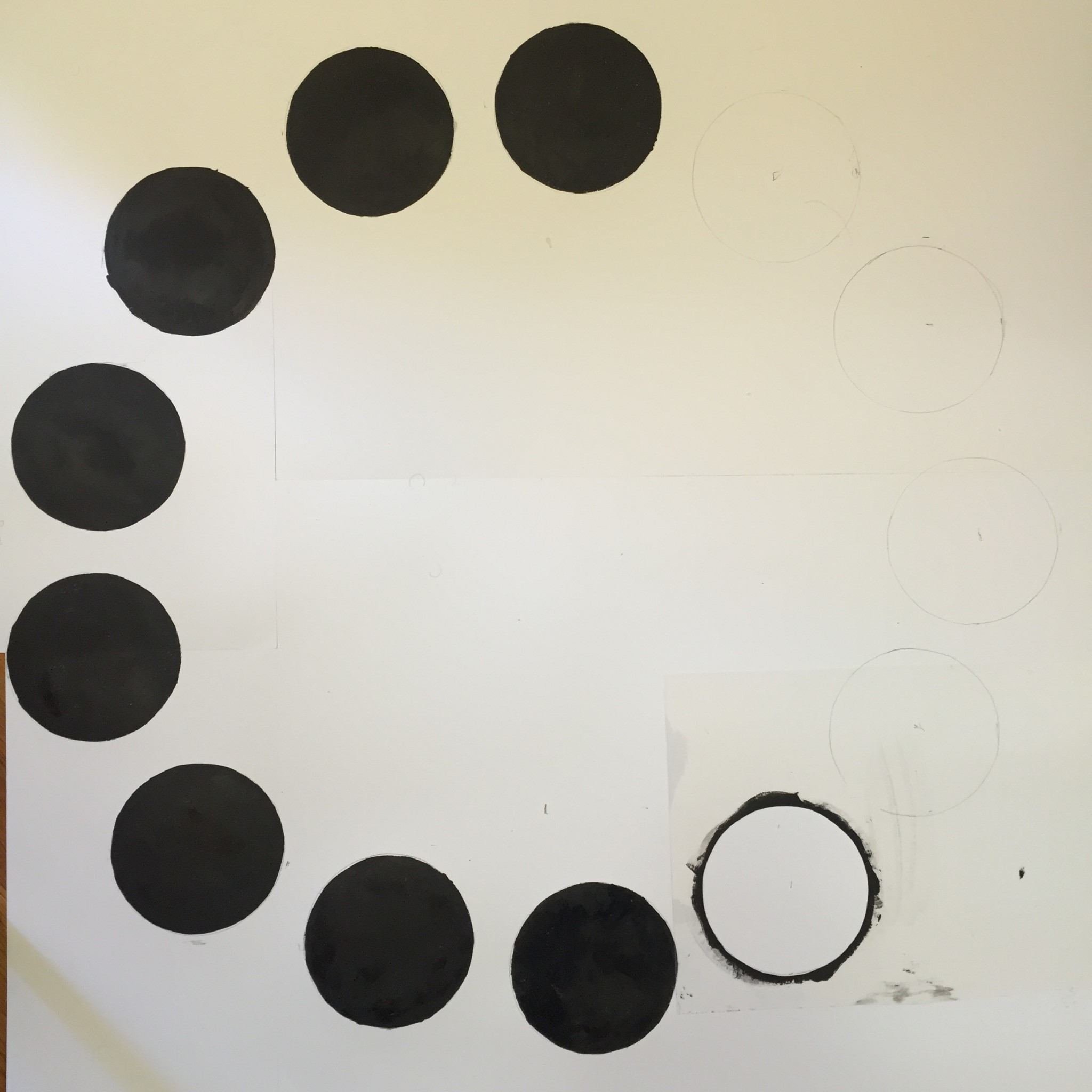
2nd prototypesketch structure

I sketched how to build the floor and install board and speakers.

Structure 

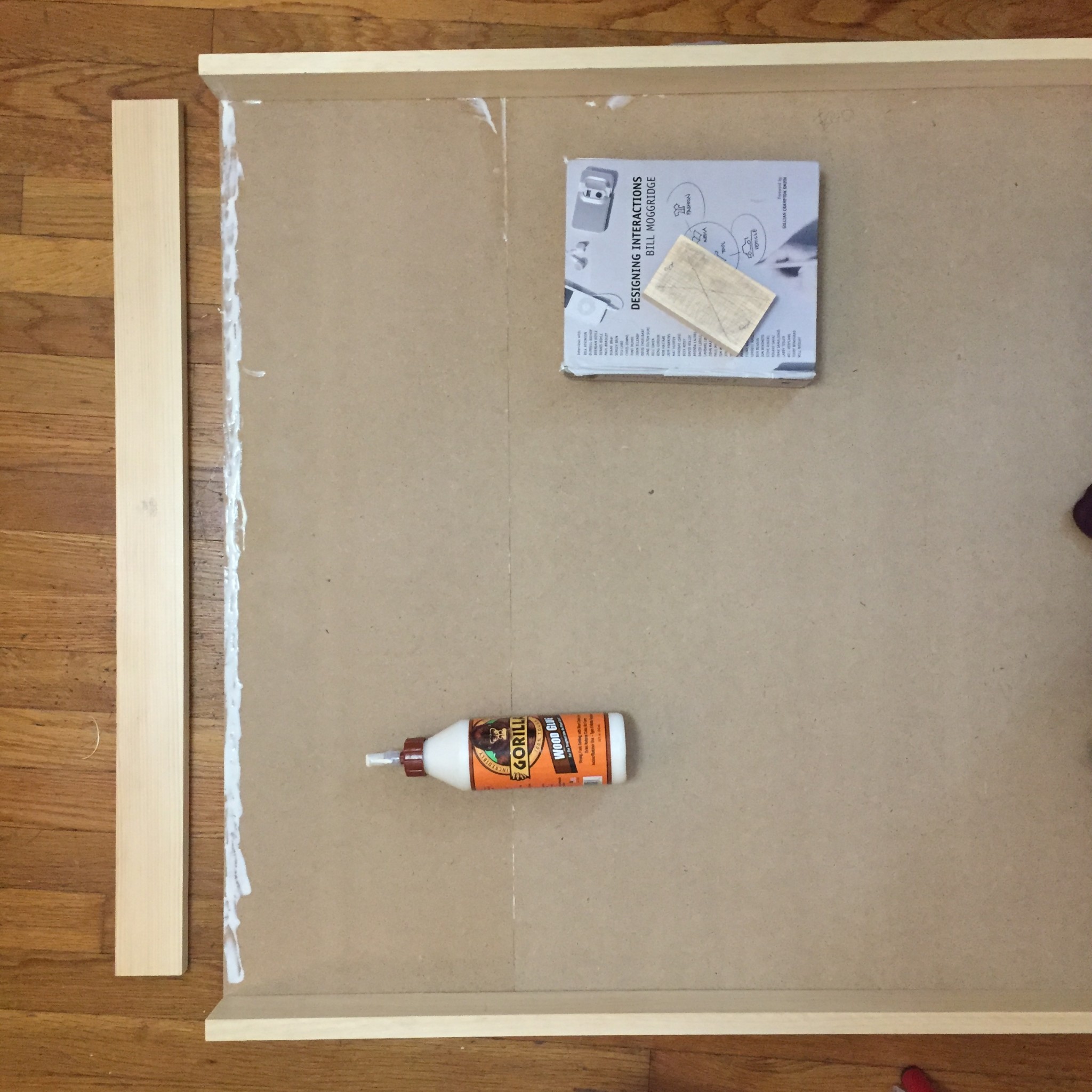
I brought wood panels to woodshop and cut them into pieces to build the floor and assembled them. Due to kids’ safety, I glued and nailed the pieces together to build a sturdy wood floor.

IMG_1577IMG_1570IMG_1573IMG_1576

Soon I finished building the floor, I came up with an idea of making my project better. I don’t need the hard floor anymore. Instead, I could use felt or thick fabric in order to make a flexible play mat. It’s unnecessary to make the floor heavy. lol


Feedbacks from classmates

After playing with thermo-chromic pigments, I found that when it comes to testing hand and eye experience, the responses from faces weren’t immediate when kids touched them. Children are impatient. I have to think about how to keep their attention as much as I can.

Also Elizabeth said it would be unnecessary to use thermo-chromic pigments on my project. So, I started looking for different materials.

Jane, Charles and Wes

We loved your concept and where you were at in terms of progress. Our main comments were on the underbelly of the project, the wiring and mechanics. It looked like you were using copper tape which we had mentioned you need to just double check the wiring with every circuit. The other comment is using material on the bottom of the pad. Maybe carpeting or a foam? 

Love the progress so far!

Max – I think your documentation is great. and the concept behind it is strong. and the aesthetic of the project is great. The only thing i would recommend you do is to keep your presentation short and sweet. 

These are the feedbacks I got in class. Their feedbacks were all sweet and supportive. I focused on possible issue with making the circuit that will be set up under the top layer. I took an action to make the circuit to see how reliable the connectivity and sturdiness of circuit are.  Also, I prepared foam layer so as to insert a cushion between the top and bottom layers for kid’s safety.

I contemplated in terms of audio, how to make the voice more relevant to the context where kids will be asked as well as who will be the users helping kids to talk. As I name my work emotional vocabulary play mat, this could play a role of therapeutic tool that assists to arouse their emotions they feel through the day and let children share their feelings with parents, therapists, and teachers.


Final_Proposal_kAi

My final project is a cape drum machine. Literally it is a wearable MIDI for drum machine. It is a instrument and toy for introducing drum machine and electronic music to children.


[ drum machine is an electronic musical instrument designed to imitate the sound of drums, cymbals or other percussion instruments. Drum machines are most commonly associated with electronic music genres such as house music, but are also used in many other genres. They are also used when session drummers are not available or if the production cannot afford the cost of a professional drummer. In the 2010s, most modern drum machines are sequencers with a sample playback (rompler) or synthesizer component that specializes in the reproduction of drum timbres. Though features vary from model to model, many modern drum machines can also produce unique sounds, and allow the user to compose unique drum beats and patterns. ]

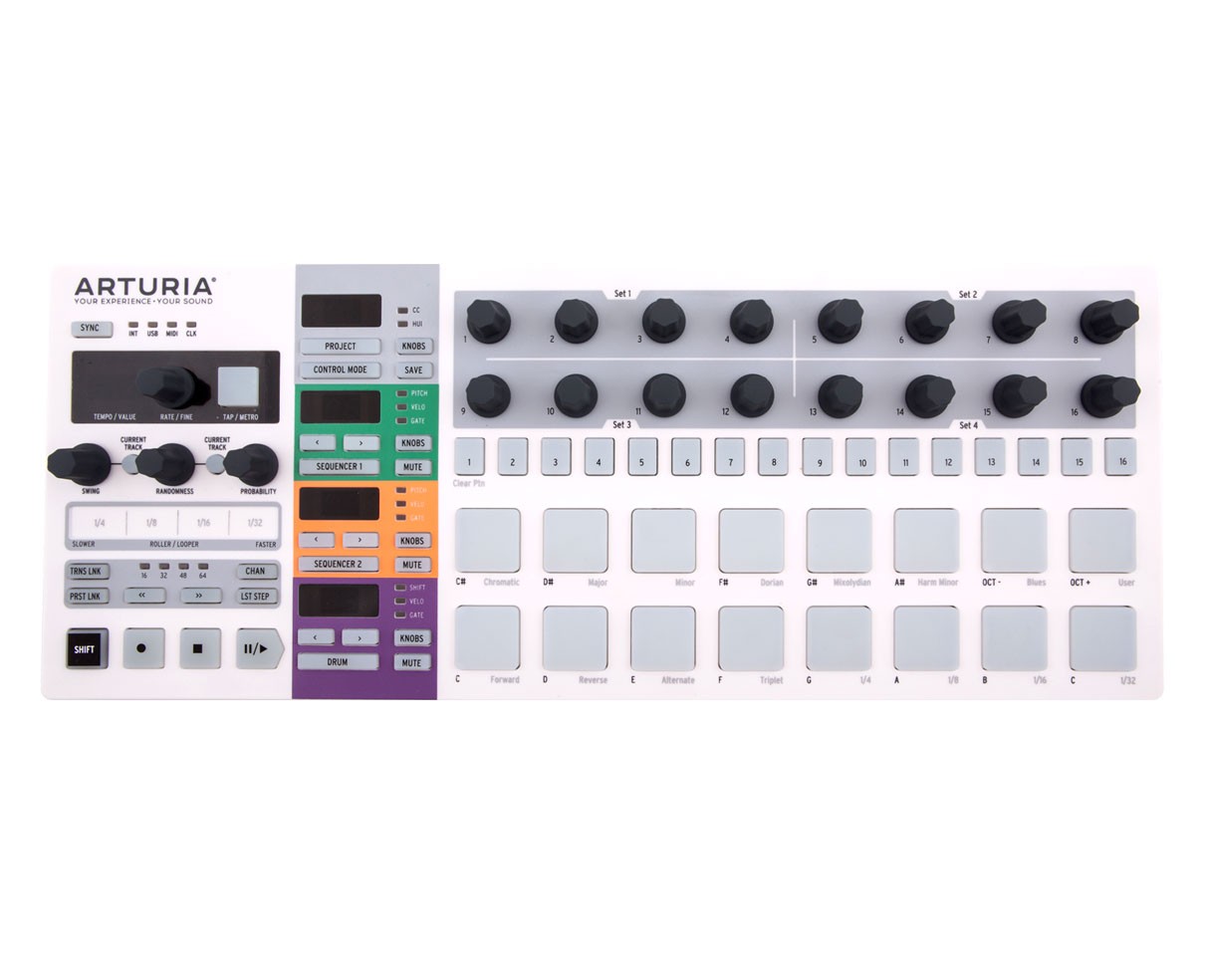
ata-beatsteppro_1


Coming back to my project, the interface is a cape. When sticking the modules on, the cape can trigger sounds and loop them through GarageBand (a musical software in computer).

cape+modules1-01cape+modules2-01

Prototype for testing the code:


Some precedents:

Final Project Proposal

Concept 

I am creating an electronic pop-up book for kids while the parents to play along with them, evoking the feeling of companionship through interactions with physical objects in the context of my narrative.

Rex’s Magic Adventures with a secret helper

  • Page 1 Meet Rex! [My main character]

Hi Rex

Hi,

I’m REX.

Thank you for opening this book

and spending time with me.

(volvelles, rotating paper disks. 13 century)

  • Page 2 

black

I recently lost my eyesight,

and I’ve been feeling very lonely.

Having you here really brightens up my day.

I am enjoying your company so much it makes me want to tell you about my past.

I was quite adventurous in my day, but would never have gotten through it all without my secret little helper.

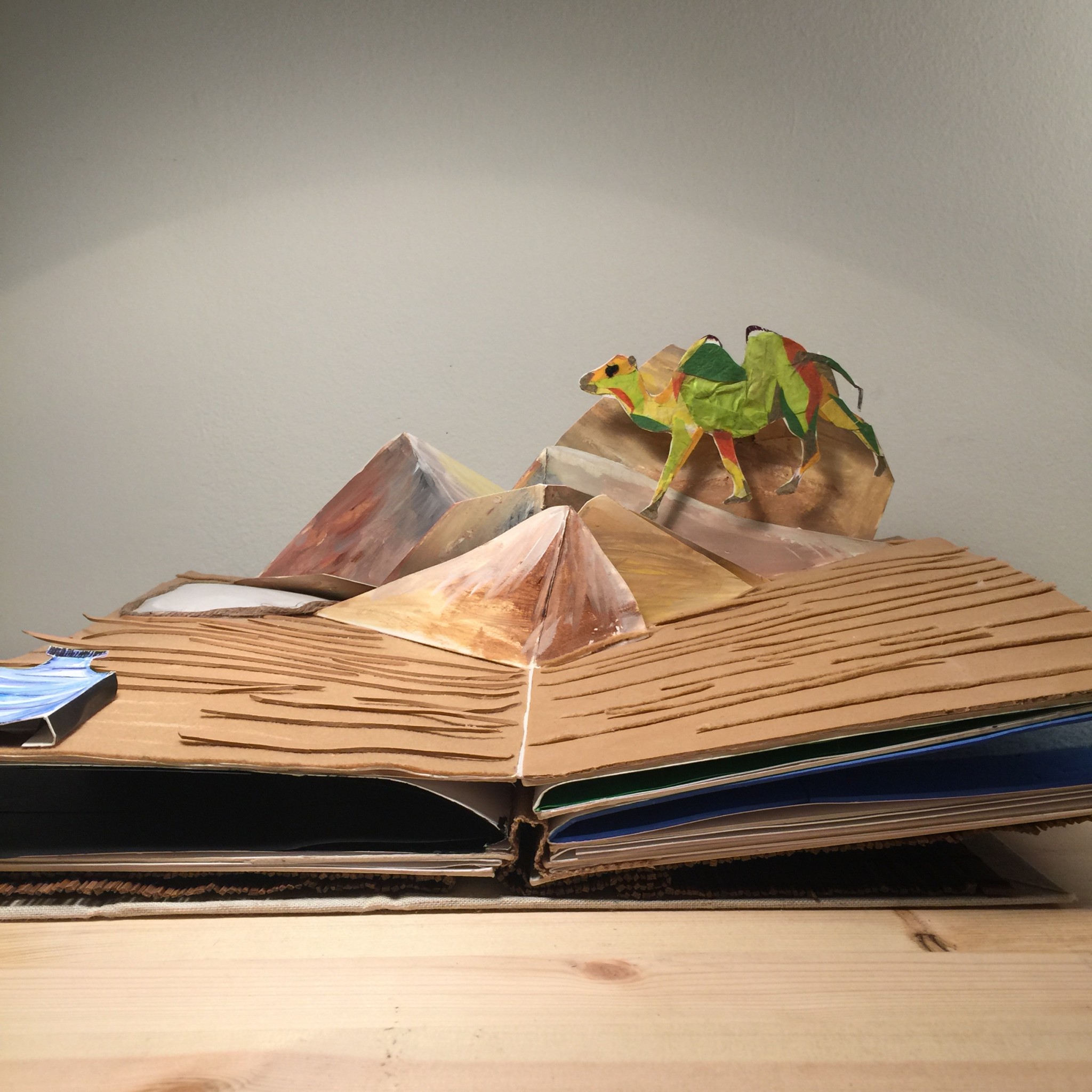
  • Page 3 – Rex in the Desert – verb: squeeze 

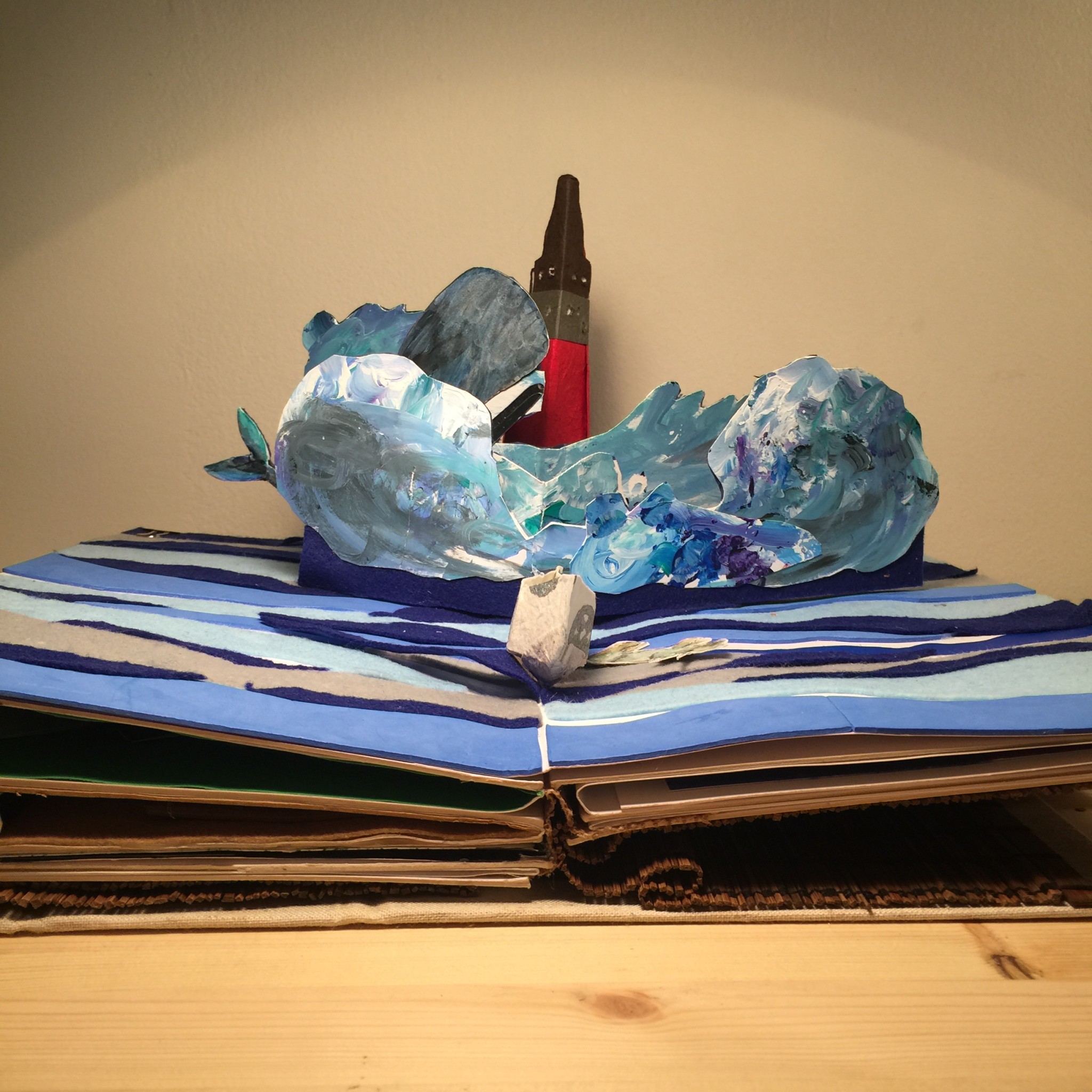
Rex is learning how to cross the desert. Got thirsty, Reader helps him find lake by squeezing the water  bottle. 
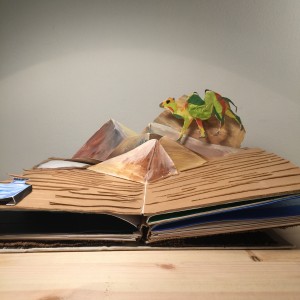
39.pic_hd


I like to make friends.

I met Cameron.

I asked him to show me his home.

So he took me to the desert.

At first, it was lovely, we were talking and laughing.

But as we walked deep into the desert,

I ran out of my water supply

and the thirst was killing me.

Luckily, I was saved by my secret helper.


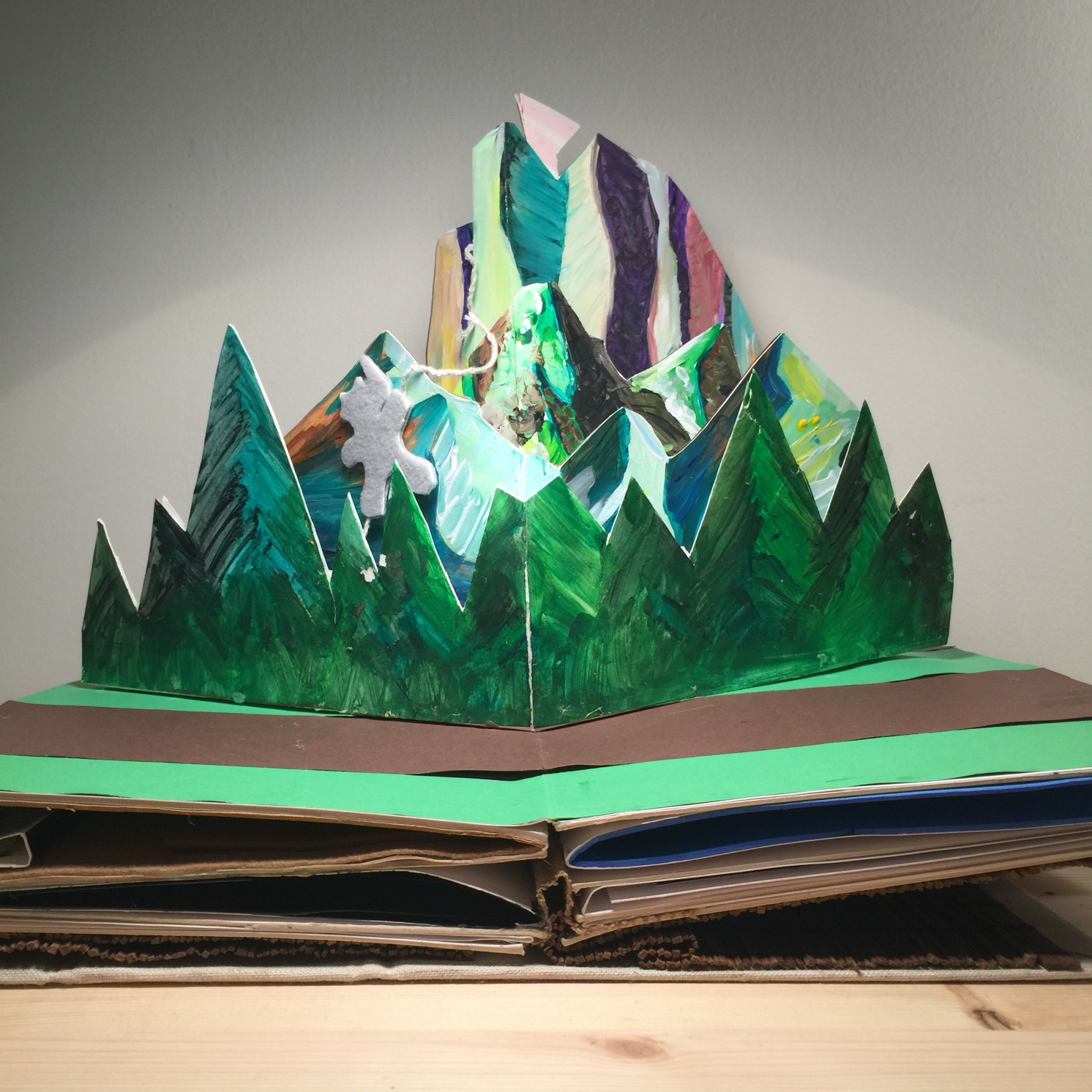
  • Page 4 – Rex climbing mountains – verb: tie

Rex is learning how to climb mountain, the rope broke, reader helps him tie the rope.
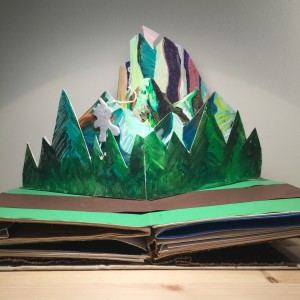
38.pic_hd


When I got out of the desert,

I met Max.

I asked her to teach me how to climb mountains.

She offered me one end of a rope

and climbed swiftly to the top the mountian

then tied the other end on a pole.

As I was in the middle of my climb, the rope broke,

I was falling,

Again, my secret helper saved me.

  • Page 5 – Rex sailing the sea – verb: put in

Rex is learning sailing, got through out of the boat, reader help put him back in the boat.
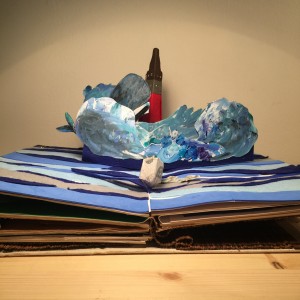
35.pic_hd


After saying goodbye to Max, I wondered to the seashore, where I met Lady W.

I asked if she could teach me how to sail the sea.

She agreed. So I built a boat and followed her into the heart of sea

One day, a heavy storm hit us, and I was thrown out my boat.

I was about to drown, it was my secret helper that picked me out of the ocean and put back into my boat.

And that’s when I saw a lighthouse, and I was saved.
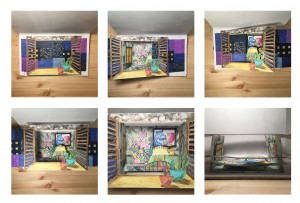
  • Page 6 – His Room 

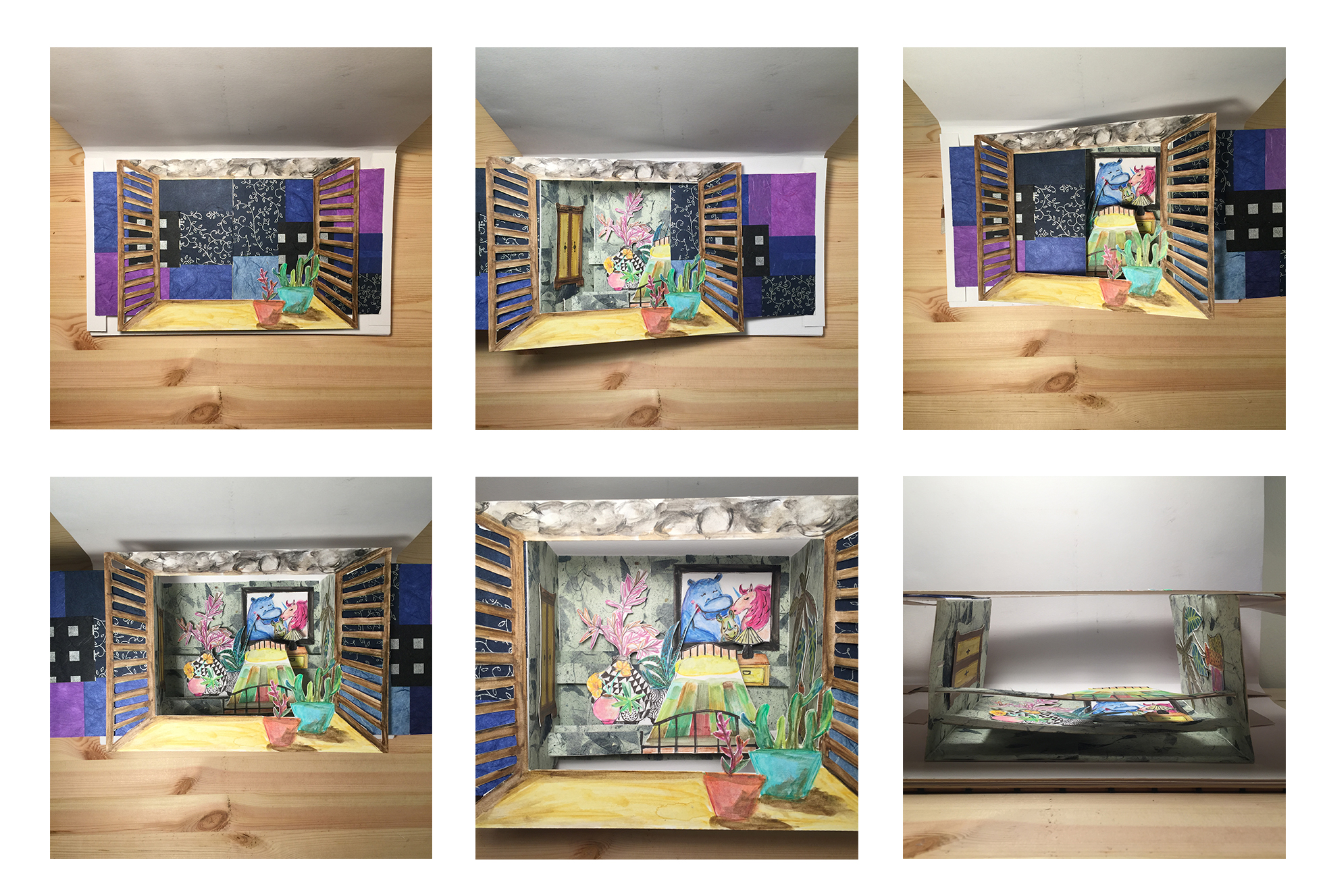
ROOM

inspired by one version of <the wizard of oz> pop up book

Thank you for listening to my stories.

I’m tired now, going to rest.

Please take a look around my room,

make yourself at home.

Good night. 

Talk to you soon. 
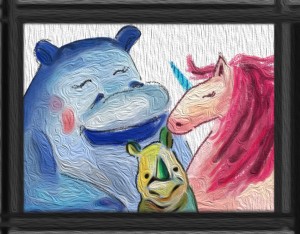
  • Family Portrait

Family Portrait 2

He’s the son of a Hippo and a Unicorn
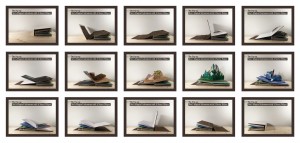
  • The whole book:

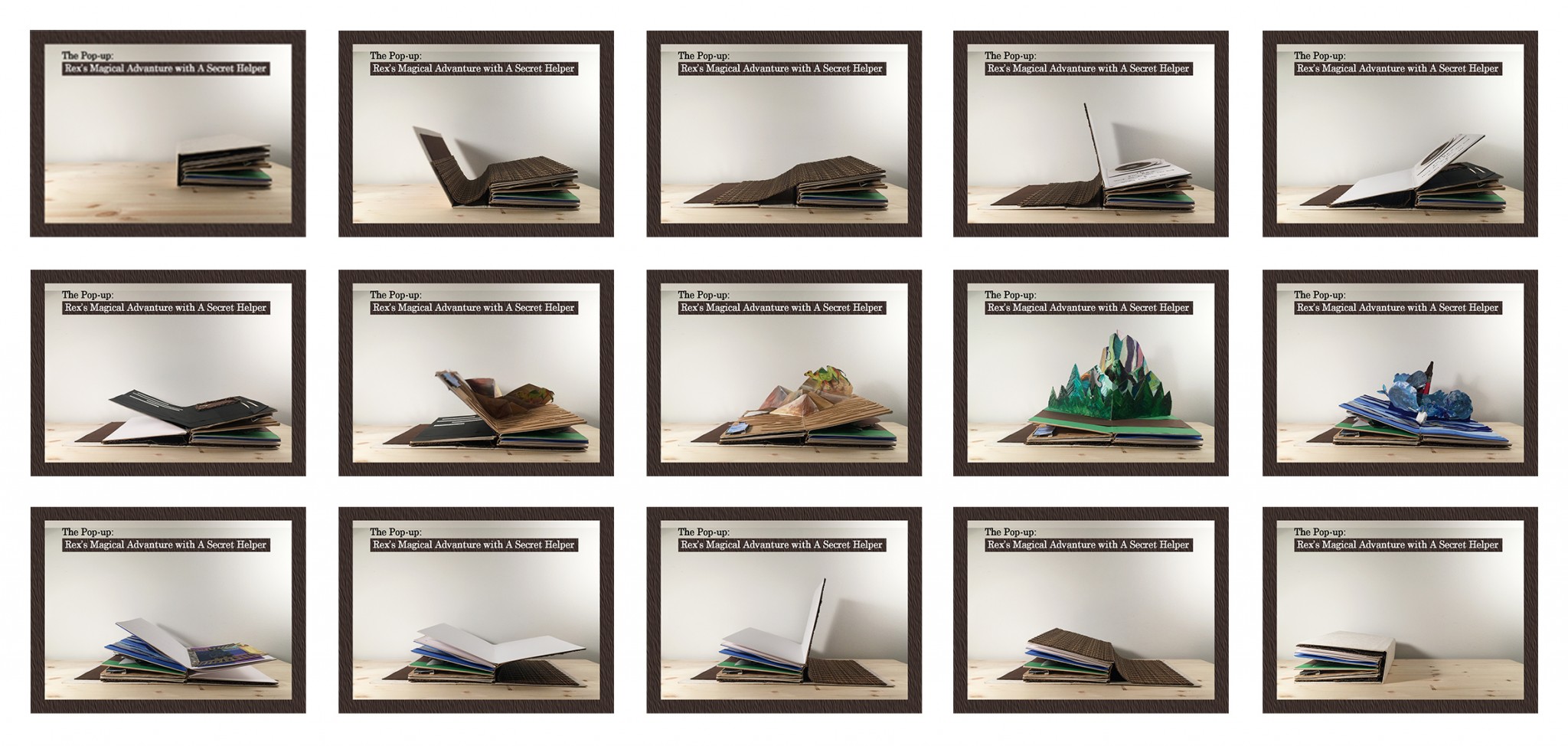
the pop up


Do you still remember your childhood? Remember the things you love to play with? The feeling of being absorbed in this little world you created for yourself? Where you are in full charge of rearranging things and ordering that world to act in new ways that pleases you better? When you looked at the drawings you did when you were little, do you ever wondered where on earth you got your imaginations from back then?

Childhood is the most important period time of one’s life. In one life span, a happy childhood can make all the difference in the world. It is very important that we don’t let reality from the adult world to stifle children’s first traces of imaginative activity. Early education is very important. And the most joyful way for achieving that is through play. As Freud puts it, “The child’s best-loved and most absorbing occupation is play.” My particular interest for my future design endeavor is in adapting cutting edge technologies for children to play with. As we see in Barthes’ Toys, children think in a completely different way and in fact have a complete world of knowledge and representation that adults cannot share with them.

In my perspective, designing the right toy for kids to play with is essential. For my final project, in order to engage with a whole generation of people who not only are versed in technological media but know how to navigate between technology and the material world.

I am creating a electronic pop-up book for kids, while the parents to play along with them, evoking the feeling of companionship through interactions with physical objects in the context of my narrative.

While the book is interactive because of the technology, but what actually brings the book alive is its narrative. The main questions I’m attempting to answer in my prototypes are how different technical interactions can be linked to specific verbs, which in turn links to different scenes on different pages.

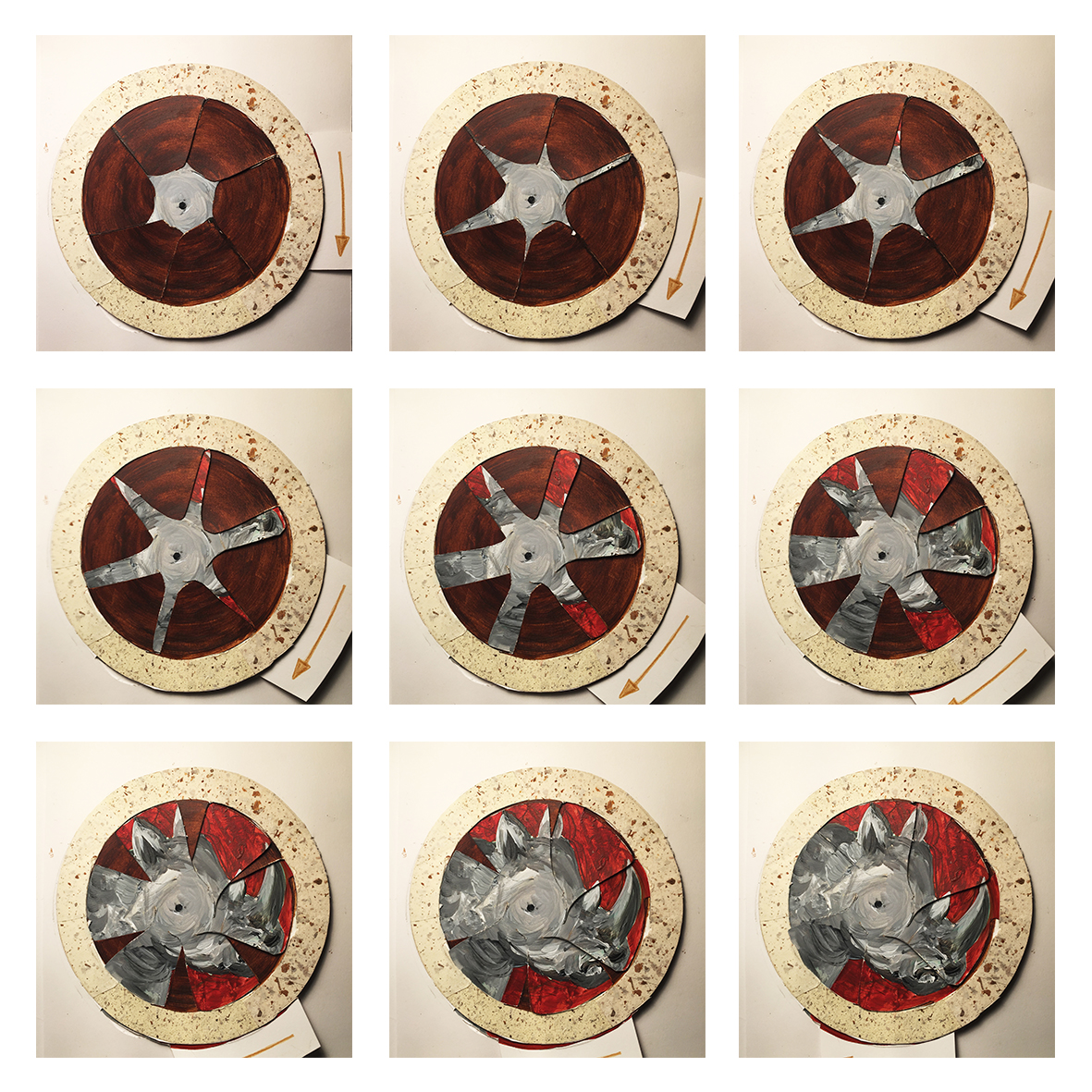
The name of the book is called <Rex’s Magic Adventures with a secret helper>. The main character of the book is a 40-year-old Rhino name Rex who recently lost his eyesight. His whole world has turned black. He’s lost the will to carry on. But luckily, the reader opened this book, bringing light into his life again by spending time with him. As the reader turns the page, Rex started to reflect back in his life of certain moments where he’s survived particular difficulties with the help of a secret helper. By following the instructions on the page, the parents will guide the kids to complete certain action required to help young Rex. At the end of the book, there is a letter, addressed to the reader, telling him/her “thank you for being my secret helper”. Rex signs the letter.

One of the strengths of my project is that I can explore various conductive/resistive materials and incorporate them into my book, for example, instead of using wires, I can use copper tape, conductive thread/yarn, smart fabric or conductive ink to construct my circuit. The second strength for doing this project is that I’m able to explore all sorts of textiles in order to make my own sensors. Thirdly, I’m also free to construct various switches utilizing different verbs such as blow, cover, roll, tie, tug, tilt, etc. in order to make the book more interesting for kids to interact with. Fourthly, I can teach myself a new craftsmanship while completing this project — paper engineering. And finally, I have the freedom to use my own painting/drawing skills in the making of my book, which makes the project unique.

But things almost never go the way you want it to go. No matter how thoroughly you planed before implementing the project, actually making it comes to live is a whole other story. One of the most critical issues for my project is hiding the circuit and power source in the book. The top priority of my book is safety. It is designed for kids age 4 – 7, so I need to make sure that while they are interacting with the book, they won’t be electrified. The current solution I came up with is that each page of my book is two-fold; the circuits hide in between two thick cardboards. And the power cords goes through the spine of the book into a wood box situated beneath the book, so I can hide the batteries and Arduino in there. Another problem I encountered is that when the book is closed, due to the fold of the pop-up materials, it can’t shuts close evenly, one side is always a bit taller than the other. In order to solve this issue, I decided to put 0.5-inch tall thin battens on each right side of the book to even out the height cap. Thirdly, I want to get rid of the USB cord for using the Arduino. So I’m experimenting on shrinking down my Arduino code onto an ATtiny to make it smaller to solder on the circuit of my book. Also, I purchased some effects pack from chibitronics, which are small and flat and solder-free (back-tape). I’m now able to make the lights in my book fade, twinkle and blink without plug in an Arduino to my computer.

Another concern of this project is whether or not the written description is able to convey both the essences of the narrative and the instruction for how to interact with the book. Is it necessary to combine audios into the book? Instead of writing the instructions on the actual book, will it be more appropriate to deliver these instructions in a different notebook solely dedicated to the adult who are accompanying and supervising the kid? Will this make the experience more interactive and magical for the kids? And will the parents be more involved in the process of reading the book with the kids together this way? By making the adult an important part of completing the interaction with the book, will this be more effective for the audience to experience the importance of companionship?

This electronic pop-up book is aiming to get children to work in the technical and material world at the same time. “Children do, it is true, play alone, or form with other children a closed world in their minds for the purposes of play.” I want to enter children’s own little world through their action of playing with my book. While they are reading my book, the content of the book engages their attention, which creates a conversation between the kid and the book. That way, the book can talk to them. Which means I can talk to them, and the book I created is part of their world.

It’s a story of aging, companionship and love. It is designed to bring awareness to adult life and to teach kids the importance of keeping adults in their life company, and making them feel loved. I want to show the kids that spending time with someone is the best way of showing him or her your love. And also, the interaction between the reader and the book is designed to make kids learn about the verbs, and practice their ability to interact with the physical world.

For my future endeavors, I want to be able to create interactive books to educate kids like Simon Schama did in his video presentations on significant historical Art Giants.

Growing up, History has always seemed distant from my daily life, as if those historical events and the people who live in those time periods are just text on the page. It has always been hard for me to relate to these figures and incidents because they’ve always felt so impersonal. But Simon Schama has restored these historical figures by putting them into a narrative context, bring in facts of different aspects of the society to make these figures come to life by portraying them as just an ordinary person, whom we may run into on the streets and has the same issues in their life like us. Maybe the painter who lives next door to you may grow up to be famous in the future, but instead of portraying these artists as out of reached famous figures, he restored their image by putting them into a daily context.

He wouldn’t be able to achieve this unless he has dived deep into the history, gathered and digested all the information he could get his hands on regarding different aspects of society (ex. economic, political). He knows a lot, but instead of dumping all this information onto his audience, he presented all this dense information in a light and easy to understand manner. I want to be able to create stories for kids to interact with incorporating his style of telling facts, which is both educational and fun. Relating different fields of studies together to make kids’ learning experience more educational, and the educational experience more playful.
 

[Memory] Hypnosis Memory Therapy


 Hypnosis Memory Therapy – Group Project

Group Member: Taylor; Binna; Max.

[Concept]

This machine is used to alter people’s memory in the future. Using Hypnosis Therapy to edit certain memories. Transforming bad memories into good ones. And vise versa.

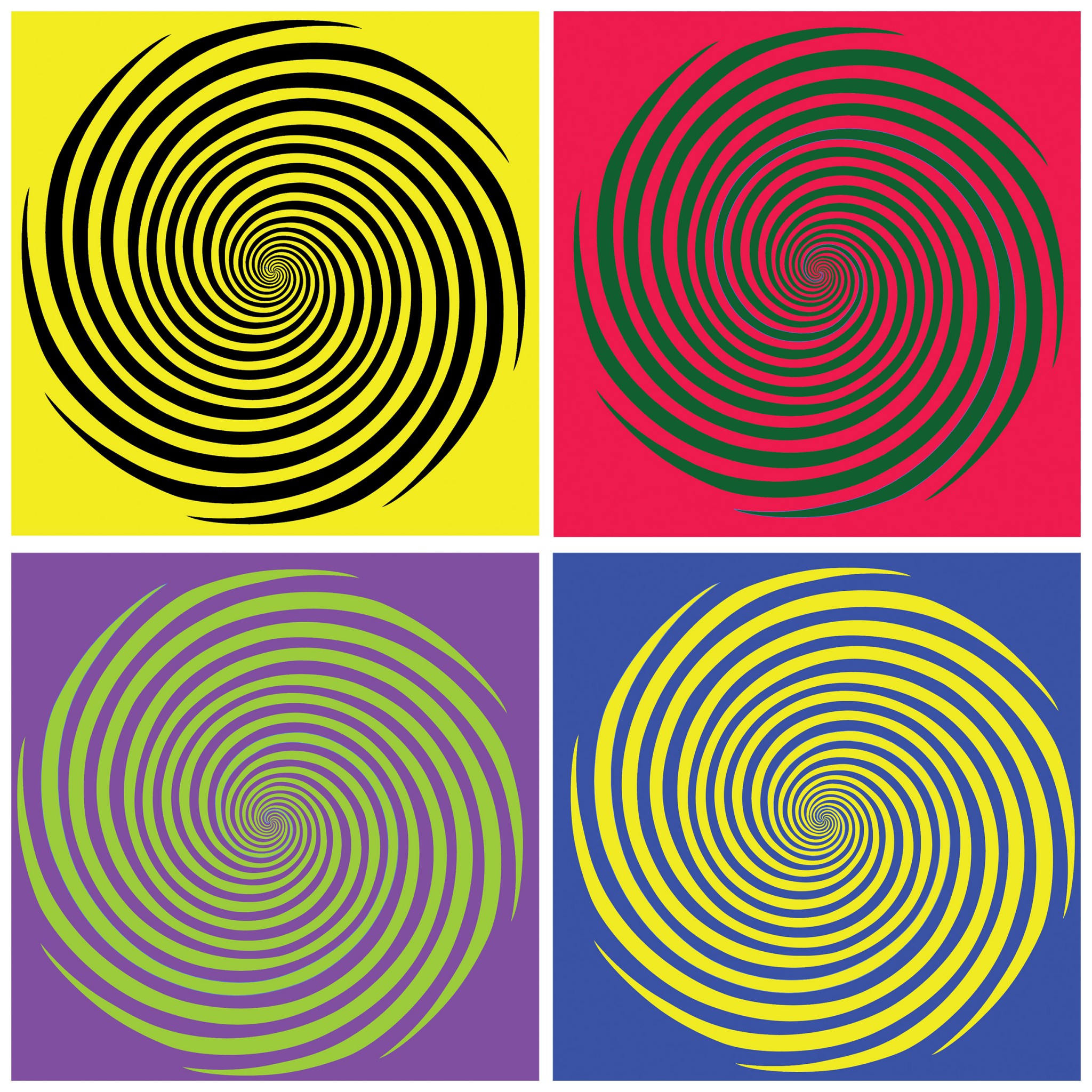
User would think of a certain memory they want to edit and gaze into the revolving Hypnosis image, then their memory would be altered.

It will be used in therapy sessions as well as purchased by individuals to use at home.

[Output]

Thermochromic pigment; Flexinol.
[Process]

  1. Attempt 1 – Theromochromic 
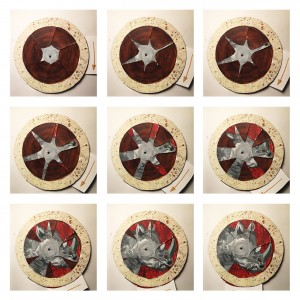
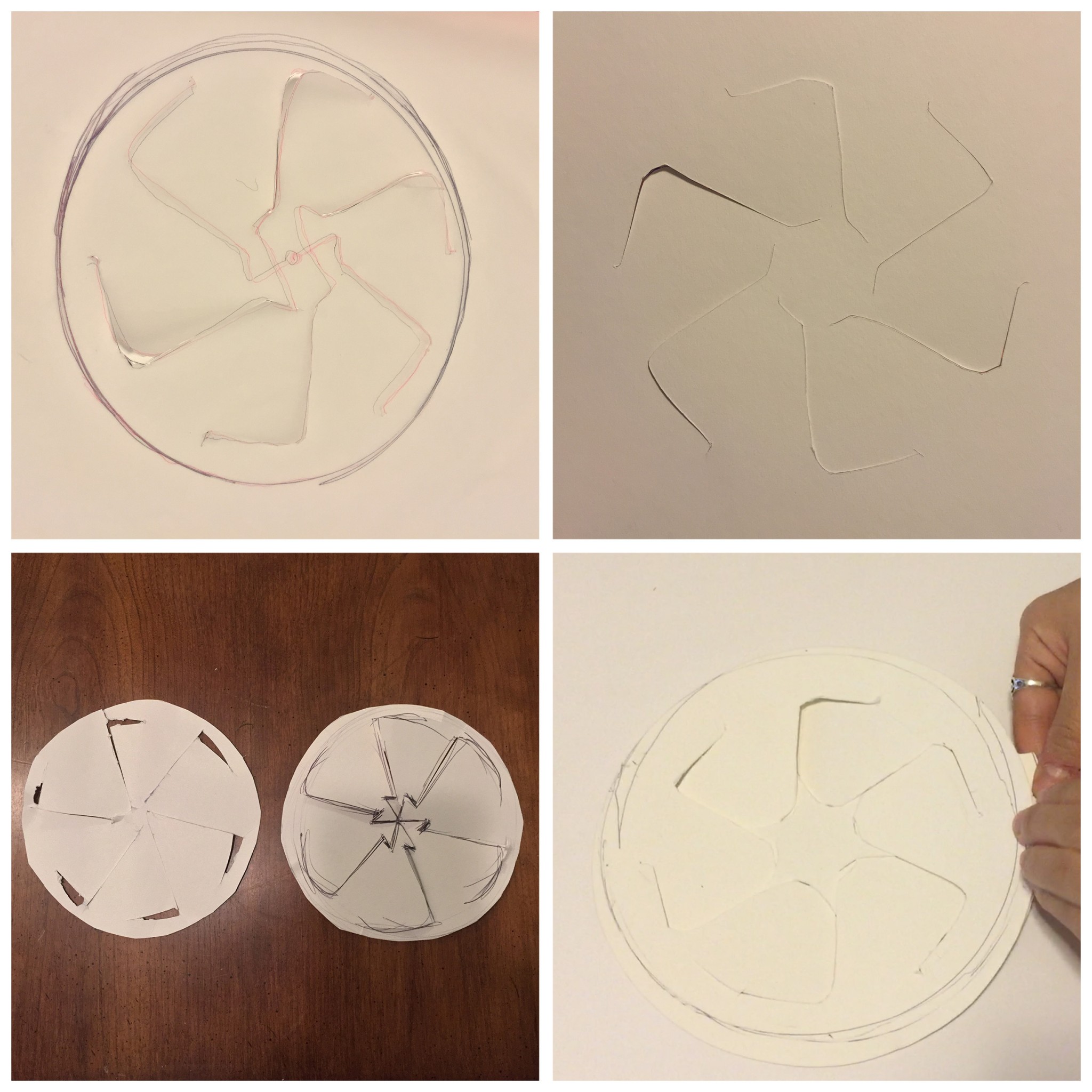
make

  • Revolving Images – Two overlapping thermochromic pigment circles (Red & Blue) dissolve into each other.

fan

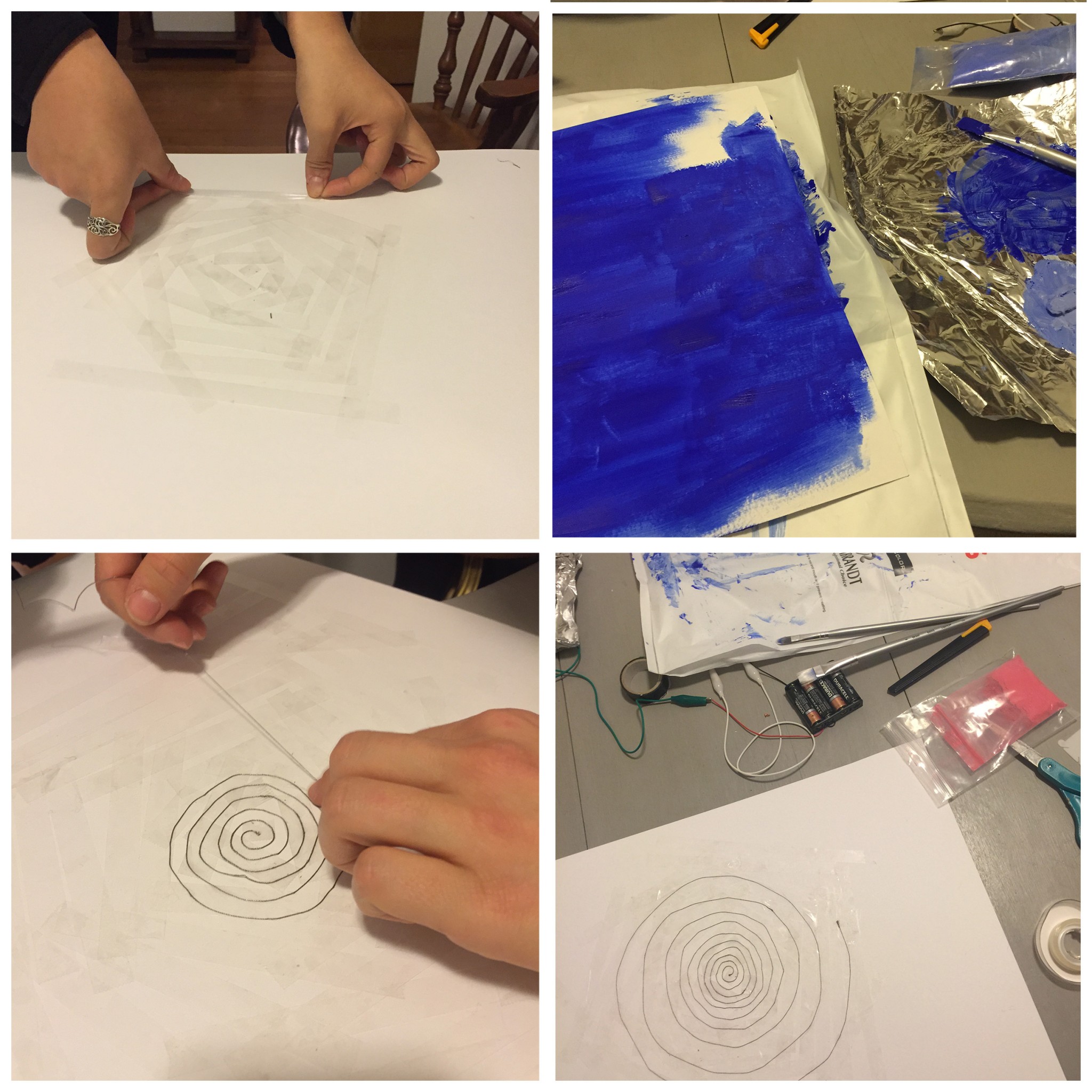
  • Heat Hypnosis Spiral -Beneath the revolving images is Spiral Shaped Flexinol. Apply Heat to it will show the spiral on the two images.
pigment

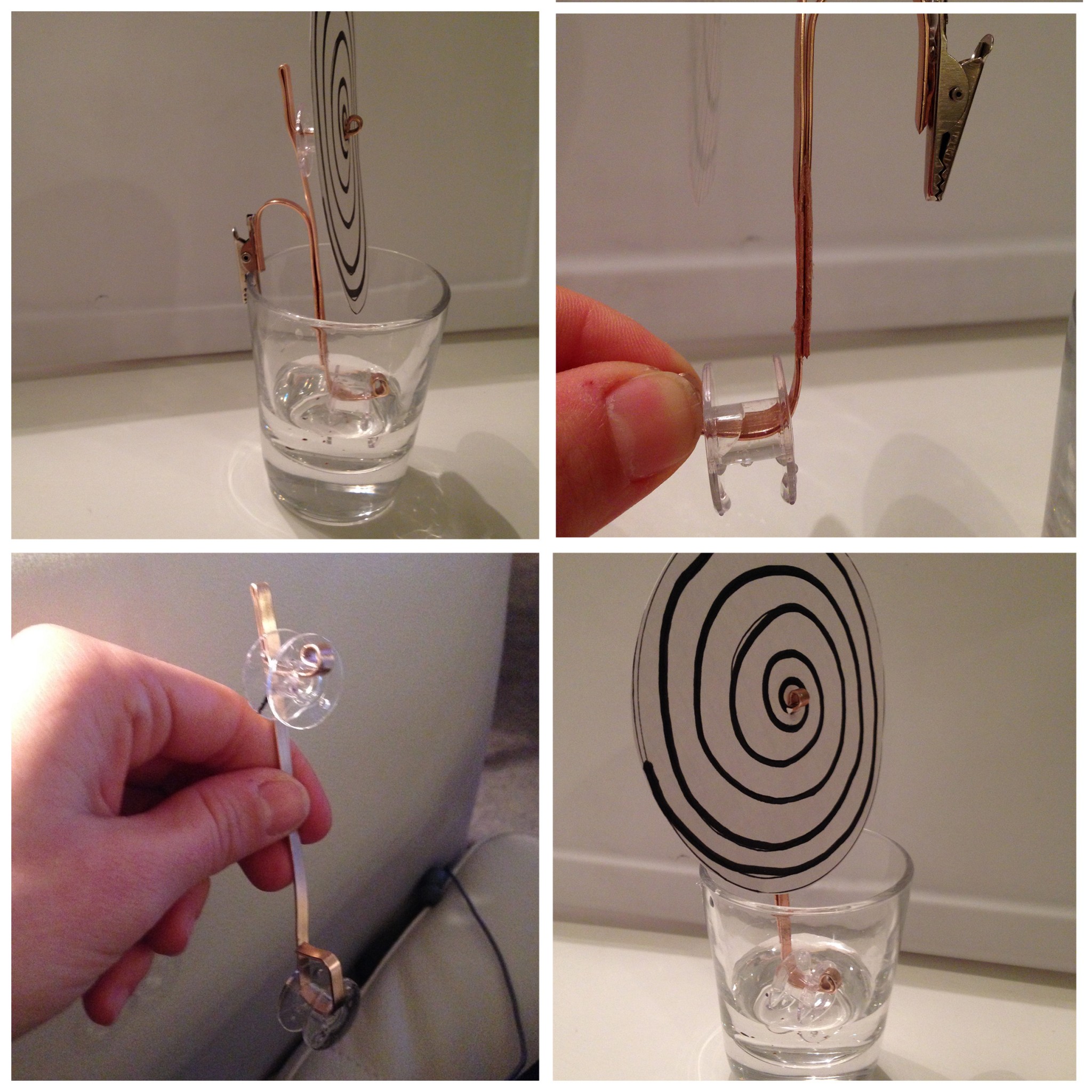
2. Attempt 2 – Motion – Flexinol 

  • Flexinol Pulley – Prototype 1 

prototype 1

  • Flexinol Pulley – Prototype

prototype 2

  • Flexinol Pulley – Prototype 3

prototype 3

[Patterns]

circle