Week1_Luobin_Project:Strandbeest

Theo Jansen has been working on this new “form” of life for over 25 years. This creature is made of yellow pipes and they “eat” wind to walk. The unique skeleton structure enables this creature to live by itself, walking flawlessly on the beach. Varies prototypes(“Animarus Apodiacula”, “Animarus  Suspendisse” and “Animarus Turgentia Vela” etc.) have been developed and the Strandbeest became something bizarrely organic like this in this video:

This living life form really intrigues by its combination of art and science. Although it doesn’t use any electric technology, Strandbeest is a work of art and mechanical perfection. The beauty of seemingly random behavior is what made this piece one of my favorite. It let me think of perpetual motion possibility at first look. The ability of making use of wind to drive a “machine” this big, not mentioning the recent version can even store the wind power itself, is truly amazing.
 

CO2 Dress (Week_01)

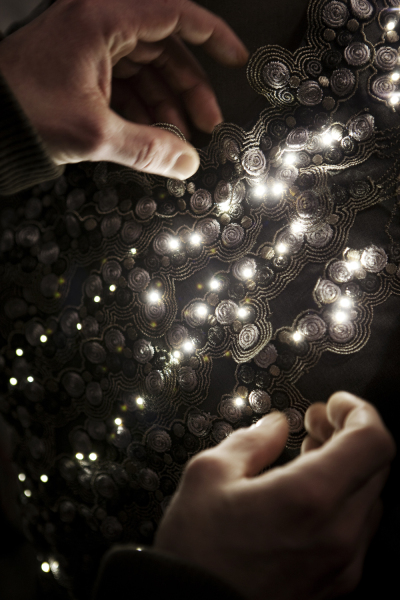
C02_Dress01 C02_Dress03

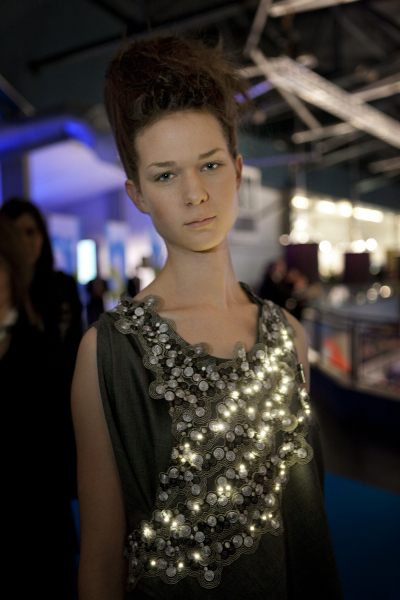
CO2 Dress designed by Danish design firm Diffus (https://youtu.be/3LuvLmCiSuw)

It is a beautiful pollution sensing dress. The most fascinating function of the dress is that the CO2 dress monitors the CO2 levels in a given environment and visualizes the data in real time with a flickering of light patterns. 

Carbon Dioxide (CO2) is a colorless, and the carbon dioxide itself can cause headache, dizziness, nausea and other symptoms at high levels. It is very clever that people can realize the level of carbon dioxide through the dress in the space – slow pulsations when the levels are low, short and hectic when they’re high. The CO2 dress is functional and aesthetic. I would love to buy this dress for the environment!

The dress is constructed using soft circuit techniques including the Lilypad Arduino, and the LEDs are stitched into the embroidery of the dress.

Week 1

LINK VDO

Particle engineer Paul Luckham and fashion designer Manel Torres from Imperial College London combined cotton fibres, polymers and a solvent to form a liquid that becomes a fabric when sprayed. The material can be built up in layers to create a garment of your desired thickness and can also be washed and worn again like conventional fabrics.

spray-clothes-sustainable-fabric-3

The idea of creating a new way of textile is very interesting. One is sustainable product because the material itself can be transformed and reused. Once it is transformed, it can be sprayed again and again.  In my perspective, this material makes me amazed that the liquid is sprayed just a seconds on body and then turned into garment which fits to individual person. This material can be another solution when people want to fix their cloths.


Project: Countours (Week_1)

Isabella Cruz-Chong

Here is the Video!
(I wasn’t able to embed it)

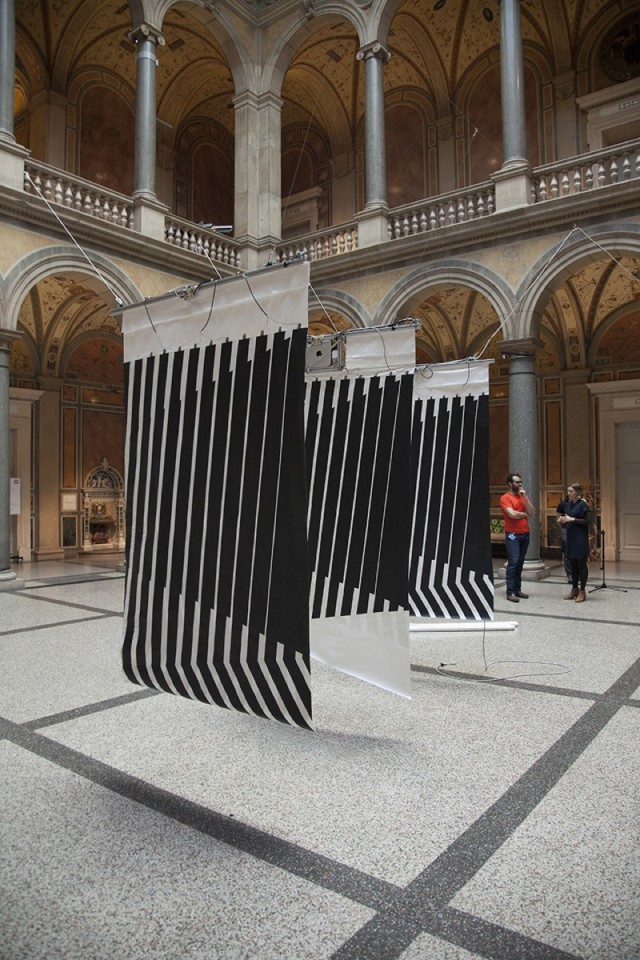
MAK_10-640x960 MAK_11-640x426 MAK_16-640x960

The aspect that intrigues me the most about the project Contours is how there are several layers to the piece/experience. I imagined the user was going to get only one specific sound by touching it and to my surprise there are different tones and frequencies which invites the person to keep exploring not knowing exactly what the result will be. It is a powerful way of setting up a “simple” and elegant installation and giving the viewer the power to discover its true dimension and complexity. The aspect that doesn’t work as well or I can’t figure it out from the video is how the person is invited to touch the piece. If I see the paper hanging how it is in the photos I wouldn’t think of touching it. I’m wondering if in some way they are inviting the viewers and if they are, how so? The other aspect to explore more is the aesthetic and graphics of the paper. I wonder if there is a relationship between the black and white lines and the sound. By quickly looking at it, there doesn’t seem to be. I imagined they could be piano keyboards but I feel something is missing. I imagine this piece could have a more thoughtful and complex aesthetic still keeping its minimum style.

Hunt For High Tech_week 1_assignment

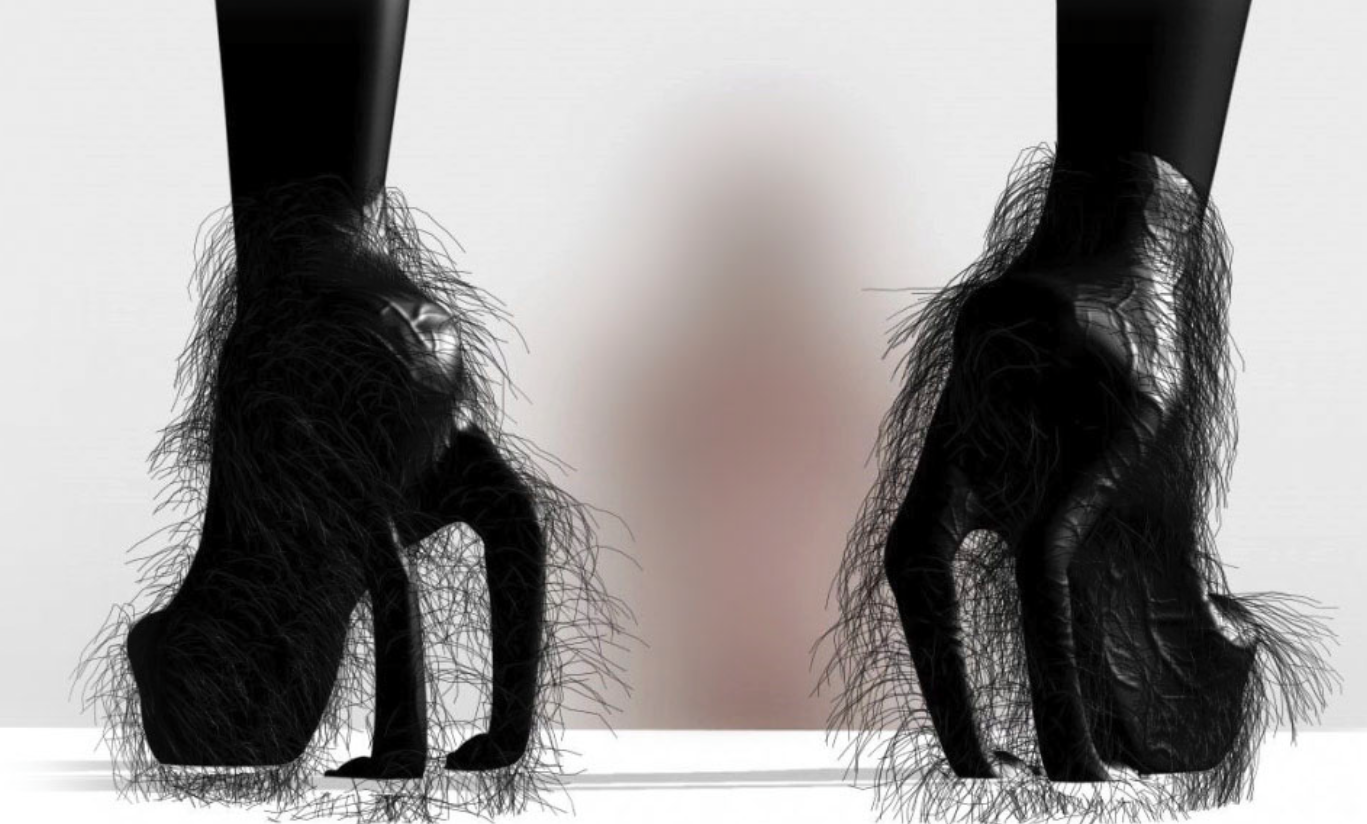
The project called Hunt For High Tech from Bart Hess. It’s a collection of “conceptual textiles and animations that seek to harness both nature and technology in an effort to create a new human/animal archetype. ” (http://barthess.nl/hunt-for-high-tech.html)

Screen Shot 2015-09-04 at 9.54.55 PM

I like the hairy shoes most. As the wearer’s second skin, this pair of shoes can breath as a live animal. Bart imagined animals could be part robot, part biological organism. I like his cyborg idea, the breathing and the aesthetic. But I don’t think their breathing is synchronizing with wearer’s breath, which is a little regret. I would love to try some second skin design in the future. It inspires me how to demonstrate a live skin by breathing.

Lotus Dome by Studio Roosegaarde (Week 1)

1414-4598-image

Link to video (since it’s not inserting itself into the post): https://www.studioroosegaarde.net/project/lotus-dome/

From Studio Roosegaarde:

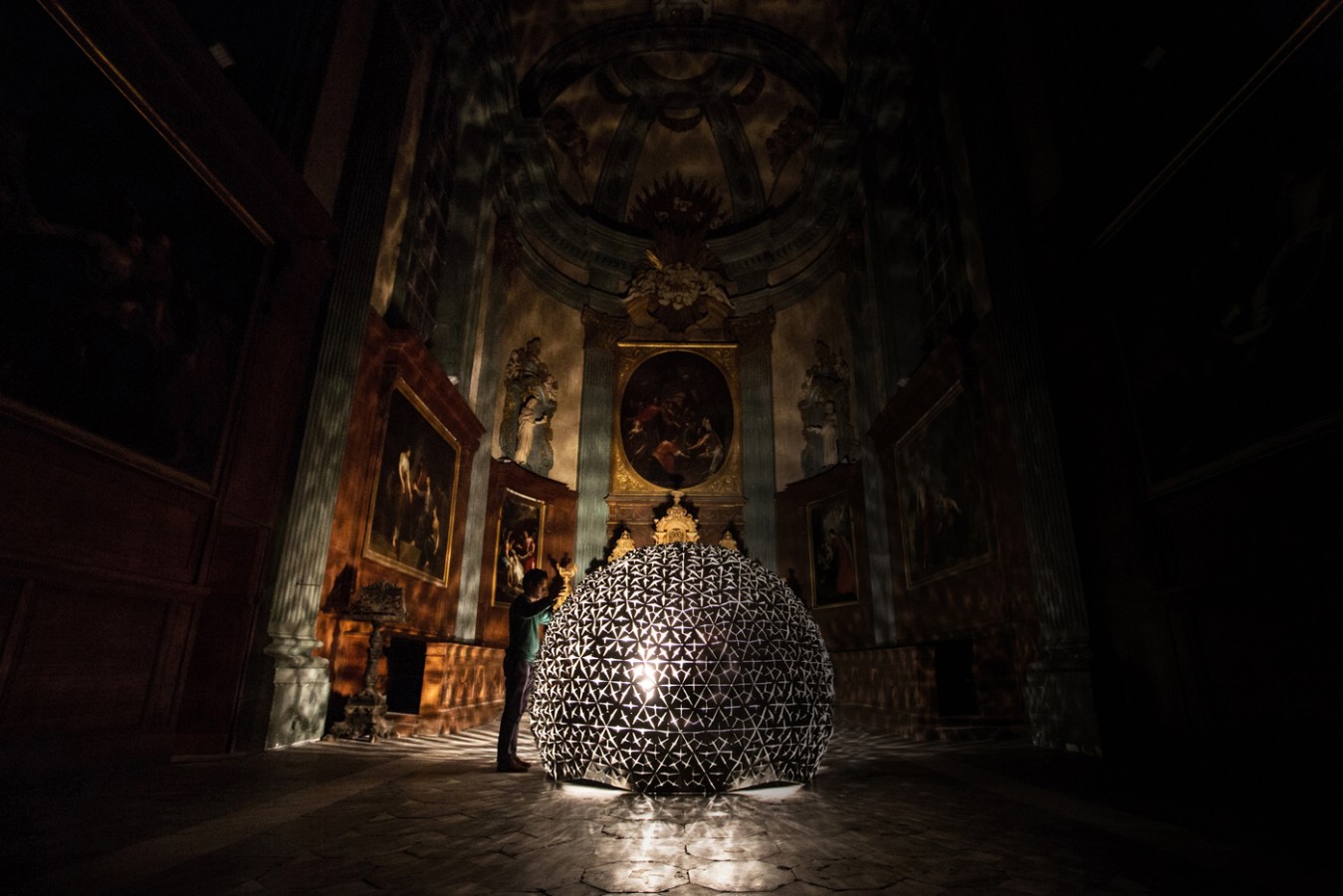
LOTUS 7.0 is a living wall composed of smart foils that fold open in response to human behaviour. When walking by LOTUS, hundreds of aluminium foils unfold in an organic way; generating transparent voids between private and public space.


LOTUS makes physical walls immaterial, giving way to a poetic morphing of space and people.


Specifications:

2010-2011. Curved wall of 4 x 2 meters fitted with hundreds of smart foils, lamps, sensors, software and other media.

Lotus Dome was the project that opened my eyes to the existence of smart materials. At that time I thought it was absolutely fascinating how materials could move on “their own” and still am fascinated its potential. Though I’d always known that logically, material is very important when it comes to creating something, especially installations, Lotus Dome really struck that home since the concept to it is quite simple, yet the results is quite beautiful, thanks to its use of materials. Since then I’ve always wanted to get my hands on some of these “new” sorts of materials, though so far I haven’t been able to, since they’re not exactly budget-friendly.


Defining our Field of Practice

The work we will do over the course of the semester will combine many different fields. There are many terms used to describe these intersections: soft circuits, eCraft, eTextiles, computational craft, creative circuits, fashion tech, etc. As we begin our exploration into these materials and processes, let’s throw all of our assumptions, ideas, and biases out on the table by creating initial definitions of these terms.


IMG_7033

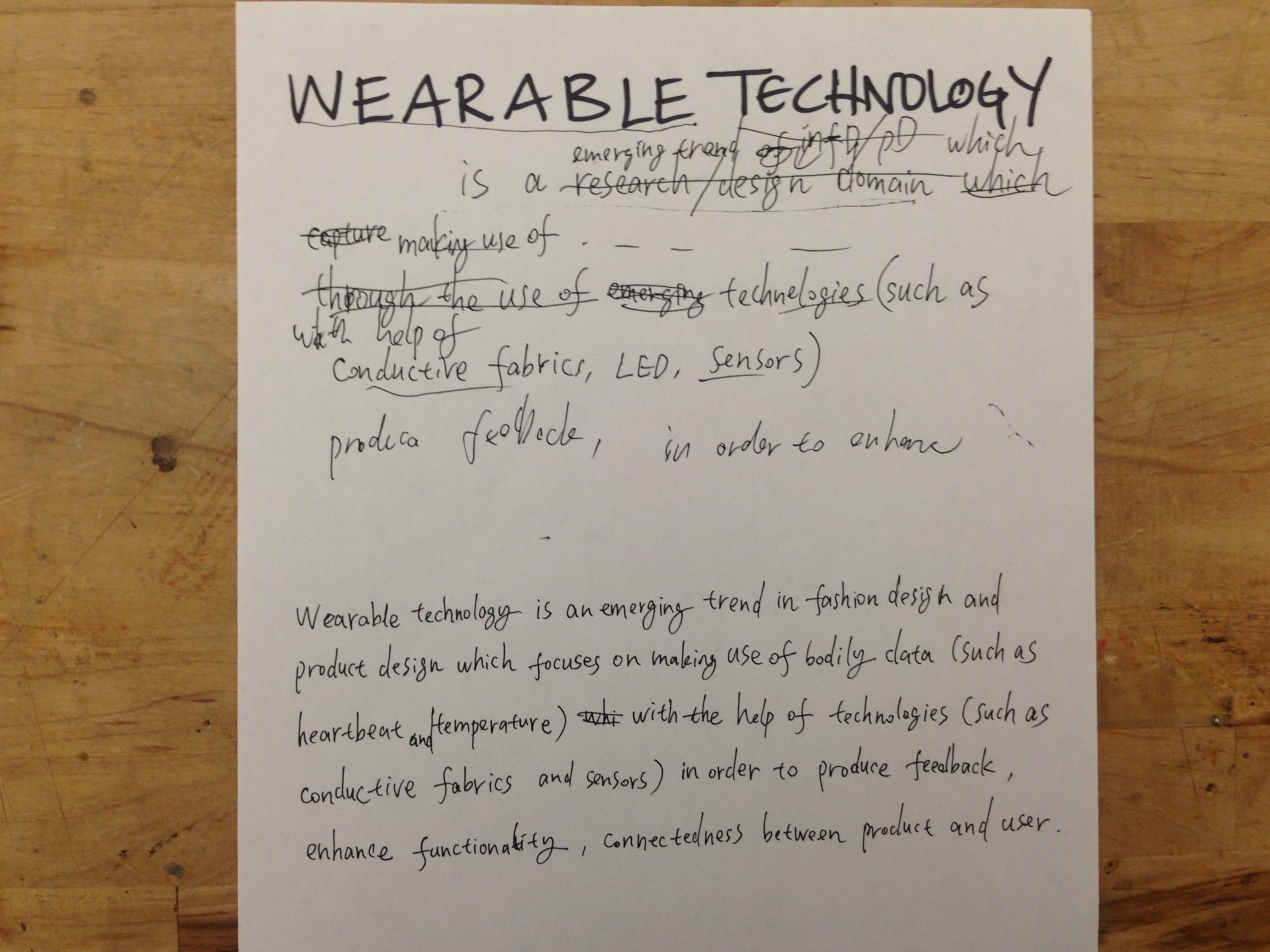
WEARABLE TECHNOLOGY is an emerging trend in fashion design and product design which focuses on making use of bodily data (such as heartbeat and temperature) with the help of technologies (such as conductive fabrics and sensors) in order to produce feedback, enhance functionality, connectedness between product and user.

Continue reading

Week 1 Assignment

1) Find a project that excites you and that uses the materials we looked at in class. Use the presentation you saw today in class to get started. Create a post that includes, images, video, or other documentation. Write a brief paragraph explaining what it is about this project that intrigues you.

2) Materials hunt. Find a material with interesting properties (form, ornamentation, conductivity, etc) and bring it to class. Canal Street is a good place to start, as is Mood and surrounding stores.

3) Purchase materials listed in the TOOL BOX today or tomorrow. I know shipping might take a week or so, so if you don’t have them all by next week, no worries.

4) Watch the MAKE Multimeter Tutorial Video