Category Archives: Uncategorized

Keyboard Hacking (Week 3)

For my keyboard hacking assignment, my goal was to create a relaxing RGB color creator. I wanted to use fabric to create fabric pressure sensors that you could sort of “pet” to add more of that color.

Problems I ran into
The pressure sensor that I created using the velostat and the conductive thread seemed to work fine with a simple hookup to a light and a battery, however, when I tried to use the same sensor I made with the keyboard hookup, the keyboard didn’t read it at all.

New Direction
After a number of iterations, I decided to make simpler fabric buttons using conductive thread and the copper taffeta.

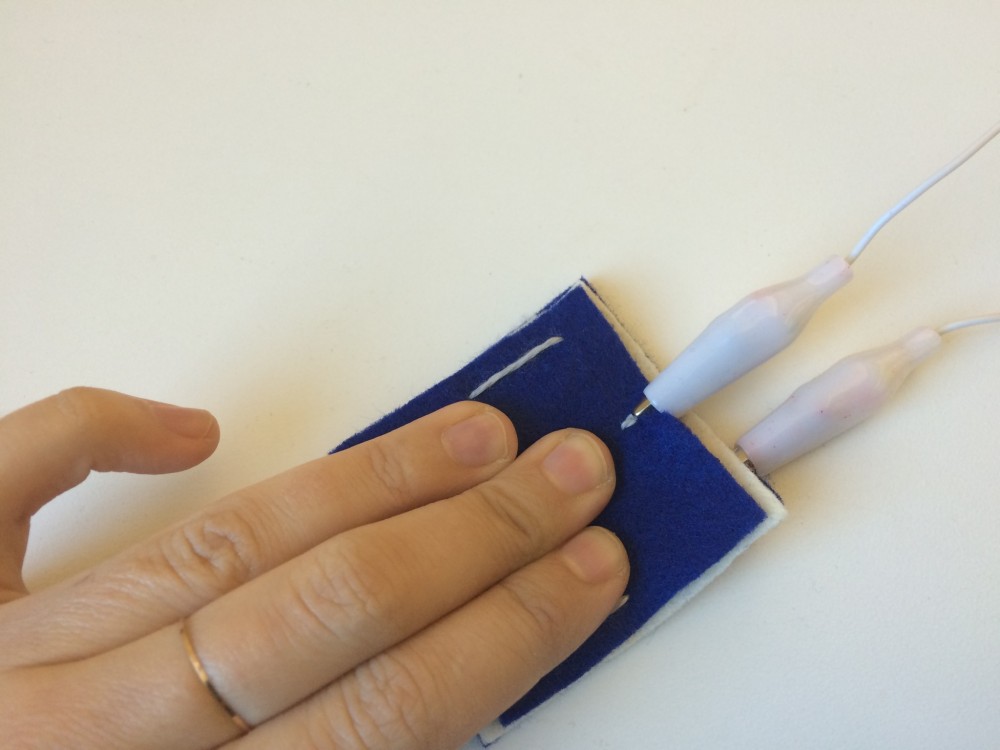
Conductive thread on felt piece
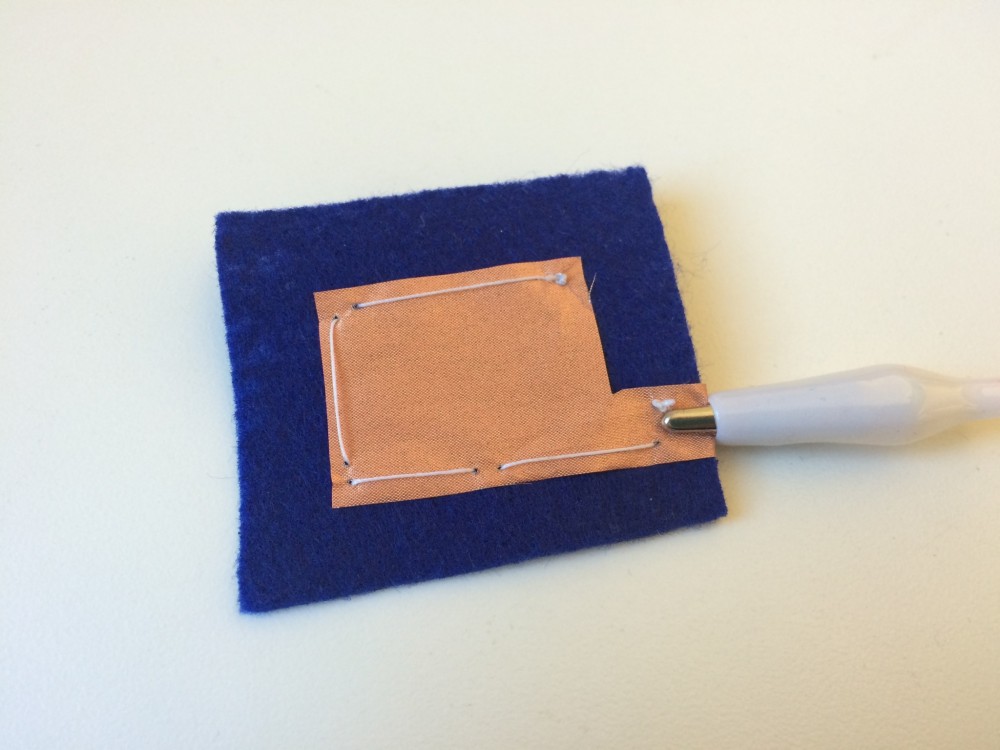
Conductive thread on felt piece

Conductive fabric on felt piece
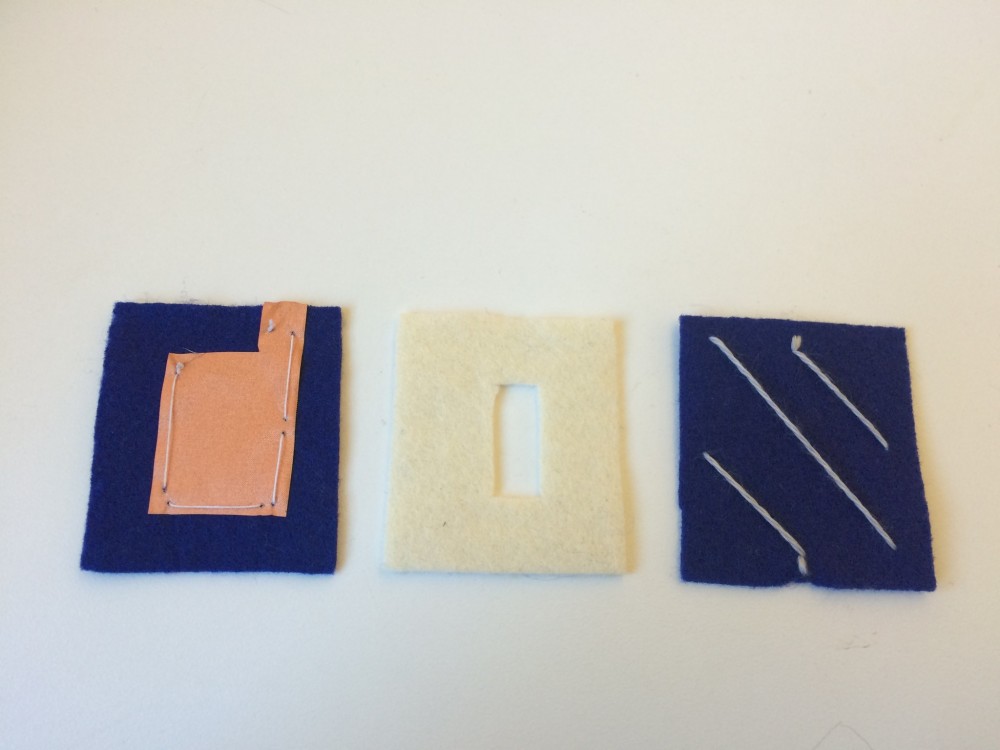
Conductive fabric on felt piece

Pieces of the sensor

Pieces of the switch

Switch being created

Creating the switch

Testing the fabric button switch

Testing the fabric button switch

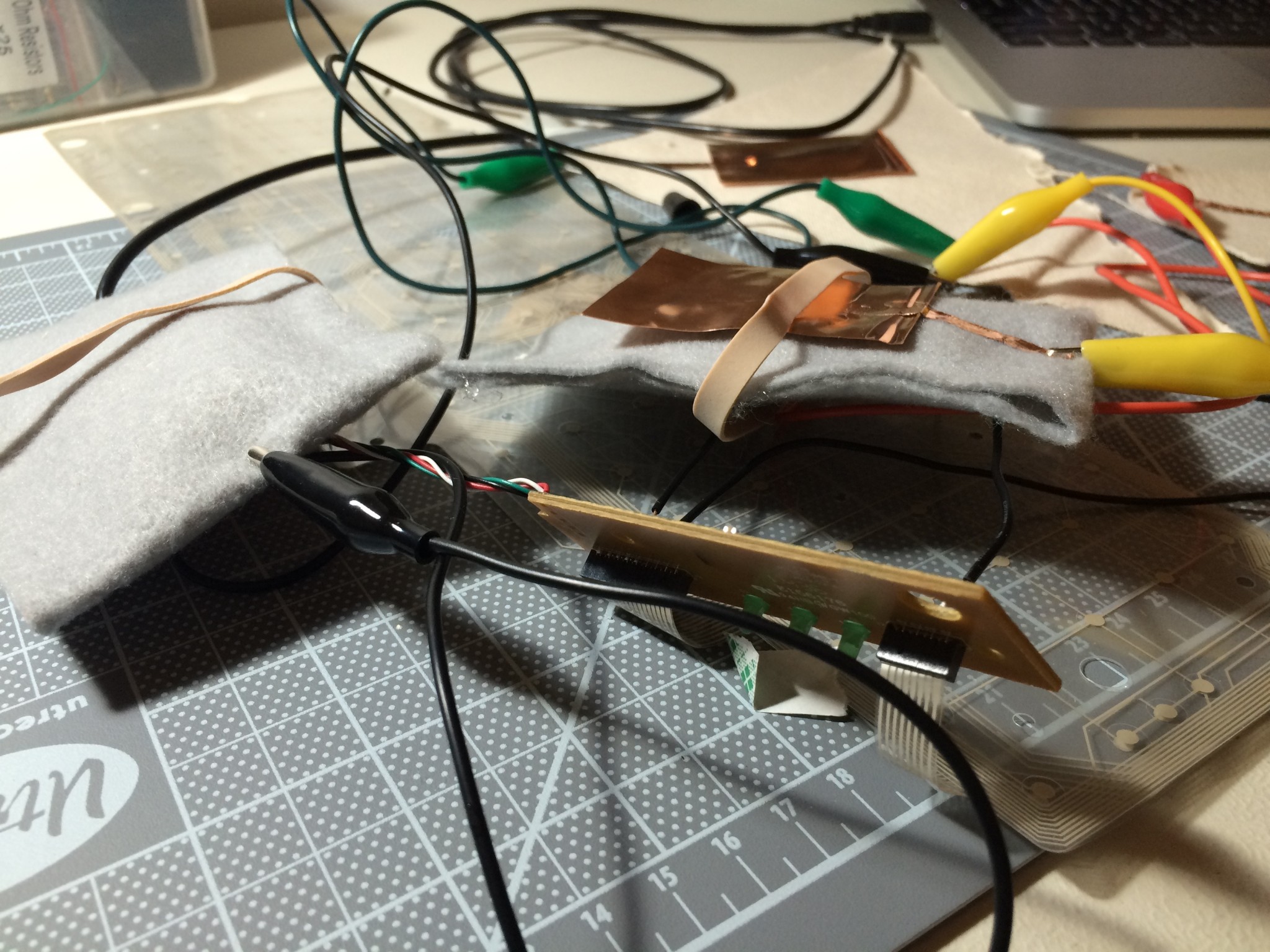
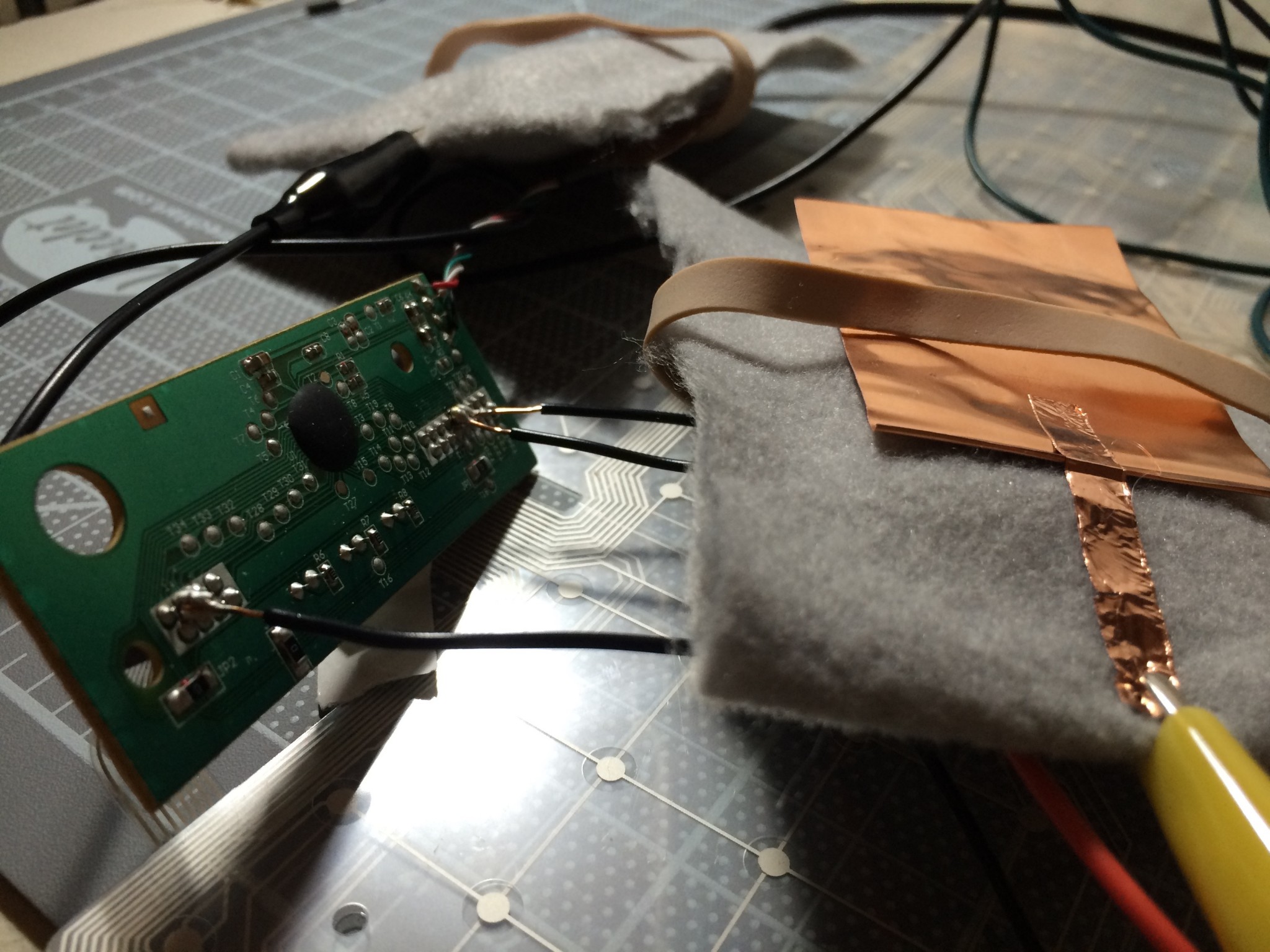
Attaching the switches to the keyboard
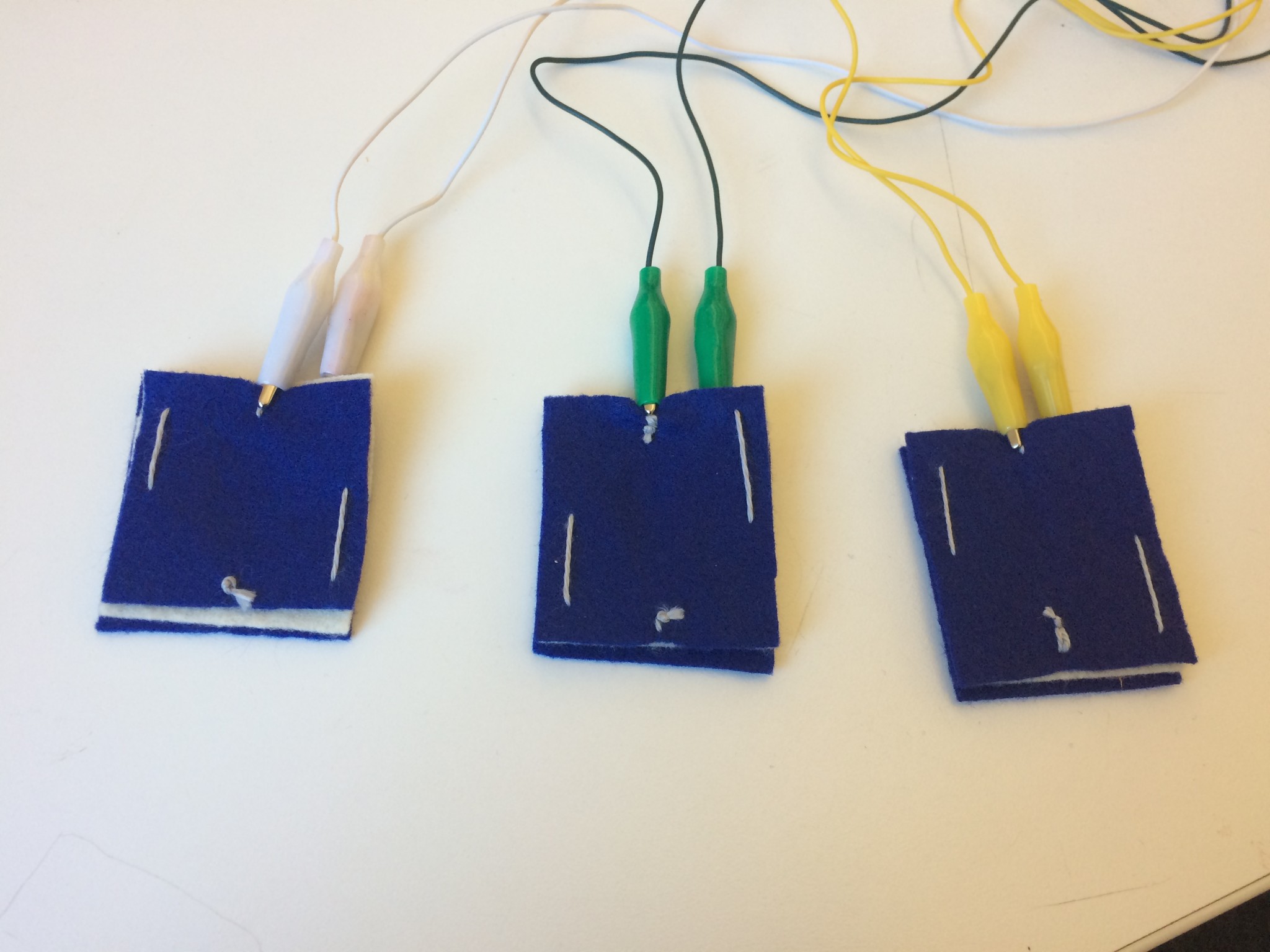
Attaching the switches to the keyboard

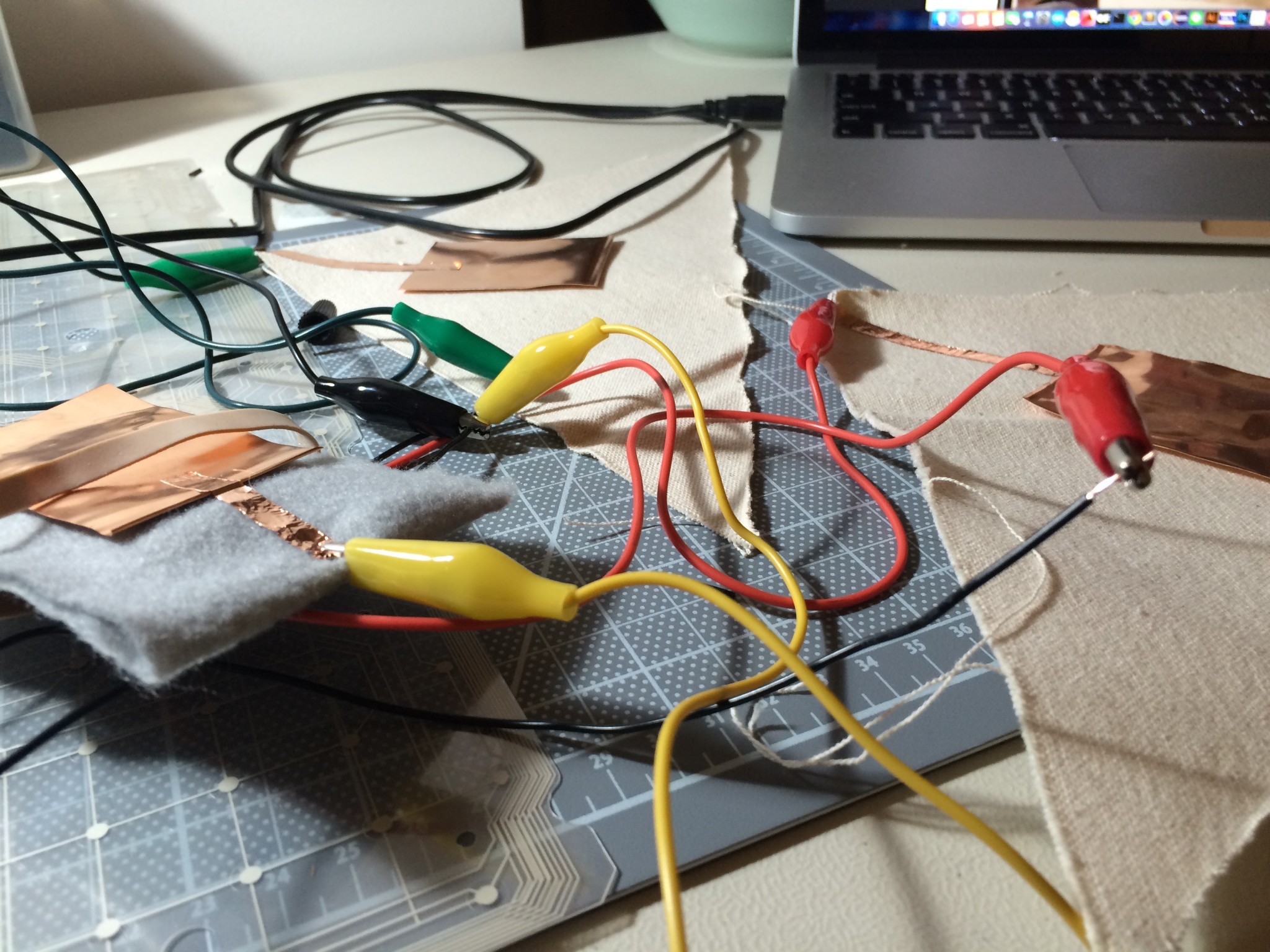
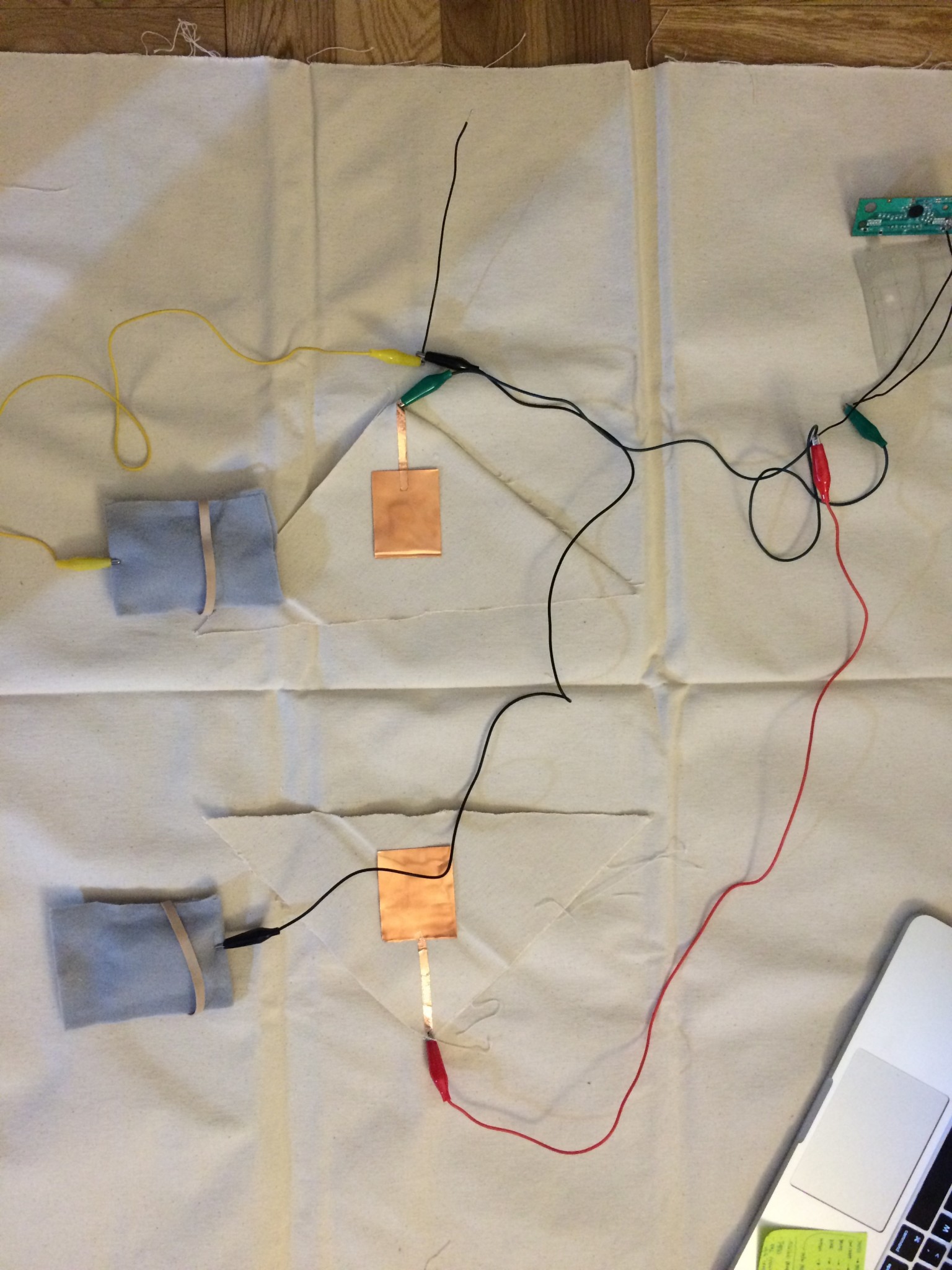
Testing the three switches
Testing the three switches
InClassWeek3.Verb + Keyboard Hacking

Word “Bounce”

IMG_7493 (1) IMG_7494 (1)


HOW TO PLAY?

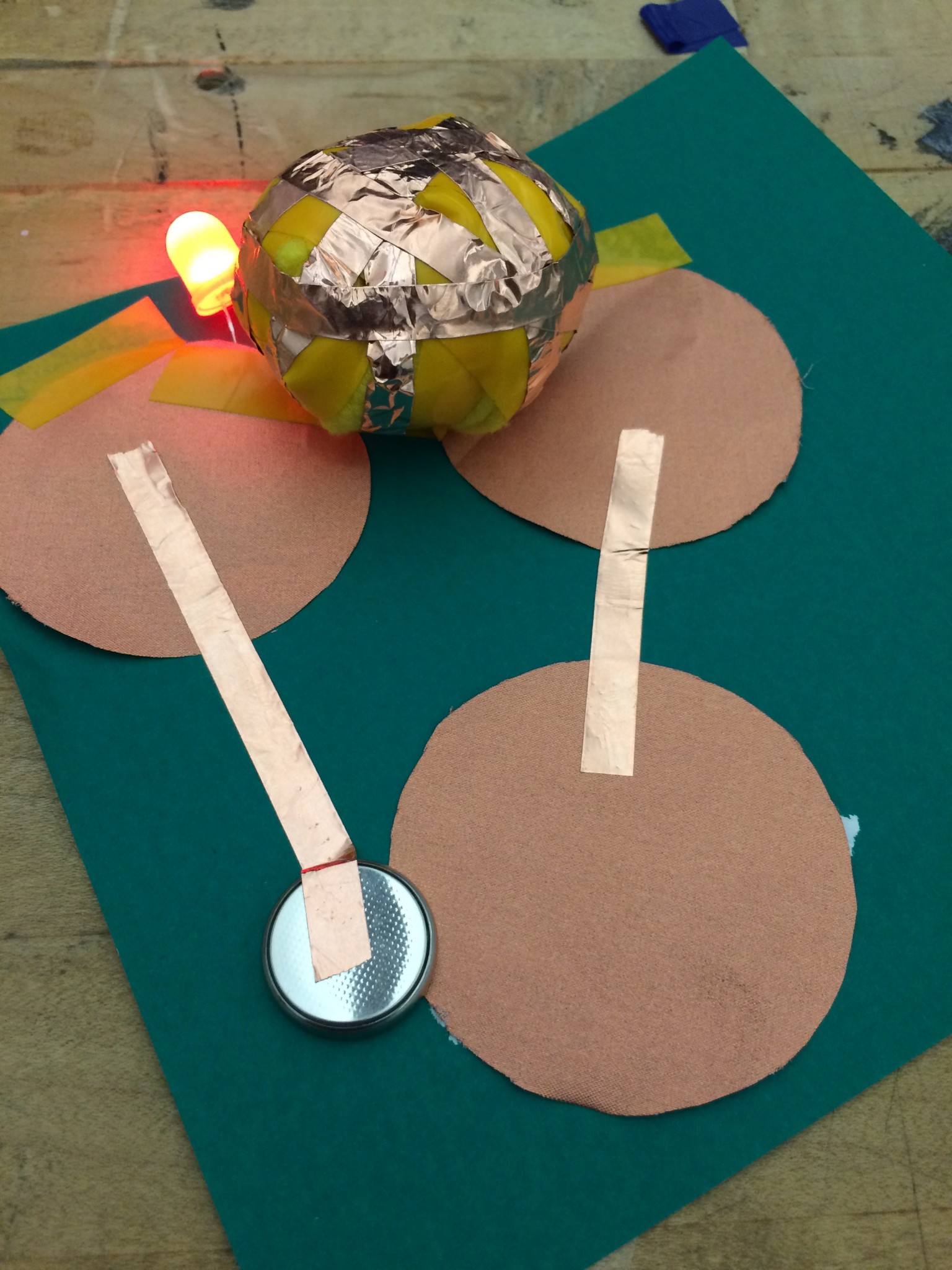
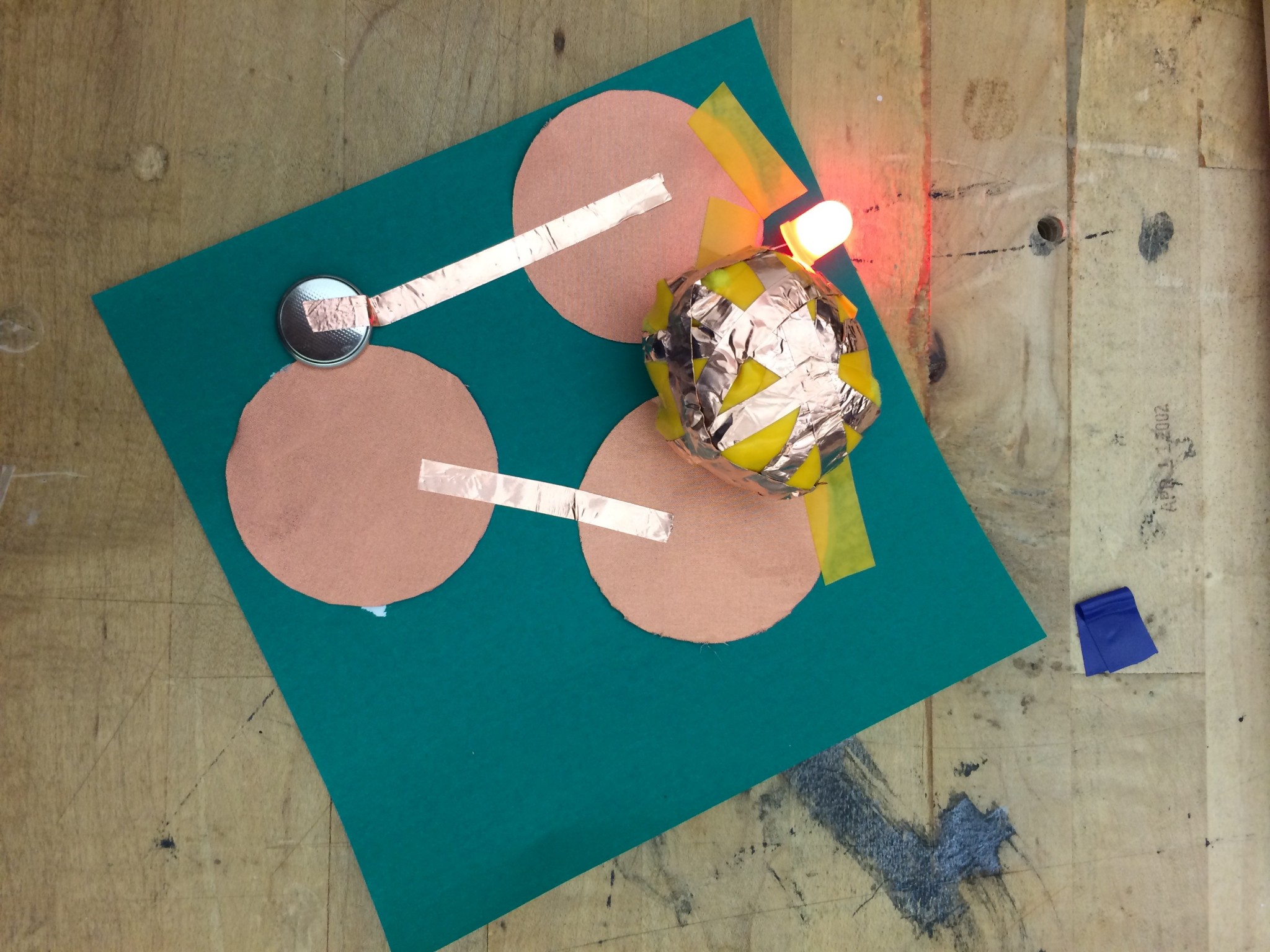
You have to throw the ball in between 2 circle coppers to connect the circuit and light up the light.


Keyboard Hacking 

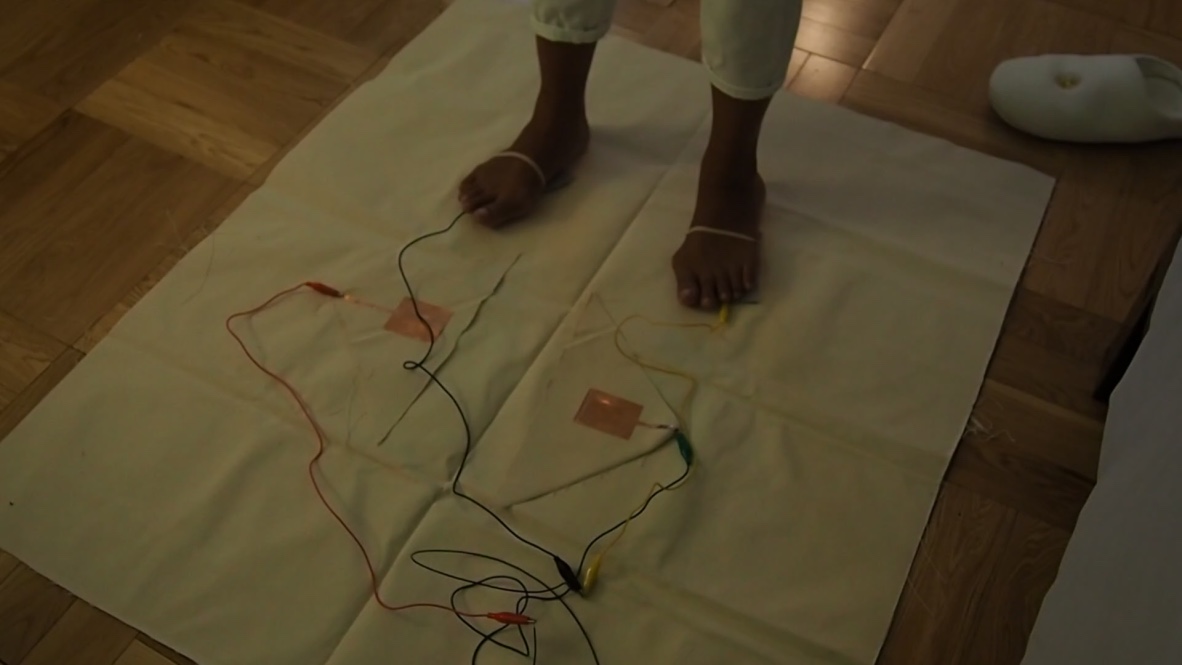
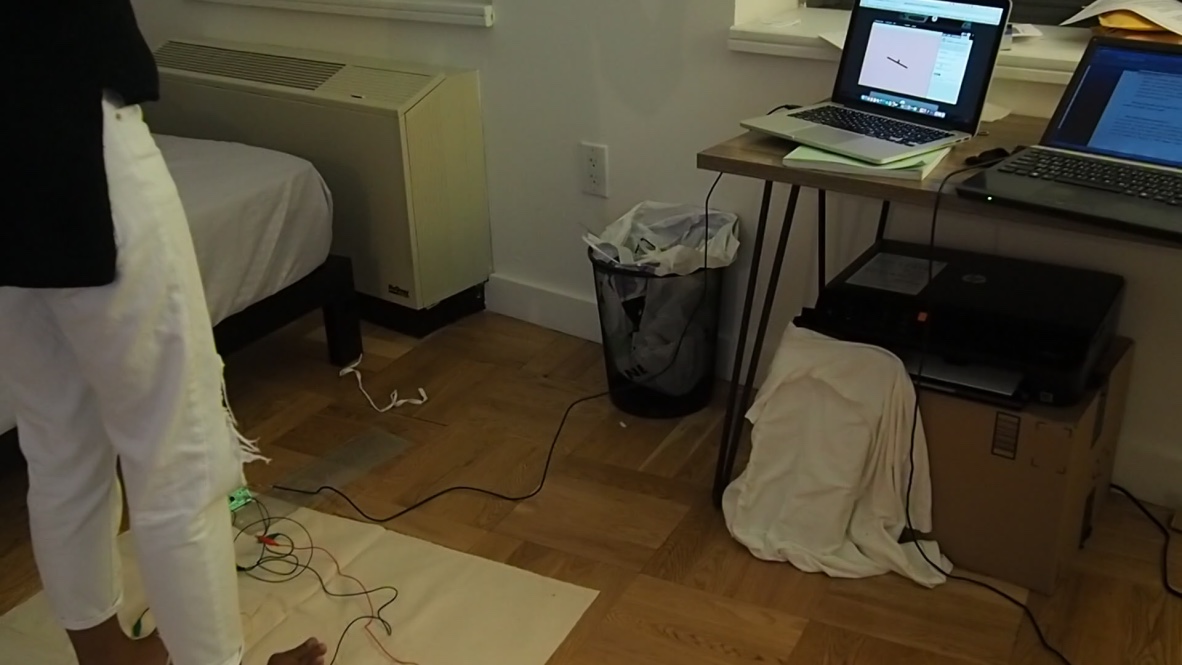
What I did is hacking a keyboard the left-right button as a controller to play game. You have to step on left to control left and step on the right panel to control right.

VDO


IMG_7676 IMG_7677 IMG_7678 IMG_7679

thumb_P1010179_1024

thumb_P1010181_1024


Paper Switch (Week 3 – in class)

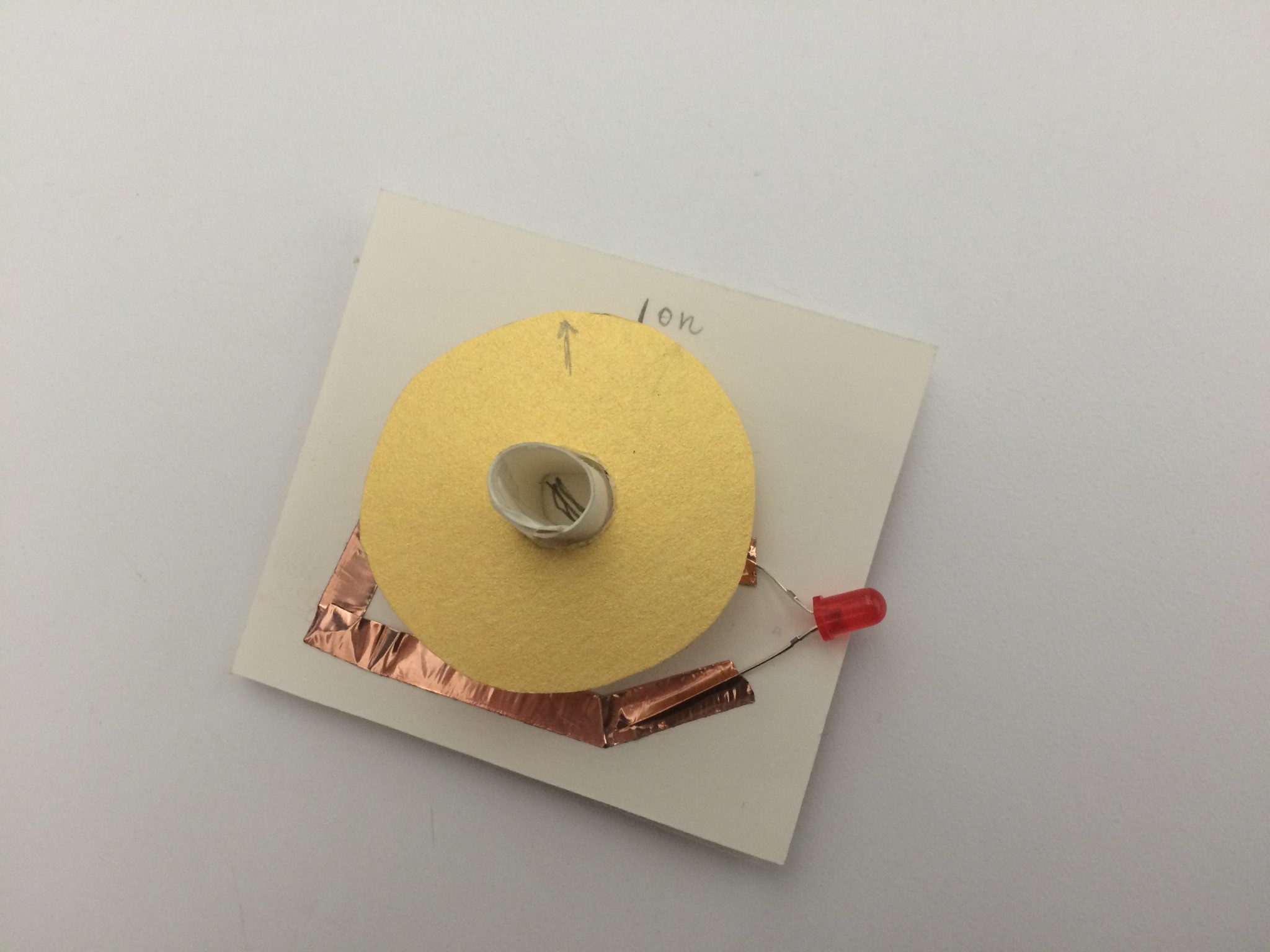
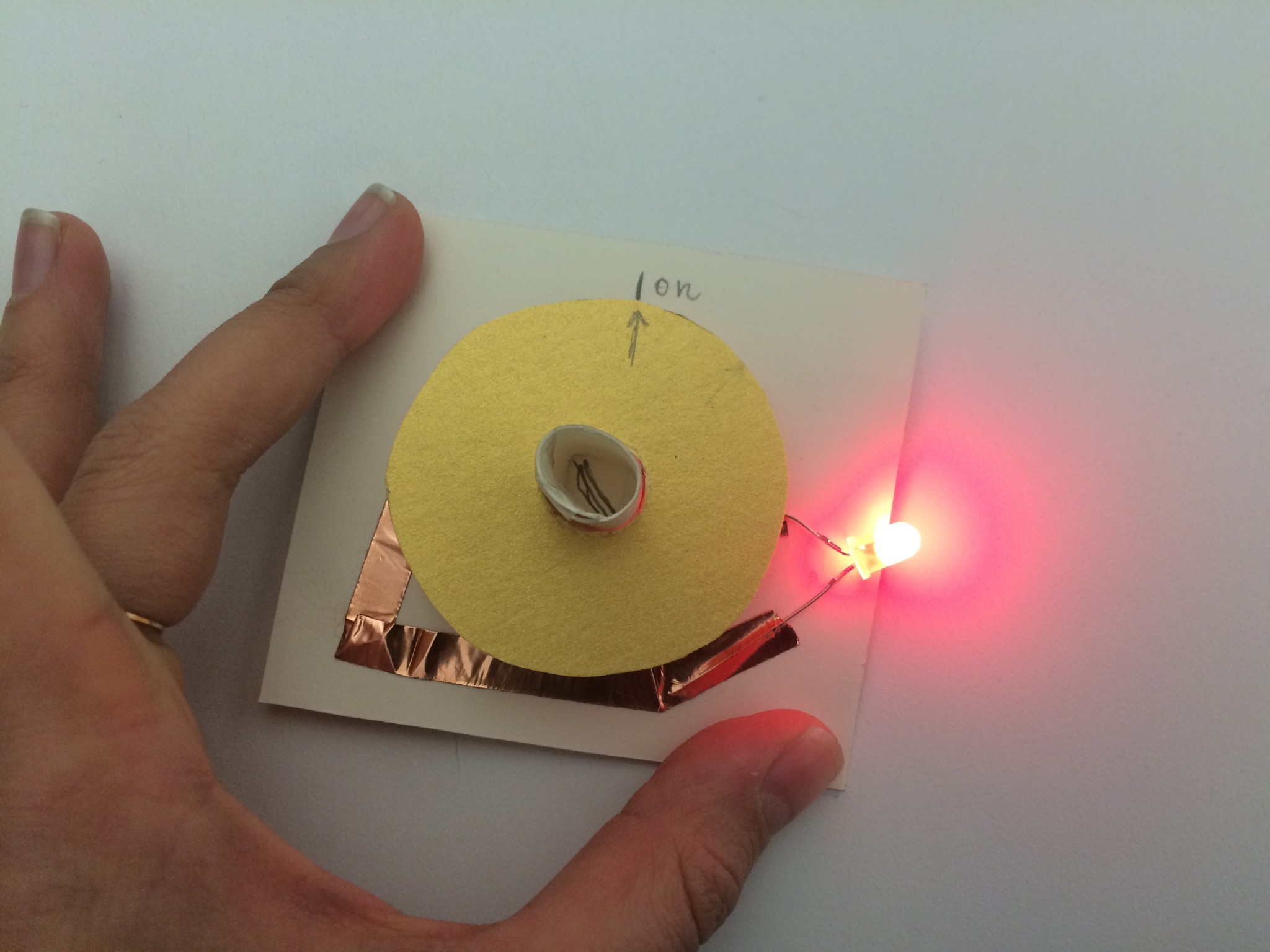
I made this little rotating paper switch. When you match the arrow to the line, you complete the circuit, turning on the red light!

Here is the switch on "off" mode

Here is the switch on “off” mode

Here is the rotating switch when it is on.

Here is the rotating switch when it is on.

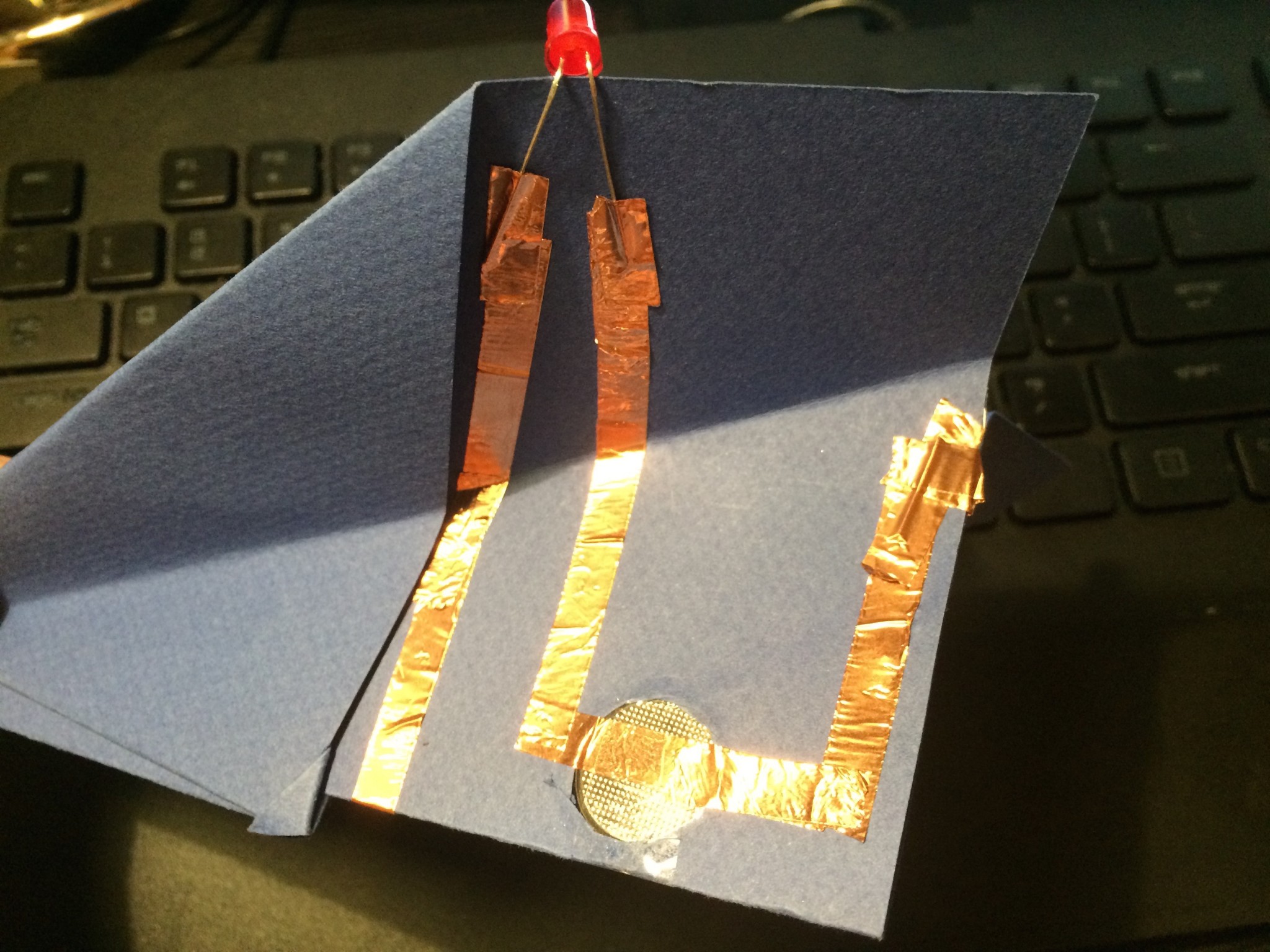
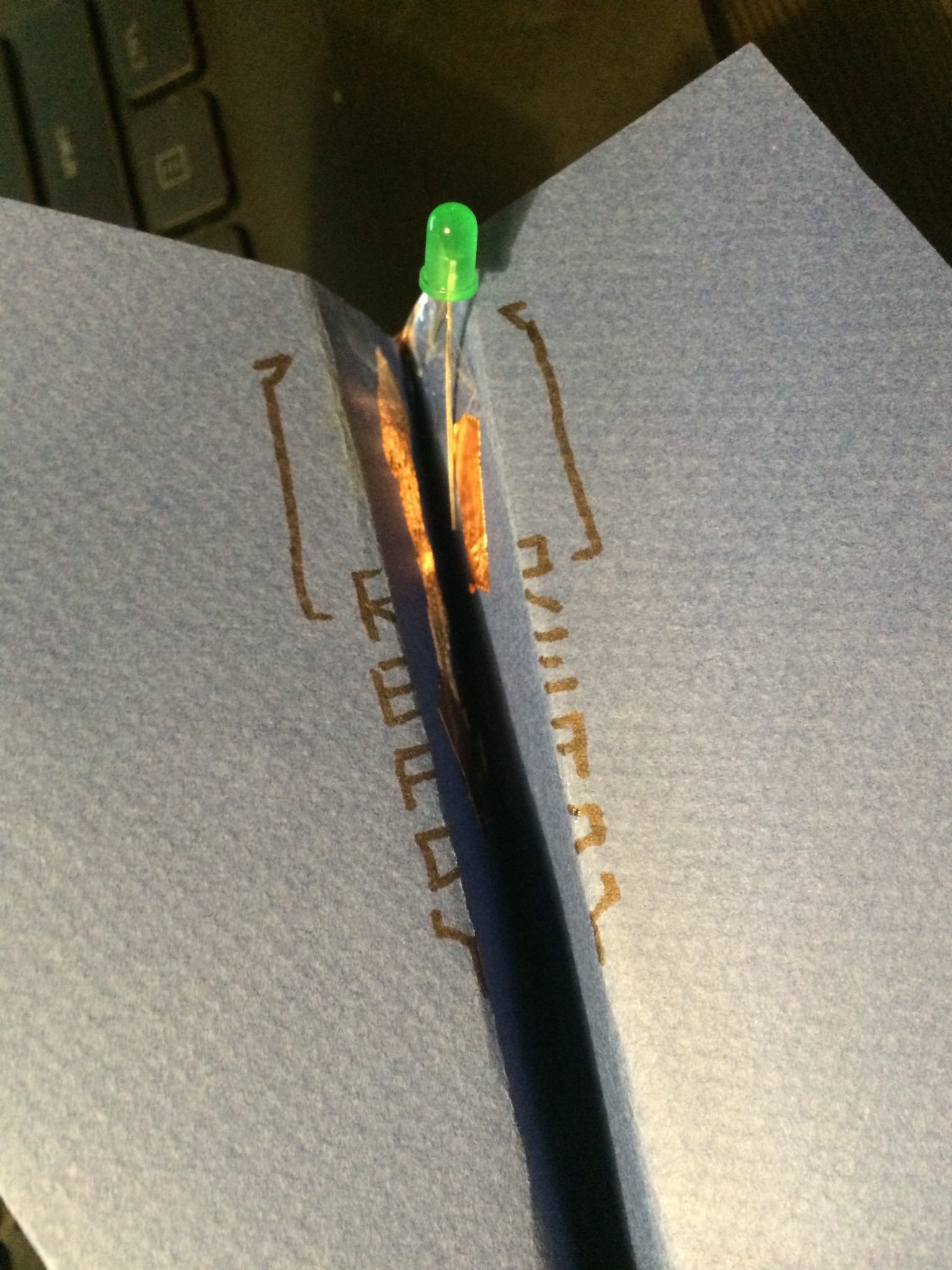
Here, you can see the battery and conductive pieces. When the conductive pieces match, positive to positive and negative to negative, the light turns on.

Here, you can see the battery and conductive pieces. When the conductive pieces match, positive to positive and negative to negative, the light turns on.

Week2_Luobin Parallel Circuits & Illustration

Parallel Circuits 

This is a paper plane with three lights. Two of them are always on and indicates the plane’s width. The one in the middle is the ready sign, it will be turned on if a person is hold the middle of the paper plane tightly.


IMG_4166    IMG_4165    IMG_4167


Circuit Illustration 

Immediately an enormous and frightful genie rose out of the earth, saying: “What wouldst thou with me? I am the slave of the ring, and will obey thee in all things.”

This line is from Aladdin’s Lamp. Genie and the lamp is what in this picture. If somebody touches the lamp the Genie will come alive(Blink Blink Blink).  Cotten is what his body is made of. I was going to use the conductive thread to connect his eyes to make its face floating on cotton, however the connection was never strong. So I stick his face on the paper, the result is surprisingly good.

IMG_4148      IMG_4149

Parallel Circuits + Illustration (week2)

Parallel Circuits

IMG_7406 (1) IMG_7413 (1) IMG_7410 (1)

DOGGY

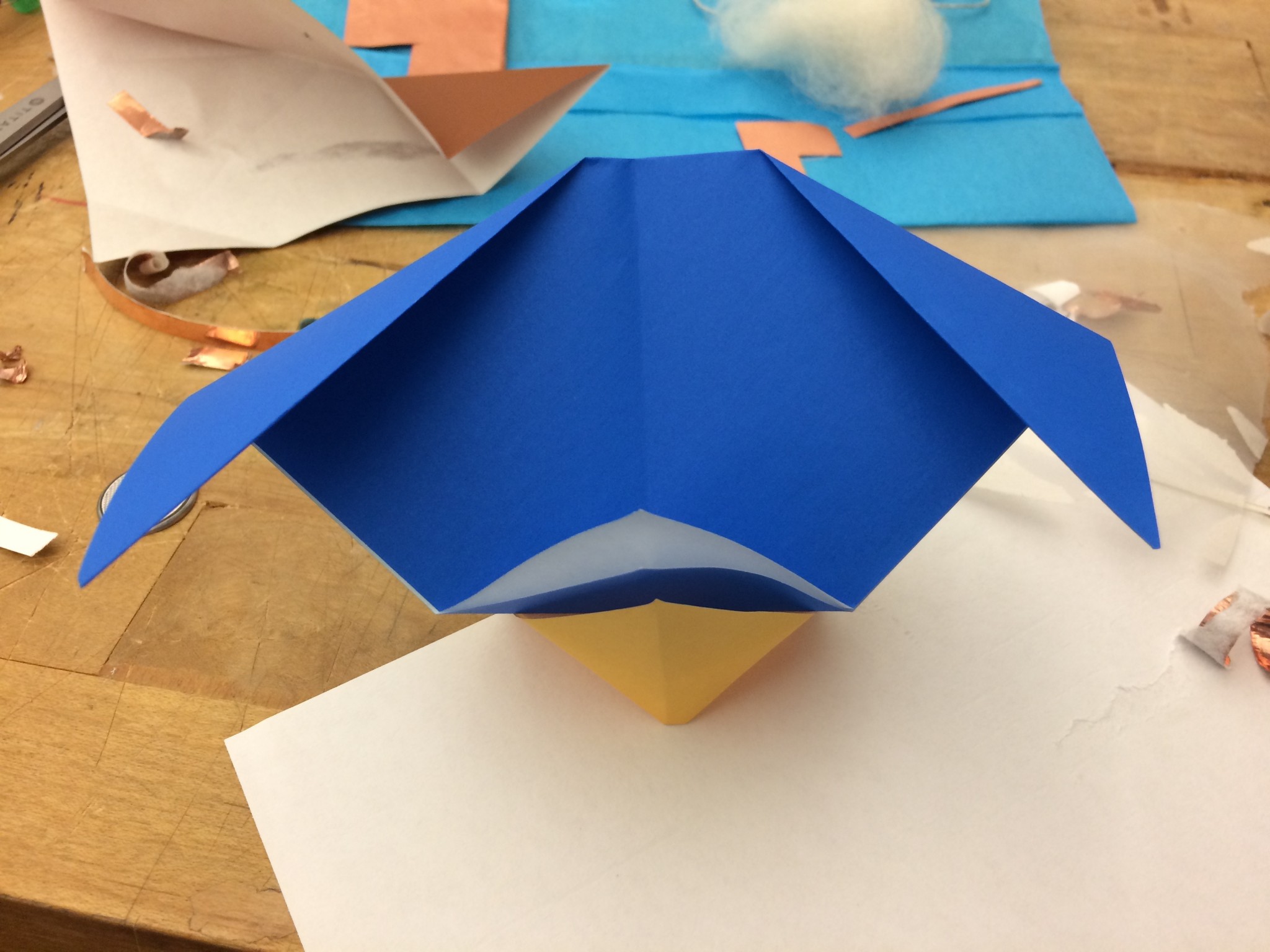
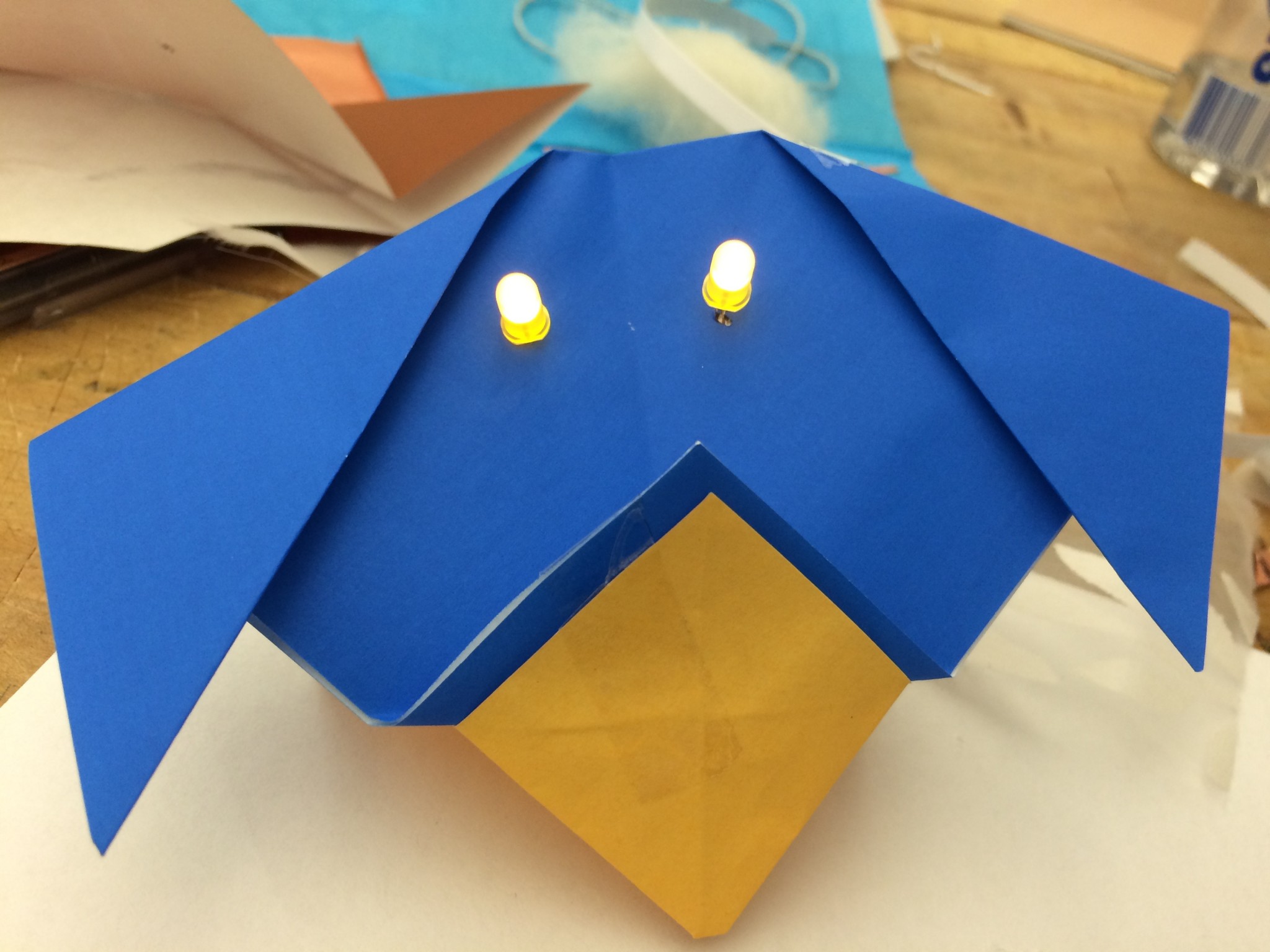
For this Doggy face, I use conductive tape and conductive ink to connect the power.


Illustration

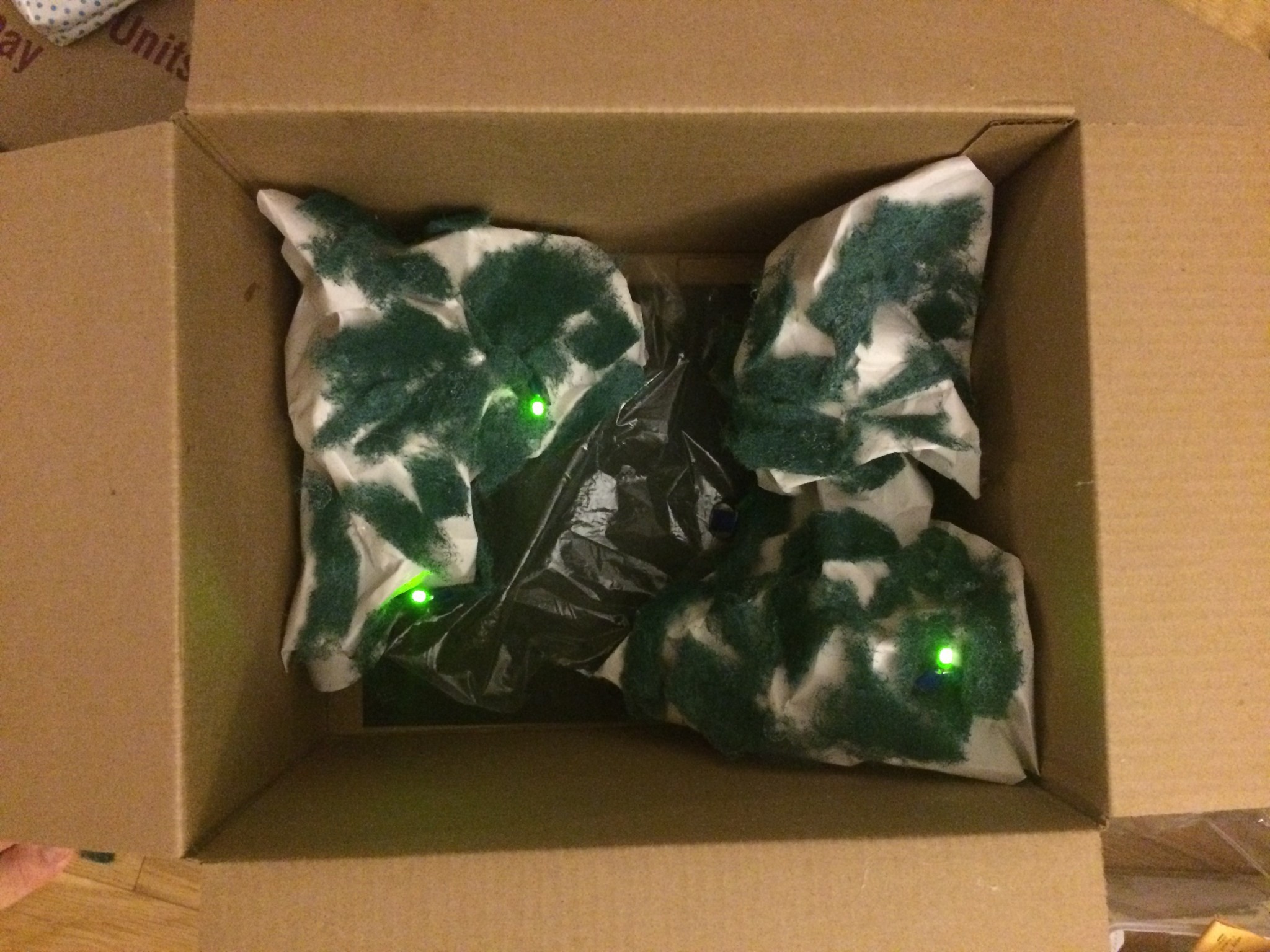
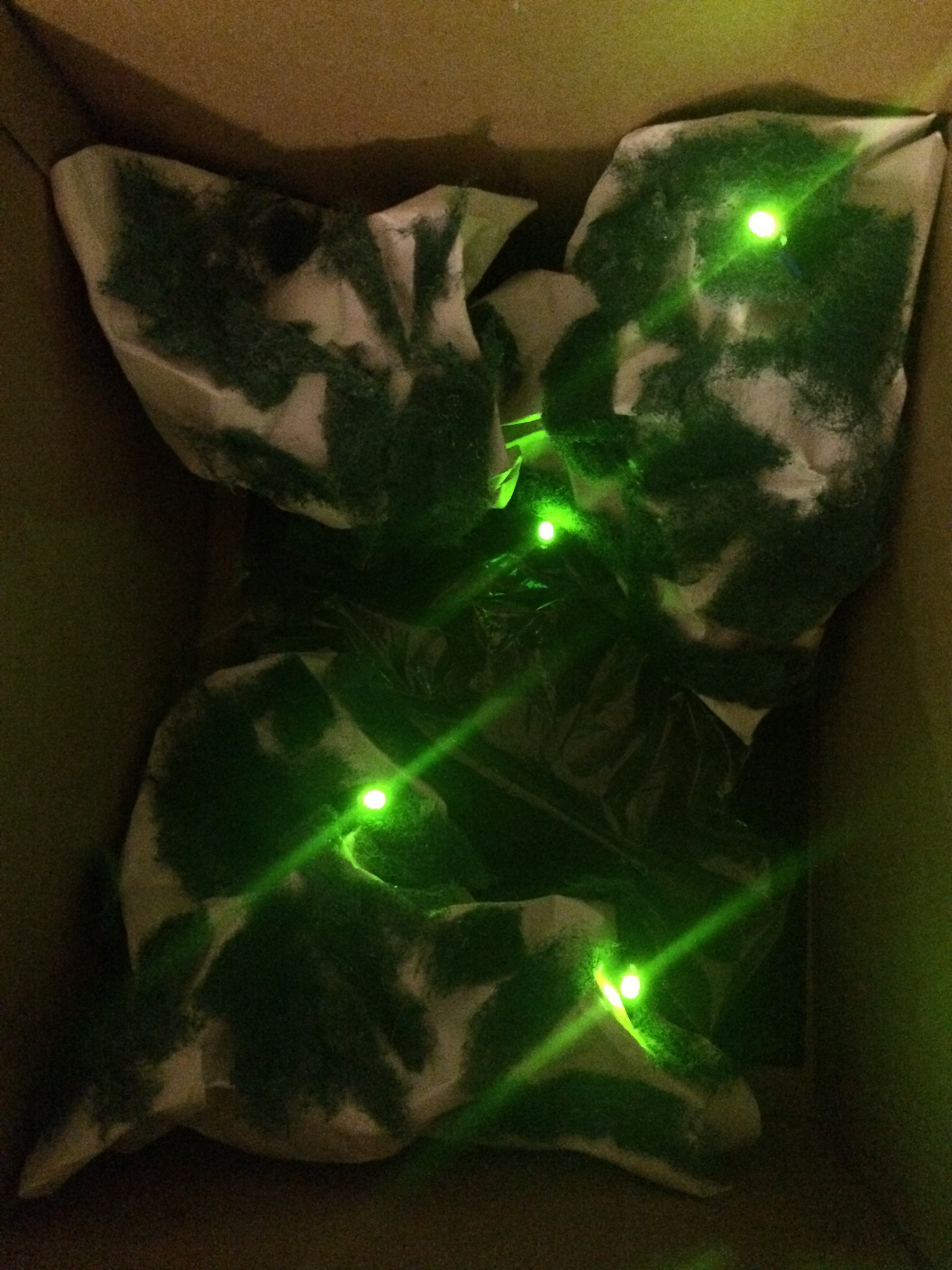
I got an inspiration from the cartoon called Detective Conan. This scene is about a boy who disappear because he try to impress his friend by catching firefly. So he is getting into the wood and he can catch one where alone the river. The best place to find the firefly is where it has clear river and many trees around.


IMG_7485 IMG_7475 IMG_7476 IMG_7477 IMG_7480 IMG_7482 IMG_7483

Learn a New Craft Project! (due Sept 29)

Key Dates
September 15 – One member of your group must have emailed me with names of group members and the craft you will be learning.
September 29 – Each group must be prepared to give their workshop in class.

Goal
Through this project you will learn the basic skills, techniques, and history of a craft practice. The goal of this is to experiment and try a new process without the use of embedded electronics. This could include any of the following:

  • sewing (by hand or on the machine)
  • embroidery
  • knitting
  • crocheting
  • draping
  • paper engineering
  • woodworking
  • silkscreening
  • surface design / fabric printing
  • etc, etc, etc

Outcomes
You will work in groups of 2-4 to design a 20-30 minute hands-on workshop or demo. Your group will give this workshop in class on September 29 to me and your peers.

Your workshop should include:

  • a brief background or history of the practice
  • the materials and tools needed
  • an overview of the process
  • a hands-on activity
  • ideas for incorporating into circuit construction

Your group is responsible for ONE post documenting the workshop with links to resources.

Week 1

LINK VDO

Particle engineer Paul Luckham and fashion designer Manel Torres from Imperial College London combined cotton fibres, polymers and a solvent to form a liquid that becomes a fabric when sprayed. The material can be built up in layers to create a garment of your desired thickness and can also be washed and worn again like conventional fabrics.

spray-clothes-sustainable-fabric-3

The idea of creating a new way of textile is very interesting. One is sustainable product because the material itself can be transformed and reused. Once it is transformed, it can be sprayed again and again.  In my perspective, this material makes me amazed that the liquid is sprayed just a seconds on body and then turned into garment which fits to individual person. This material can be another solution when people want to fix their cloths.