Niki and Denah used wire and copper tape in a parallel circuit. We lit up two LEDs. Pictures below!
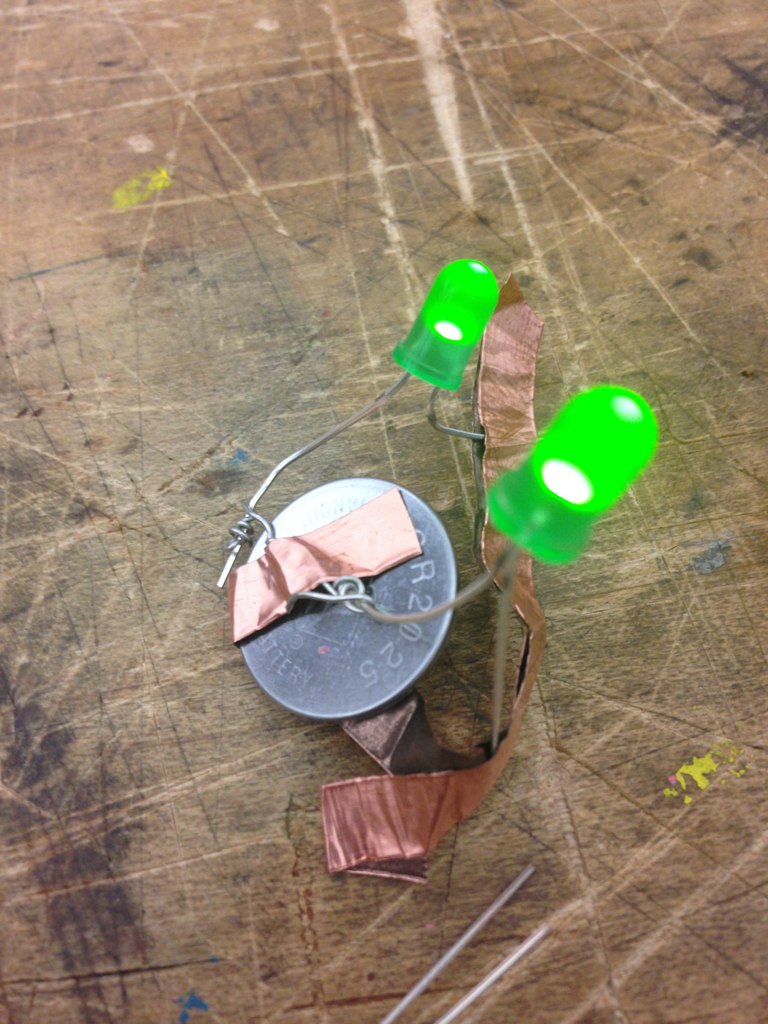

Niki and Denah used wire and copper tape in a parallel circuit. We lit up two LEDs. Pictures below!
“But the eyes are blind. One must look with the heart.” -The Little Prince, Antoine de Saint-Exupéry
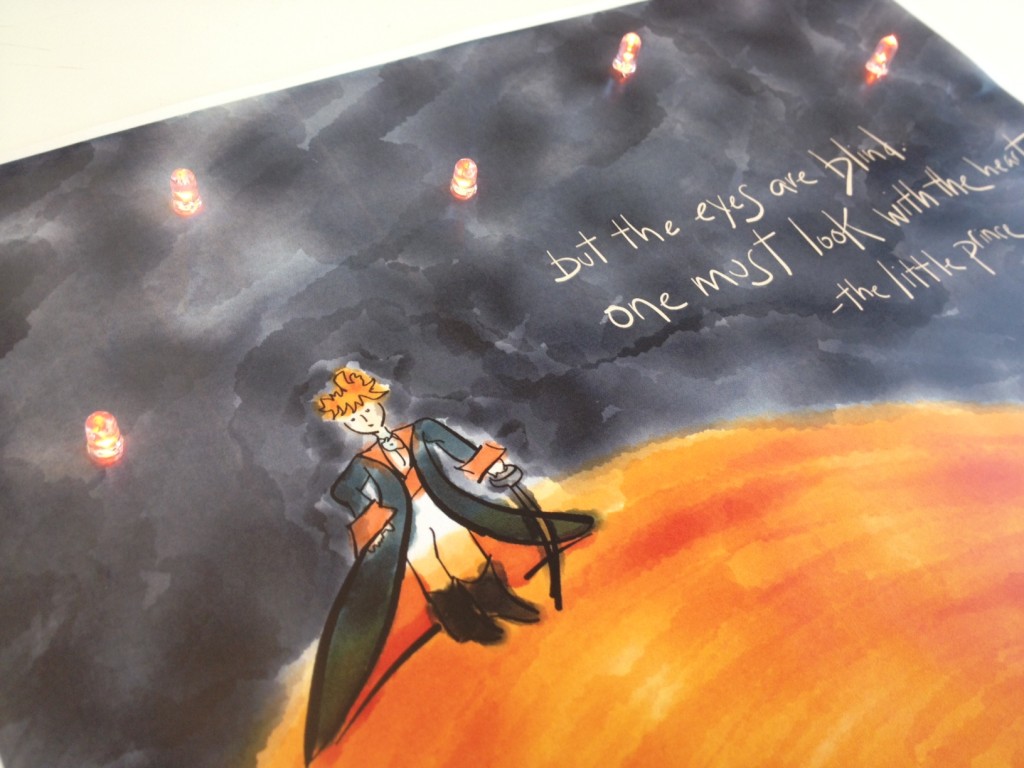
I chose The Little Prince because I’ve noticed a lovely little phenomenon. When presented with technology – high or low (especially low, actually) – adults revert to a childlike animation and excitement, which I think is just wonderful. We regard lights as magic and that fascination is one I would never trade. The Little Prince regards the adult world as absurd and imparts important social criticism through deceptive childlike messages.
I made the stars featured throughout the novella out of orange LEDs, because both stars and lights are magical in their own way.
Finally, I chose the quote because it is so important to feel everything we do deeply. Intellect is important, but passion drives us.
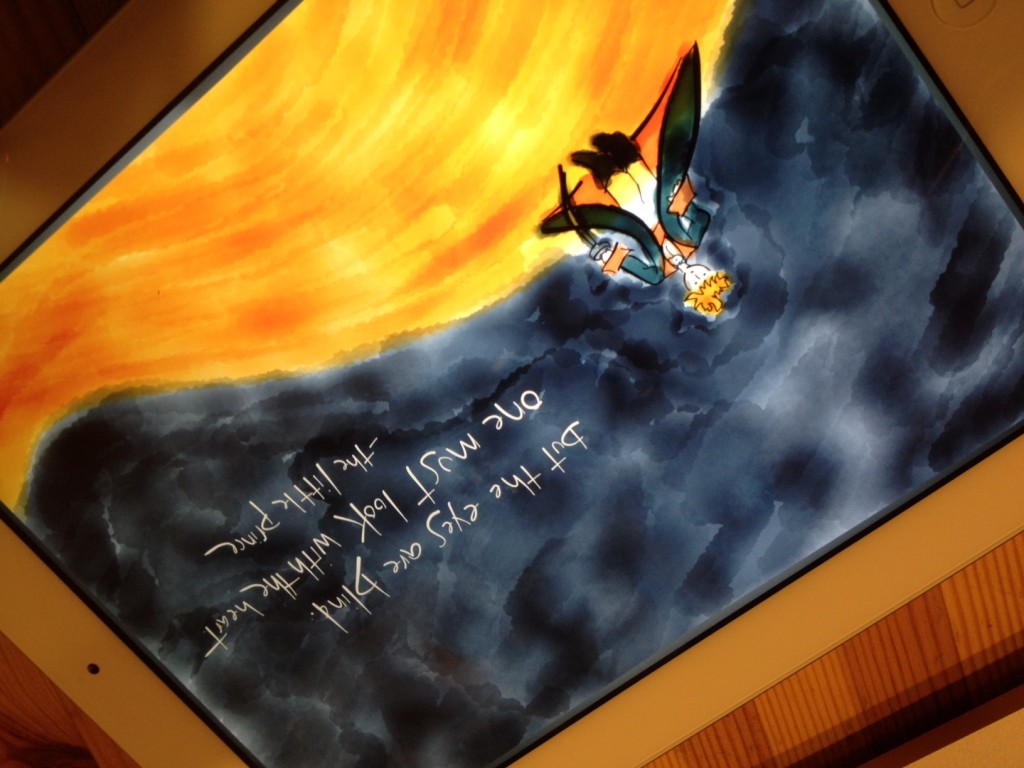
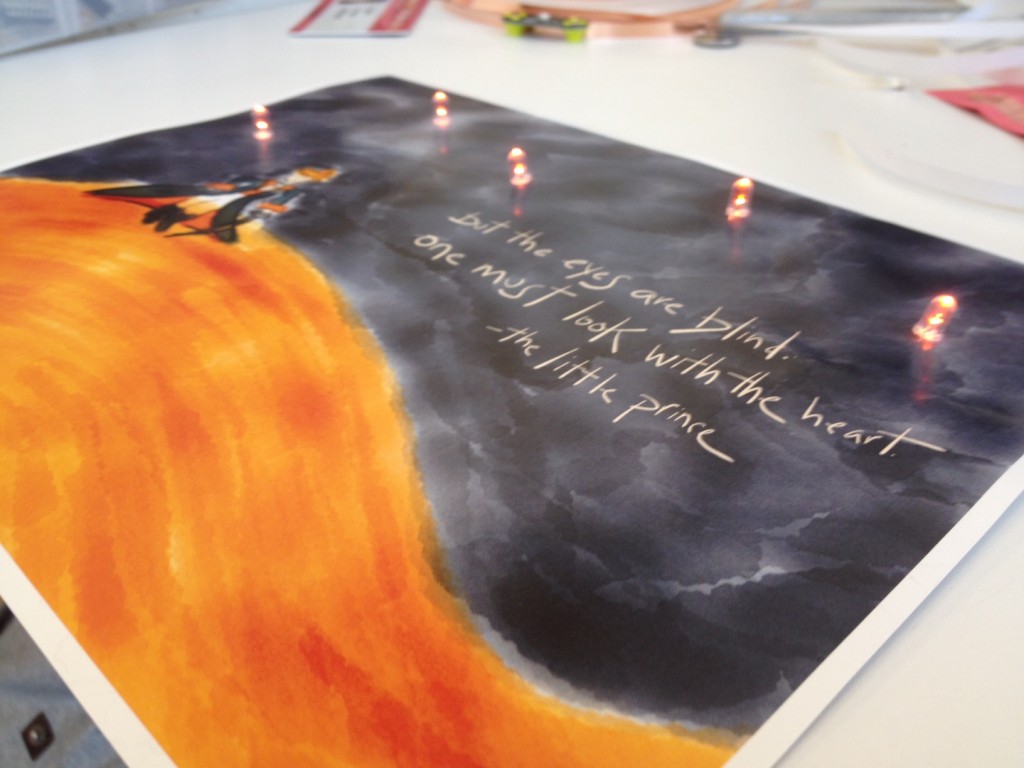
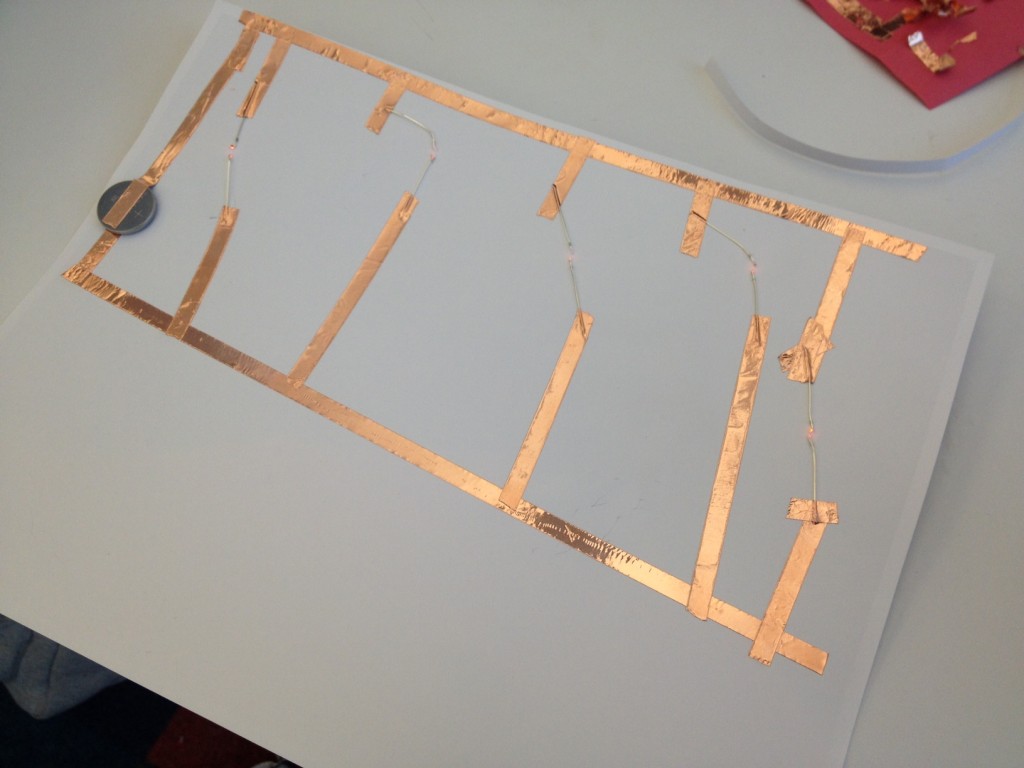
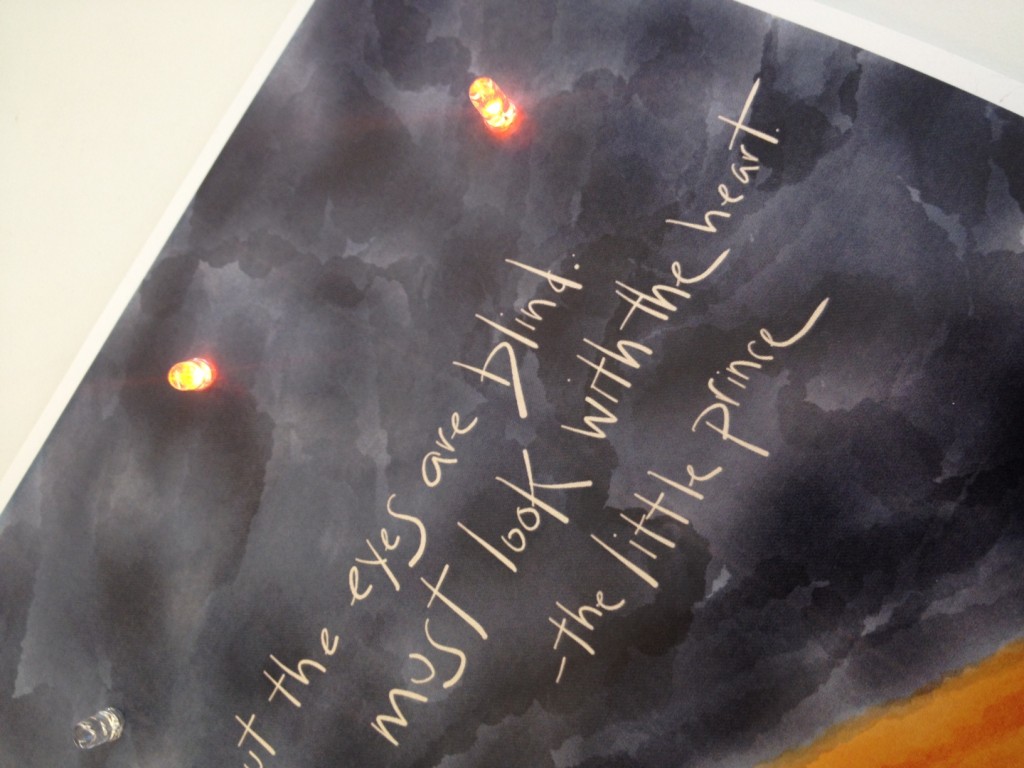
Using Paper by 53, I drew/painted an image from The Little Prince. After printing it, I attached LEDs for the stars, and made the parallel circuit using a 3V coin battery and copper tape.
Hi all,
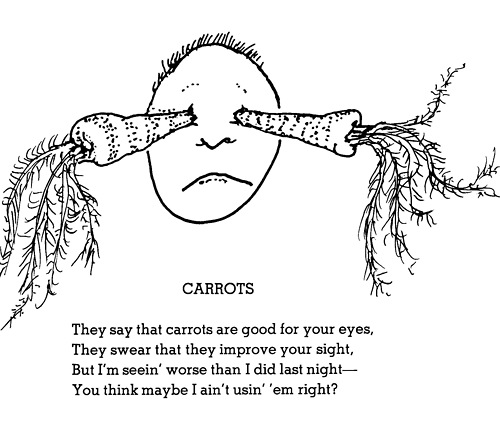
I made a felt carrot with LED’s activated by felt switch in parallel circuit pattern for my homework assignment. I was inspired by Shel Silverstein’s Poem, “Carrots”
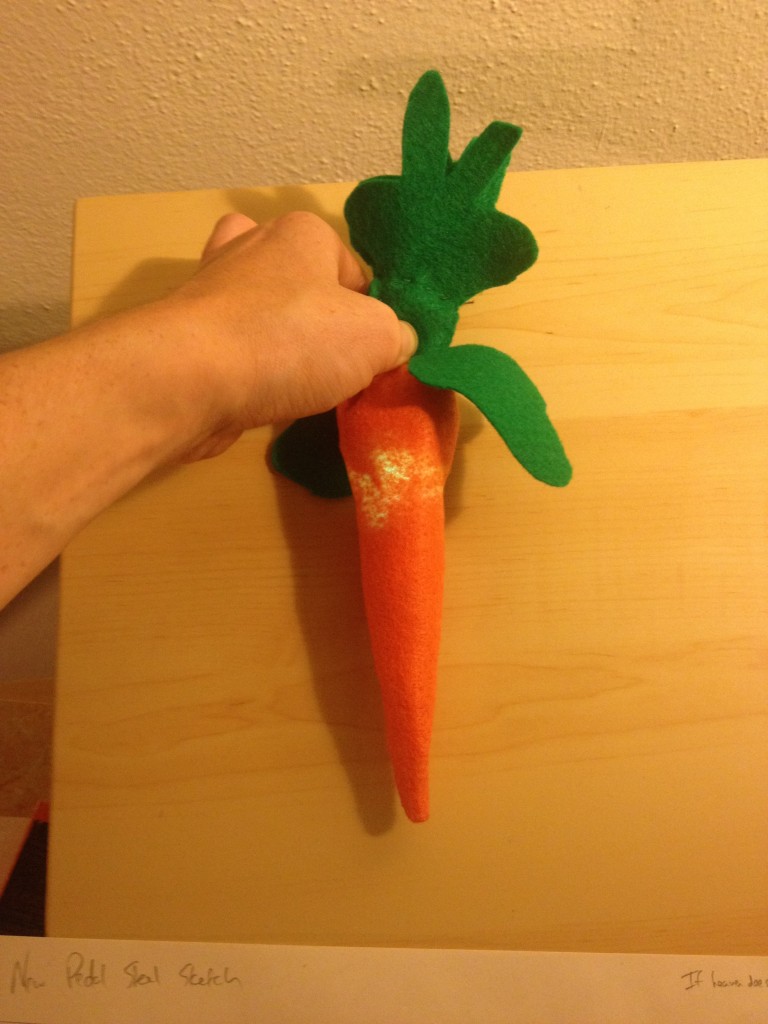
Enjoy! Keep away from bunnies.
- Joselyn McDonald
www.joselynmcdonald.com

Kristin Slater and Gabor Tankovics
2014-09-02 21.08.28 2014-09-02 21.12.10 2014-09-02 21.12.14 2014-09-02 21.12.24
I think it will be a interesting project if I can make something using the ambient
3 light led..
In-class Assignment:
Construct TWO parallel circuits:
- Use two or more LEDs on each.
- Use two different types of conductive material.
- Document each one and post it to the class blog as an in-class assignment. If one did not work, hypothesize why it did not and what you would do to make it work. (This should not take you too long.)
Assignment for next week:
Illustration project: Pick sentence or passage from a story that you like (children’s storybooks work VERY well). Illustrate one scene from that book and integrate a circuit into it using the materials we discussed in class. Post documentation to the blog and bring your final product into class.
Four college students from North Carolina State University have started to invent a nail polish that changes color when it contacts with date-rape drugs, including Rohypnol, Xanax, and GHB. They markets themselves to be “the first fashion company empowering women to prevent sexual assault”.
This product may not relate to any materials we talked about in class, but I found this one a very brilliant use of wearable technology, and also a very good combination of technology and social issue. When it comes to wearable/crafting technology products or accessaries, we often think of how to enclose the technical things using beautiful covering materials or sewing skills and make it neat, but this one just remains the original decoration. Although this doesn’t use any circuits and it more relates to the chemical reaction, it provides me an additional option of how to make my project neat.
The image below indicates how this product works in pubs and bars. As you can see, when woman want to detect their drinks, they have to put their fingers into the cup and stir. Some people think it is not the neat part when it comes to use. Also an article came right after their promotion, saying they don’t really understand anything about sexual assaults and most of the sexual assaults do not happen in the bars and relate to drinks.

These reviews may have their point of view, but this product opens the possibilities of using our body decorations as a practical way to protect ourselves. In the aspect of computational craft, this also inspires me to use certain parts of my body to be the conductive switch that triggers a circuit.
I stumbled upon this project from Hannah Perner-Wilson, called Joy Slippers.

They originally caught my eye on Instructables because I liked the aesthetic and there’s something intriguing about seeing old style coiled phone cables coming out of slippers. I originally thought they were attached together, which seemed to have exciting implications, but they’re not as it turns out. They have pressure sensors in them that send data back through the phone cables.
I also enjoyed looking at her x-IMU gloves. Although, we’ve all seen the gloves loaded with sensors thing, i thought these ones looked a bit different. I like the well controlled wires that are visible through the top. It’s a good example of having an exposed guts look, while also looking very intentional. For me, they also invoke connections to the central nervous system, which seems very appropriate.
This felted crochet sensor project by Instructables user, push_reset, serves as an inspiration for my upcoming Computational Crafting class at Parsons The New School for Design. I appreciate many aspects of this project, from the aesthetic to the functionality. Aesthetically speaking, this project intrigues me. I find felt appealing both visually and as a malleable material that I like to incorporate into my work. Sensors often have a very singular look – metallic and cold – however, push_reset’s sensor is delightfully subversive in that it is inviting, touchable, and soft. As for the functionality, I read her documentation (which is excellent) and I appreciate that this flex sensor is seemingly rather reliable. I’ve had a slew of unfortunate experience with rubber and metal flex sensors, and found them underwhelming in their reliability. push_reset had similar experiences and then went on to make this sensor in order to have the aesthetic and reliability that she desired. Cheers!
by Joselyn McDonald
http://vimeo.com/12997478http://vimeo.com/12997478
