Homework Assignment #4- I LOVE KNITTING- Cat Schmitz

I am a storyteller, designer, learner, researcher, and an educator. I tend to lean towards projects that are based in understanding someone’s story and communicating that to create new conversation that could perhaps spark change. My design process is heavily dependent on research and learning and my design goal is to educate from my findings.

Favorite tool- Markers and a blank page. Markers are so colorful and expressive and there’s so much possibility with a blank page.

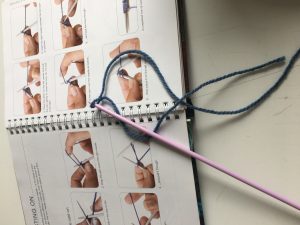
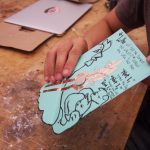
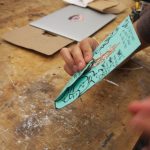
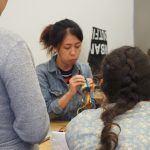
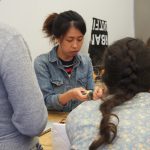
So this week, I tried KNITTING! I knew nothing about it and found myself lost in the yarn section at Michaels. My original goal was to make a massive knit blanket with chunky yarn, but a gut feeling told me to calm down and buy a book for beginners before I . So, I bought a book called KNITTING FOR ABSOLUTE BEGINNERS and found myself struggling to tie the first slip knot. 49641953806__d7850c27-dfac-4ebc-99e9-d844bcc07537 49641953133__c97e57e5-f109-49b7-bfb5-1f79e3eee553
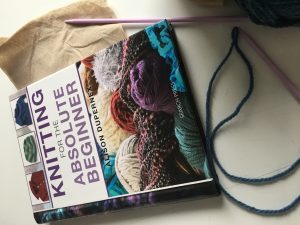
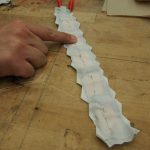
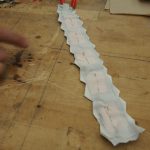
After some struggling with a helpful DT classmate, Aine, I was able to learn how to cast on a few stitches. Casting on, from what I understand, is basically making some stitches. See below.
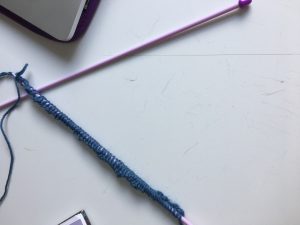
49642465117__6082c105-7dc6-4c3c-a28d-9b45e656b756


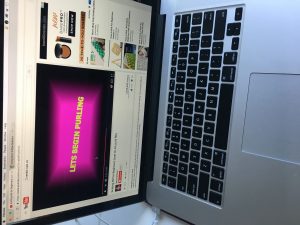
So, this was knitting. Nowhere in my book did I find an explanation for what do even do next, so I started randomly googling “what to do after you cast on- knitting.” Then, I found this gem on youtube.

So here’s the result of that:
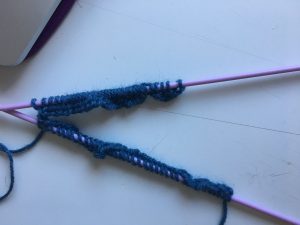
img_2396-2 img_2397-2

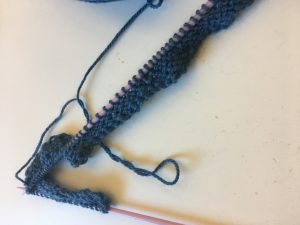
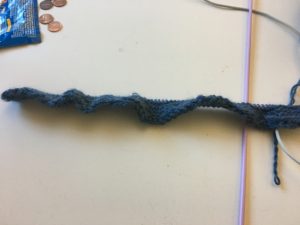
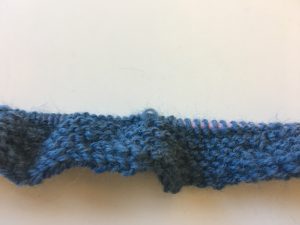
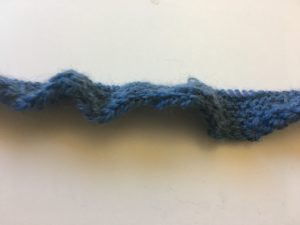
and after many hours, this is what I have:
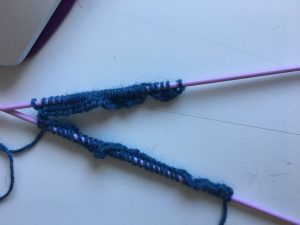
img_2396-4 img_2398 img_2399 img_2401 img_2400

A few thoughts:


I LOVED KNITTING!!!! It was so fun and relaxing. The hardest part was getting the knots right, so asking for help was crucial as well as some googling. Once I got going, I felt a lot better and quickly picked it up. I obviously have a rough start with some missing stitches, but I still feel hopeful about picking it up more as I do it.

One thing: knitting is time consuming. I love doing it and consider it a very zen activity that I want to continue, but I need to scale my ideas of massive knit blankets down a tad.


Week 3 Assignment – Swatches by Alonso Castro

img_5465img_5464img_5466

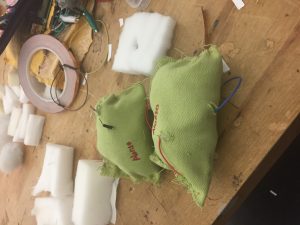
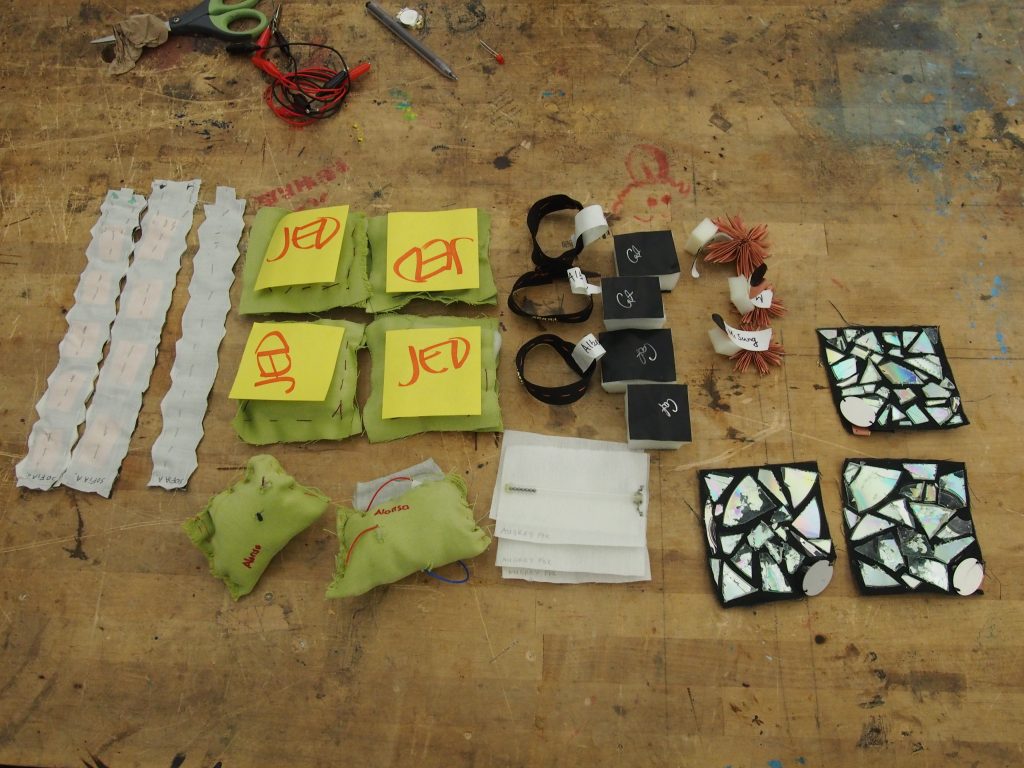
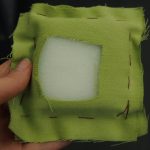
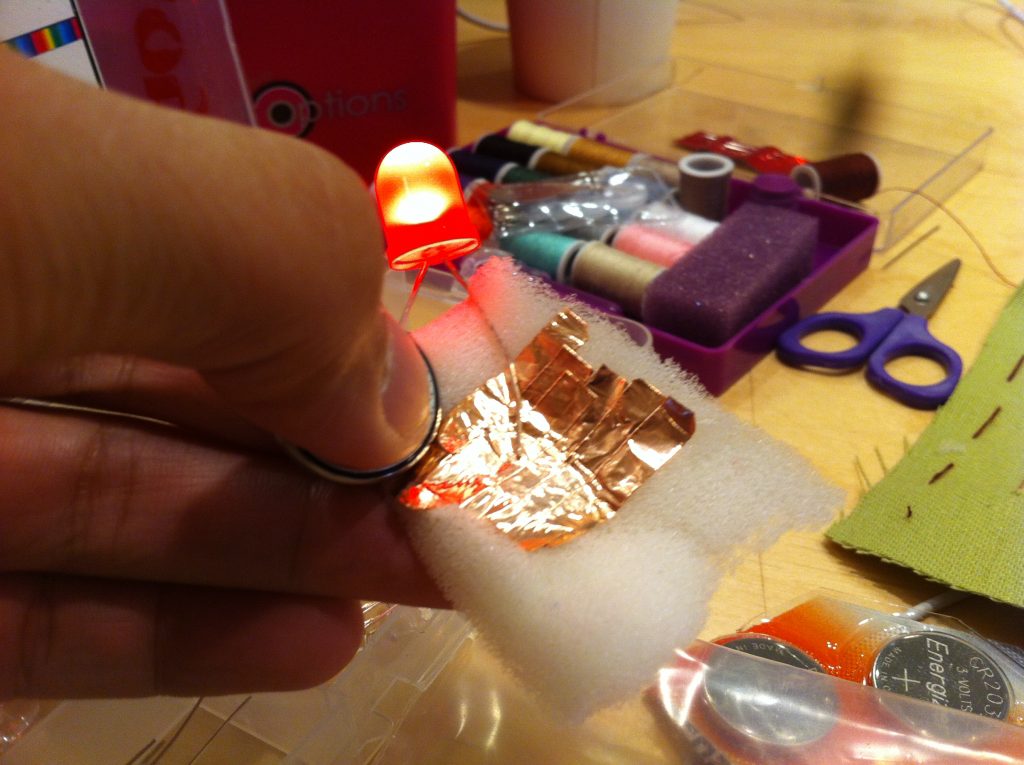
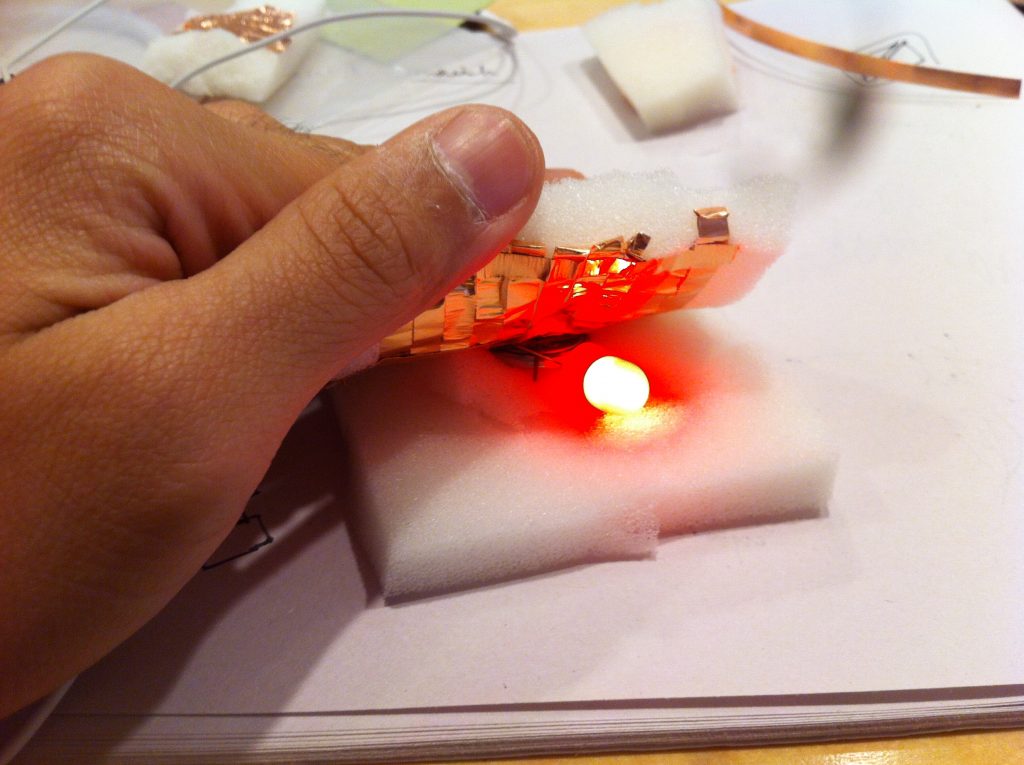
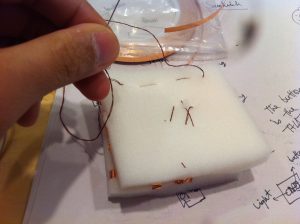
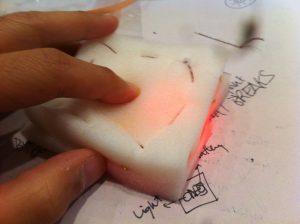
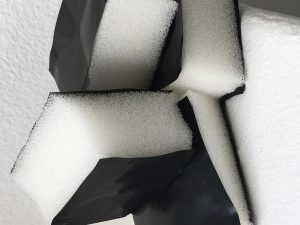
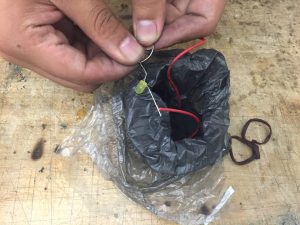
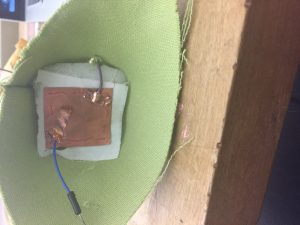
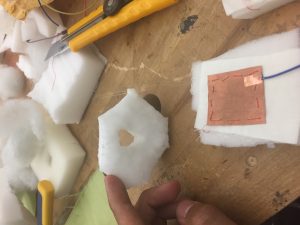
My first iteration of this project was inspired by the LED throwies shown in class, but in this case I wanted to make discs made with foam and cotton fabric and let it be a toy where two or more people could play with. Then, I could not make the disc fly well enough without the battery, LED light and wired inside so I decided to make little pillow-shaped object with wires hanging on the outside for easily changing batteries and/or LEDs. Inside the pillows I made a sandwich circuit with two pieces of foam holding a piece of cotton knitted onto copper fabric and in the middle a piece of foam with a hole in the middle that would break the circuit unless the pillow was pressed to create a contact between the two pieces of copper fabric.


Week 4: Assignment

1) Before next class, I would like you to try learning a new craft. That’s it. NO electronics. Make a swatch (small example) that comes out of your learning. This could include any of the following:

  • sewing (by hand or on the machine)
  • embroidery
  • knitting
  • crocheting
  • draping
  • paper engineering
  • woodworking
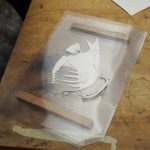
  • silkscreening
  • surface design / fabric printing
  • etc, etc, etc

Here are some tutorials from last year as inspiration (also, this was a much longer project last year – you do NOT need to go into this depth). There are also a TON of tutorials if you hit the Googles.

2) Create a post with an image of your swatch and reflect on the following questions.
After doing all of the above, write a blog post that answers the questions below. It doesn’t have to be long, but I would like you to spend a good amount of time reflecting on these:

  • How do you identify / classify yourself? Choose as many as you would like from the following and feel free to add to it. Briefly explain why you chose them.
    • storyteller
    • maker
    • engineer
    • coder
    • designer
    • artist
    • learner
    • hacker
    • research
    • educator
    • gamer
    • craftsperson
    • [other?]
  • What is your favorite tool and why? (I’m going to put one restriction on this – you’re not allowed to say computer 🙂
  • Reflect on your experience trying out a new craft. Some questions you could address: What did you like about the process? What was frustrating? What insight did you gain? What advice would you give to someone?

Week 4: Hello World

Reading Sensor Values


In class documentation

Swatch Exchange: Sensors

Jed Segovia: Swatches

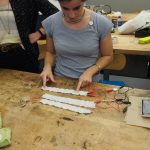
2016-09-17-14-05-34 2016-09-17-14-05-42 2016-09-17-14-44-30 2016-09-17-15-09-20 2016-09-17-15-30-09 2016-09-17-15-30-21  2016-09-17-17-03-40 2016-09-17-17-08-23 2016-09-17-17-20-02 2016-09-17-17-53-55 2016-09-17-18-05-50 2016-09-17-18-11-11 2016-09-17-18-20-01 2016-09-18-15-25-21 2016-09-18-19-42-54

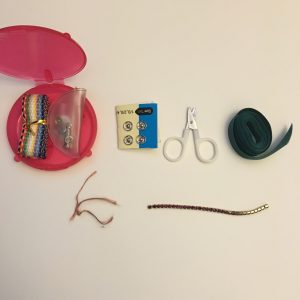
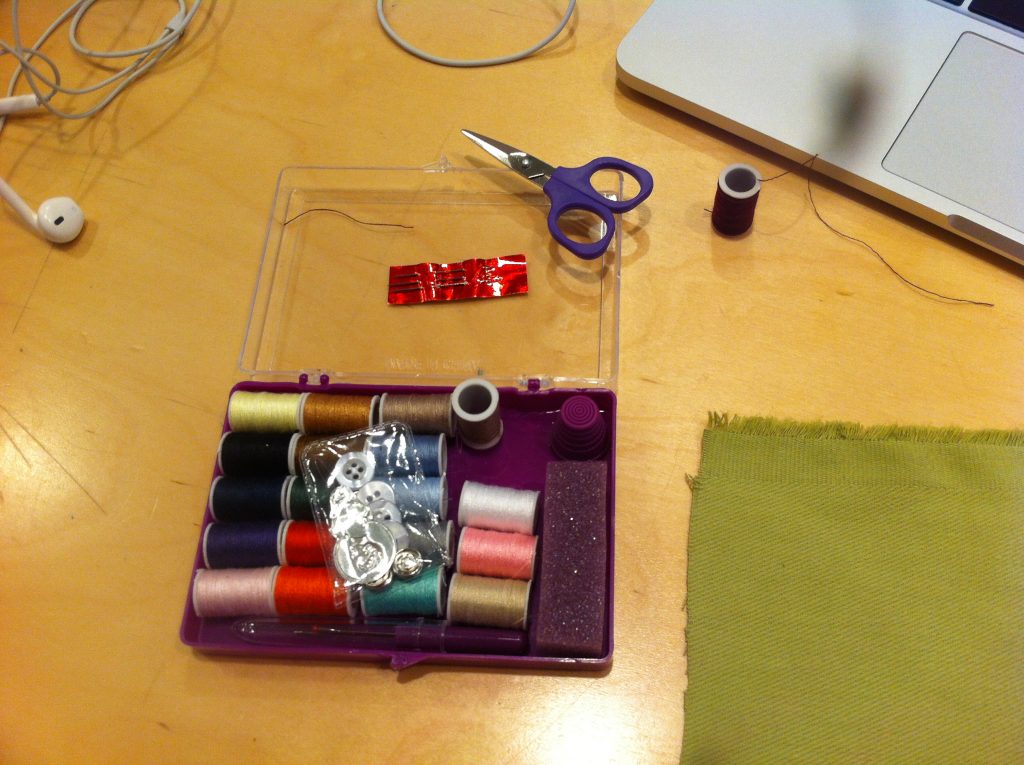
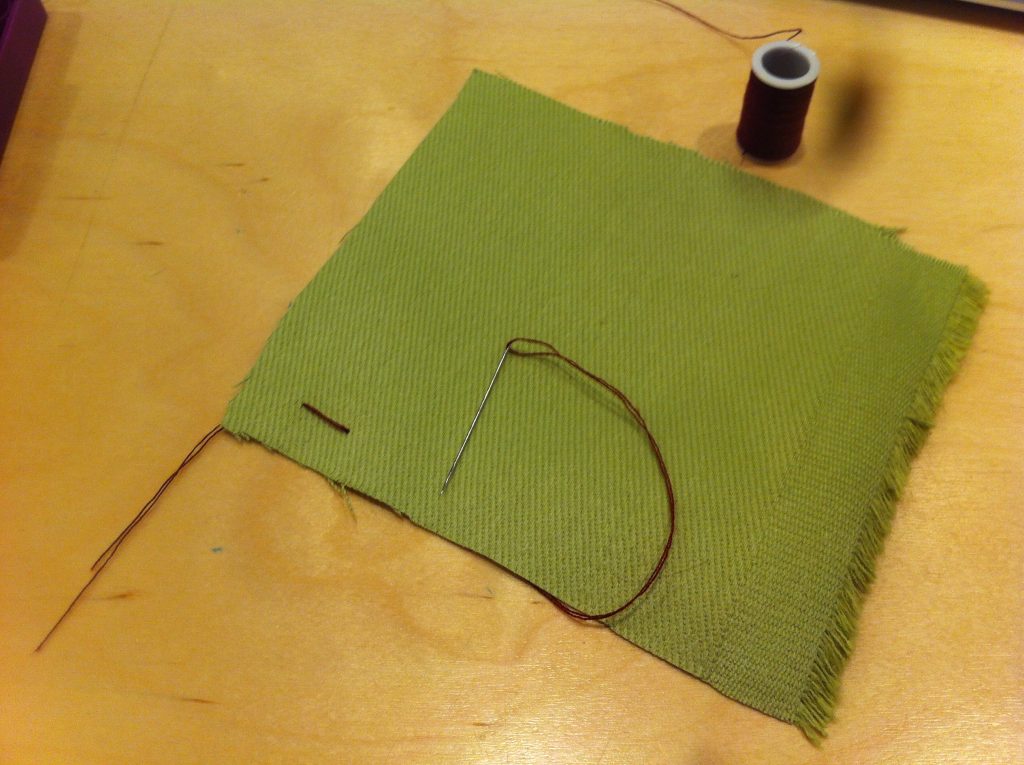
I personally had fun with this because I learned how to sew!

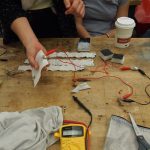
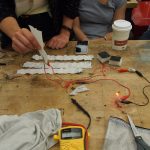
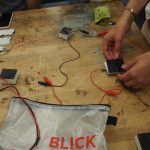
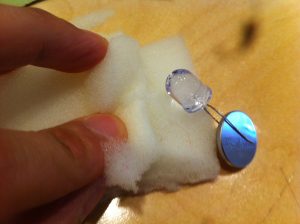
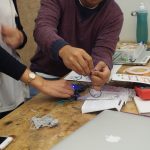
I decided to make a simple button based on the example our instructor showed us in class. She used foam, velostat, alligator wires, an LED, and a 9V battery.

I thought about doing something similar with the conductive thread. But since I was a first-time sewer, I didn’t have time to figure out how to work the conductive thread. Instead, I went for a simple 3V coin battery and LED circuit combination.
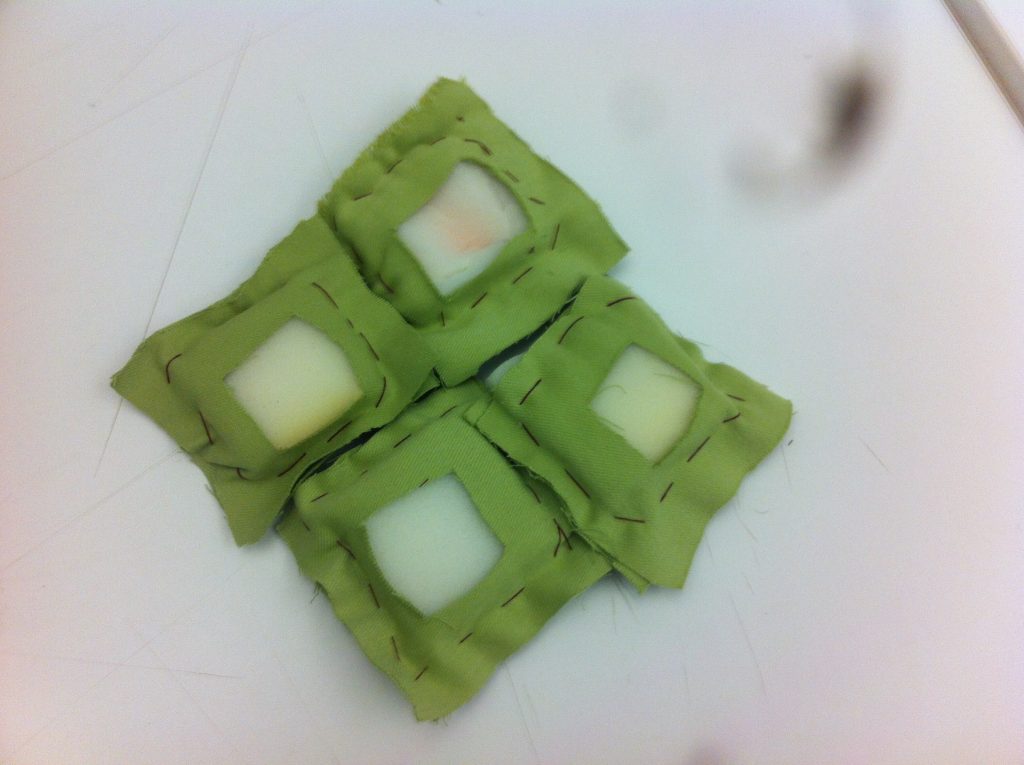
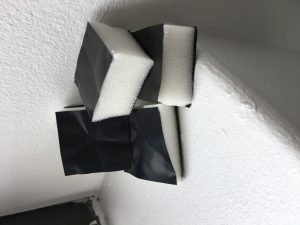
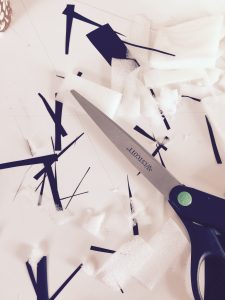
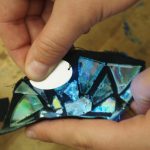
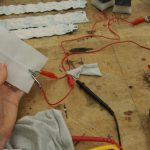
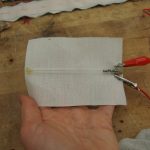
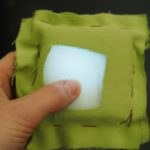
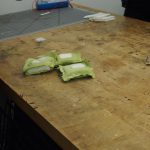
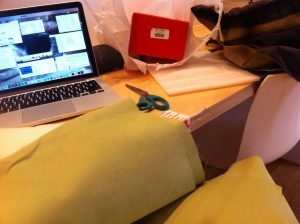
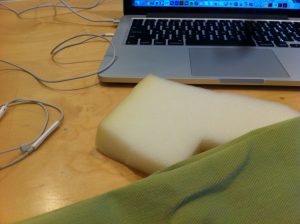
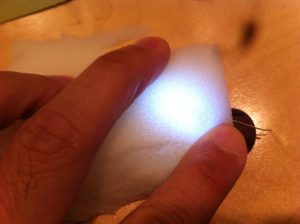
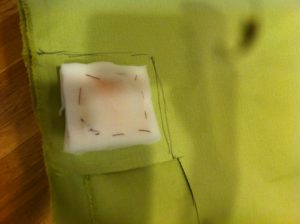
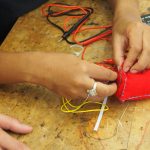
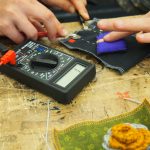
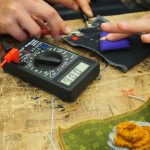
I made a circuit sandwich with two pieces of foam and stitched fabric. I put the button inside and essentially sewed up a light-up pillow.

Midterm Assignment: Lamp Project due Oct.18

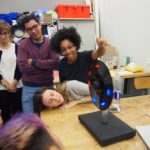
Design a lamp using the techniques, tools, and materials we have been learning over the course. Lamp and presentation are due OCT. 18. You will have ten minutes total to present. Instructable due Friday, Oct. 21.

Your theme: Duality. We are constantly living at the intersection of opposites and the ambiguous spaces they create. Consider this as a starting point for your design.

Constraints:
1) MUST use a switch or sensor. RE: You must have a way of controlling the circuit.
2) Must have at least two states (e.g. on/off, fading fast/slow, red/blue, etc) or more.
3) You do not have to use Arduino.
4) You cannot use jumper wires *unless* it is to connect your circuit traces to the Arduino. In this case, you should consider how to integrate your Arduino into the design. Depending on your time and financial constraints, you may want to explore other types of Arduinos that better fit your design, such as a Lilypad, Flora, Gemma, Arduino Mini, etc.
5) The midterm is an individual project.

I will be evaluating you along the following categories:
Process
– Paper prototyping interaction and structure
– Grasp of assembly and how to integrate electronics with materials
– Material is appropriate for the project

Concept + Design
– Clear design goal
– Desired interaction accomplished (What should the user be doing or feeling? What action do you want them to perform?)
– Intuitive interface (or convoluted depending on the design goal)
– Articulated audience – who is this for?

Documentation
– Create an Instructable documenting your project.

DUE OCTOBER 4
1) Paper prototypes for feedback (Focus on role or look+feel)
2) Concept and design goal (What does your design seek to accomplish? Who are you designing for?
3) Materials list (What do you need to build your design)
4) Prior art and precedents that inspired your design and direction.

Week 2 Homework 2 – Alonso Castro

In class assignment

img_5436img_5435

Homework 2

img_5453 img_5455

Illustration – Itsy Bitsy Spider from Alonso Castro on Vimeo.

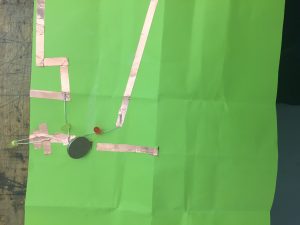
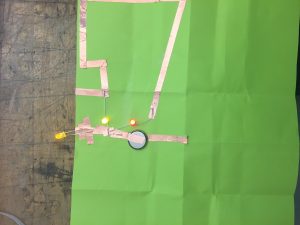
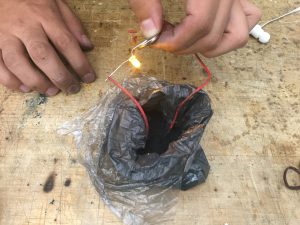
I first wanted to try the homework illustrating itsy bitsy spider using graphite powder, but realized that the amount of powder used for it to be able to be conductive would have to be a full bag of it. Then, noticed it was very resistive used in small amounts.

I decided to then draw the song and connect a battery (the sun) to an LED light (on the tip of the umbrella) using copper tape.

When constructing sensors, remember your three variables:

  • Distance: Resistance increases over distance no matter what the material
  • Pressure: Some materials are pressure sensitive will decrease in resistance when pressure is applied to them.
  • Surface Area: Increasing the size of the area for electricity to flow will decrease the resistance. For example, a foot of resistive thread in a line would be more resistive than a foot of the same thread that is stitched close together.