For my final project I would like to propose
Wonder Woman Bracelets using LEDs and magnets.
I am interested in incorporating flexinol on the bracelets but need to work out where on front of the bracelet would fold.
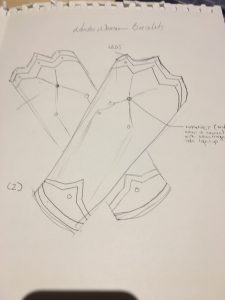
For my final project I would like to propose
Wonder Woman Bracelets using LEDs and magnets.
I am interested in incorporating flexinol on the bracelets but need to work out where on front of the bracelet would fold.
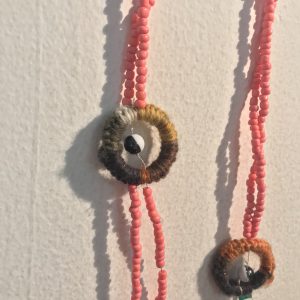
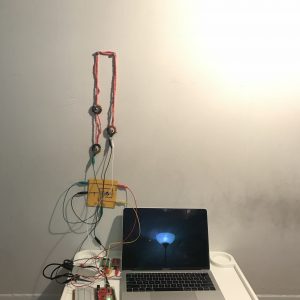
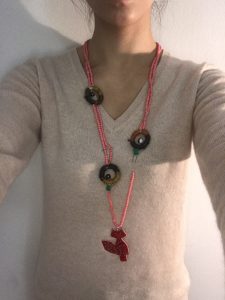
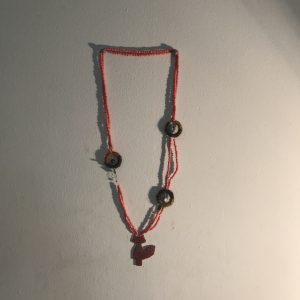
People are always on their cellphones checking notifications. In a way, we have become cyborgs because of this behavior. The world we perceive no longer consists of only cityscape but also data structure. And in returns, our data becomes parts of us as well, a long with our flesh and bones. This idea inspired me to create a wearable piece that responds to your phone’s notification. Every time a notification pops up, the flip dots on the necklace will be activated. When an user wears the necklace, they become one with their data as their mind constantly moves back and forth between the physical and the digital world.
I have created a semi-functional prototype for this idea. The biggest issue I have currently is how to hook it up to a phone. I have been looking into TouchOSC and Ardunio OSCuino but they only allow me to control the arduino using the TouchOSC app instead of from the notification settings.
For our final, Aaron, Dylan, Lucien and I are collaborating together on a game that we are creating for The New Arcade and Computational Craft. For this game, Lucien will be working on the programming aspect for the game, meaning that Aaron, Dylan and I will be working on the controller.
The game will be a multiplayer competition game, in which players take on the persona of an owl. The goal of the game is to capture and safely secure as many items as you can in your nest by the end of the game. There will also be power-ups that players can take, which temporarily gives that player the power to steal items from other players nests.
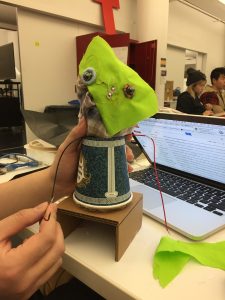
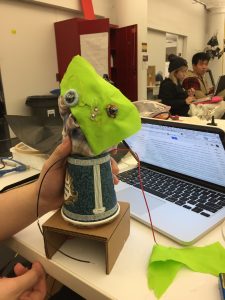
This is the first prototype of our game controller. It is an owl. The head of the controller can be turned 360 degrees controlling the direction the players respective owl in the game. This is done by using a potentiometer, which we will map to Unity. In addition to being able to control the direction of the owl, players can “fling” their owls in the direction they desire. We are incorporating flip-dots for the eyes of the owl, which will be used to fling the owls. The flip dots are connected to a handle, kind of like a pinball machine handle. When the handle is pulled, the eyes flip, completing a circuit, and launching the game owl.
In addition to the four owl plushie controllers, we are aiming to create a table for the game. Because this is a multiplayer game, we feel that a monitor might be too small for players to enjoy the game. Our plan is to build a table which is empty in the middle, so that we can attach a screen to project the game on to from the bottom.
Final times! Woohoo! Here are your final deliverables:
1) WORKING PROTOTYPE
You MUST bring your prototype to show – even if it is not working. If you require a specific environment, please email me.
2) PRESENTATION
You will have 7 minutes to present. This includes time for feedback, so structure your presentation accordingly. Your should include the following in your presentation ( in whatever order you like):
3) VIDEO DOCUMENTATION
You should make a short video introducing your project. It should include the title of your piece, your concept, and a prototype demo.
1) BLOG POST
2) INSTRUCTABLE
Here are the components you should have:
I will assess your project by the following criteria:
Ideation, Concept, and Design
Process + Materials
Presentation
OPTIONAL THEME: MEMORY
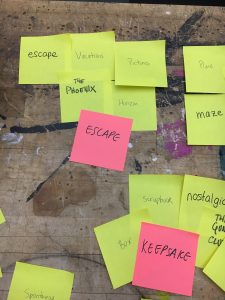
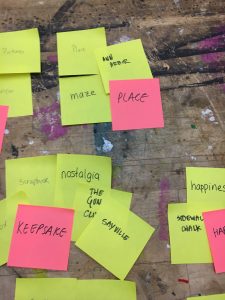
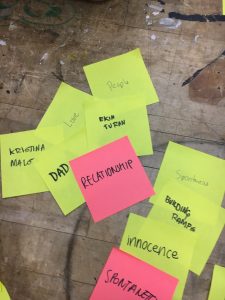
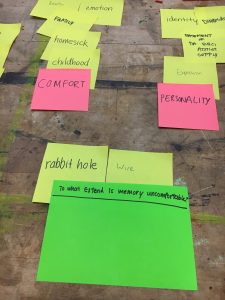
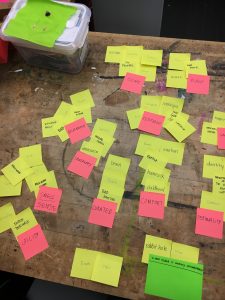
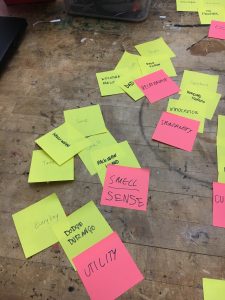
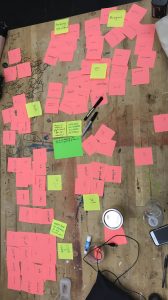
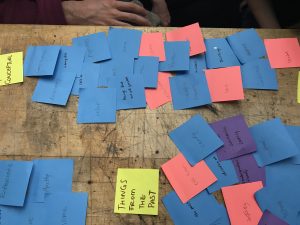
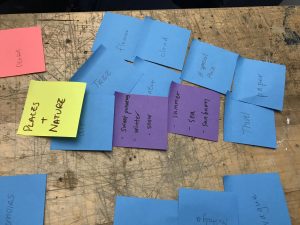
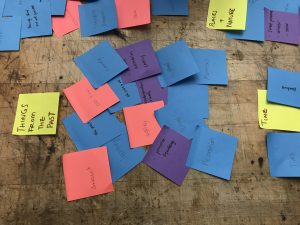
Questions and prompts from in-class activity:
Since we ran a little short on time, I am also including a few notes below that I hoped to incorporate into our discussion. They are meant to provoke ideas and questions:
Human memory
Most people would argue that it is our memories which comprise our sense of self, our values, habits, perspectives – our identity. There are three types of human memory: sensory, short term, and long term. Sensory handles information you receive in your immediate environment, such as the feeling paper or the smell of a burnt LED. Short-term memory allows you to hold some information for a short amount of time. Long-term memory goes deeper: it allows you to store vast amounts of information over long periods of time. These will influence who you perceive yourself and others to be. You may consciously build these memories or construct them without full self awareness. We have personal memories and collective memories, and they may not always align.
Digital Memory
Digital memory gives us the ability to store infinite amounts of information that we can retrieve at any moment. While digital memory may seem abstract and intangible, it cannot live without a physical component, the hardware of switches, ICs, capacitors, transistors, resistors, and so on. This hardware was not always small enough to fit into our hands. In the past, increased memory meant increased size. Now we are able to recall any piece of information anywhere. Some of this memory is volatile and lives on only when powered, while others are stored semi-permanently. Some memory allows users only to read or only to write or to both read and write new memories.
Material Memory
A material’s memory depends on its form and properties (tensile, mechanical, electrical, or otherwise). Softer materials like paper, textiles, and wood can be manipulated into new forms, storing new “memories” that redefine their functions (e.g. a piece of fabric sewn into a shirt, a piece of wood turned into a handle on the lathe, etc). Smart materials have the ability to change states by altering their properties and forms. SMAs return to a programmed shape when activated, thermochromic pigment disappears with heat, conductive fabric has electrical properties in addition to textile properties. The look and feel of a material impacts our sensory memory and contributes to the user’s overall experience with an object or environment.
Suggested Readings:
Becoming Materials: Material Forms and Forms of Practice by Jenny Bergström, Brendon Clark, Alberto Frigo, Ramia Mazé, Johan Redström, and Anna Vallgårda
Poetic Computation Reader by Taeyoon Choi
Ch 2: Memory: to remember and forget
To What extent is memory uncomfortable?
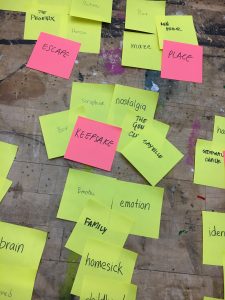
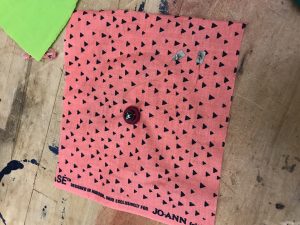
This week we created flip dots. For my flip dot, I decided to use the embroidery technique to keep my coil. Making the coil open for electricity to go was challenging for me. I think flip dots are extremely cool and interesting to experiment with.
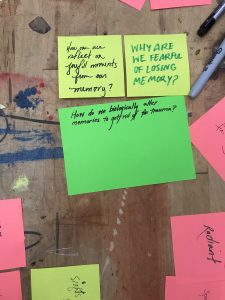
Our design questions:
This week i tried create a paper armadillo using flexinol, the main idea is that when heat is applied, the armadillo will contract into his shell.
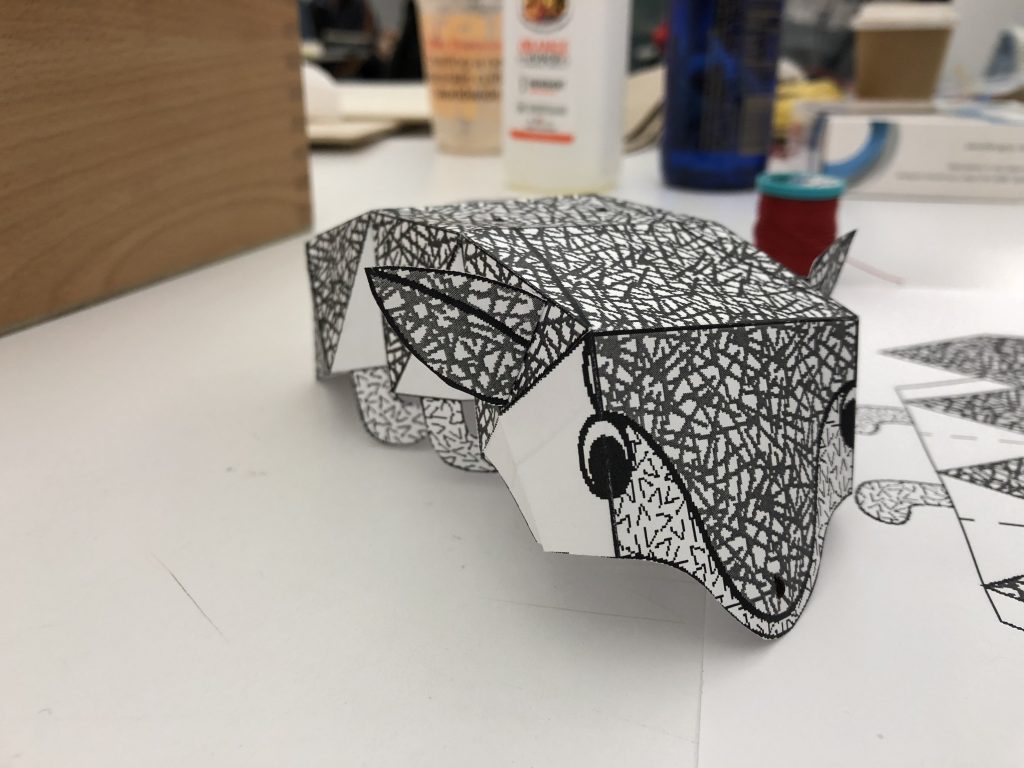
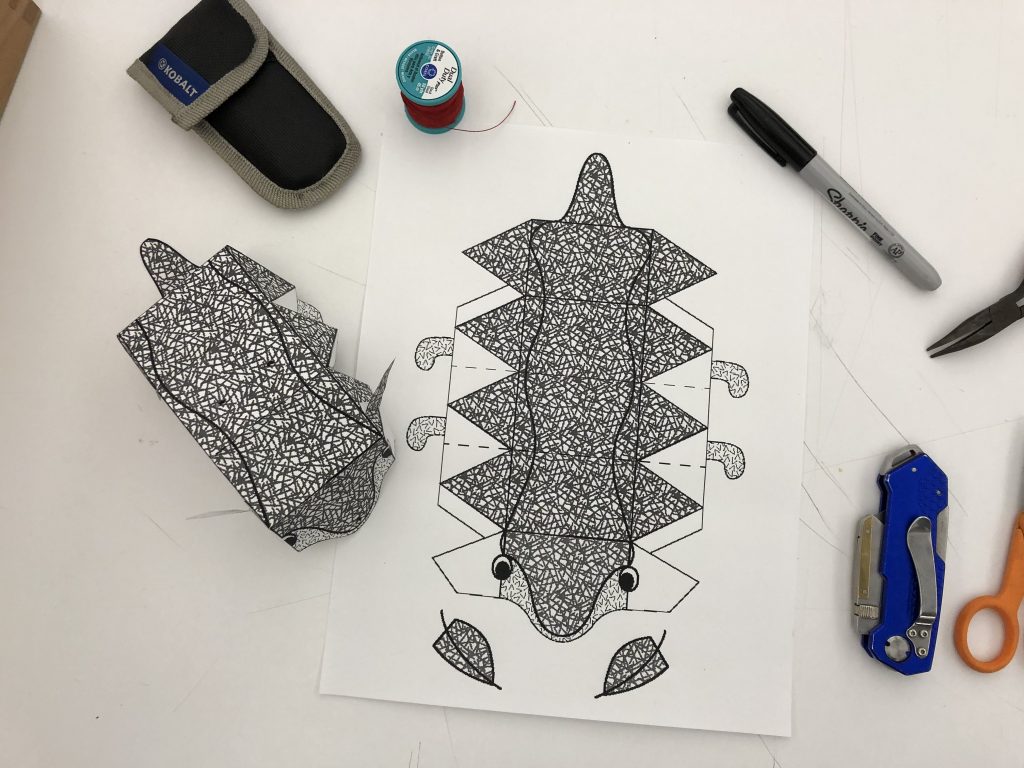
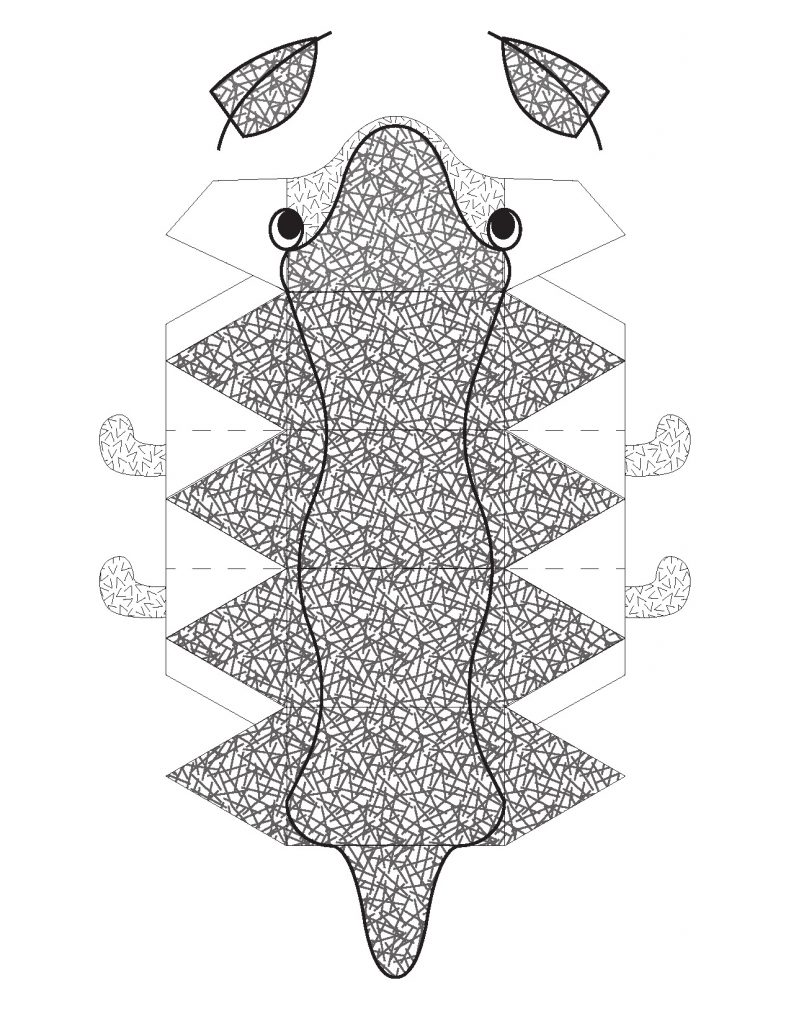
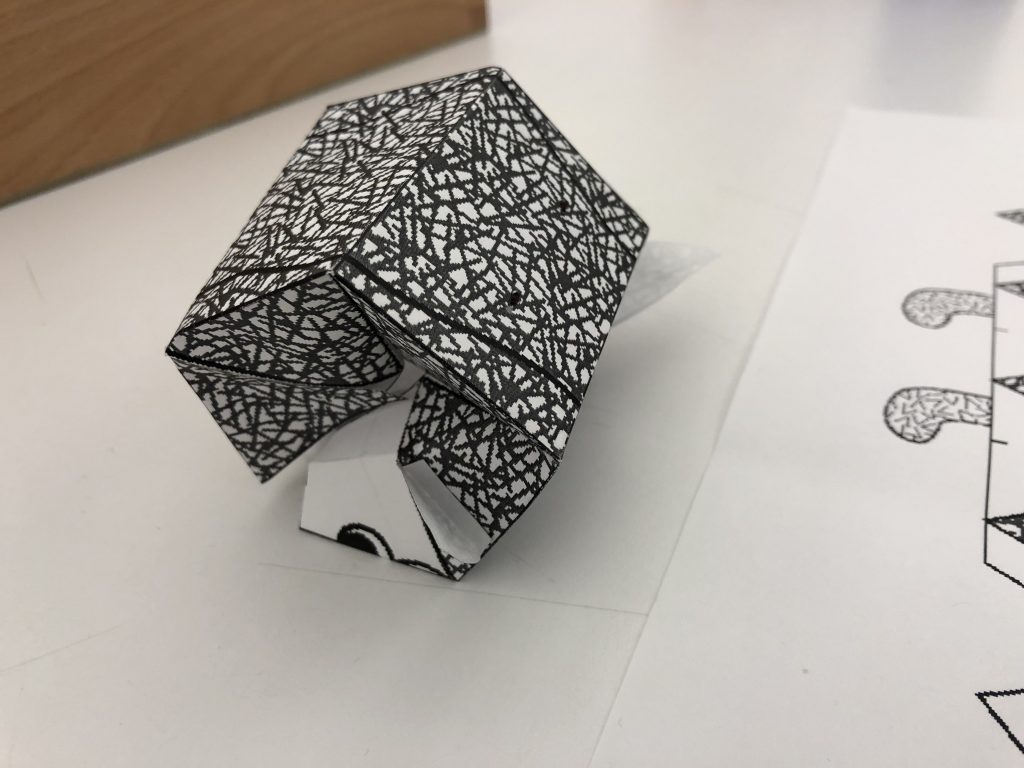
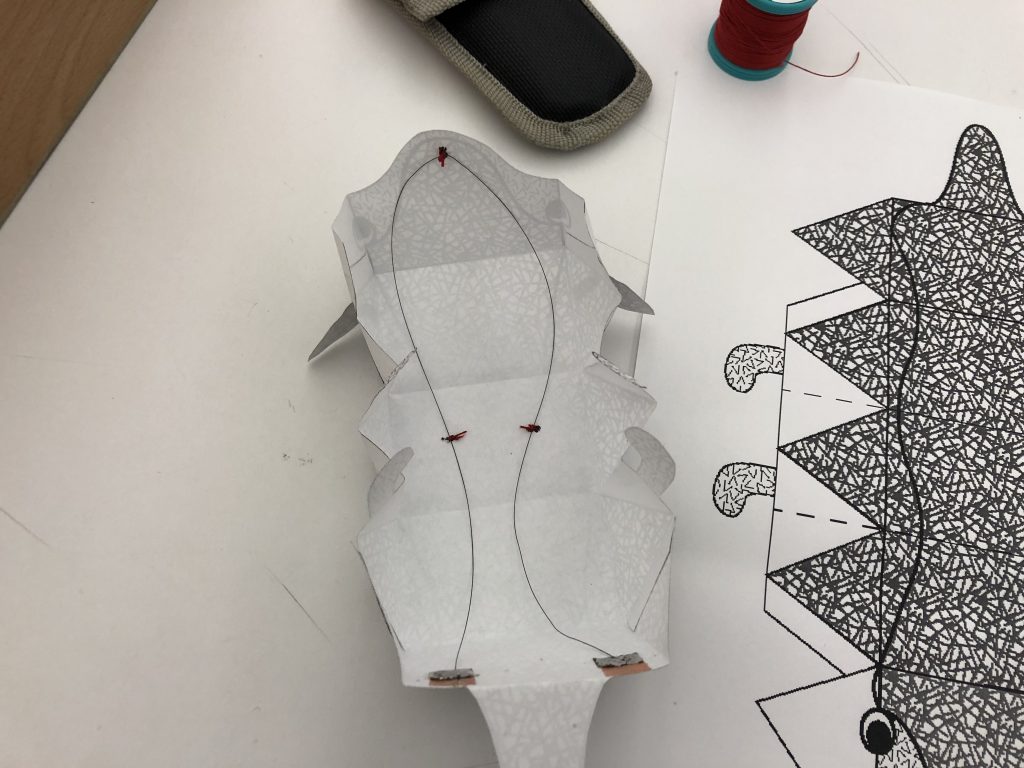
This little project was inspired by old cartoon animations of a steak, so raw, that it’s still “living” enough to run away from the individual that is trying to cook it. I cut slits into the cardboard to allow it to bend more easily in the way intended. The move meant reminded me of the cartoon steak almost instantly, but also could represent things like a rolly polly bug.
I wanted to hook this up to a potentiometer through Arduino but I was having difficulty trying to connect the circuit up correctly…