Final times! Woohoo! Here are your final deliverables:
DUE TUESDAY, 12/12
1) WORKING PROTOTYPE
You MUST bring your prototype to show – even if it is not working. If you require a specific environment, please email me.
2) PRESENTATION
You will have 7 minutes to present. This includes time for feedback, so structure your presentation accordingly. Your should include the following in your presentation ( in whatever order you like):
- Concept
- Precedents
- User testing + feedback
- Process documentation
- Video of project demo
- Challenges you faced
- Future iterations
3) VIDEO DOCUMENTATION
You should make a short video introducing your project. It should include the title of your piece, your concept, and a prototype demo.
DUE WEDNESDAY, 12/20 AT MIDNIGHT (I will not accept late submissions)
1) BLOG POST
- Create a short post on the blog with The link to your Instructable.
- Text of your project description from the Instructable
- Any other documentation links.
- A short reflection on your process. What were your wins, challenges? What did you learn?
- Where would you take it next?
2) INSTRUCTABLE
Here are the components you should have:
- Title. IMPORTANT: Make your title descriptive or catchy so it easy for people to find. If you have a more abstract title, include a subtitle. For example, Vague textiles VS Vague textiles: Using thermochromic ink to change fabric surfaces
- Intended audience. Who is this for? Beginners? Textile coders of the 23rd century? Elementary afterschool STEAM club? Let people know what prior knowledge they need so they don’t have unreasonable expectations before jumping in.
- Description of the project. Write a few sentences on why you made it, what it does, what you hoped to accomplish, challenges you might have faced, and where you would take it next.
- Materials list. List the materials you used and link to where people can purchase. Here the materials list for the class. Email me if you cannot find a link to a material we used.
- Video documentation. Include the video described above.
- Steps to make it. Write all of the steps needed to recreate your project. Include images or diagrams to supplement.
- Circuit diagram. Be sure to include a circuit diagram or drawing.
ASSESSMENT GUIDELINES
I will assess your project by the following criteria:
Ideation, Concept, and Design
- Incorporates computational concepts discussed in class
- Able to translate ideas/concepts into project form within a given environment
- Thoughtful integration of design elements
- Presents functioning prototype.
- Presents working documentation if was unable to get working
- Synthesizes design and technology to create interesting and contextually significant work that makes contributions to the domain
Process + Materials
- Thoroughly documented according to class guidelines
- Uses materials and processes learned in class
- Synthesizes materials and processes to make relevant contributions to field
- Iterated prototypes
- Demonstrated effective problem-solving/ finding skills
- Scoped approach to project and sculpted according to personal goals, strengths, and weaknesses
Presentation
- Articulated concept and problem statement clearly
- Prepared for presentation (slides ready and prototype set up)
- Addresses all required elements for presentation
- problem statement/question you are trying to answer
- audience (who is this for? we are designers, which means we design for someone or something.)
- concept statement
- precedents/inspiration
- process/prototypes
- what you learned
- where you would take the next iteration
OPTIONAL THEME: MEMORY
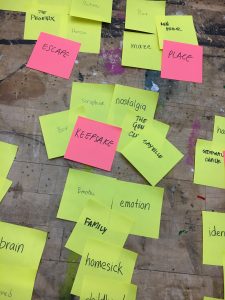
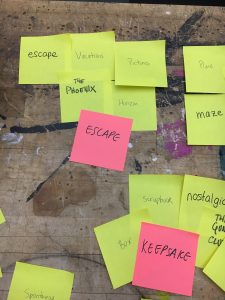
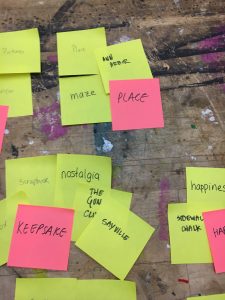
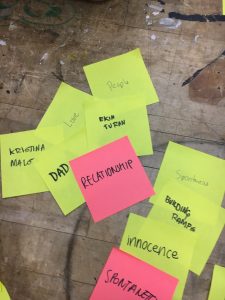
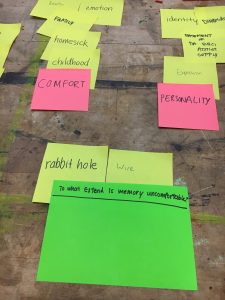
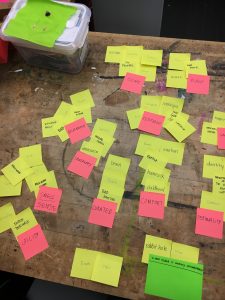
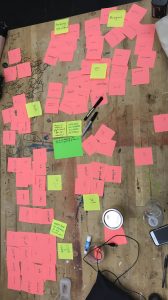
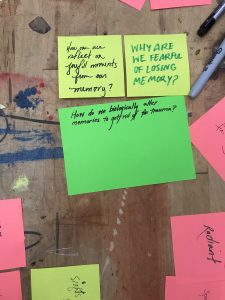
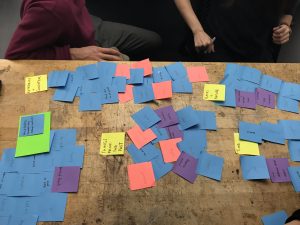
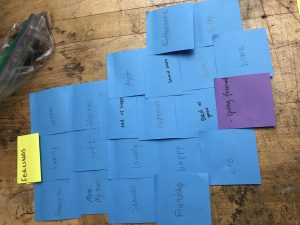
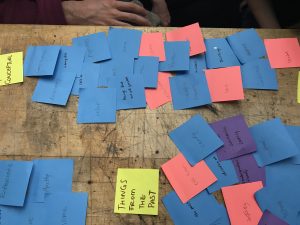
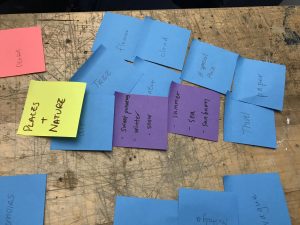
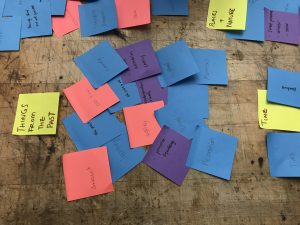
Questions and prompts from in-class activity:
- How do we biologically alter memories to get rid of trauma?
- How can we reflect on joyful moments from our memory?
- Why are we fearful of losing our memory
- What kind of memories do we cling on?
- To what extent is memory uncomfortable?
- How do memories help us progress through our lives?
- Why do we need to remember things?
- Why do fleeting moments bring nostalgic memories?
- Why do memories make you feel lonely?
- What is the point of remembering loved ones from the past?
Since we ran a little short on time, I am also including a few notes below that I hoped to incorporate into our discussion. They are meant to provoke ideas and questions:
Human memory
Most people would argue that it is our memories which comprise our sense of self, our values, habits, perspectives – our identity. There are three types of human memory: sensory, short term, and long term. Sensory handles information you receive in your immediate environment, such as the feeling paper or the smell of a burnt LED. Short-term memory allows you to hold some information for a short amount of time. Long-term memory goes deeper: it allows you to store vast amounts of information over long periods of time. These will influence who you perceive yourself and others to be. You may consciously build these memories or construct them without full self awareness. We have personal memories and collective memories, and they may not always align.
Digital Memory
Digital memory gives us the ability to store infinite amounts of information that we can retrieve at any moment. While digital memory may seem abstract and intangible, it cannot live without a physical component, the hardware of switches, ICs, capacitors, transistors, resistors, and so on. This hardware was not always small enough to fit into our hands. In the past, increased memory meant increased size. Now we are able to recall any piece of information anywhere. Some of this memory is volatile and lives on only when powered, while others are stored semi-permanently. Some memory allows users only to read or only to write or to both read and write new memories.
Material Memory
A material’s memory depends on its form and properties (tensile, mechanical, electrical, or otherwise). Softer materials like paper, textiles, and wood can be manipulated into new forms, storing new “memories” that redefine their functions (e.g. a piece of fabric sewn into a shirt, a piece of wood turned into a handle on the lathe, etc). Smart materials have the ability to change states by altering their properties and forms. SMAs return to a programmed shape when activated, thermochromic pigment disappears with heat, conductive fabric has electrical properties in addition to textile properties. The look and feel of a material impacts our sensory memory and contributes to the user’s overall experience with an object or environment.
Suggested Readings:
Becoming Materials: Material Forms and Forms of Practice by Jenny Bergström, Brendon Clark, Alberto Frigo, Ramia Mazé, Johan Redström, and Anna Vallgårda
Poetic Computation Reader by Taeyoon Choi
Ch 2: Memory: to remember and forget